5 Best Vacuum Gauge For Engine Diagnostics In 2026
As an Amazon Associate we earn from qualifying purchases.
A vacuum gauge is one of the simplest tools for checking how well an engine is breathing. It measures suction inside the intake system. An unusual reading can point to leaks, worn parts or timing problems. This guide helps beginners and home mechanics compare five popular vacuum gauge kits for engine diagnostics.
The five products in this round-up share a similar design. Most are analog gauges with a round dial, a rubber hose and a set of adapters. Several also test fuel pump pressure, and one is digital. The comparison rests on the listed features and typical use, not on personal testing. Where a detail is not stated in the listing, this guide leaves it out.
Quick Comparison Table of the Five Vacuum Gauges
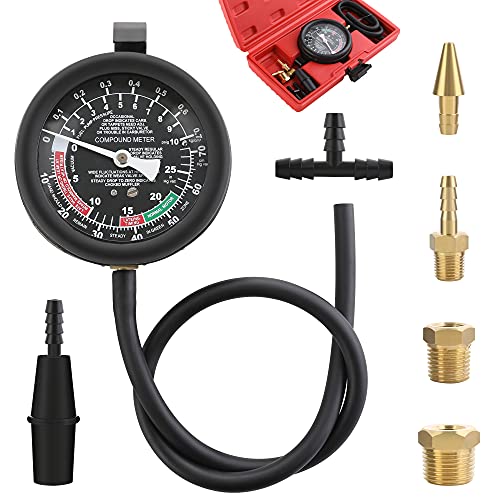


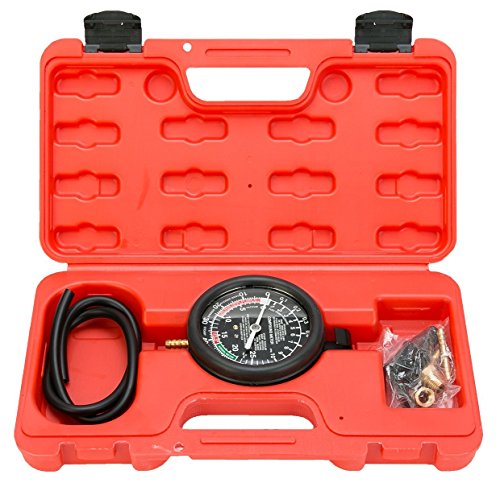

Individual Vacuum Gauge Reviews for Engine Diagnostics
1. Hromee Fuel Pump and Vacuum Tester Gauge: best for general home diagnostics
The Hromee kit is a mechanical tester that covers both vacuum and low-pressure fuel pump checks. It suits people who work on older carbureted engines and want one kit for several basic tests. The listing describes it as useful for finding leaks in vacuum lines, the intake manifold and the brake assist system.
What the kit does
The gauge reads vacuum from 0 to 28 inches of mercury and pressure from 0 to 10 PSI. Those ranges fit typical carburetor and mechanical fuel pump work. The pressure side is meant for pumps operating below 10 PSI, so it does not suit modern electric fuel injection systems.
Key features in plain words
The dial is 4 inches across, with color-coded scales that make the reading easier to see. A rubber guard surrounds the gauge, and a hook on top lets you hang it on a bracket. The kit includes a 2-foot rubber hose and six adapters. The hose length lets you position the gauge where you can see it while you work.
Everyday use
Most of the work involves tapping the gauge into a vacuum port, starting the engine and watching the needle. Because there are many adapters, you may need a little time to find the right fitting. Try the smallest adapter that seals firmly on the port. The hook and large dial help when someone else is revving the throttle.
Performance and ease of use
The large scale is one of the kit’s clearer strengths. A steady needle at a fixed height at idle generally suggests a well-sealed intake. A needle that drops or flutters can signal a leak or a valve problem. The adapter set is wide, which helps across engines but adds some clutter.
Value for money
At the listed price, the kit is one of the more affordable options here. You get both vacuum and fuel pressure testing in one case, which is practical for occasional checks. Buyers who need high-pressure fuel testing for modern engines will need a different tool.
Pros
- Tests both vacuum and low fuel pump pressure in one kit
- Large, color-coded 4-inch dial that is easy to read
- Includes six adapters for a wide range of fittings
- Hook and rubber guard add convenience during use
Cons
- Fuel pressure range is limited to pumps below 10 PSI
- Adapter set can take time to sort through
- Analog needles may be harder to read in poor light
2. NYXOVA Vacuum and Fuel Pump Tester Gauge: best for beginners who want clear instructions
The NYXOVA kit is an analog tester with a similar set of functions to the Hromee kit. Its listing stresses ease of use and includes a written manual. That makes it a sensible choice for someone new to vacuum gauges.
Analog gauges use a moving needle rather than a number on a screen. Many beginners find this easier to follow as the engine runs. The manual adds a second layer of help, so you can check each step before moving on.
Test functions
The listing describes four checks: fuel pump pressure, fuel pump vacuum, carburetor intake manifold and general vacuum. You switch between them by changing the hose connection. The vacuum range runs from 0 to 28 inches of mercury, and the pressure range from 0 to 10 PSI.
Know which test you need before you start. A fuel pump pressure check measures how much pressure the pump delivers. A vacuum check measures the suction an engine creates. Both help you spot leaks or wear, but they answer different questions.
Key features in plain words
The gauge face is 4 inches across, with color-coded scales. It is about 1.2 inches thick and has rubber side notches for a firm grip. The kit includes a 2-foot hose and a set of brass and plastic adapters.
The hose gives you room to place the gauge where you can read it. The mix of adapters helps you fit more than one connection point. Color-coded scales show which zone the needle is in at a glance.
Everyday use
Most users connect the gauge, start the engine and note where the needle settles. The manual helps with the order of steps, which matters under the hood. Check that each fitting is snug before starting the engine, since a loose connection can give a false reading.
Write down the needle position for each test so you can compare results later.
Performance and ease of use
The rubber side notches make the gauge comfortable to hold while you watch the needle. The manual is a real benefit for beginners who want to avoid guesswork. The kit is less complex than some options, so it can feel less overwhelming at first.
Good lighting and a clear view of the needle make readings easier to judge. In a tight engine bay, the hose length and gauge size will affect how comfortable the setup feels.
Value for money
At the listed price, this kit sits at the lower end of the range. It covers the same main tests as more expensive analog kits. For a first tester, the included guidance and low cost make it a reasonable choice.
Check that the pressure range and adapter set match the vehicles you plan to test. A kit that fits your needs at a low price often offers better value than a pricier one with features you will never use.
Pros
- Includes an instruction manual that helps beginners follow the steps
- Covers four separate tests with one gauge
- Rubber side notches give a comfortable, secure grip
- Low listed price for a complete kit with a carrying case
Cons
- Pressure range is capped at 10 PSI, so it will not suit higher-pressure systems
- Analog needle can be harder to read precisely than a digital display
- Less detail on fitting compatibility than some competing listings
3. AUTOOL PT502 Digital Vacuum Pressure Gauge: best for precise readings
The AUTOOL PT502 is a digital gauge rather than a mechanical kit. It measures negative pressure in sealed systems and hoses and shows the result on a clear screen. It suits users who want numbers instead of needle positions.
Digital gauges appeal most to people who record readings, compare results over time, or need to spot small changes. A numeric display removes guesswork about where a needle sits between two marks. The trade-off is that the gauge needs power before it can run.
How the digital display works
A digital sensor reads the vacuum and shows the value in real time. The measuring range is from minus 101 kPa to 0 kPa. Built-in temperature compensation helps keep readings steady across a wide range of conditions.
The sensor converts pressure into an electrical signal, so the screen updates as the system changes. You can watch a reading settle after you start an engine or open a valve.
Key features in plain words
The gauge runs on a 12-volt external power supply. It includes reverse polarity protection, which helps guard against damage if the power leads are connected the wrong way. The compact body suits both workshop and field use.
Reverse polarity protection does not replace careful wiring. It guards against one common mistake, so it still pays to check the leads before you switch on.
Everyday use
Because the readout is numeric, you can record values and compare them between tests. Many users find small pressure changes easier to notice than with an analog needle. The main setup task is supplying power and connecting the sensor to the system under test.
A typical session starts with connecting the sensor and power supply, then confirming the display responds. You record a baseline reading, make your change, and note the new value.
Performance and ease of use
The digital screen removes the need to judge a needle position against a printed scale. Readings are shown in one unit, which can simplify comparison. Setup is more involved than a simple analog gauge because it needs a power source.
Once powered and connected, operation is straightforward. New users may need a few minutes to become comfortable with the power connection and the display layout.
Value for money
This is the highest-priced option in the round-up. You pay more for the digital display, temperature compensation and polarity protection. For users who need repeatable numbers, the extra cost can be worthwhile. For occasional checks, a simpler analog kit may serve better.
Ask yourself how often you will use the tool and if you need recorded values. Frequent testing or a need for precise numbers can justify the added features.
Pros
- Digital readout shows clear numeric values
- Built-in temperature compensation supports consistent readings
- Reverse polarity protection helps reduce wiring mistakes
- Compact design suits workshop and field work
Cons
- Requires a 12-volt power source, which adds a setup step
- Highest price in this round-up
- Focuses on vacuum readings, so it does not test fuel pump pressure
4. 8MILELAKE Fuel Pump and Vacuum Tester Gauge: best for simple, basic tests
The 8MILELAKE kit is a basic analog tester for fuel pump pressure and engine vacuum. Its listing is short but covers the essentials. It suits someone who wants a straightforward tool for occasional checks.
Analog kits need no batteries or external power. A needle shows the reading directly, so there is no screen to power or calibrate. For many home mechanics, that simplicity is the main attraction.
What the kit covers
The listing states that the gauge can test fuel pump output pressure up to 10 PSI and read engine vacuum up to 28. It also notes that the adapters suit most vehicles. The kit comes in a blow-molded case for storage.
Fuel pressure tests show if the pump delivers the flow the engine expects. Vacuum readings can point toward leaks or intake problems when read alongside other symptoms.
Key features in plain words
The gauge dial measures 3.5 inches across, slightly smaller than the 4-inch dials on other mechanical kits. The listing says little about the number of adapters or hose length, so check the contents before buying.
Compare the listed contents with the fittings your vehicle needs. Confirm that the hose will reach the test point on your engine. If the listing is unclear, confirm these details with the seller.
Everyday use
Most checks follow the same pattern: connect the gauge, start the engine and read the needle. The smaller dial may be a little harder to read at a glance. The blow-molded case keeps the kit together between jobs.
Read the needle with the gauge at eye level to reduce parallax error. Compare the reading with the expected range for your engine, and store the kit in its case so the fittings stay together.
Performance and ease of use
The kit is simple to understand, which suits first-time users. A smaller dial can make fine readings more demanding. Because the listing is brief, users may need to work out some fitting choices on their own.
The basic design means fewer steps and fewer parts to manage. The trade-off is that you interpret the needle yourself, and small differences can be harder to judge. Taking a few readings and comparing them helps build confidence.
Value for money
The listed price is close to the Hromee kit. The 8MILELAKE listing offers fewer details, so compare the included parts before deciding. For basic checks, the value depends on if the adapters match your engine.
A kit that covers your engine’s fittings can offer good value for occasional use. If you must buy extra adapters or hoses, the total cost may rise. Add up the full set you need before comparing prices.
Pros
- Simple design that is easy to understand
- Covers fuel pump pressure and engine vacuum
- Blow-molded case keeps parts organized
- Listed as suitable for most vehicles
Cons
- Smaller 3.5-inch dial can be harder to read at a glance
- Listing gives limited detail on adapters and hose length
- Pressure range is limited to 10 PSI
5. DASBET Vacuum and Fuel Pump Tester Gauge: best for budget buyers who want a complete kit
The DASBET kit is an analog tester with a full set of adapters and a carrying case. It is the lowest-priced option in this round-up. It suits buyers who want a complete kit without spending much.
Many people start with a single gauge and later find they need a fitting that does not match. This kit tries to cover those gaps from the start. The trade-off is that more parts mean more to sort through.
What the kit includes
The package includes one gauge, a 2-foot rubber hose, an extra-long hose, several brass and plastic adapters and a 14mm/18mm manifold adapter. The extra-long hose can help when the gauge needs to sit away from a tight engine bay. The gauge covers vacuum up to 28 inches of mercury and pressure up to 10 PSI.
Key features in plain words
The gauge is 4 inches across with color-coded scales, which help you read the right unit at a glance. It is about 1.2 inches thick and has rubber side notches for a firmer grip. The hose is rated to 40 PSI, well above the gauge’s 10 PSI limit.
Everyday use
The kit works much like the other mechanical gauges here. You connect the hose to a vacuum port or fuel line fitting, then read the needle while the engine runs or cranks. The manifold adapter may not match every fitting, so test the fit before you rely on it for a job.
The carrying case keeps the parts together, which helps when you move between jobs. Losing a small brass adapter is a common frustration, and a case reduces that risk.
Performance and ease of use
The large dial and notched grip make the gauge comfortable to hold while you watch the needle. The mix of adapters gives flexibility, but sorting them takes patience. Expect to spend a few minutes matching each adapter to its fitting the first time.
The design is straightforward for someone who has done basic engine checks before. Beginners may need to look up what a normal vacuum reading looks like for their engine. A single reading does not diagnose a fault, so pair it with other checks.
Value for money
At the listed price, this is the least expensive kit in the round-up. Buying the same parts separately would usually cost more, though prices change, so check the current listing. Buyers who need a complete kit on a tight budget may find it a strong fit.
Pros
- Lowest listed price in the round-up
- Broad set of adapters, including a manifold adapter
- Large 4-inch dial with color-coded scales
- Carrying case keeps all parts together
Cons
- Adapter sorting takes some patience
- Pressure range is capped at 10 PSI
- Analog needle may be less precise than a digital display
Comparison Insights: How the Five Vacuum Gauges Differ
The five kits share the same basic purpose, but they differ in a few clear ways. The main split is between the four analog kits and the one digital gauge. Analog kits test both vacuum and fuel pump pressure, while the digital model focuses on vacuum readings.
Dial size is another difference. Four of the mechanical kits use a 4-inch dial, while the 8MILELAKE kit uses a 3.5-inch dial. A larger face is generally easier to read from a short distance.
Ease of use varies more than the core specifications. The NYXOVA kit stands out for its instruction manual, which helps first-time testers know what to expect. The DASBET and Hromee kits offer the widest adapter sets, which helps on more engines but adds sorting work. The AUTOOL requires power but removes the need to read a needle.
On value, the best choice depends on your needs. The DASBET and NYXOVA are the lowest-priced options. The Hromee and 8MILELAKE sit in the middle. The AUTOOL costs the most but offers digital readings and built-in temperature compensation.
Vacuum Gauge Buying Guide: Key Factors Explained Simply
Before buying, decide what you plan to test. A vacuum gauge reads the suction inside the intake system. A fuel pump tester reads how hard the pump pushes fuel toward the engine. Some kits do both, while others focus on one job.
Check the measurement ranges
Vacuum is usually shown in inches of mercury, often up to 28 inches. Fuel pump pressure is usually shown in PSI, or pounds per square inch. Make sure the range covers the systems you plan to check. Most listings in this round-up cap pressure at 10 PSI.
Consider dial size and readability
A larger dial is easier to read, especially under a hood where light is poor and space is tight. Color-coded scales help you spot the normal range quickly. Rubber guards and side notches make the gauge more comfortable to hold and reduce the chance of dropping it.
Look at the adapters
Engines use many different fittings, and a single connector rarely fits every line. A kit with more adapters gives you more ways to connect to different hoses and ports. Check that the kit lists adapters for your type of engine before you order.
Decide between analog and digital
Analog gauges are simple, need no power and show a needle position. They suit quick checks. Digital gauges show a number on a screen but usually need a battery. Digital units make it easier to record exact values, which helps when you compare readings over time.
Think about storage and portability
Most kits here come with a carrying case. A case keeps hoses, fittings and adapters from getting lost in a drawer or truck bed. If you move between jobs, a compact, organized kit is more convenient.
Who Should Buy Each Vacuum Gauge
Matching the tool to the buyer makes the choice easier. Each product here suits a slightly different user. These notes describe typical fits based on listed features, not hands-on testing.
Home mechanics working on older carbureted engines may want the Hromee kit. Its vacuum and low-pressure fuel pump tests, large dial and hook suit general home diagnostics, especially while the engine is running.
Complete beginners may find the NYXOVA kit the most approachable. The instruction manual and comfortable grip help first-time users learn the steps, and clear markings show what a normal reading looks like.
Users who want exact numbers may prefer the AUT OOL PT502. Its digital readout and temperature compensation suit repeatable measurements. It needs a 12-volt supply and costs the most of the options listed, so weigh that against how often you will use it.
Occasional users who want a simple basic tool may consider the 8MILELAKE kit. Its straightforward design covers fuel pump pressure and engine vacuum, but the smaller dial and limited listing details call for a closer look. Confirm the specifications on the product page before buying.
Budget-minded buyers who want a full set of parts may lean toward the DASBET kit. It offers the lowest listed price, a broad adapter set and a carrying case. The trade-offs are the adapter sorting, which takes patience, and the 10 PSI cap, which may not suit every fuel system.
Final Verdict on the Best Vacuum Gauge for Engine Diagnostics
No single kit is right for everyone. The best choice depends on your budget, engine type and how you prefer to read results. Analog kits suit most home checks, while the digital model suits users who need precise numbers.
For a first-time buyer, the NYXOVA kit stands out because of its included manual and low price. The manual helps a beginner understand each test and how to read the needle. For a broad set of adapters at the lowest cost, the DASBET kit is a strong option. The Hromee kit offers a good balance of vacuum and fuel pressure testing with a large, easy-to-read dial.
In short, match the kit to the job. Check the measurement ranges, adapter list and dial size before you buy. A careful choice will serve you well across many basic engine checks.
Frequently Asked Questions About Vacuum Gauges for Engine Diagnostics
What does a vacuum gauge measure?
A vacuum gauge measures the suction, or negative pressure, inside the intake system. Readings are usually given in inches of mercury, often abbreviated as inHg. The reading shows if the engine is drawing air as expected.
A steady needle at a normal level often points to a healthy intake system. A needle that drops, flutters or swings can point to a leak, a worn component or an ignition timing issue. The gauge alone does not name the fault, so use it alongside other checks.
Can one kit test both vacuum and fuel pump pressure?
Yes, several of the mechanical kits in this round-up do both. The Hromee, NYXOVA, 8MILELAKE and DASBET kits list vacuum and low-pressure fuel pump tests. The AUTOOL PT502 focuses on vacuum readings only.
If you plan to test fuel pressure, confirm that the kit covers the pressure range you need. Mechanical kits built for carburetor systems usually cover low pressures, so they may not suit every fuel system.
Do I need a digital gauge?
Not always. Analog gauges are simple, need no power and suit many basic checks. A digital gauge helps when you want exact numbers or need to record values between tests.
Many home mechanics start with an analog kit and add a digital tool later if their work becomes more detailed. Consider how often you will test and if you need written records.
What does the 10 PSI limit mean?
PSI stands for pounds per square inch, a unit of pressure. A 10 PSI limit means the gauge is meant for low-pressure carburetor fuel pumps. It is not designed for high-pressure fuel injection systems.
Using a gauge beyond its rated range can damage it and produce misleading readings. Check the rating in the product listing before connecting it to a fuel line.
Are the adapters compatible with every vehicle?
No single kit fits every engine. Listings say the adapters suit most vehicles, but fittings vary. Check the included adapter sizes against your engine before you start a test.
If an adapter does not seal properly, the reading may be inaccurate or a leak may occur. Compare thread sizes and fittings before you begin.

Peterson is an automotive enthusiast and auto parts reviewer with a passion for vehicle maintenance, upgrades, and performance. He enjoys researching and testing car parts, tools, and accessories to help drivers make informed buying decisions. Through AutoPartsTalk.com, Peterson shares honest reviews, practical maintenance tips, and expert guides to keep vehicles running safely and efficiently.