5 Best Coolant Tester In 2026
As an Amazon Associate we earn from qualifying purchases.
A coolant tester is a small tool that checks how well your engine coolant, also called antifreeze, protects your engine. It shows if the mix of water and antifreeze will keep fluid from freezing in winter or boiling in summer. Finding the best coolant tester depends on what you need to check and how you plan to use it.
This guide is written for beginners who have never bought a coolant tester before. It looks at five products that share the same basic purpose: measuring the protection level of automotive coolant. The comparison rests on the listed features and typical use of each product, not on personal testing. Each section explains what the tool does, who it suits, and where it may fall short.


1. OEMTOOLS Professional Series Ethylene Glycol: best for checking the mix without guessing
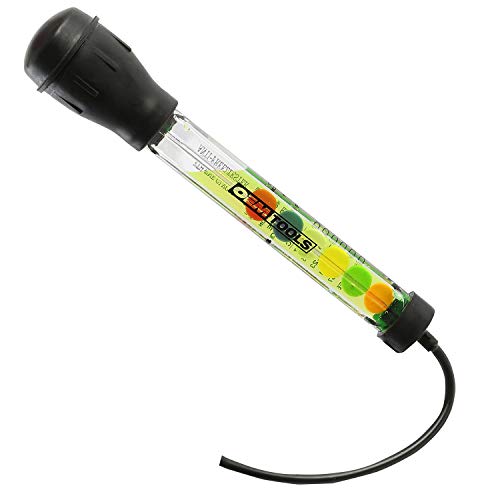
The OEMTOOLS Professional Series Ethylene Glycol Antifreeze Tester is a disc-type tester. It uses small floating disks inside a clear tube to show the freezing point of the coolant. It is designed for ethylene glycol antifreeze, the most common type in cars.
This tester suits drivers who want a simple, count-based reading. It also suits people who maintain several vehicles, such as a truck, an RV or a boat. The listing says it works on diesel, RV, camper and marine antifreeze as well, so one tool can cover more than one vehicle.
Best use cases
The most common use is a seasonal check before winter, when a weak mix could allow fluid to freeze and crack parts. It also helps when you top up coolant and want to confirm the mix is still right. For example, if you add plain water to a low reservoir, a quick test shows if the protection has dropped. Owners of vehicles that use different antifreeze types may find the wide compatibility useful.
How the disk reading works
You draw a sample of coolant into the tube and count how many disks float. Each disk has a set density, so the number that floats depends on how much antifreeze is in the fluid. The chart on the body of the tester matches the count to a protection level. The listing says five floating disks means ideal protection.
A sixth disk is included to show overprotection. Too much antifreeze in the mix lowers cooling efficiency, so this extra check helps you spot it. Because of this, the tester helps you avoid adding too much as well as too little.
Daily use and reading the sample
Most buyers find the process quick once they know the chart. Read the sample at room temperature and let the disks settle before counting. The clear body makes it easier to see rust or other particles in the fluid, which can signal that the coolant needs changing. That said, you still need to read the disks carefully, since the result depends on counting.
Performance and ease of use
The listing says the disc-type design is accurate at all temperatures. This means you can test with the engine hot or cold. Hot coolant can be dangerous to handle, so many people wait until the engine has cooled before drawing a sample. The one-piece bulb and neoprene dip tube are simple to handle without extra parts.
Value for money
At the listed price, this tester sits in the middle of the group. It offers a clear method and a useful overprotection check. Buyers who want a readable count method will likely feel it is fair value, while those who need a detailed lab-style breakdown may prefer a different tool.
Pros
- Clear disk-count reading that is easy to follow once you know the chart
- Includes a sixth disk to warn about overprotection
- Works with many antifreeze types, including diesel and marine
- Clear body makes it easier to spot rust or impurities
Cons
- You must count disks and match them to a chart, which takes a moment to learn
- Designed mainly for ethylene glycol coolant, so it may not suit every fluid type
- Requires drawing a sample into the tube, which can be messy for some users
- Gives a freezing point estimate rather than a detailed breakdown of the mix
2. Antifreeze Coolant Tester: best for a dial reading in two temperature scales
The Dweekiy Antifreeze Coolant Tester is a dial-type densitometer. A densitometer measures how dense a liquid is, and that density relates to how much antifreeze is in the mix. Instead of floating disks, this product uses a pointer and scale to show the result.
It suits buyers who prefer reading a needle on a dial and want both Celsius and Fahrenheit readings. It also suits people who test batteries as well as coolant, since the listing mentions 6V, 12V and 24V systems. If you only ever work in one temperature unit, the second scale may be a bonus rather than a necessity.
Best use cases
The most common use is checking freezing and boiling protection before a season changes. For example, many people test their coolant in autumn to confirm it will handle a cold snap, and again in spring. Owners of cars, trucks and RVs may find the battery compatibility useful. The dual scale also helps people who read temperatures in either unit.
How the dial reading works
You draw a small amount of coolant into the tester and read where the pointer stops on the scale. The listing says the tester measures both freezing point and boiling point. This gives you a view of protection in winter and summer, so one tool covers both checks.
Daily use and handling
A dial is usually quicker to read than a set of disks, since you only look at one pointer. The listing describes a clear dial with a pointer and scale for quick readings. Even so, small scale marks can be harder to read in dim light, so testing in a well-lit area helps. Wipe the tester clean after each use to keep the dial easy to see.
Performance and build quality
The listing describes wear-resistant materials built to handle harsh automotive conditions. It also says the tester is calibrated to standard specifications. Because the listing gives no test figures, the accuracy level is best confirmed with the maker’s own details before you rely on the reading for critical decisions.
Value for money
At the listed price, this is one of the lower-cost options in the group. It offers two temperature scales and battery use in one tool. Buyers who want a simple dial at a modest cost will likely find it reasonable, especially if they plan to use both functions.
Pros
- Dial reading is quick to check once you know where to look
- Calibrated in both Celsius and Fahrenheit
- Also works for battery testing on 6V, 12V and 24V systems
- Low price compared with several other options in this group
Cons
- Small scale marks may be harder to read in poor light
- Battery use is a separate function, so it may not suit someone who only needs coolant checks
- The listing gives no detailed accuracy figures, so buyers may need to check further
- Dial readings may take practice to interpret compared with a simple count method
3. ATD Tools 1106 Professional Antifreeze: best for a durable, simple tester across coolant types
The ATD Tools 1106 Professional Antifreeze and Coolant Tester is a hydrometer-style tool for checking coolant condition. It is built for ethylene glycol coolants, including GM Dex-Cool, according to the listing. Its housing is described as tough and shatter-resistant.
This tester suits drivers who want a sturdy, straightforward tool. It also suits people who work on several vehicles and need a tool that handles regular use. The listing presents it as simple to use.
Best use cases
The most common use is a routine check of coolant condition during service. Many people test coolant before cold weather arrives, since the fluid’s protection against freezing depends on its mix. It also suits people who want one tool for a range of ethylene glycol coolants. The clear housing makes it easier to look at the fluid while testing.
Checking the coolant
You draw coolant into the tester and read the result against the markings on the tool. The listing says it easily checks the condition of antifreeze and coolant. Because the listing gives few details, the exact reading method is worth confirming with the product guide. Always test cool coolant, since hot fluid can give misleading readings and can burn you.
Daily use and durability
The shatter-resistant clear housing suggests the tool can handle being moved around a garage. It is less likely to break if dropped on a hard floor. A tool that stays in a toolbox or on a shelf between jobs benefits from this kind of build. That said, no tool is fully protected from rough handling.
Performance and ease of use
The listing says the tester is simple to use, which suits beginners who want few steps. The clear housing helps you see the fluid as you work. Results depend on reading the markings correctly, so take a moment to understand the scale first. Rinsing the tester with clean water after each use helps keep readings accurate over time.
Value for money
At the listed price, this tester sits in the middle of the group. Its durable housing and wide coolant compatibility add to its worth. Buyers who want a sturdy tool for regular coolant checks will likely find it a sensible choice. Compare the current price with other testers before you buy, since prices change often.
Pros
- Tough, shatter resistant clear housing that suits garage use
- Works with all ethylene glycol coolants, including GM Dex-Cool
- Simple to use with few steps for beginners
- Clear body lets you see the fluid while you test
Cons
- The listing gives few details, so you may need to read the guide closely
- Covers ethylene glycol coolants, so it may not suit propylene glycol fluids
- Reading the markings correctly takes care, especially for first-time users
- Does not offer a second function such as battery testing
4. Yuecoom Coolant Tester: best for a lightweight, portable dial with two functions
The Yuecoom Coolant Tester is a dial-type rapid tester for antifreeze. It is described as measuring both freezing and boiling points. The listing presents it as lightweight and easy to carry.
This tester suits people who want a compact dial tool for checking coolant in different places. It also suits buyers who want readings in both Celsius and Fahrenheit. It is a practical option for those who check protection in both winter and summer.
A dial tester is a simple device. It does not need batteries or a screen, so there is less to set up before each check. That simplicity is one reason many people keep this type of tool in a vehicle.
Best use cases
The most common use is a quick check of coolant before a trip or at a seasonal service. Its portable design makes it handy for checks away from home. The dual scale also covers both freezing and boiling protection.
For example, a driver heading into cold mountain roads might check freezing protection before leaving. Someone who drives in hot climates might check boiling protection before a long summer journey. One tool can cover both situations.
How the dial reading works
You draw a sample of coolant and read the pointer on the dial. The listing says it gives fast results. Two sets of readings cover freezing and boiling protection in one tool.
Read the scale with the device held level and at eye height. This helps avoid misreading the pointer. Follow the instructions included with the tool, since the exact procedure can differ between models.
Daily use and portability
A lightweight design is easier to keep in a glovebox or toolbox. It is simple to carry to a garage or roadside check. Even so, a small tool can be easy to misplace, so a fixed storage spot helps.
Keep the tester in a protective case or a dedicated pouch if one is available. This guards the dial and the sampling parts from knocks and dust. Wipe off any spilled coolant after each use.
Performance and ease of use
The listing describes fast and precise results from the dial. It also says the tool is calibrated in both degrees Celsius and Fahrenheit. Because the listing gives no test figures, buyers should confirm accuracy with the maker before relying on it.
Ease of use depends on how comfortable you are reading a dial. Some people find the pointer quick to read after a few tries. Others may need more practice to be confident in the reading.
Value for money
At the listed price, this is one of the lower-cost options in the group. It offers a dial, two scales and both freezing and boiling readings. Buyers who want a portable and affordable dial tool will likely see it as reasonable value.
Price alone does not tell you how well a tool will perform. Compare the features you actually need with the price before you decide.
Pros
- Lightweight and easy to carry for checks on the go
- Measures both freezing and boiling points
- Calibrated in Celsius and Fahrenheit
- Low price compared with several other options in this group
Cons
- Dial readings may take practice to interpret quickly
- The listing gives no detailed accuracy figures
- A small tool can be easy to misplace without a set storage spot
- Focuses on coolant checks, without the battery function some rivals offer
5. 3-in-1 Antifreeze Tester in Fahrenheit Scale: best for coolant, concentration and battery checks
The aichose 3-in-1 Antifreeze Tester is a multi-function tool. It measures the freezing point and concentration of ethylene glycol or propylene glycol coolant. It also measures the specific gravity of battery acid, which shows battery charge condition.
This tester suits buyers who want one tool for several jobs. It also suits people who check both coolant and battery condition. The listing says it uses Fahrenheit scales and works with two antifreeze base types. If you already keep separate testers for coolant and battery, this device may let you consolidate them into one.
Best use cases
The most common use is checking coolant protection and mix strength in one step. A quick reading tells you if the mix will protect the engine at the lowest temperatures you expect where you live. It is also useful for a quick battery acid check. Owners who service several vehicles or equipment engines may value having one tool for these jobs.
The three functions in plain words
The first function reads the freezing point of the coolant. This tells you the temperature at which the fluid may begin to freeze. The second reads how strong the antifreeze mix is, as a percentage. The third reads battery acid concentration, which shows battery charge condition.
Scale ranges for each coolant type
The listing gives separate ranges for each antifreeze base. Ethylene glycol coolant reads from -84°F to 32°F for freezing point. Propylene glycol coolant reads from -60°F to 32°F, so check the base type before you start. Using the wrong scale can give you a misleading reading, so confirm which antifreeze your vehicle or equipment uses.
Daily use and quick readings
The listing says you need only two or three drops of solution. It also says readings come in a few seconds and the tool needs no battery. Automatic temperature compensation adjusts for the temperature of the fluid, which makes results easier to rely on in different conditions. Because the test is quick, you can check coolant during routine maintenance without setting aside much time.
Performance and ease of use
The quick, drop-based method is simple for beginners to follow. Because the tool covers three jobs, you need to read the correct scale each time. Taking a moment to match the scale to the job avoids confusion. Keep the instructions nearby for your first few uses until the steps feel familiar.
Value for money
At the listed price, this is the highest-priced option in the group. Its value comes from covering coolant freezing point, concentration and battery condition in one tool. Buyers who need several checks will likely find it a better fit than a single-purpose tester. If you only ever check coolant, a simpler and less expensive tester may serve you just as well.
Pros
- Covers freezing point, mix concentration and battery acid in one tool
- Works with both ethylene glycol and propylene glycol coolant
- Uses only two or three drops and needs no battery
- Automatic temperature compensation for varied conditions
Cons
- Has three scales, so reading the correct one takes care
- Higher price than most single-purpose testers in this group
- Scales are in Fahrenheit, which may need conversion for some users
- Multi-function design may be more than a buyer who only checks coolant needs
Comparison insights: how the five testers differ
The five products share one purpose but differ in method. Two use floating disks or a dial to show freezing point. Others focus on concentration or battery checks as well. Knowing these differences helps you match a tool to your needs.
Start by looking at what each tool actually measures. A freezing point tester tells you the lowest temperature your coolant can handle before it begins to freeze. A concentration tester tells you how much antifreeze is mixed with water. Some multi-function tools cover both, so the right choice depends on which readings you need.
In terms of performance, the disk-count method gives a clear result once you know the chart. Dial testers show a reading on a scale, which some people find quicker. The multi-function tester adds concentration and battery readings, but needs more care with its scales.
Ease of use varies as well. Simple housings and few steps suit beginners, while three-scale designs take more practice. As a result, a first-time buyer may prefer a single-purpose tool with clear markings.
A tool with fewer scales is easier to read at a glance. Each extra scale adds one more chart to check and one more place to misread a result. Clear markings and a plain layout can save time and reduce mistakes.
On value for money, the lower-priced dial testers offer a basic check at a modest cost. The middle-priced options add durability or a sixth overprotection disk. The highest-priced tool covers more jobs, so its value depends on if you need those extra checks.
A basic tester may be all you need for a yearly check of one vehicle. If you service several vehicles or also want battery readings, a broader tool may cost less per check over time. Compare the features you will actually use rather than the full list.
Buying guide: key factors explained in plain words
Start by deciding what you need to check. If you only want to know the freezing point of your coolant, a single-purpose tester is often enough. If you also want to check battery condition, a multi-function tool may save money over time.
Next, look at the coolant type. Most of these testers are built for ethylene glycol antifreeze, which is the most common type in cars. Check the listing for propylene glycol support if your vehicle or fluid uses it.
Check your owner’s manual or the coolant label to confirm which type you have. Mixing types can cause problems, so knowing your fluid helps you pick a tester that reads it correctly. When in doubt, ask a service technician.
Then think about how you will read the result. Floating disks give a count you compare to a chart. A dial gives a needle reading on a scale. Pick the method that feels clearest to you.
Consider the temperature scales too. Some testers read only Fahrenheit, while others offer Celsius as well. Choose the scale you are most comfortable with, since reading the wrong one can lead to a wrong conclusion.
Finally, weigh price against features. A lower price suits a simple check, while a higher price can make sense if you need several functions. Keep in mind that the listed details are the only facts available, so confirm any accuracy claims with the maker.
Who should buy these products: matching buyers to a tester
If you want a clear count method and an overprotection check, the OEMTOOLS tester suits you. Its chart-based reading lets you compare the floating disks against a scale. It also suits people who maintain several vehicles and want a consistent method for each one.
If you prefer a quick needle reading in both Celsius and Fahrenheit, the Dweekiy dial tester is a good match. You read one pointer against a scale, so there is less to count or interpret. It also suits people who want a basic battery check alongside coolant checks. Its lower price makes it a sensible starting point for a first purchase.
If you need a sturdy tool for regular garage work, the ATD Tools 1106 suits you. Its shatter resistant housing handles frequent use and the occasional drop better than a fragile case would. It works best for ethylene glycol coolants, including GM Dex-Cool, so check your coolant type before you rely on its readings.
If you want a portable dial tool for checks in different places, the Yuecoom tester fits that need. Its light build makes it easy to store in a glovebox or toolbox, so you can check coolant at a roadside stop or a friend’s driveway. It also covers both freezing and boiling readings, which helps when you want a fuller picture of protection.
If you want one tool for coolant freezing point, mix strength and battery acid, the aichose 3-in-1 tester suits you best. It is the most useful for buyers who run several checks in one session, since a single device covers each job. Be ready to read the correct scale each time, because mixing up the coolant and battery scales can give a misleading result.
Final verdict: which coolant tester fits best
There is no single winner for every buyer, because each tester serves a different need. The right choice depends on if you want a count method, a dial, a sturdy housing, portability or several functions. Matching the tool to your use matters more than any one feature on a spec sheet.
For a beginner who wants a simple coolant check, a single-purpose tester with clear markings is often the easiest start. It keeps the task focused, so you learn one reading well before adding more checks. For someone who checks coolant and batteries, the multi-function option offers more in one tool and can reduce the number of gadgets in your toolbox. In short, pick the tester that answers the questions you actually have about your vehicle.
Frequently Asked Questions
What does a coolant tester measure?
A coolant tester measures how well the antifreeze and water mix protects your engine. Most testers show the freezing point, and some also show boiling point or mix strength. This tells you if the coolant will work in your local weather.
Do I need a coolant tester if I already know the mix ratio?
A tester gives a direct reading of the fluid in your system. Mix ratios can drift over time as coolant is topped up with plain water or a different mix. Checking the actual fluid can confirm if the protection is still right for your conditions.
Can one coolant tester work on different antifreeze types?
Some testers cover more than one type, such as ethylene glycol and propylene glycol. Others are built mainly for ethylene glycol coolant, and their scales may not suit propylene glycol. Always check the listed compatibility before buying.
Is a dial tester or a disk tester easier for beginners?
Both are workable for beginners. A dial gives one pointer to read against a scale, while a disk tester needs you to count floating disks and match them to a chart. Choose the method that feels clearer to you and that you will use consistently.
Why might a coolant tester show too much protection?
Adding too much antifreeze lowers cooling efficiency, even though it may seem safer. Some testers include a check for overprotection to help you spot this. A reading that is too high is a sign the mix needs adjusting, so compare the result against your vehicle’s manual before making changes.

Peterson is an automotive enthusiast and auto parts reviewer with a passion for vehicle maintenance, upgrades, and performance. He enjoys researching and testing car parts, tools, and accessories to help drivers make informed buying decisions. Through AutoPartsTalk.com, Peterson shares honest reviews, practical maintenance tips, and expert guides to keep vehicles running safely and efficiently.