How to Clean Water Spots on Car Windows?
Water spots on your car windows are annoying. They show up after rain, at car washes, or when you park under trees. But here’s the good news: you can get rid of them easily. This guide will teach you everything you need to know about removing those stubborn marks and keeping your windows crystal clear.
What Causes Water Spots on Car Windows?
Before you start cleaning, let’s talk about why water spots appear in the first place. Understanding the cause helps you prevent them from coming back.
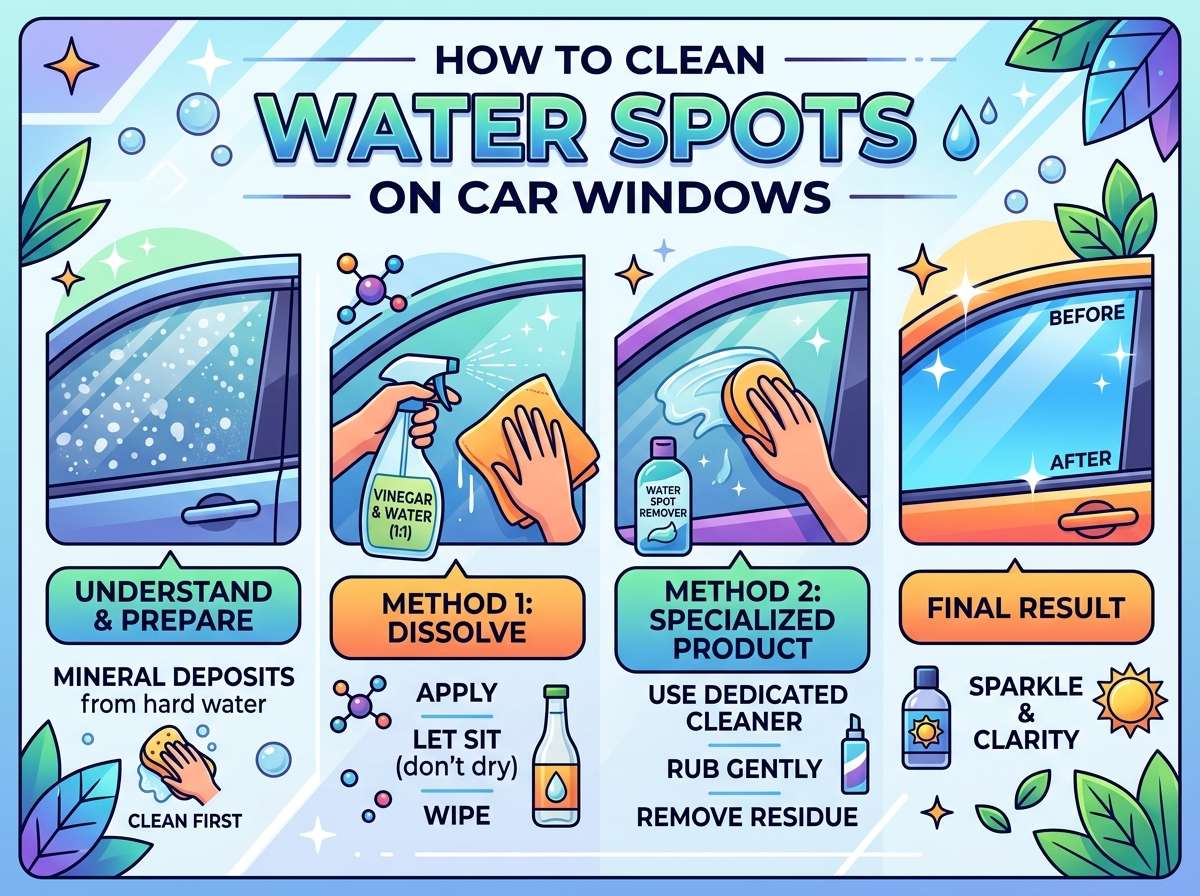
Water spots form when tap water or rainwater sits on your glass and dries. The water itself evaporates, but minerals like calcium and magnesium stay behind. These minerals create those white, hazy marks you see on your windows.
Hard water is the biggest culprit. If your tap water has lots of minerals, you’ll notice more water spots. Rain water can also leave spots, especially if you live in an area with pollution or dust in the air. Car washes sometimes leave spotting too, since they use tap water to rinse your vehicle.
The problem gets worse in hot weather. Sun speeds up evaporation, which means minerals get left behind faster. If you park under trees, bird droppings mixed with water can create even tougher stains.
Tap water contains dissolved solids. As the water evaporates, these solids concentrate and harden on your glass. The longer water sits, the more stubborn the spots become. Fresh spots are easier to remove than old, baked-on ones.
Why Water Spots Matter
You might think water spots are just a cosmetic issue. But they actually affect more than appearance.
Water spots block light from entering your car properly. This reduces visibility when you’re driving, especially during bright sunlight or night driving. Poor visibility means less safety for you and your passengers.
Spots also reduce the effectiveness of your windshield wipers. Your wipers can’t work as well on a spotted surface. This becomes a real problem during rain or snow.
The longer water spots sit on your glass, the harder they become. Some spots can actually etch the glass surface if left untreated for a long time. Etching causes permanent damage that no amount of cleaning can fix.
Keeping your windows spot-free keeps your car looking clean and new. It also helps maintain the value of your vehicle if you ever decide to sell it.
The Best Tools for Removing Water Spots
You don’t need fancy equipment to clean water spots. Most of what you need is probably already in your home.
Microfiber cloths are your best friend. These soft cloths trap dirt without scratching your glass. They’re cheap and work incredibly well. Get several so you always have clean ones available.
White vinegar is a natural cleaner that breaks down mineral deposits. It’s safe, affordable, and usually sitting in your kitchen. The acidity cuts right through hard water marks.
Distilled water helps because it has no minerals. Using distilled water prevents new spots from forming when you rinse.
Glass cleaner designed for cars works great too. Brands like Windex or specialty automotive glass cleaners dissolve water spots quickly. These products often have alcohol, which helps dry the glass without leaving streaks.
Rubbing alcohol (isopropyl alcohol) is another excellent choice. It evaporates fast and leaves no residue. Mix it with water for a budget-friendly cleaner.
Spray bottles let you apply cleaners evenly. Get one with an adjustable nozzle so you can control how much product you use.
Soft-bristle brushes help for tough spots. Use them gently to avoid scratching. Never use steel wool or rough scouring pads.
Squeegees help remove excess liquid without leaving drips or runs. They’re especially useful on windshields.
Bucket filled with distilled water is essential for rinsing. Keep one in your car cleaning station.
You don’t need to buy everything at once. Start with microfiber cloths, vinegar, and glass cleaner. Add other items as you find what works best for you.
Step-by-Step: How to Clean Water Spots
Now let’s get into the actual cleaning process. Follow these steps and you’ll have sparkling windows.
Step 1: Park in the Shade
Find a shaded spot to work. Direct sunlight makes your cleaner dry too fast, leaving streaks. Shade also protects you from heat while you work. If you can’t find shade, wait until morning or evening when the sun is lower.
Step 2: Start with Dry Cleaning
Use a dry microfiber cloth to wipe the window first. This removes dust and loose dirt. Dry cleaning prevents you from grinding abrasive particles into the glass when you apply your cleaner. Rub gently in circular motions.
Step 3: Apply Your Cleaner
Spray your chosen cleaner directly onto the window. Don’t oversaturate it. You just want enough to wet the surface. If using vinegar, mix equal parts white vinegar and distilled water in your spray bottle first.
Let the cleaner sit for a few seconds. This gives it time to break down the mineral deposits. Don’t let it dry completely though.
Step 4: Wipe with Your Microfiber Cloth
Use gentle pressure and work in circular motions. Start from the top and work your way down. This prevents dirty water from dripping onto clean sections.
For stubborn spots, let the cleaner sit longer and apply a bit more pressure. Still be gentle enough that you’re not scratching the glass.
Flip your cloth frequently to a clean side. Using a dirty section will smear grime around instead of removing it.
Step 5: Rinse with Distilled Water
Spray distilled water over the window to rinse away all the cleaner. This prevents residue from leaving new spots. Use your squeegee to remove excess water and prevent drips.
Step 6: Final Buff with a Clean Cloth
Use a fresh microfiber cloth to do a final wipe. This removes any water remaining on the glass. This step prevents new water spots from forming as the water evaporates.
Buff in the same direction (usually top to bottom) to avoid creating new streaks.
Using Vinegar for Water Spot Removal
Vinegar is a powerhouse for water spots. It’s cheap, natural, and super effective. Here’s how to use it properly.
Mix equal parts white vinegar and distilled water. Pour this into your spray bottle. The acidity in vinegar dissolves calcium and magnesium deposits that form water spots.
Spray the mixture on the spotted areas. Let it sit for one to two minutes. The longer you let it sit, the more time the vinegar has to work on tough spots.
Wipe the window thoroughly with a microfiber cloth. You’ll see the spots fade quickly. The vinegar smell goes away as the window dries.
For really stubborn spots, soak a cloth in the vinegar solution and place it against the spot for five minutes. The extended contact breaks down even baked-on deposits.
Some people add a few drops of rubbing alcohol to their vinegar solution. This helps the window dry faster without streaks. Try a 50-30-20 ratio: 50% vinegar, 30% distilled water, 20% rubbing alcohol.
Using Commercial Glass Cleaners
Store-bought glass cleaners designed for cars work fast and easy. These products are formulated specifically for automotive glass and often include rain-repellent properties.
Spray the cleaner directly on the window. Don’t spray so much that it runs down and makes a mess. A light to medium coating is perfect.
Wipe immediately with a microfiber cloth. Most commercial cleaners work fast, so you don’t need to wait. Use moderate pressure and work in circular motions.
Buff the glass with a clean, dry cloth to remove any streaks. Some products leave a slight film, and buffing removes this.
Commercial cleaners often cost a bit more than vinegar, but many people find them worth it for speed and convenience. They also often contain ingredients that repel water, which helps prevent future spots.
Removing Tough, Stubborn Water Spots
Some water spots have been baking in the sun for weeks or months. These tough spots need extra effort.
Apply your cleaner and let it soak for longer than usual. Patience is key here. Let it sit for five to ten minutes. This extended contact time allows the cleaner to penetrate and dissolve the deposit.
Use a soft-bristle brush with gentle pressure. The brushes help break up the mineral crust without scratching. Always brush gently. Aggressive scrubbing can scratch the glass permanently.
Apply cleaner multiple times if needed. Don’t try to remove a spot in one pass. Three or four applications with waiting time between them works better than one aggressive attack.
For extremely stubborn spots on windows you don’t look through (like side windows), try a specialized water spot remover. These products contain stronger solvents designed specifically for hard water marks.
Some people use a clay bar designed for cars. These clay bars remove contaminants from the glass surface. Wet the clay bar and gently rub it across the spot. The texture of the clay helps lift deposits.
Never use razor blades or scrapers on your windshield. The windshield has a special layer that protects you in accidents. Scraping can damage this protective coating and also create dangerous visibility issues.
How to Prevent Water Spots from Forming
Prevention is always easier than cleaning. A few simple habits keep your windows spot-free longer.
Dry your car after washing. Use a microfiber drying cloth to remove water droplets before they evaporate. This is the single best prevention method.
Use distilled water. When you rinse your car at home, use distilled water for the final rinse. The absence of minerals means no spots when the water dries.
Apply water-repellent coating. Products like Rain-X create an invisible layer that causes water to bead up and roll off. Less water sitting on glass means fewer water spots. Reapply these coatings every few months.
Avoid parking under trees. Bird droppings, pollen, and tree sap mix with water to create extra-tough spots. If you must park under trees, wash your car more frequently.
Park in a garage. When possible, protect your car by parking indoors. This prevents rain and environmental contaminants from sitting on your windows.
Wash your car regularly. Frequent washing prevents debris from accumulating and spots from getting baked on. Wash every one to two weeks, or more often if you live in a dusty area.
Squeegee after rain. If you see water droplets on your car after rain, quickly squeegee them off. This stops water spots before they can form.
Best Practices for Windshield Cleaning
Your windshield gets the most abuse and needs the most attention. Here are windshield-specific tips.
Always clean both sides of the windshield. The inside collects dust and dirt too. Clean glass, both sides, gives you the best visibility and safety.
Use up-and-down motions for windshield wipers to follow the same path. This prevents streaks and debris buildup in one area.
Replace your wiper blades every six to twelve months. Worn blades leave streaks and don’t clean as effectively.
For the windshield interior, use the same process but without the final rinse in most cases. Interior grime isn’t usually water spots, so adjust your technique based on what you’re removing.
Never clean your windshield while driving. Pull over in a safe location first. Visibility is critical for safety.
Cleaning Side Windows and Back Glass
Side windows and rear glass have their own challenges.
Side windows often get less attention, so water spots build up more. Use the same cleaning method, but check both sides. The inside collects more dust than you’d think.
Back glass gets rained on but rarely cleaned. This is where the toughest, most baked-on spots live. Don’t forget these windows during your cleaning routine.
Use the same gentle technique regardless of which window you’re cleaning. All automotive glass is the same, even if it gets different exposure levels.
Dealing with Hard Water Stains
Hard water stains are concentrated mineral deposits. They’re tougher than regular water spots because the minerals are heavily concentrated.
Vinegar works better than regular cleaners on hard water stains. The acidity breaks down mineral buildup. Let vinegar soak for extended periods on these stubborn marks.
Make a paste from baking soda and a tiny bit of water. Apply this gently to hard water stains. The slight abrasive nature helps, but remain gentle to avoid scratching.
Some people use cola drinks on hard water stains. The phosphoric acid helps dissolve mineral deposits. Spray cola on the stain, let it sit, then wipe clean. Rinse well after to remove sticky residue.
Commercial hard water stain removers exist and work well if home remedies don’t do the job. These products are formulated specifically for minerals and dissolve deposits faster.
What to Avoid When Cleaning Windows
Knowing what NOT to do prevents damage and accidents.
Avoid newspaper and paper towels. They leave lint and can scratch. Use microfiber cloths exclusively.
Don’t use newspaper like your grandma did. That’s an old myth that doesn’t work well with modern automotive glass.
Never use abrasive scouring pads or steel wool. These scratch glass and destroy the protective coatings on windshields.
Don’t mix cleaners together. Combining different products can create toxic fumes or reduce effectiveness. Stick to one cleaner per session.
Avoid cleaning in direct sunlight. Your cleaner dries too fast, leaving streaks. Work in shade or during cooler times of day.
Don’t oversaturate the glass with cleaner. Too much product creates a film that’s hard to buff away.
Never use harsh chemicals like bleach or ammonia-based cleaners on automotive glass. These can damage the glass coating and nearby paint.
Avoid touching the glass with bare hands after cleaning. Oils from your skin create new spots.
The Cost of Professional Cleaning
Sometimes you might consider professional detailing services. These services cost money but save time.
Professional detailers charge between fifteen and fifty dollars for window cleaning, depending on how dirty your car is and your location. This seems expensive for something you can do yourself.
But professionals have access to stronger solutions and specialized equipment. They can remove spots that resist home cleaning.
For regular maintenance, cleaning yourself is cost-effective. Save professional cleaning for when you’ve got really stubborn spots or want a comprehensive detailing.
If you don’t have time to clean your own windows, professional service is worth the investment. Your visibility and safety matter more than saving a few dollars.
FAQs About Water Spot Removal
Can water spots damage my windshield permanently? Yes, if left for very long periods, minerals can etch the glass surface. Etching is permanent. Clean water spots as soon as you notice them.
Is distilled water really necessary? For cleaning, tap water is fine. For final rinsing to prevent new spots, distilled water is worth using. It’s cheap enough to keep on hand.
How often should I clean my windows? Clean your windows as often as water spots appear. For most people, weekly or bi-weekly cleaning keeps them spot-free.
Can I use the same cloth for windows and other parts of my car? No. Use separate cloths for windows versus wheels or body panels. Window cloths should never touch tires or dirty areas.
What temperature water should I use? Room temperature or slightly warm water works best. Hot water can cause issues with some cleaners. Cold water is fine too.
Why do my windows streak after cleaning? Streaks usually mean you’re not buffing completely or you’re using too much cleaner. Use less product and buff more thoroughly with a clean, dry cloth.
Is vinegar safe for tinted windows? Yes, vinegar is safe for tinted windows. It won’t damage the tint film. Use the same technique as you would for regular glass.
Quick Cleaning Routine for Busy People
Not everyone has time for a detailed window cleaning process. Here’s a fast version.
Keep a bottle of glass cleaner and a pack of microfiber cloths in your car. Whenever you notice spots, grab what you need.
Spray the cleaner on the window. Wipe with your cloth using circular motions. Buff with a clean section of cloth. Done in two minutes per window.
This quick version won’t remove the toughest spots, but it handles regular water spotting quickly. Do a deeper clean monthly for stubborn spots.
Seasonal Window Maintenance
Different seasons bring different challenges for your windows.
In rainy seasons, water spots form faster. Wash your car more frequently and use water-repellent products.
Winter weather brings salt and grime in areas where roads are salted. Clean more often and consider protective coatings.
Summer heat bakes water spots onto glass quickly. Park in shade when possible and clean as soon as spots appear.
Fall brings pollen and tree debris. Wash frequently to prevent buildup.
The Bottom Line
Water spots on your car windows are fixable with simple tools and basic techniques. You don’t need special skills or expensive equipment. A microfiber cloth, some vinegar, and patience will handle most water spotting problems.
The key is cleaning regularly and preventing spots before they get baked on. A few minutes of maintenance saves you from spending hours on stubborn, dried-on spots.
Start with your next wash. Keep your windows crystal clear by following these methods. Your visibility improves, your car looks better, and you’ll maintain its value.
Stop letting water spots ruin your car’s appearance. You’ve got all the knowledge you need right here. Grab your supplies and get cleaning. Your crystal-clear windows are just a few minutes of work away.
Remember: clean windows today prevent frustrating scrubbing tomorrow. Make window cleaning a part of your regular car care routine, and you’ll never deal with tough water spots again.

Peterson is an automotive enthusiast and auto parts reviewer with a passion for vehicle maintenance, upgrades, and performance. He enjoys researching and testing car parts, tools, and accessories to help drivers make informed buying decisions. Through AutoPartsTalk.com, Peterson shares honest reviews, practical maintenance tips, and expert guides to keep vehicles running safely and efficiently.