5 Best Performance Brake Pads Under $100 In 2026
As an Amazon Associate we earn from qualifying purchases.
Looking for performance brake pads without spending a lot? This guide is for beginners who want to understand what separates good brake pads from average ones. It focuses on the best performance brake pads under $100, so buyers can compare options within a reasonable budget.
The five products in this round-up share a few things in common. Each one is priced under $100, and each is made for either bicycles or cars. They all aim to improve stopping feel, reduce noise or limit dust, and they all claim a reasonable level of daily reliability. This comparison rests on the listed features and typical use, not on personal testing.
Before you read the individual reviews, it helps to know a few basics. Brake pads press against a rotor or disc to slow the wheel, and the friction material they use shapes how the brake feels, how quickly it bites, how much dust it leaves and how long it lasts. Pad material is the most common difference between models, so the product notes below focus on it.


1. AGPTEK Bike Brake Pads: best for bikes on mixed trails and city rides
What this product is and who it suits
The AGPTEK Bike Brake Pads are disc brake pads for bicycles. They come in a pack of four pairs, which makes them a practical choice for riders who want spares on hand. They suit riders who use a bike for mountain trails, city commuting or casual riding.
If you ride one bike for a mix of purposes, a general-purpose pad like this is often easier to live with than a pad built for one narrow use. If you only ride downhill at high speed, a specialist pad may be a better fit.
Best use cases
This pad is designed for everyday riding across several terrains. Riders can use it on trails, on the road to work, or on weekend rides. A commuter who rides mostly on dry pavement and a trail rider who faces mud and steep descents can both find it a reasonable match.
It is a general-purpose option rather than a specialist race pad. Riders who push heavy loads or race regularly should look for pads rated for those conditions.
Key features in simple words
The pads use a semi-metallic compound. In plain terms, this is a mix of metal fibers and other materials that grips the rotor. The maker says it balances braking response, heat handling, wear life and noise control. These goals pull against each other, so no single pad excels at all four.
The product also states that it is designed to handle dry and wet conditions and high temperatures. It lists compatibility with several Shimano, Tektro and TRP caliper systems. The listing stresses that fit depends on the caliper and pad shape, so buyers should check their original pads first.
Comparing the old pad to the new one, including the shape of the backing plate and the position of any retaining pin, is a simple way to confirm fit.
Daily riding feel
Semi-metallic pads usually feel firm and responsive at the lever. They tend to stay consistent when the trail gets muddy or the bike gets hot on a long descent. Riders may notice a little more noise than with some ceramic options, which the listing says is managed but not eliminated.
Noise often comes from vibration, dust or a pad that is not fully bedded in. Riders who notice squeal should first check that the pads are clean and properly seated before assuming the pad itself is the cause.
Installation and ease of use
The included steps are clear. Riders remove the caliper, swap the pads and spring, clean the caliper, and reinstall. The listing advises a final spin test to check for rubbing. Basic tools such as an Allen key and pliers are needed, so the job suits a home mechanic with some patience.
A common mistake is to forget to reset the caliper piston or to skip cleaning the rotor. Taking a few extra minutes for these steps often prevents a noisy or weak brake after the first ride.
Value for money
At this price, the four-pair pack offers good value for riders who wear pads quickly or like to keep spares. Buyers pay less per pad than they would for a single set from many premium brands.
Value depends on how often you ride and how fast your pads wear. A rider who replaces pads once a year may not need four pairs, while a frequent rider in wet, gritty conditions may use them up much sooner.
Pros
- Four pairs in one pack, good for spares
- Semi-metallic compound suits mixed riding
- Works with several common caliper systems
- Clear installation steps in the listing
Cons
- Fit depends on caliper shape, so checking is essential
- Semi-metallic pads may be noisier than ceramic pads
- Installation requires some mechanical comfort
- Not a specialist pad for racing or extreme loads
2. PowerStop Z23 Performance Brake Pads Front: best for quiet, clean daily driving
What this product is and who it suits
The PowerStop Z23 front pads are carbon fiber ceramic pads for the front brakes of certain Toyota models. The set includes two pads and installation hardware. Each pad is a friction component that presses against the brake rotor to slow the wheel, so the material and fit matter for how the car stops.
These pads suit drivers who want an upgrade over standard replacement pads for everyday driving. They are a good fit for people who care more about quiet operation and clean wheels than about track-level performance. If you mostly drive in town and on the highway, this type of pad is designed with that use in mind.
Best use cases
These pads fit daily commuting, errands and regular highway driving. Stop-and-go traffic is a common everyday task, and ceramic pads are generally aimed at smooth, predictable braking in those conditions. Drivers who make a lot of short trips often notice the difference in noise and dust more than in raw stopping distance.
They are built as a direct fit upgrade, so they suit drivers who want a simple swap without changing how the car brakes in normal use. A direct fit part is designed to match the original dimensions and mounting points of the vehicle. That means the brake system should work as it did before, with the benefit of a different pad material.
Key features in simple words
Carbon fiber ceramic pads use a dense, heat-resistant material. The listing says they offer more stopping power than standard OE replacement pads. OE means original equipment, the parts the car was built with. Heat resistance matters because brakes turn motion into heat, and materials that handle heat well tend to keep their performance during repeated stops.
The pads have rubberized shims and chamfered, slotted edges. In plain terms, shims are thin layers that dampen vibration, and chamfers are small angled edges that help limit noise. The maker describes the result as very quiet braking. Shims and chamfers do not stop all noise, but they are designed to reduce the high-pitched sounds that brake pads sometimes make.
The formula is described as low-dust and fade-resistant. Brake fade means a drop in stopping power when brakes get hot, so resisting it helps the brakes feel steady over time. For example, a driver going down a long hill with repeated braking is the kind of situation where fade resistance becomes noticeable.
Daily driving feel
Ceramic pads generally produce less visible dust than many standard pads. Owners often notice cleaner wheels between washes. The braking feel is usually smooth and predictable, with little squeal when the pads are new and properly seated. Bedding in, a short break-in process of controlled stops, helps the pad surface transfer an even layer to the rotor, which supports a smooth feel.
Results vary with driving habits, the condition of the rotors and the vehicle itself. A car that is driven gently in town will show a different experience than one used for heavy towing or frequent hard braking. Setting realistic expectations helps avoid disappointment after the first few drives.
Installation and ease of use
The set includes hardware, which helps with a complete swap. Fit must be confirmed for the specific vehicle before buying, because brake pads are sold for particular makes, models and years. Checking your vehicle details against the listing is the simplest way to avoid ordering the wrong part.
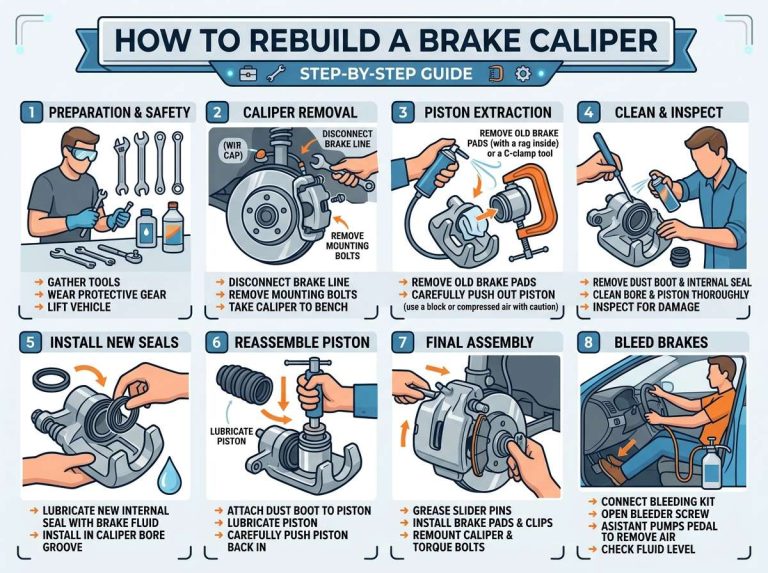
Installation requires basic tools and some familiarity with brake work, so many buyers choose a mechanic. Tasks include lifting the vehicle safely, removing the wheels, compressing the caliper piston and fitting the new pads. Anyone unsure about these steps should hire a professional, since brakes are a safety system and mistakes can be serious.
Value for money
At $52.99, this set sits in the middle of the price range for this round-up. The 12 month or 12,000 mile limited warranty adds some reassurance. Buyers who value quiet, low-dust pads for a family car may see this as fair value. Buyers who only need basic stopping and plan to replace pads often may find a lower-cost option more practical.
Pros
- Carbon fiber ceramic pads aim for quiet, smooth braking
- Low-dust formula keeps wheels cleaner
- Includes installation hardware
- Limited warranty offers some added confidence
Cons
- Only fits specific front brake setups, so fitment must be confirmed
- Requires basic brake knowledge or a professional fitting
- Costs more than basic replacement pads
- Ceramic feel may differ from the feel of the original pads
3. Bendix Premium SBC1210 Ceramic Front Brake Pads: best for Toyota and Lexus owners
What this product is and who it suits
The Bendix Premium SBC1210 is a ceramic front brake pad designed to match original equipment specifications for a list of Lexus, Pontiac, Scion and Toyota models. It suits owners of those vehicles who want a direct replacement rather than a performance upgrade.
If your vehicle is not on the listed application chart, this pad is not the right choice. Check the fitment details against your exact make, model, engine and trim before you order. A pad that fits a similar car may still differ in shape or mounting points.
Best use cases
This pad fits everyday commuting and general driving. It is built for normal road use, not heavy towing or track work. For most owners, it works as a straightforward front brake replacement.
Typical examples include school runs, errands, highway trips and daily travel to work. In these situations, the pad’s steady, predictable behavior matters more than maximum stopping power. If you regularly carry heavy loads or drive hard on mountain roads, you may want a pad rated for that heavier duty.
Key features in simple words
The ceramic formula is intended to reduce dust and noise. The maker says it offers smooth braking and cleaner wheels compared with conventional pad materials. Ceramic pads are popular for their calm operation in city traffic.
The listing says the pads are tested to meet or exceed industry standards. It also claims resistance to brake fade, which helps the brakes respond consistently during repeated stops. These are the claims the product makes, and buyers can judge them against their own driving.
In plain terms, ceramic material is a dense, non-metallic compound that tends to produce a fine, light-colored dust. Metallic pads often produce darker dust and can be louder. The trade-off is that ceramic pads usually cost more than basic organic pads, though this model sits at a moderate price point.
Daily driving feel
Owners of ceramic pads often describe a soft, steady pedal feel. Dust tends to stay low, and noise is usually minimal once the pads have bedded in. Drivers in stop-and-go traffic often appreciate this calm behavior.
Bedding in means making a series of moderate stops for the first several hundred miles so the pad surface and rotor transfer an even layer of friction material. Skipping this step can lead to squeal or uneven braking. Follow the instructions included with the pads or the procedure your brake maker recommends.
Installation and ease of use
Because the pads are designed to OE specifications, the fit is usually straightforward for listed models. Buyers should still confirm compatibility before ordering. Installation needs standard hand tools and a careful approach to the caliper.
Replace pads in axle sets, meaning both front wheels together, so braking stays even from side to side. Inspect the rotors, slide pins and hardware at the same time. If you are not comfortable working on brakes, a qualified technician can complete the job in a standard service visit.
Value for money
At $29.88, this is one of the lower-priced options here. For owners of the listed vehicles, it offers a practical balance of cost and expected performance. It is a sensible choice when the goal is a reliable, quiet replacement without paying for extra features.
Prices can change, so check the current listing before you buy. Compare the total cost, including any tools or labor you may need, rather than the pad price alone.
Pros
- Designed to OE specifications for a direct fit
- Ceramic formula aims for low dust and quiet braking
- Competitively priced for the category
- Tested to meet or exceed listed industry standards
Cons
- Limited to the listed Lexus, Pontiac, Scion and Toyota models
- Not designed for high-performance or towing use
- Ceramic pads may not grip as aggressively as metallic pads in cold conditions
- Still requires confirmed fitment before purchase
4. Bendix Premium SBC1084 Ceramic Front Brake Pads: best for trucks and pickups
What this product is and who it suits
The Bendix Premium SBC1084 is a ceramic front brake pad for select Chrysler, Dodge, Mitsubishi and Ram vehicles. It is also built to OE specifications, which means the design aims to match the original pads the manufacturer fitted at the factory. It suits truck and pickup owners who want a dependable front pad for regular use.
If you own one of the listed vehicles and you want a replacement that follows the factory design, this pad is a reasonable place to start. If your truck falls outside the compatibility list, it is not the right choice. Owners of other vehicles should look for a pad that matches their own make, model and year.
Best use cases
This pad fits daily driving, errands and light hauling in the listed vehicles. Commuting on highways and stop-and-go city traffic are both typical uses. A pickup that carries the occasional load of lumber or garden materials falls within this range as well.
Because trucks are heavier than cars, owners should pay attention to how the brakes feel under load. A loaded bed or a passenger in the cab adds weight that the brakes must slow down. The pad is meant for normal road use rather than heavy work, so drivers who regularly carry heavy loads should consider this when deciding.
Key features in simple words
Like its sibling pad, the SBC1084 uses a ceramic formula. The maker says this helps limit dust and noise and keeps wheels cleaner. Ceramic material also tends to hold up well under regular use, which is why many owners pick it for everyday driving.
Ceramic pads produce a fine, light-colored dust rather than the darker, heavier dust that some other pad types leave behind. Many owners find that this makes wheels easier to keep clean between washes. Dust levels still depend on driving habits and how often the brakes are used.
The listing claims that the pad is designed to reduce brake fade and keep braking response steady. It also says the pad is rigorously tested against industry standards. The compatibility list covers a wide range of model years, so checking the exact vehicle is important before you order.
Daily driving feel
Many truck owners value a predictable pedal feel, and ceramic pads usually provide this. The pedal tends to respond in a consistent way from one stop to the next. Predictability matters most when you are driving in traffic and need to slow down smoothly.
Noise tends to be low during normal stops. Owners may notice that the brakes feel calm and steady during everyday driving. Some squeal can occur when the pads are new or after a long period of inactivity, which is normal for most pad types.
Installation and ease of use
Installation follows the usual front brake steps: remove the caliper, replace the pads, and reinstall. Many owners with basic tools and some mechanical experience can complete the job, while others prefer a shop. Following the vehicle service manual for torque values and caliper bolt procedures is a sound habit.
Trucks can be heavier to lift and support, so safe jacking and secure stands are important. Never rely on a jack alone to hold the vehicle while you work. The fit should be checked against the vehicle list before buying, and it is wise to confirm the part number on the old pads if you have them.
Value for money
At $32.89, this pad costs a little more than the SBC1210 but remains well within the budget. For owners of the listed trucks, it offers OE-style performance at a fair price. Brake pads are a regular maintenance item, so a steady, moderately priced option can make sense over time.
Its value depends on if the vehicle is on the compatibility list. A pad that fits well and performs as expected is worth more than a cheaper pad that needs to be returned. Check the listing carefully before you order.
Pros
- Ceramic formula suits daily truck use
- Covers a wide range of listed model years
- OE-style design supports a direct fit
- Low dust helps keep wheels cleaner
Cons
- Compatibility is limited to specific trucks and models
- Heavier vehicles may need more attention during installation
- Not intended for towing or heavy-duty work
- Ceramic pads may feel softer than metallic pads under hard braking
5. PowerStop Z23 Performance Brake Pads Rear: best for Subaru rear brakes
What this product is and who it suits
The PowerStop Z23 rear pads are carbon fiber ceramic pads made for the rear brakes of certain Subaru models. The set includes two pads and installation hardware. Before you buy, check the product listing to confirm that your exact model and year range are covered.
This product suits drivers who want a quiet, clean rear brake upgrade for everyday driving. It is a practical choice for owners who value low brake dust and a steady feel without needing track-level performance.
Best use cases
These pads fit daily commuting, weekend trips and regular road use. Rear brakes usually do less work than front brakes, so the pads see moderate heat and wear in normal driving. That makes a ceramic compound a reasonable match for most street driving.
They are less suited to heavy towing, repeated hard stops or frequent track days. In those situations, a pad with a higher friction rating for sustained heat may be a better fit. Matching the pad to how you actually drive is the simplest way to get good results.

Peterson is an automotive enthusiast and auto parts reviewer with a passion for vehicle maintenance, upgrades, and performance. He enjoys researching and testing car parts, tools, and accessories to help drivers make informed buying decisions. Through AutoPartsTalk.com, Peterson shares honest reviews, practical maintenance tips, and expert guides to keep vehicles running safely and efficiently.