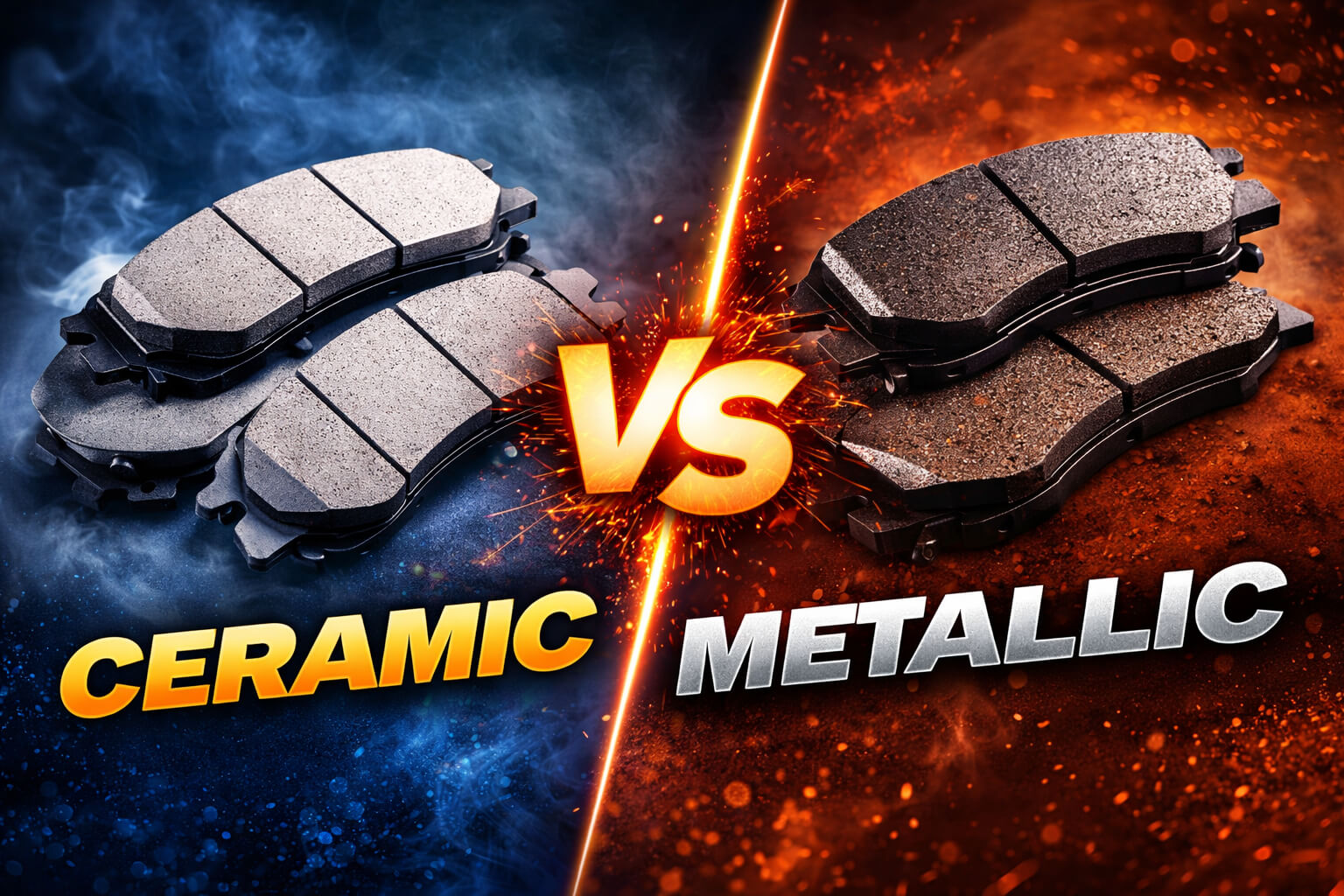
Ceramic vs Metallic Brake Pads
Your car starts rolling down the street. You press the brake pedal. The vehicle slows down and stops. Simple, right? But have you ever thought about what makes this happen?
Inside your wheels, brake pads press against metal discs called rotors. This friction creates the stopping power you need. The type of brake pads you use makes a huge difference in how your car performs.
Today, we’re going to talk about two popular options: ceramic brake pads and metallic brake pads. Both work well, but they work differently. Each has its own strengths and weaknesses.
Let’s break it down in plain English.
What Are Brake Pads Anyway?
Before we compare the two types, let’s get the basics straight.
Brake pads are flat pieces that sit inside your brake calipers. When you step on the brake pedal, hydraulic pressure pushes these pads against the brake rotors. The rotors are the shiny metal discs you can sometimes see through your wheel spokes.
The pads grip the rotors tightly. This friction converts your car’s motion into heat. That heat escapes into the air, and your car slows down.
Every brake pad contains different materials. These materials determine how the pad performs. Some are better for daily driving. Others work best for racing or heavy towing.
Metallic Brake Pads Explained
Metallic brake pads go by a few different names. People call them semi-metallic pads or just metal pads. Don’t let the name fool you, though. They’re not pure metal.
These pads contain a mixture of materials. You’ll find steel fibers, copper, iron, and other metals mixed together. A binding resin holds everything in place. The metal content usually ranges from 30% to 65%.
The rest of the pad contains friction modifiers and other compounds. These help the pad work smoothly and last longer.
Metal pads have been around for decades. Mechanics and car enthusiasts know them well. They’re reliable and proven technology.
How Metallic Pads Perform
Metal brake pads excel at stopping power. The metal content creates strong friction against the rotors. This means shorter stopping distances when you need to brake hard.
They handle heat extremely well. When you brake repeatedly on mountain roads or during spirited driving, the pads get hot. Really hot. Metal pads can take this heat without fading or losing effectiveness.
These pads also last a long time. The metal content resists wear better than softer materials. You won’t need to replace them as often as some other types.
But metal pads come with trade-offs. They create more brake dust. That black powder you see coating your wheels? That’s brake dust. Metal pads produce quite a bit of it.
They’re also noisier. Metal against metal creates squealing and squeaking sounds. Some people don’t mind this. Others find it annoying.
The rotors wear faster with metal pads too. The hard metal surface acts like sandpaper on the rotors. You might need to replace your rotors more often.
Ceramic Brake Pads Explained
Ceramic brake pads are newer technology. They became popular in the past few decades as manufacturers looked for quieter, cleaner alternatives.
These pads contain ceramic fibers mixed with bonding agents. Copper fibers often join the mix to improve heat transfer. Some formulas include other non-ferrous materials too.
The ceramic material is similar to pottery clay after it’s been fired in a kiln. It’s hard, dense, and stable at high temperatures.
Car makers started using ceramic pads on luxury vehicles first. Now they’re common on many everyday cars and trucks.
How Ceramic Pads Perform
Ceramic pads run much quieter than metal pads. The softer material creates less vibration and noise. You’ll rarely hear squealing or grinding sounds.
They produce very little brake dust. What little dust they make is lighter in color. It doesn’t stick to wheels as badly as the dark dust from metal pads. Your wheels stay cleaner longer.
Ceramic pads are gentler on rotors. The softer material wears down the metal discs more slowly. Your rotors last longer, saving you money on replacements.
These pads perform consistently across different temperatures. They work well in cold weather and stay effective when things heat up.
But ceramic pads aren’t perfect. They cost more than metal pads upfront. The manufacturing process is more complex and expensive.
They don’t handle extreme heat as well as metal pads. During very hard, repeated braking, ceramic pads can fade slightly. This isn’t a problem for normal driving, but track enthusiasts notice it.
Ceramic pads also wear out faster than metal pads. The softer material erodes more quickly. You’ll replace them more often, though your rotors will thank you.
Breaking Down the Key Differences
Let’s put these two types side by side and look at specific categories.
Noise Levels
Metal pads make noise. That’s just how they work. The hard metal creates vibrations that turn into squeals and squeaks. Some drivers don’t care. Others hate it.
Ceramic pads operate almost silently. The softer material dampens vibrations before they become noise. Your neighbors won’t glare at you when you pull into the driveway late at night.
Winner for quiet operation: Ceramic pads, hands down.
Brake Dust Production
Metal pads create lots of dark, sticky brake dust. This dust covers your wheels and makes them look dirty fast. You’ll spend more time cleaning if you care about appearance.
Ceramic pads produce minimal dust. The small amount they create is light-colored and less sticky. Your wheels stay cleaner between washes.
Winner for cleanliness: Ceramic pads by a mile.
Stopping Power
Metal pads bite hard. They create strong, immediate friction. This translates to excellent stopping power, especially during hard braking.
Ceramic pads stop your car effectively too. For normal driving, you won’t notice much difference. But under extreme conditions, metal pads have the edge.
Winner for raw stopping power: Metal pads take this one.
Durability and Lifespan
Metal pads last longer before wearing out. The hard metal content resists erosion. You might get 70,000 miles or more from a set of quality metal pads.
Ceramic pads wear faster. You might replace them every 40,000 to 50,000 miles. The exact lifespan depends on your driving style and conditions.
Winner for pad longevity: Metal pads win here.
Rotor Wear
Metal pads are tough on rotors. They grind away at the metal discs like sandpaper. You’ll replace rotors more often.
Ceramic pads treat rotors gently. The softer material wears itself down instead of eating away at the rotors. Your rotors last much longer.
Winner for rotor protection: Ceramic pads protect your investment.
Heat Management
Metal pads handle extreme heat like champions. They dissipate heat quickly and maintain performance even when glowing hot. Track drivers and people who tow heavy loads appreciate this.
Ceramic pads work well at moderate temperatures. They start to fade a bit under extreme, sustained heat. For street driving, this isn’t an issue.
Winner for heat resistance: Metal pads dominate.
Price
Metal pads cost less upfront. You’ll pay less when buying and installing them.
Ceramic pads run more expensive. The materials and manufacturing process drive up the cost.
Winner for initial cost: Metal pads are cheaper.
Performance in Different Weather
Metal pads work in all weather conditions. Cold, hot, wet, or dry – they perform consistently.
Ceramic pads also handle different weather well. They actually work better than metal pads in very cold conditions. They don’t need as much warmup time.
Winner for weather versatility: It’s basically a tie.
Who Should Use Metallic Brake Pads?
Metal pads make sense for certain drivers and situations.
Performance enthusiasts love metal pads. If you drive aggressively or take your car to the track, metal pads won’t let you down. They handle the heat and abuse.
People who tow heavy trailers need metal pads. Towing creates lots of heat during braking. Metal pads manage this heat without fading.
Budget-conscious drivers appreciate metal pads. They cost less initially and last longer before wearing out.
Drivers who don’t care about brake dust or noise will be happy with metal pads. If you rarely wash your car and don’t mind some squealing, metal pads work great.
Truck and SUV owners often prefer metal pads. These heavier vehicles benefit from the extra stopping power and heat resistance.
Who Should Use Ceramic Brake Pads?
Ceramic pads suit different needs and preferences.
Daily commuters love ceramic pads. The quiet operation and clean wheels make everyday driving more pleasant.
People who care about their car’s appearance prefer ceramic pads. Less brake dust means prettier wheels without constant cleaning.
Luxury car owners usually want ceramic pads. These vehicles deserve the smooth, quiet braking that ceramics provide.
Drivers who want to protect their rotors should choose ceramic pads. The softer material saves money on rotor replacements over time.
Anyone who values peace and quiet will appreciate ceramic pads. No squealing, no grinding – just smooth, silent stops.
The Cost Factor Over Time
Let’s talk about the real cost difference. It’s not just about the sticker price.
Metal pads cost less upfront. You might pay $50 to $100 for a set of quality metal pads. Installation might add another $100 to $200.
Ceramic pads cost more initially. Expect to pay $100 to $200 for the pads themselves. Installation costs about the same.
But here’s the twist: you need to consider rotor replacement costs too.
Metal pads wear down rotors faster. You might replace rotors every other brake job. New rotors cost $150 to $300 or more, depending on your vehicle.
Ceramic pads protect rotors. You might skip one or two rotor replacements compared to metal pads. This saves significant money over time.
You’ll replace ceramic pads more often, though. They wear out faster than metal pads.
Do the math for your specific situation. The total cost over several years might actually favor ceramic pads, even though they cost more upfront.
Installation and Compatibility
Both types of pads install the same way. A mechanic can swap them in about an hour or two.
You can also install them yourself if you’re handy with tools. The process isn’t complicated. You’ll need a jack, jack stands, basic hand tools, and some mechanical know-how.
Most vehicles accept both types of pads. Check your owner’s manual or ask a mechanic to be sure. Some high-performance cars work better with specific pad types.
When you switch from one type to another, you might need to bed in the new pads. This means doing several gentle stops to transfer a thin layer of pad material onto the rotors. This helps the pads work their best.
Performance Under Special Conditions
Let’s look at how these pads handle specific challenges.
Mountain Driving
Driving down long, steep mountain roads tests your brakes hard. Constant braking creates massive heat.
Metal pads excel here. They resist fade even after miles of continuous braking. The heat doesn’t bother them.
Ceramic pads work okay for occasional mountain trips. But if you live in the mountains or drive them regularly, metal pads make more sense.
City Driving with Lots of Stops
Stop-and-go traffic means constant braking. But the braking isn’t usually extreme.
Ceramic pads shine in this environment. Quiet operation matters when you’re stuck in traffic. The pads stay cool between stops and work smoothly.
Metal pads work fine too, but the noise and dust become annoying in city driving.
Highway Cruising
Long highway drives mean less braking overall. But when you do brake, you’re doing it from high speeds.
Both pad types handle highway driving well. The differences matter less here because you’re not braking constantly.
Racing and Track Use
Taking your car to the track? Metal pads are the clear choice.
The extreme heat from repeated hard braking will overwhelm ceramic pads. They’ll fade and lose effectiveness.
Metal pads thrive under these conditions. Many track enthusiasts upgrade to even more aggressive racing pads.
Common Myths Debunked
Let’s clear up some confusion about brake pads.
Myth: Ceramic pads stop your car faster.
Not true. Metal pads usually provide better initial bite and stopping power. Ceramic pads stop you just fine, but metal pads have the edge in raw performance.
Myth: Metal pads damage your rotors.
They do wear rotors faster, but they don’t damage them. The wear is normal. You’ll just replace rotors more often.
Myth: Ceramic pads don’t work well in the rain.
False. Both types work fine in wet conditions. Modern brake systems handle water effectively regardless of pad type.
Myth: You can’t mix pad types on your car.
Technically you can put different types on front and rear. But it’s not recommended. Stick with one type for consistent braking feel.
Myth: More expensive pads are always better.
Not necessarily. The best pad depends on your needs. Sometimes cheaper metal pads outperform expensive ceramics for your specific use case.
Making Your Decision
So which should you choose? Here’s a simple decision tree.
Ask yourself these questions:
Do you drive aggressively or tow heavy loads? Go with metal pads.
Do you value quiet operation and clean wheels? Choose ceramic pads.
Is budget your main concern? Metal pads cost less overall.
Do you want to protect your rotors? Ceramic pads are gentler.
Do you drive in the mountains frequently? Metal pads handle the heat better.
Is your car a daily driver on normal roads? Ceramic pads make driving more pleasant.
There’s no wrong answer. Both types work well. The right choice depends on your priorities.
Maintenance Tips for Both Types
No matter which pads you choose, take care of them properly.
Inspect your brakes regularly. Look at the pads through the wheel spokes. Make sure you have at least a quarter inch of pad material left.
Listen for warning sounds. Squealing might mean your pads are getting low. Grinding means you’ve worn through the pads completely – get them replaced immediately.
Keep your brake fluid fresh. Old fluid absorbs moisture and reduces braking performance. Flush and replace it every couple of years.
Clean your wheels regularly. Even ceramic pads create some dust. Don’t let it build up.
Bed in new pads properly. Follow the break-in procedure to get the best performance.
Drive smoothly. Aggressive braking wears pads faster and creates more heat. Gentle, progressive braking extends pad life.
The Future of Brake Pad Technology
Brake pad technology keeps improving. Manufacturers develop new materials and formulas constantly.
Some companies make hybrid pads that combine ceramic and metal materials. These try to offer the best of both worlds.
Carbon-ceramic pads appear on exotic sports cars. They’re incredibly expensive but offer amazing performance.
Low-copper formulas are becoming standard. Environmental regulations limit copper content in brake pads. New materials replace the copper while maintaining performance.
Electric vehicles need special brake pads. Regenerative braking reduces brake wear, so the pads need to work well even when used infrequently.
The brake pad you choose today might be obsolete in a few years. That’s fine. Technology marches forward.
Final Thoughts
Ceramic and metallic brake pads both do the same job – they stop your car safely. But they do it differently.
Metal pads offer raw performance, heat resistance, and long pad life. They’re noisier, create more dust, and wear rotors faster.
Ceramic pads provide quiet operation, clean wheels, and rotor protection. They cost more upfront and wear out faster.
Think about how you drive. Consider what matters most to you. The right brake pad is the one that fits your needs best.
Don’t overthink it. Both types will stop your car safely. You can always switch to the other type next time if you’re not happy.
Talk to your mechanic. They know your car and your driving area. They can make a solid recommendation.
Your brakes keep you safe on the road. That’s what really matters. Metal or ceramic, just make sure you maintain them properly and replace them when needed.
Safe driving starts with good brakes. Now you know enough to make a smart choice about what goes in your wheels.
Quick Reference Guide
Choose Metallic Pads If:
- You drive aggressively or race your car
- You tow heavy trailers regularly
- You want maximum heat resistance
- You want the longest pad lifespan
- Initial cost matters more than total cost
- Noise and dust don’t bother you
Choose Ceramic Pads If:
- You want quiet braking
- You care about wheel cleanliness
- You want to extend rotor life
- You drive normally on regular roads
- You value comfort over raw performance
- You’re willing to pay more upfront
Both types work great. Pick the one that matches your priorities. Your car will stop safely either way.
Now get out there and drive with confidence, knowing you’ve got the right brake pads for your needs.