How to Cool Down a Car Engine Quickly?
Your car’s engine runs hot. Really hot. We’re talking about temperatures that can reach 200 degrees Fahrenheit or higher during normal operation. Sometimes, your engine gets too hot, and that’s when problems start. Whether you’re stuck in traffic on a scorching day or your temperature gauge is climbing faster than you’d like, knowing how to cool down your engine quickly can save you from expensive repairs and dangerous situations.
This guide walks you through everything you need to know about engine cooling. You’ll learn why engines overheat, what steps to take right now, and how to prevent this problem from happening in the future.
Why Does Your Engine Get So Hot?
Before we jump into the solutions, let’s talk about why your engine heats up in the first place.
Your car’s engine burns fuel to create power. This burning process generates massive amounts of heat. Your engine’s cooling system works hard to remove this heat and keep everything running at the right temperature. The whole system includes your radiator, coolant, thermostat, water pump, cooling fans, and hoses.
When something breaks down in this system, heat builds up fast. Your engine temperature rises, and that’s when you get an overheating problem.
Common reasons engines overheat include:
- Low coolant levels due to leaks or evaporation
- A broken thermostat that gets stuck
- A faulty water pump that fails to circulate coolant
- A bad radiator that can’t release heat properly
- Broken electric fans that don’t turn on when needed
- Clogged hoses that block coolant flow
- A loose or broken serpentine belt
- Driving with a heavy load in extreme heat
- Sitting in traffic with a weak air conditioning system
- A damaged radiator cap that creates pressure problems
Most of these issues sneak up on you. You might notice your temperature gauge climbing slowly at first. Then suddenly, you’re looking at an overheating engine.
What To Do Right Now When Your Engine Starts Overheating
If your temperature gauge is creeping up or your warning light just came on, act fast. Here’s what to do:
Turn Off The Air Conditioning
Your AC system makes your engine work harder. The compressor runs off your engine’s power, pulling energy away from the cooling fans. When your engine is overheating, shut off the AC immediately. This reduces the load on your engine and lets the cooling system focus on temperature control.
Turn On The Heater
This sounds backward, but it works. Your car’s heater pulls heat away from the engine and pumps it into your cabin. Blast that heater on high. Open your windows if needed. This simple step helps transfer engine heat out of your cooling system.
Ease Off The Gas
Stop aggressive driving. Reduce your speed and avoid rapid acceleration. Hard driving makes your engine work harder and creates more heat. Calm, gentle driving reduces engine strain and heat production. You want your engine to do less work, not more.
Find A Safe Spot
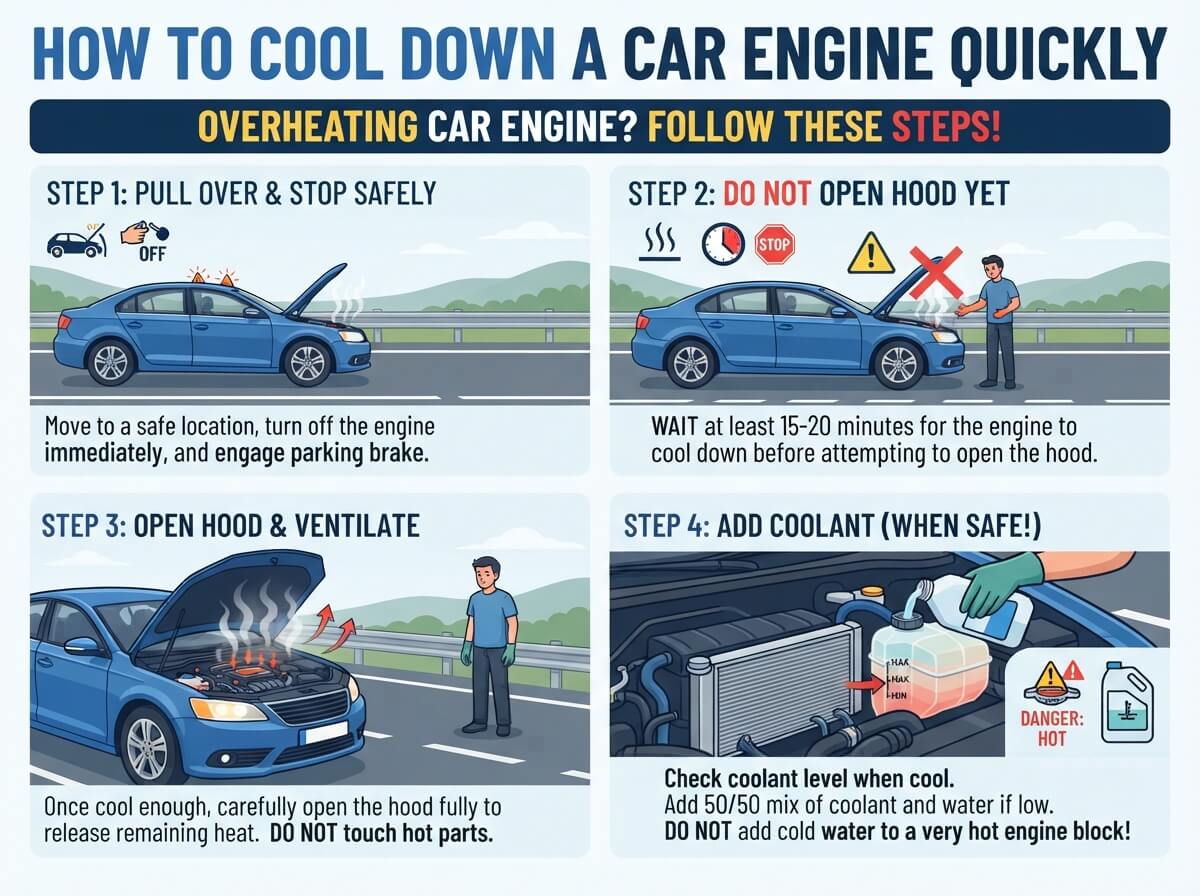
Look for a place to pull over safely. A parking lot is ideal. Get away from traffic and find a shaded area if possible. Park your car somewhere safe and turn off the engine immediately. Let it cool down.
Don’t Panic If Steam Appears
Seeing steam come from under your hood looks scary, but don’t panic. Steam is just water vapor rising from hot coolant. It’s a sign your engine is very hot, but it’s not an explosion waiting to happen. Just turn off the engine and let it cool.
Let Your Engine Cool Naturally (The Right Way)
Here’s what happens next: you wait. This step tests your patience, but it’s essential for safety.
Turn off your engine and open your hood to allow airflow. Crack open your windows a bit to help with ventilation. The heat needs somewhere to go. Let your engine sit for at least 15 to 20 minutes. The longer you wait, the better. Some mechanics recommend waiting 30 minutes or more.
Don’t touch anything under the hood yet. The engine block, hoses, coolant, and metal parts are extremely hot right now. You can get serious burns from touching them or even from the steam they produce.
During this cooling period, your radiator fans might keep running. That’s normal and actually helpful. Let them work.
Check Your Coolant Level Safely
After your engine cools down, it’s time to check your coolant. This tells you whether you have a leak or a low level.
Find your coolant reservoir. It’s usually a clear plastic tank with “coolant” or “antifreeze” written on it. Look at the level marks on the side. Your coolant should be between the minimum and maximum lines.
Never open the radiator cap directly while your engine is hot. Wait until your engine is completely cool. The coolant inside is pressurized, and opening it while hot can cause serious burns from hot liquid spraying out.
If your coolant level is low, add more. Use the coolant type your car manual recommends. Don’t mix different types of coolant. Add it to the reservoir tank, not the radiator cap. The reservoir feeds coolant to your cooling system automatically.
Additional Cooling Strategies For Severe Overheating
If your engine is really hot, you need more aggressive cooling methods.
Run Water Over The Radiator (Carefully)
Some people pour water on the radiator to cool it down faster. This works, but be careful. Use cool water, not ice-cold water. The temperature difference can crack the radiator or engine block. Pour water gently over the radiator core while your engine is off. Don’t pour water directly on the engine itself.
Actually, this method is risky. Unless you know what you’re doing, skip it. Letting your engine cool naturally is safer.
Use Ice Packs Or Cold Towels
Wrap ice packs or cold, wet towels around the radiator hose. The cold helps pull heat away from the coolant. This works slowly but safely. Never use dry ice, which can damage components.
Drive Slowly To A Mechanic
If you’re close to a repair shop, you might drive there slowly with the windows down and heater on high. Keep your speed under 30 miles per hour. Stop every few minutes to let the engine cool. This approach only works if you’re very close to help.
Preventing Your Engine From Overheating
Prevention beats dealing with overheating every time. Here’s how to keep your engine cool:
Check Your Coolant Regularly
Make checking your coolant a habit. Do it once a month when your engine is cool. Look at the level and the color. Healthy coolant is usually bright green, orange, or pink depending on the type. Brown or dirty-looking coolant means it needs a flush and refill. Old coolant loses its ability to absorb heat and protect your engine.
Maintain Your Cooling System
Your entire cooling system needs care. That includes your radiator, hoses, water pump, thermostat, and cooling fans. Have a mechanic inspect these parts every time you get regular maintenance. Replace worn hoses before they fail. A broken hose causes sudden coolant loss and rapid overheating.
Keep Your Radiator Clean
Dirt and debris build up on your radiator’s outer surface. This blocks airflow and reduces cooling efficiency. Clean your radiator gently with a soft brush or low-pressure water. Never use high-pressure water that can damage the fins. A clean radiator works much better.
Check Your Thermostat
Your thermostat tells your cooling system when to start and stop cooling. A stuck thermostat causes temperature problems. If your temperature gauge stays high even after your engine cools, your thermostat might be broken. Get a mechanic to test it.
Replace Your Serpentine Belt
This rubber belt drives your water pump and cooling fans. A worn belt can slip and not provide enough power to these components. If your belt looks cracked or frayed, replace it. Regular belt replacement prevents cooling failures.
Make Sure Your Fans Work
Electric cooling fans should kick in when your engine temperature rises. Listen for them running after you shut off your engine. If you never hear them, they might be broken. A broken fan means your radiator can’t cool well, especially in traffic.
Use The Right Coolant Concentration
Your coolant mixture matters. Most people run a 50/50 mix of coolant and water. This balance provides heat absorption and freeze protection. Too much water makes the coolant less effective at absorbing heat. Too much coolant concentrate can cause the same problem.
Park In Shade
When you park, try to find shade. Direct sunlight makes your engine compartment much hotter. When you start driving again, your cooling system has less heat to fight. This simple habit reduces engine stress, especially in extreme heat.
Avoid Extreme Driving Conditions
Towing heavy loads, driving in stop-and-go traffic, or climbing steep hills creates extra engine heat. These activities work your engine hard. If you must do these things, keep an eye on your temperature gauge. Give your engine breaks to cool down. Highway driving is easier on your cooling system than city driving.
Use Quality Engine Oil
Your oil also helps cool your engine by removing some heat. Thick, dirty oil doesn’t work well. Fresh oil with the right viscosity improves heat management. Change your oil on schedule and use the grade your manual recommends.
When To Call A Professional
Some cooling problems need professional help. Don’t ignore these situations:
- Your temperature gauge stays high even after cooling
- You see green, orange, or pink fluid leaking under your car
- Your car keeps overheating repeatedly
- Your cooling fans never seem to run
- Your radiator has visible damage or cracks
- Your hoses are soft, mushy, or falling apart
- You smell sweet odors coming from your engine
- Your heater blows cold air when it should be hot
Any of these signs point to cooling system problems that need a mechanic’s attention. Driving with a broken cooling system risks complete engine failure, which costs thousands of dollars to fix.
Key Takeaways
Cooling down your overheating engine requires calm action and patience. When your engine temperature climbs, turn off the AC, turn on the heat, ease off the gas, and find a safe place to park. Let your engine cool naturally for at least 15 to 20 minutes before checking anything. Add coolant if levels are low.
The best approach is preventing overheating problems before they happen. Check your coolant monthly, maintain your cooling system parts, keep your radiator clean, and drive sensibly in extreme conditions. These steps keep your engine running at the right temperature and prevent expensive repairs.
Your car’s cooling system is one of its most important features. Treat it right, and your engine will run reliably for years. Ignore it, and you’ll face breakdowns at the worst possible times. The choice is yours, and the solution starts with paying attention to your temperature gauge.
Final Thoughts On Engine Temperatures
Engine overheating happens to almost every driver eventually. Now you know what to do when it happens to you. You know the causes, the immediate steps to take, and how to prevent it from happening again.
Remember: when in doubt, pull over, turn off your engine, and wait. Your engine can wait for you to cool down. Rushing things leads to damage. Take time to address cooling problems properly, and your car will reward you with reliable performance for a long time to come.
Stay cool, and keep your engine cooler.