How to Clean Spark Plug Holes?
Your car’s engine is like the heart of your vehicle. It keeps everything running, and spark plugs play a huge role in making that happen. But here’s the thing—your spark plugs sit inside spark plug holes, and these holes can get dirty and gunked up over time. When that happens, your engine doesn’t run as smoothly as it should.
If you’ve never tackled this job before, don’t worry. Cleaning spark plug holes is totally doable for beginners. You don’t need fancy equipment or years of experience. Just follow along, and you’ll have clean spark plug holes in no time.
Why Your Spark Plug Holes Need Cleaning
Let’s talk about what happens inside your engine. Your spark plugs fire thousands of times each day, creating the tiny explosions that power your engine. All that action creates residue and carbon buildup. Over time, dirt, oil, and debris collect around the spark plug holes.
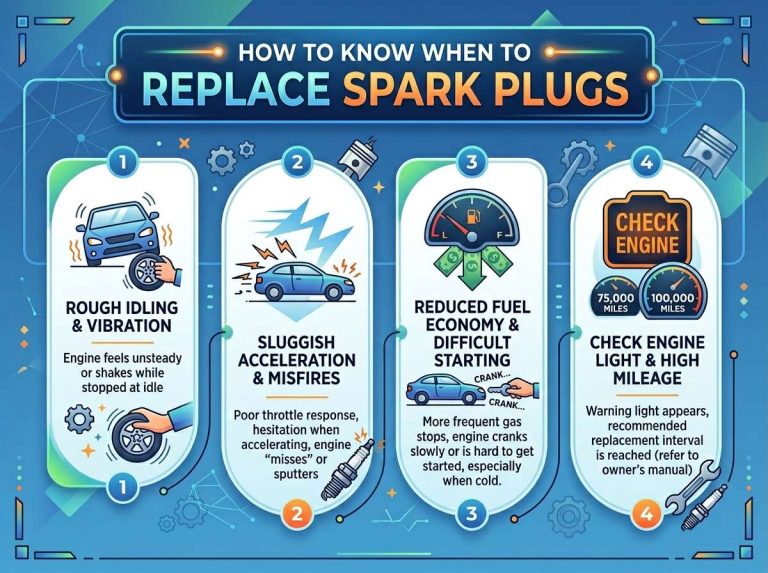
This buildup causes real problems. Your engine might start rough, stumble when you accelerate, or just feel sluggish. Fuel economy can drop, and your engine might even misfire. The spark plugs can’t do their job properly when the holes are clogged with gunk.
Regular engine maintenance includes cleaning spark plug holes. This simple task keeps your spark plugs working effectively and your engine running strong. Think of it as keeping your car’s heart healthy.
Tools and Supplies You’ll Need
Before you start, gather everything you need. Having the right equipment makes this job quick and easy.
Tools:
- Socket wrench set
- Spark plug socket
- Ratchet handle
- Spark plug wire puller or boot removal tool
- Small wire brush or detail brush
- Compressed air can
- Shop towels or clean rags
- Safety glasses
- Work gloves
- Container for keeping track of spark plug wires
Supplies:
- Gasket scraper or plastic scraper
- Contact cleaner spray
- Engine degreaser
- Small flashlight or work light
You probably have most of these items already. The compressed air can is the real MVP here—it blasts out stubborn dirt and debris that you can’t reach by hand.
Safety First: Preparation Steps
Before you dig into your engine bay, take these safety steps seriously. They keep you safe and protect your vehicle.
First, let your engine cool completely. Never work on a hot engine. The metal components get extremely hot and can burn your skin. If you just drove your car, wait at least 30 minutes before starting work.
Next, disconnect your car battery’s negative terminal. This prevents electrical shocks and keeps the engine from accidentally turning on. Just loosen the nut on the negative cable and pull it off the battery post.
Finally, put on your safety glasses and work gloves. Your eyes need protection from debris and spray, and your hands need protection from sharp edges and chemicals.
Step-by-Step Spark Plug Hole Cleaning Process
Now for the actual work. I’ll walk you through each step so nothing surprises you.
Step 1: Locate Your Spark Plugs
Pop open your hood and look for the spark plug wires or coil packs. These sit on top of your engine. If you have an older car, you’ll see thick wires running from the ignition coil to the spark plug holes. Newer cars might have coil packs sitting directly on the holes. Either way, you’re looking for the right spot.
Step 2: Remove the Spark Plug Wires or Coil Packs
This part takes patience. Grasp the spark plug wire boot (the rubber part that connects to the spark plug) and twist it gently while pulling. Don’t yank on the wire itself—grab the boot only. Twisting helps break the seal so it comes off easier.
For coil packs, look for a bolt holding it in place. Unbolt it and lift the coil pack straight up. Some clips might resist, so work it gently side to side.
As you remove each wire or coil, set it aside in order. Use your container to label which wire goes to which cylinder. This step saves you time and confusion when you reassemble everything.
Step 3: Inspect the Spark Plug Hole Area
Now take your flashlight and look into the spark plug hole. What do you see? You might find:
- Loose dirt and dust
- Oil residue
- Carbon buildup
- Debris from worn gaskets
- Water or moisture
The condition of the hole tells you how aggressive you need to be with cleaning.
Step 4: Blow Out Loose Debris
Here’s where your compressed air can shines. Point the nozzle into the spark plug hole and blast it with short bursts of air. Do this multiple times, angling the nozzle to reach different sides of the hole. All that loose dirt and dust flies right out.
Use shop towels to catch the debris as it comes out. This keeps your engine bay cleaner and prevents particles from falling back into the hole.
Step 5: Remove Stubborn Buildup
For tougher gunk, break out your gasket scraper or plastic scraper. Plastic works better than metal because it won’t damage the spark plug hole walls or the gasket surface.
Scrape gently around the hole opening. Focus on the area where the spark plug wire or coil pack sat. That’s where the most buildup lives. Take your time and be careful—you’re not trying to remove the entire gasket, just the crusty stuff on top.
Step 6: Use Compressed Air Again
After scraping, use the compressed air can again. Another round of blasting pushes out all that loosened material.
Work your way around the hole, angling the air nozzle differently each time. Keep using fresh shop towels to catch what comes out.
Step 7: Apply Contact Cleaner
Contact cleaner spray dissolves stubborn residue and carbon buildup. Spray a small amount around the spark plug hole. Don’t soak it—just enough to dampen the area.
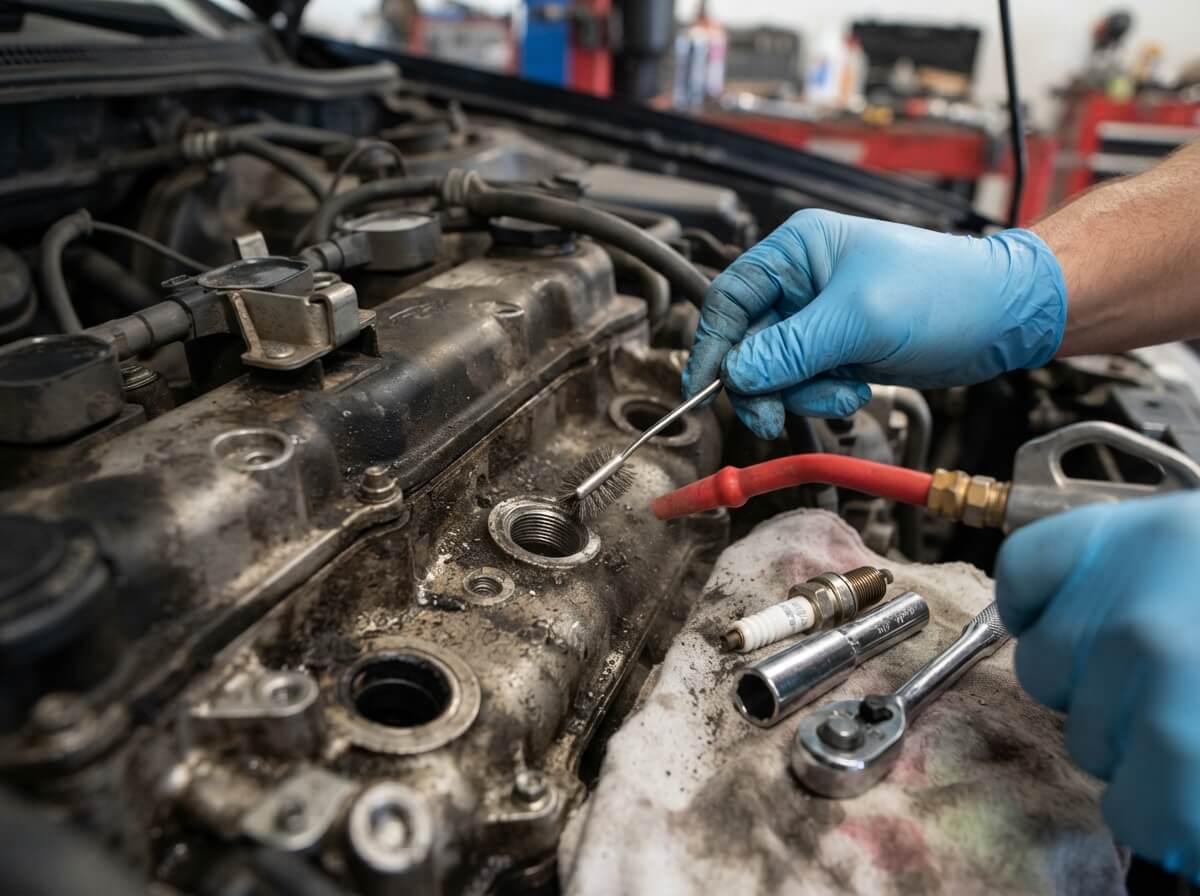
Let the cleaner sit for about 30 seconds. This gives it time to break down the gunk. Then take a small wire brush or detail brush and gently scrub the hole. Brush in all directions to loosen everything.
Step 8: Final Air Blast
Use your compressed air can one more time for the final cleanup. Blast the hole thoroughly to remove all the cleaner, dissolved residue, and any remaining debris.
Wipe the area clean with a fresh shop towel. You want the spark plug hole area to look dry and clean.
Step 9: Clean All Remaining Holes
Repeat steps 3 through 8 for each remaining spark plug hole. Your engine probably has 4, 6, or 8 spark plugs depending on your vehicle type. Work through them all.
Don’t rush this part. Each hole deserves the same attention. You’ll notice they probably get cleaner than the first one because you’ve got the technique down.
Step 10: Reassemble Everything
Once all holes are clean, it’s time to put everything back together. This is the reverse of what you did earlier.
Start with the first cylinder and work your way through in order. Connect the spark plug wire boots or reattach the coil packs exactly as they came off. Push wires onto the spark plug terminals until they seat completely. You’ll hear a click, and they won’t pull off easily.
For coil packs, bolt them back into place and make sure they sit flush against the spark plug holes.
Step 11: Reconnect the Battery
Reconnect your car battery’s negative terminal. Tighten the nut securely so it won’t vibrate loose.
Step 12: Test Your Engine
Close your hood and start your engine. Listen for any changes. A clean engine usually runs quieter and smoother. Let it idle for a minute and then take it for a short test drive.
Notice the difference? Your engine should respond better to the throttle. You might feel improved power delivery and smoother acceleration.
Common Mistakes People Make
Learning from others’ mistakes helps you avoid problems.
Don’t remove all spark plug wires at once. Always remove and clean around one spark plug hole at a time, then reassemble it before moving to the next one. This prevents you from mixing up the wire order, which can really mess up your engine.
Avoid using metal brushes or scrapers. Metal can scratch the casting and create small pits where dirt can hide. Plastic or brass brushes work great without causing damage.
Don’t skip safety precautions. Working on a hot engine or with the battery connected can lead to serious injury. Take your time with safety steps.
Never let water or excessive liquid drip into the spark plug holes. A little contact cleaner is fine, but you don’t want water sitting in the cylinder. It can damage your engine.
Don’t force anything. If a spark plug wire won’t come off, twist it more gently. If a gasket scraper hits resistance, back off. You’re working with precise components.
Maintenance Tips for the Future
Keeping your spark plug holes clean starts with good overall engine maintenance.
Change your oil regularly. Clean oil prevents buildup and residue from accumulating inside your engine. Dirty oil breaks down and leaves deposits everywhere, including around spark plug holes.
Use quality fuel. Premium fuel burns cleaner and creates less carbon buildup than low-quality gas. Less carbon means less gunk around your spark plugs.
Replace your air filter on schedule. A clogged air filter forces your engine to run rich (too much fuel), which creates more carbon deposits.
Keep your engine cool. An overheating engine creates more carbon buildup. Make sure your cooling system works properly and your radiator is clean.
Drive your car regularly at highway speeds. Short trips and constant idling allow carbon to build up faster. Regular driving at varied speeds helps your engine self-clean naturally.
Check your spark plugs every few thousand miles. Clean spark plugs prevent deposits from building up around them.
When Should You Clean Spark Plug Holes?
There’s no set schedule, but certain signs tell you it’s time.
If your engine is rough at idle, that’s a sign. When your car hesitates before accelerating, clean spark plug holes might help. A noticeable drop in fuel economy means your engine is working harder than it should, possibly due to dirty spark plug holes.
Most mechanics recommend cleaning spark plug holes whenever you change your spark plugs. Since you’re already in there, you might as well knock out a quick cleaning. Some people clean them every 50,000 miles as part of routine maintenance.
If you notice your check engine light coming on, get that diagnosed by a professional first. Sometimes spark plug hole cleaning helps, but not always. Poor fuel economy and rough running can point to dirty spark plug holes, but they can also indicate other issues.
Frequently Asked Questions
How long does spark plug hole cleaning take?
For a beginner, expect 30 to 45 minutes for the entire job. Once you’ve done it once, you can probably cut that time in half. Each hole only takes a few minutes—the hardest part is removing and reinstalling the wires or coil packs.
Can I clean spark plug holes without removing the wires?
Not really. You need to remove the wires or coil packs to access the holes properly. If you try to work around them, you won’t reach the buildup that needs to come out.
What if I can’t reach the spark plug holes with my tools?
Some engines are tight, and certain spark plugs are harder to reach than others. Take your time, use flexible wrenches or extensions, and work from different angles. If you really can’t do it yourself, a mechanic can handle it quickly.
Do I need to replace my spark plugs when I clean the holes?
Not necessarily. You can clean the holes without replacing the plugs. That said, if your spark plugs are old or worn, replace them at the same time. You’re already in there doing the work.
Can dirty spark plug holes damage my engine?
They won’t destroy your engine, but they do reduce performance and efficiency. Your engine burns more fuel and produces less power. Over a long time, constant misfires can damage cylinders and valves.
Is this a job I should take to a mechanic?
You absolutely can do this yourself if you’re comfortable working on your car. It’s not complicated or dangerous when you follow proper safety steps. That said, there’s no shame in having a professional handle it. Many shops charge $50 to $150 for this service.
Your Engine Will Thank You
Cleaning spark plug holes is one of the best DIY maintenance tasks you can tackle. It’s affordable, straightforward, and delivers real results. Your engine runs better, burns fuel more efficiently, and starts more reliably after a good cleaning.
The best part? You learn something new about how your car works. Every time you pop that hood and look at your engine, you understand it a little better. That knowledge helps you make smarter decisions about your vehicle’s care and maintenance.
Take your time, follow each step carefully, and enjoy the satisfaction of improving your car’s performance with your own two hands. Your engine is cleaner now, and you’ve saved money on a mechanic’s bill. That’s a win.
Now get out there and give your spark plug holes the cleaning they deserve.