How to Check for a Recall on Your Car?
If you own a car, you need to know about recalls. They matter more than most people realize. A recall happens when a manufacturer finds a problem with a vehicle that could affect safety or cause it to break down. The good news? Checking for recalls is simple, free, and takes just a few minutes.
This guide walks you through every way to find out if your car has a recall. You’ll learn what recalls are, why they matter, and exactly how to check your specific vehicle. By the end, you’ll feel confident knowing your car is safe.
What Is a Car Recall, Really?
Let’s start with the basics. A vehicle recall is when a car manufacturer discovers a defect in a vehicle that creates a safety risk or doesn’t meet safety standards. When this happens, the manufacturer must notify owners and fix the problem for free.
Recalls cover all kinds of issues. Some are serious safety problems like faulty brakes or steering systems. Others involve less dramatic issues like seat belt problems, window regulators that break, or fuel leaks. Some recalls even address emissions problems that affect the environment.
The National Highway Traffic Safety Administration (NHTSA) oversees all recalls in the United States. They require manufacturers to report safety defects. Owners then get notified so they can take their vehicles to dealerships for repairs.
Here’s the key thing to understand: recalls are free. The manufacturer pays for all parts and labor. You don’t pay a penny. That’s why it’s so important to check if your car has any open recalls.
Why Should You Care About Recalls?
Safety is the number one reason. Many recalls address serious problems that could hurt you or your family. Braking system failures, steering problems, and airbag defects can all lead to accidents. Checking for recalls helps keep everyone in your car safe.
Beyond safety, recalls can protect your wallet. Some recall issues get worse over time. A small problem today might become an expensive repair tomorrow. Getting a recall done now stops bigger problems from happening.
Your resale value matters too. When you sell or trade in your car, buyers often check the recall history. A vehicle with completed recalls looks better than one with open recalls. Fixing recalls now makes your car more attractive to future buyers.
Method One: Check the NHTSA Website
The easiest and fastest way to check for recalls is using the official NHTSA website. This is the government’s database that has every recall record.
Here’s how to do it:
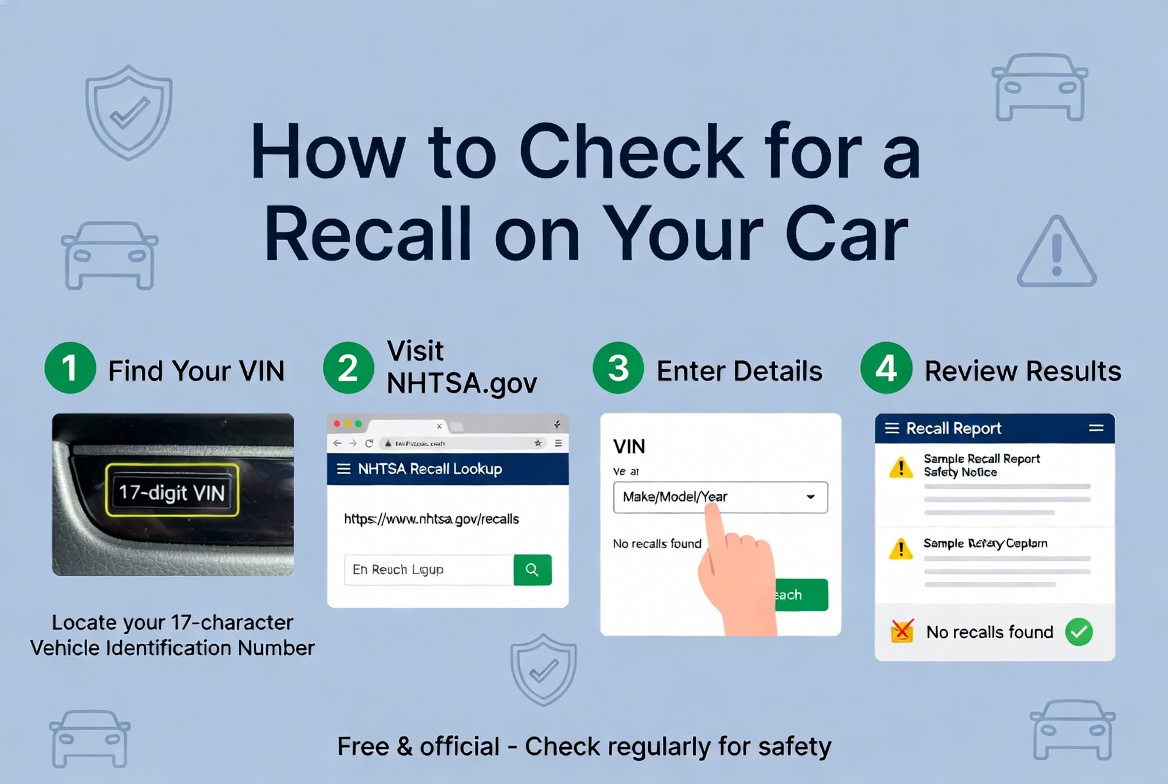
Step One: Go to www.nhtsa.gov and look for the “Check for Recalls” tool. You can search from the home page.
Step Two: Enter your vehicle identification number (VIN). This is a 17-character code that uniquely identifies your car. You can find your VIN in several places. Check the driver’s side of your windshield where it meets the dashboard. You can also find it on your car’s title and insurance documents.
Step Three: Click search. The system instantly shows you every safety recall for that specific vehicle.
Step Four: Read through the list carefully. Each recall shows what the problem is and what gets fixed. Some recalls apply only to certain production batches, so not every recall might apply to your exact car.
The NHTSA tool is reliable and official. This is the primary place manufacturers report recalls, so you’re getting information straight from the source.
Method Two: Visit Your Manufacturer’s Website
Every major car manufacturer maintains its own recall information. Going directly to the company can give you extra details.
Find your car’s manufacturer online. Look for sections labeled “Recalls,” “Service Bulletins,” or “Owner Information.” Most sites let you enter your VIN and see all recalls for your vehicle.
Manufacturer websites sometimes show recalls that went out more recently. They might also provide extra information about timing for repairs or any recalls that are being actively worked on.
Different manufacturers organize their recall information differently. Some make it super easy. Others bury it deeper in their site. If you have trouble finding it, call your car’s customer service line. They’ll help you check your vehicle’s recall status over the phone.
Method Three: Contact Your Local Dealership
Walking into your local dealership is another solid option. Any authorized dealership for your brand can check your vehicle’s recall history.
You don’t even need to bring your car. Call ahead and give them your VIN. Tell them you want to check for open recalls. They’ll look it up in their system and tell you exactly what recalls apply to you.
Many dealerships will set up an appointment to fix recalls right away. That’s actually convenient. You get one appointment that handles multiple recalls instead of making multiple trips.
This method has another benefit. Dealership staff can explain recalls in person if you have questions. They can tell you how long each repair takes and what to expect.
Method Four: Use Manufacturer Recall Lookup Tools
Some car companies offer dedicated recall lookup apps or tools. Toyota’s website, for example, lets you check recalls directly from their page. Chevy, Ford, Honda, and others have similar options.
These tools work similarly to the NHTSA database, but they focus only on that brand’s vehicles. They’re sometimes easier to use if you prefer working with the manufacturer directly.
Getting a Recall Fixed
Once you find a recall, fixing it is straightforward.
Contact your dealership or an authorized service center for that brand. Tell them you have a recall and want to schedule an appointment. Most dealerships give recall work priority because it’s paid by the manufacturer, not the customer.
Bring your car to the appointment. Get there on time and let the service team know you’re there for the recall repair.
Leave your car for the work. The mechanics will complete the repairs. Depending on what’s being fixed, this might take thirty minutes or several hours. Ask about the timeframe when you schedule.
Pick up your car. Once the work is done, your recall is complete. The service center will document that the repair was done.
Some recalls are quick fixes. A software update might take an hour. Other recalls require replacing parts, which takes longer. The dealership will give you an estimate of how long you need to wait.
If you can’t reach your local dealership, call the manufacturer’s customer service number. They can help you find a service center that handles recalls.
What If You’re Buying a Used Car?
Buying used? Always check the recall history before you buy.
Use the NHTSA website and the same process described above. Enter the VIN and look at the recall history. See how many recalls that car has had and whether they’ve all been fixed.
Ask the seller about recalls. They might have paperwork showing that recalls were completed. If the car has open recalls, negotiate with the seller. They should either get the recalls fixed or lower the price.
Never ignore recalls on a used car. Fix them right away after purchase. The good news is that the manufacturer covers the cost, regardless of who owns the car.
Common Recall Questions Answered
How often should I check for recalls? Check at least once a year. You can check more often if you want. Some people check twice yearly to be safe.
Can I check for recalls online if I don’t have the VIN handy? The NHTSA site requires a VIN to search. If you don’t have it memorized, look it up on your insurance card or title before going online.
What if my car is very old? Even old cars can have recalls. The NHTSA database goes back decades. If your vehicle is vintage or classic, it might have recalls too.
Do all recalls mean the car is unsafe to drive? Not necessarily. Some recalls are for issues that develop over time. Others involve problems that only show up in specific conditions. That said, safety recalls should get fixed promptly. Don’t put them off.
What if I can’t get an appointment at my dealership? Call the manufacturer’s customer service line. They can sometimes direct you to other authorized service centers. Some recalls are so common that independent shops might also handle them.
Will a recall repair affect my warranty? No. Recall work is covered by the manufacturer and doesn’t impact your existing warranty.
Can I file a complaint if a dealership won’t do a recall repair? Yes. You can file a complaint with NHTSA if a dealership refuses to perform a free recall repair.
Why Some People Miss Recalls
Many car owners never check for recalls. Here’s why that’s a mistake.
Some people don’t know recalls exist. If you’ve never bought a car before, you might not realize that you should check. That’s exactly why guides like this exist.
Others get the notification but ignore it. Manufacturers send letters to owners when recalls happen. If you move and don’t update your address, you might miss these letters.
Some owners think recalls aren’t important. They assume if there was a serious problem, they would have already noticed it. That’s not always true. Many defects take time to show up.
Busy schedules cause delays too. People mean to get recalls fixed but keep putting it off. Before they know it, weeks turn into months.
The Bottom Line
Checking for recalls takes less than five minutes. Fixing them is free. Yet many car owners skip this simple step.
Don’t be that person. Use one of these methods today to check if your car has any recalls. If it does, schedule an appointment immediately.
Your safety is worth those five minutes. Your car’s resale value is worth the effort. Your peace of mind is definitely worth it.
A Quick Reminder About Regular Maintenance
While you’re thinking about your car’s health, remember that recalls are just one part of vehicle care. Keep up with regular maintenance too. Change your oil, rotate your tires, and get regular inspections. Recalls fix specific defects, but good maintenance keeps your whole car running smoothly.
Stay on top of recalls and maintenance together, and your car will serve you well for years to come.
Final Thoughts
You now know exactly how to check for recalls on your car. You understand why they matter. You know where to look and what to do if you find one. Most importantly, you know that these repairs are free and can make your vehicle safer.
Don’t wait. Visit the NHTSA website or your manufacturer’s site today. Enter your VIN. See if your car needs any work. If recalls come up, contact your dealership and get them scheduled.
Your car, your wallet, and your family will thank you for taking this simple but important step.
Happy driving, and thanks for keeping safety a priority.