How to Fix a Scratched Windshield?
You’re driving down the road. The sun hits your windshield at just the right angle. That’s when you see it—a nasty scratch right in your line of sight. Your heart sinks a little. Now you’re wondering: can I fix this myself? How much will this cost? Will I need a whole new windshield?
Take a breath. You’re not alone in this. Windshield scratches happen to almost every car owner. The good news? Not every scratch requires an expensive replacement. In fact, many scratches can be fixed with simple tools and a bit of elbow grease.
This guide will walk you through everything you need to know about repairing your windshield. Whether you’re dealing with a tiny surface scratch or something slightly deeper, you’ll find practical solutions here.
What Causes Windshield Scratches?
Before we jump into fixes, let’s talk about what puts scratches on your glass in the first place. Understanding the cause helps you prevent future damage.
Dirty Wipers
Your windshield wipers are probably the most common culprit. When dirt gets trapped under the wiper blade, it acts like sandpaper against your glass. Over time, this creates fine scratches across your windshield. Old, worn wiper blades also contribute to this problem. The rubber degrades and leaves particles behind.
Road Debris
When you drive, tiny rocks and gravel get kicked up from the road. These bits of debris hit your windshield hard. A single piece of gravel moving at highway speed can leave a mark. Dust particles mixed with water also scratch glass when wipers drag them across the surface.
Careless Cleaning
This one’s tricky because you’re trying to help. Using harsh materials or the wrong cleaning technique can damage your glass. Rubbing with paper towels, dry cloths, or scouring pads causes scratches. Even some car wash brushes will scratch if they’re not maintained properly.
Automatic Car Washes
The rotating brushes in automatic car washes collect dirt and debris. When they spin against your windshield, they can leave tiny scratches. The brushes press hard against the glass, and they’re not always cleaned between cars.
Weather and Temperature Changes
Extreme heat and cold make glass expand and contract. This stress can cause hairline cracks and tiny scratches. Salt on your windshield during winter months also contributes to surface damage. Sand storms and heavy wind with dust particles also take their toll.
Age and Wear
Your windshield simply gets old. UV rays from the sun break down the top layer of glass. Normal wear and tear from constant exposure adds up over time.
Types of Windshield Scratches: Know What You’re Dealing With
Not all scratches are created equal. The type of scratch you have determines what repair method will work best.
Surface Scratches
These are the lightest kind of damage. Surface scratches sit only on the very top coating of your glass. You can barely feel them when you run your finger across the scratch. They don’t affect visibility much. Light hits them wrong, and you notice them when the sun’s bright.
Fine Hairline Scratches
These are deeper than surface scratches but still minor. You can see them clearly but they don’t create a web of cracks. Hairline scratches might catch your fingernail slightly. They’re easy to notice when light hits them at certain angles.
Deep Scratches
Deep scratches go much further into the glass. These are serious and usually require professional attention. You can feel them easily with your finger. They might feel like a groove or trench. These scratches catch dirt and grime, making them darker and more visible.
Star Cracks and Impact Damage
These aren’t scratches anymore—they’re cracks. A rock hit your windshield hard and broke the glass. These start from a central point and radiate outward like a star. This damage requires windshield replacement.
Simple Home Remedies for Minor Scratches
Let’s start with the easy stuff. If you have a minor scratch, you can try these methods at home. They cost very little and take minimal time.
Using Baking Soda and Water
Baking soda works as a mild abrasive. It’s gentle enough not to cause more damage, but strong enough to smooth minor scratches.
Here’s what to do:
Mix baking soda with water until you get a paste. The consistency should be like toothpaste. Apply the paste directly to the scratch using a soft cloth or your finger. Rub the scratch gently in circular motions for about two minutes. Don’t press hard—let the paste do the work. Rinse with clean water and dry with a microfiber cloth.
This method works best on surface scratches. You might need to repeat it several times to see results. Check your progress between applications.
Applying Nail Polish Clear Coat
Clear nail polish fills tiny scratches and protects them from dirt. It also brings back shine to the damaged area.
Apply a thin layer of clear polish directly over the scratch. Use the brush that comes with the bottle. Let it dry completely. Apply a second coat for better coverage. Once dry, use rubbing alcohol on a cotton ball to clean up any polish that got on the surrounding glass.
This is a temporary fix, not a permanent solution. The polish might peel away eventually, but it buys you time and makes the scratch less noticeable.
Using Windshield Repair Resin
This is a step up from the previous methods. Windshield repair resin actually bonds to the glass and hardens. Many car parts stores sell windshield repair kits.
Clean the scratched area thoroughly with glass cleaner. Dry completely. Apply the resin directly to the scratch according to the kit instructions. Most kits come with an applicator bottle or syringe. Fill the scratch with resin. Smooth it out with a plastic scraper. Let it cure for the time specified—usually 24 hours.
Once it hardens, the resin becomes clear and bonds to the glass. This lasts much longer than nail polish. It won’t prevent future damage, but it protects the existing scratch.
Professional Windshield Scratch Removal Techniques
If home remedies don’t work, professionals have more advanced tools and techniques.
Polishing and Buffing
Auto body shops use special polishing compounds and buffing pads. These rotate at high speeds to smooth the glass surface. A professional can remove fine scratches and hairline marks that home methods can’t touch.
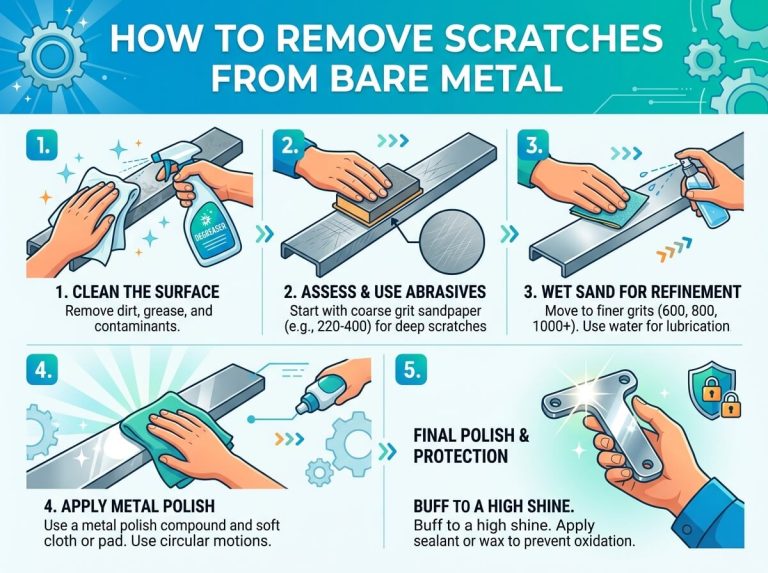
The process takes a couple of hours. The technician uses increasingly fine grits of polishing compound. They start rough and get finer as the scratch becomes less visible. The result is smooth glass that catches light evenly.
This method is safe for most scratches. It removes a tiny layer of glass to make the surface smooth. As long as the scratch isn’t too deep, buffing works great.
Windshield Restoration Service
Some shops offer professional windshield restoration. They combine multiple techniques including polishing, coating application, and specialized sealants.
These services include a protective coating that makes future scratches less likely. The coating also makes your windshield easier to clean. Some coatings make water bead off better, which helps with visibility in rain.
This is more expensive than basic polishing but gives longer-lasting results.
Windshield Replacement
When a scratch is too deep or the glass is severely damaged, replacement is your only option. Insurance often covers windshield replacement, especially if you have comprehensive coverage.
A professional will remove your old windshield and install a new one. They apply urethane sealant around the edges to keep it waterproof. The entire job takes about an hour.
New windshields are expensive without insurance. A typical replacement costs $300 to $1000 depending on your vehicle. Most insurance covers this with little or no deductible.
Do-It-Yourself Windshield Repair Kits
Several companies sell DIY windshield repair kits. These kits contain everything you need to fill small cracks and scratches.
What’s Included
Most kits come with:
- Windshield repair resin
- Applicator bottles or syringes
- Plastic scrapers and squeegees
- Instructions
- Protective film or tape
- Cleaning supplies
How to Use a Kit
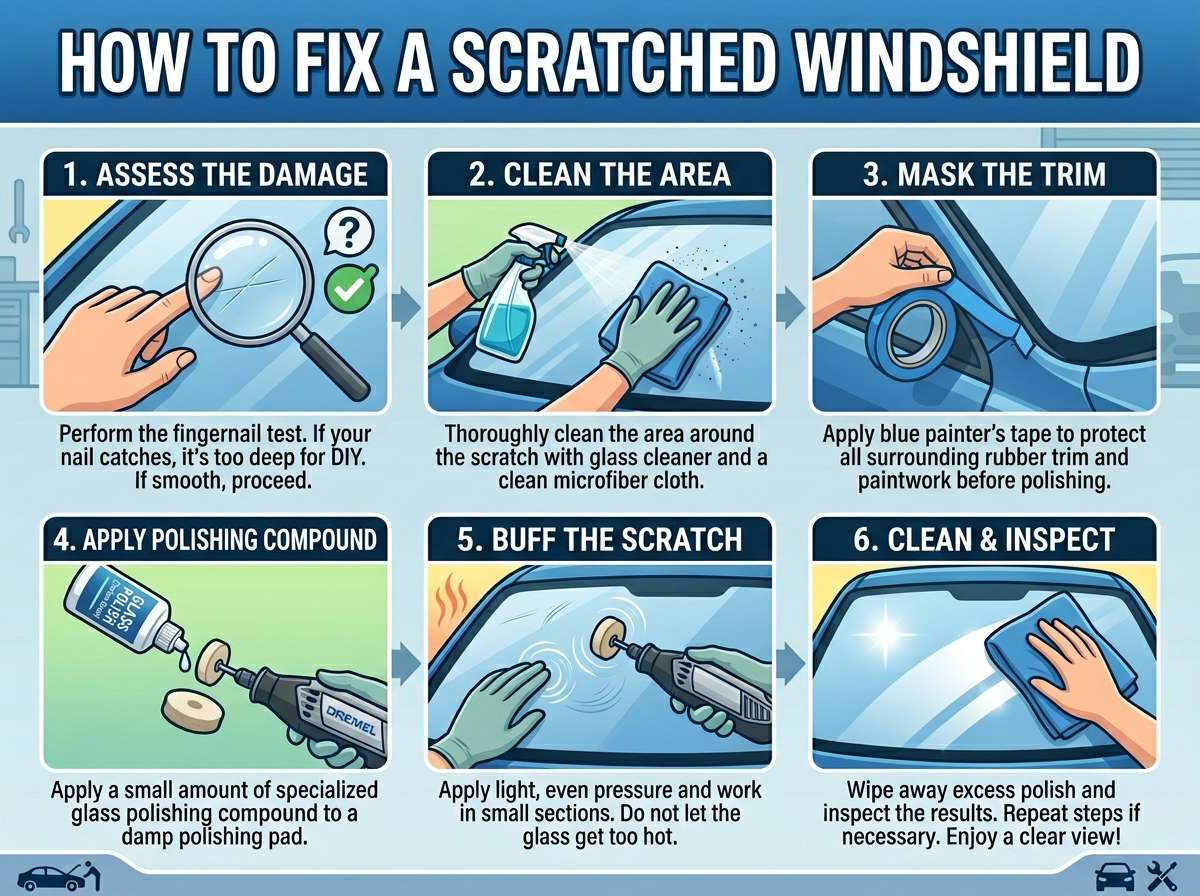
- Clean the scratched area with soap and water. Let it dry completely.
- Remove any loose glass or debris from the scratch.
- Apply the protective film around the scratch if the kit includes it.
- Insert the resin into the applicator bottle.
- Apply resin directly to the scratch. Fill it completely.
- Smooth the resin with a plastic scraper.
- Remove excess resin with the squeegee.
- Let it cure for 24 hours without touching it.
- Once dry, remove any film and clean the area.
Pros and Cons
Pros:
- Much cheaper than professional repair
- You can do it yourself at home
- Works on small scratches and chips
- Prevents dirt from getting in the scratch
- Quick application process
Cons:
- Won’t work on deep scratches
- Results might not be perfect
- Might need to repeat applications
- Resin can yellow over time
- Not permanent
- Difficult for large damaged areas
Prevention: Stop Scratches Before They Start
The best way to deal with scratches is to prevent them. Here are smart ways to protect your windshield.
Maintain Your Wipers
Replace your wiper blades every six to twelve months. Old blades deteriorate and damage glass. When you notice streaking or skipping, replace them immediately. Dirty blades cause scratches, so keep them clean.
Lift your wipers off the glass before you wash your car or go to an automatic car wash. This prevents damage from the brush or high-pressure water.
Use Proper Cleaning Techniques
Always use soft, microfiber cloths for cleaning. These don’t scratch glass. Paper towels and newspapers are rough and leave scratches.
Spray glass cleaner on the cloth first, then wipe the windshield. Never rub dry glass with any cloth. Always wet the surface first.
For tough spots, use water and mild dish soap. Avoid harsh chemicals that can damage the glass coating.
Avoid Automatic Car Washes
Hand washing or touchless car washes are better for your windshield. Automatic car washes with brushes can scratch the glass. If you must use an automatic wash, select the “rinse only” option to skip the brush.
Park Smart
Park in a garage when possible. This protects your windshield from debris, weather, and temperature extremes. If garage parking isn’t available, park under a tree or awning. This shields your glass from sun damage and falling debris.
Apply Protective Coatings
Windshield protective coatings create a barrier against scratches and damage. These products make your windshield more resistant to environmental damage.
Many new cars come with factory coatings. If yours doesn’t, you can apply an aftermarket coating. These last for several years and help maintain your windshield’s condition.
Keep Your Windshield Clean
Dirt and debris on your glass cause scratches when wipers move across it. Clean your windshield frequently with proper techniques. This removes particles before they can scratch.
During winter, keep salt and sand off your windshield. These materials cause significant damage.
Maintain Safe Driving Distance
Following other vehicles too closely puts you in the path of road debris. Keep a safe distance between your car and the car ahead. This reduces the chance of rocks hitting your windshield.
When to Replace vs. Repair
Deciding whether to repair or replace isn’t always obvious. Here’s how to make the right choice.
Choose Repair If:
- The scratch is small
- It’s only on the surface
- It doesn’t affect visibility
- You want to save money
- The damage is less than 12 inches long
Choose Replacement If:
- The scratch is deep
- It’s in your line of sight
- The windshield has multiple large scratches
- The glass is cracked
- Insurance covers most of the cost
- The damage is growing
Your safety matters most. If a scratch or crack makes you squint or lean to see clearly, replace the windshield. Impaired visibility while driving is dangerous.
Cost Breakdown
Understanding costs helps you decide on the best approach.
Home Remedies: $5 to $15 Baking soda, nail polish, and cleaning supplies cost very little.
DIY Repair Kits: $20 to $50 These kits are affordable and work for small damage.
Professional Polishing: $100 to $300 Basic polishing service removes minor scratches.
Professional Restoration: $200 to $500 More complete service with coatings and protection.
Windshield Replacement: $300 to $1000 Full replacement depends on your vehicle type.
Insurance Claims: $0 to $250 Most insurance covers replacement with a small deductible.
Answering Common Questions
Can I use toothpaste to remove scratches?
Some people suggest toothpaste, but it’s not ideal. Toothpaste is too abrasive and might cause more damage. Baking soda mixed with water is gentler and more effective.
Will a scratch get worse over time?
Yes, scratches tend to get worse. Dirt gets trapped inside them. Water causes the crack to expand. Treating a small scratch early prevents bigger problems later.
Can I drive with a scratched windshield?
Small scratches are fine to drive with. Deep scratches or cracks compromise safety. If the scratch affects your visibility, don’t drive until it’s fixed.
How long does repair resin last?
Most repair resin lasts two to five years. Eventually it yellows or peels away. It’s not a permanent fix, but it buys time.
Should I use heat or cold on the scratch?
Don’t use extreme heat or cold. Temperature changes can make scratches worse. Let your car warm up or cool down naturally before cleaning.
Is there a way to prevent scratches on a new windshield?
Protective film and coatings can help. Regular gentle cleaning and proper wiper maintenance are your best prevention tools. Nothing makes a windshield completely scratch-proof.
Can I fix a scratch on the inside of the windshield?
Inside scratches are harder to fix because you can’t access them easily. Most repair methods apply from the outside. For inside scratches, professional polishing might work, but replacement might be necessary.
Final Thoughts
A scratched windshield doesn’t have to mean the end of your glass. You have options. Small scratches respond well to home remedies and DIY kits. Moderate scratches benefit from professional polishing. Deep damage requires replacement.
Don’t ignore windshield damage. A small scratch becomes a big problem if you leave it. Dirt works its way in and causes stress on the glass. Cold weather makes it worse. What starts as a minor issue becomes an expensive repair.
Start with prevention. Maintain your wipers. Clean properly. Drive smart. These simple steps keep your windshield healthy for years.
When scratches do happen, act quickly. Apply a temporary fix right away. This protects the area from getting worse. Then decide if professional help is needed.
Most scratches are fixable without spending a fortune. DIY kits and professional polishing are affordable compared to replacement. Try these methods before considering a full replacement.
Your windshield is your window to the road. Keeping it clear and clean is an investment in your safety and your car’s appearance. With the information in this guide, you can handle scratched windshield problems confidently.
Take action today. Assess your scratch. Try the appropriate fix. Your windshield—and your wallet—will thank you.
Quick Reference: Scratch Repair Methods at a Glance
| Method | Cost | Time | Best For | Difficulty |
|---|---|---|---|---|
| Baking Soda | $5 | 30 min | Surface scratches | Very Easy |
| Nail Polish | $5 | 2 hrs | Minor scratches | Easy |
| DIY Resin Kit | $35 | 2 days | Small scratches | Easy |
| Professional Polishing | $200 | 2 hrs | Hairline scratches | N/A |
| Professional Restoration | $300 | 3 hrs | Multiple minor scratches | N/A |
| Windshield Replacement | $500+ | 1 hr | Deep damage/cracks | N/A |
Key Takeaways
- Not all scratches need replacement. Many can be fixed at home or by professionals.
- Home methods work for minor scratches. Baking soda, nail polish, and DIY kits are affordable options.
- Professional polishing removes hairline scratches. It’s worth the cost for moderate damage.
- Prevention is cheaper than repair. Maintain wipers, clean properly, and park smart.
- Safety comes first. If a scratch affects visibility, replace the windshield.
- Act fast. Small scratches worsen over time. Treat them quickly.
- Know your options. You have multiple solutions depending on damage severity.
Your windshield deserves attention. With these strategies, you’ll keep it clear, safe, and looking good.

Peterson is an automotive enthusiast and auto parts reviewer with a passion for vehicle maintenance, upgrades, and performance. He enjoys researching and testing car parts, tools, and accessories to help drivers make informed buying decisions. Through AutoPartsTalk.com, Peterson shares honest reviews, practical maintenance tips, and expert guides to keep vehicles running safely and efficiently.