How to Know If Your Timing Belt Is Bad?
Your car’s timing belt is one of those parts you don’t think about until something goes wrong. Then suddenly, you’re facing a massive repair bill. The good news? You can spot problems early if you know what to look for. This guide walks you through everything you need to know about a bad timing belt.
What Is a Timing Belt and Why Does It Matter?
Let’s start with the basics. Your timing belt is a rubber belt with teeth on it. It sits inside your engine and does a very important job. It keeps your engine’s valves and pistons moving at exactly the right time.
Think of it like a conductor leading an orchestra. Everything has to happen in perfect rhythm. If the timing is off, the whole thing falls apart. Your engine needs this belt to run smoothly and efficiently.
Without a working timing belt, your engine simply won’t run. That’s why a bad timing belt isn’t something you can ignore.
How Often Should Your Timing Belt Be Replaced?
Before we talk about spotting problems, let’s discuss timing belt maintenance. Most manufacturers recommend replacing your timing belt every 60,000 to 100,000 miles. Some cars go longer, others need replacement sooner.
Check your car’s manual to find the exact interval for your vehicle. Don’t guess on this one. Following the right schedule is the best way to avoid timing belt failure.
If your car is used, you might not know when the belt was last replaced. If it’s been more than a few years since the last replacement, getting it checked by a mechanic is smart. They can tell you if it needs to be replaced soon.
Warning Signs Your Timing Belt Is Going Bad
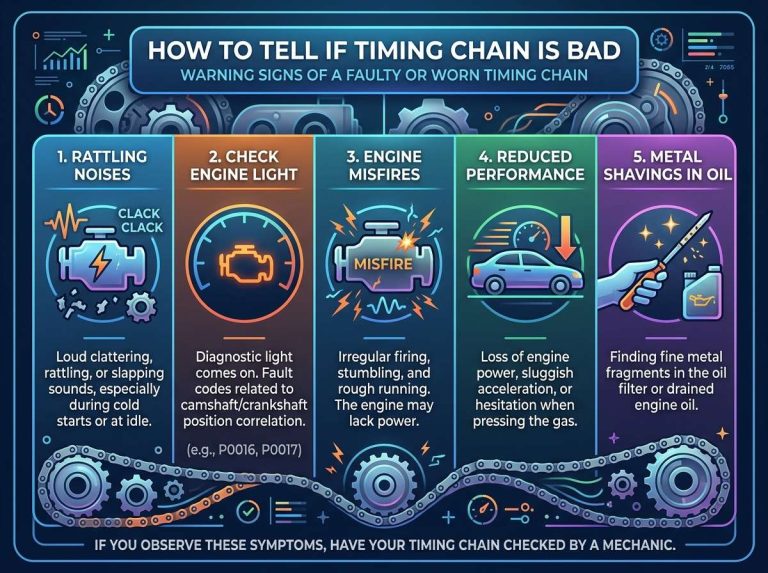
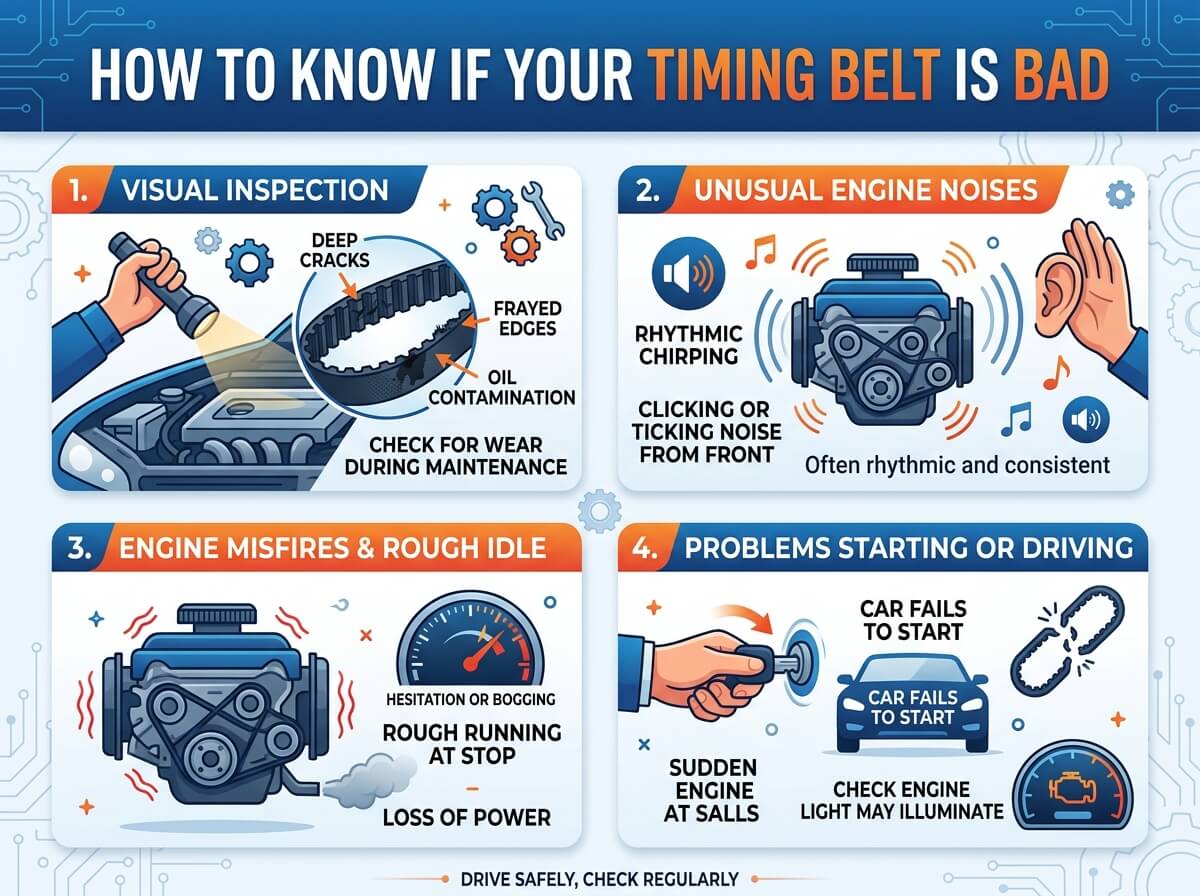
1. You Hear a Ticking Noise from the Engine
One of the first signs is a ticking sound coming from your engine. It sounds like a fast clicking or tapping noise. You’ll usually hear it when the engine is running.
This noise happens because the belt teeth are worn down. When the belt is worn, it slips slightly. Each slip makes that ticking sound. The noise might get louder as you drive.
Don’t ignore this sound. It’s your engine telling you something is wrong. If you hear it, get your car to a mechanic soon.
2. Your Check Engine Light Comes On
The check engine light can mean many things. But if it’s combined with other symptoms on this list, your timing belt might be the culprit.
Modern cars have sensors that detect timing issues. When something’s off, these sensors trigger the check engine light. Your mechanic can read the code to know for sure.
Even if the light comes on alone, getting it checked is important. You want to know what triggered it before the problem gets worse.
3. The Engine Runs Rough or Misfires
Does your engine feel like it’s not running smoothly? Maybe it stumbles when you accelerate or feels like it’s hesitating. This could be a timing belt issue.
When the belt is worn, it can slip. Even a small slip throws off the precise timing your engine needs. This causes misfires where one or more cylinders don’t fire properly.
You might notice the check engine light flashing during a misfire. This is your car saying it needs attention right now.
4. Your Car Won’t Start or Is Hard to Start
A bad timing belt can make starting your car difficult. You turn the key and nothing happens. Or you turn it and the engine cranks but won’t catch.
This happens because the belt can’t keep the timing right. The engine can’t reach the timing it needs to start.
If your car suddenly won’t start and you’ve had no other problems, the timing belt might not be the issue. But if you’ve noticed other symptoms, this could be the final straw.
5. You See Oil Leaking Near the Timing Belt
Your timing belt sits behind a cover at the front of your engine. If you notice oil leaking from this area, the belt cover might be failing. This means the belt could be exposed to dirt and moisture.
Look under your car when it’s been parked for a while. See any dark stains? Ask your mechanic to check if the leak is coming from the timing belt area.
Oil damage can ruin a timing belt quickly. So getting this fixed soon is important.
6. White Smoke Comes from Under the Hood
If white smoke is pouring from under your hood, your engine is overheating. A failed timing belt can cause your engine to overheat. This happens because the engine can’t run right without proper timing.
Never ignore white smoke. Pull over safely and turn off your engine. Let it cool before checking anything. Call for help if needed.
7. The Pedal Feels Soft When You Press It
A bad timing belt can make your acceleration feel weak. When you press the gas pedal, the car doesn’t respond like it should.
The engine can’t generate the power it needs because the timing is off. You feel this as a lack of pep when accelerating.
This symptom alone might be something else. But paired with other signs, it points to a timing belt problem.
8. Your Engine Knocks or Pings
A knocking sound in the engine is never good. If it sounds like marbles rattling around in your engine, pay attention.
A worn timing belt causes timing to slip. This slipping can cause the engine to knock or ping. It’s the sound of combustion happening at the wrong time.
This is a serious sign. Don’t drive the car far if you hear this. Get it checked right away.
Problems That Happen When a Timing Belt Fails
Understanding what happens when a timing belt fails completely can help you understand why replacing it is so important.
Engine Damage
When a timing belt breaks completely, the damage can be catastrophic. The valves and pistons can collide. This happens because they lose their timing coordination.
Bent valves. Cracked pistons. Damaged cylinder heads. These are all expensive repairs. Some engines are damaged so badly they can’t be saved. You might need an engine replacement.
The cost can easily reach $4,000 to $8,000 or more. Compare that to the $500 to $1,500 cost of replacing the belt before it breaks.
The Car Won’t Run
Obviously, a broken timing belt means your engine won’t run. Your car becomes a paperweight until it’s fixed.
You’ll be stranded. Getting towed becomes necessary. This adds to the total cost of fixing the problem.
You Could Get in an Accident
Imagine your timing belt breaks while you’re driving. Your engine dies. Your power steering might go out. Your brakes might become harder to use.
This is dangerous. You could lose control of the car. An accident becomes possible.
Driving a car with a bad timing belt is risky. Getting it fixed protects your safety.
How to Check Your Timing Belt
You can’t easily see your timing belt without removing some covers. But here’s what you can do:
Visual Inspection (with Professional Help)
A mechanic can remove the timing cover and look at the belt directly. They’ll look for cracks, fraying, or tears.
They’ll also check the tension of the belt. Too loose, and it might slip. Too tight, and it stresses the belt.
Get this inspection done if you’re concerned. It’s usually a simple, low-cost job.
Listen to Your Engine
Pay attention to how your engine sounds. Does it sound different than normal? Any new noises?
A ticking sound is the most common sign. Learn how your car normally sounds so you notice changes.
Check the Maintenance History
If you own a used car, ask for records of when the timing belt was replaced. If it was a long time ago, you might be due for another replacement.
If no records exist, have a mechanic check it. They can estimate the belt’s condition.
Look for Leaks
Check around the front of your engine for oil leaks. If the timing belt cover is leaking, moisture and dirt can damage the belt.
What to Do If You Think Your Timing Belt Is Bad
Step 1: Stop Driving the Car Excessively
Don’t go on long road trips. Limit driving to necessary trips like getting to a mechanic.
A bad timing belt can fail suddenly. The longer you drive, the greater the risk.
Step 2: Schedule an Appointment with a Mechanic
Find a trusted mechanic and call them. Explain your symptoms. They’ll likely schedule you soon.
Don’t put this off. The sooner you get it checked, the better.
Step 3: Get a Professional Diagnosis
Let the mechanic examine your car. They might check the belt directly or use diagnostic tools.
Be honest about the symptoms you’ve noticed. This helps them figure out what’s wrong.
Step 4: Get a Price Quote
Ask for a written estimate before they start work. Know what you’re paying for.
Timing belt replacement costs vary. The belt itself is cheap. Labor is where most of the cost comes from.
Step 5: Have It Replaced
Once diagnosed, have the belt replaced right away. Don’t wait.
A new belt is an investment in your car’s health. It prevents the massive damage that comes from a broken belt.
Timing Belt Replacement Cost and Timeline
How Much Does It Cost?
The timing belt itself costs $25 to $75. Labor usually costs $500 to $1,500 depending on your car.
Some cars are easy to access. Others require removing the entire front of the engine. Complex cars cost more.
Always get a quote before agreeing to the work.
How Long Does It Take?
Timing belt replacement usually takes 4 to 8 hours. Some cars take longer.
Plan for your car to be at the shop most of a day. Some jobs might need a second day.
Should You Replace Other Parts?
Many mechanics recommend replacing the water pump, tensioner, and seals while they’re in there. You’re already paying for labor, so it makes sense.
These parts might fail soon anyway. Replacing them now saves you money later.
Ask your mechanic which parts should be replaced. Get a full quote including everything.
Preventive Maintenance to Avoid Timing Belt Failure
The best thing you can do is prevent problems before they start.
Follow Your Maintenance Schedule
Stick to the timing belt replacement interval in your owner’s manual. This is the most important thing you can do.
Most cars need it done every 60,000 to 100,000 miles. Mark your calendar so you don’t forget.
Keep Your Engine Clean
A clean engine runs cooler. Heat can damage the timing belt. Keep your engine compartment free of dirt and debris.
Check your air filter regularly. A clogged filter makes your engine run hotter.
Monitor Your Coolant
Your cooling system helps keep your engine at the right temperature. Low coolant means your engine runs hot.
Check your coolant level monthly. Top it off if needed.
Use Quality Oil
Your oil keeps your engine lubricated and cool. Use the grade your manual recommends.
Change your oil and filter at recommended intervals.
Get Regular Inspections
Have your mechanic look at your timing belt during regular maintenance. They can spot problems early.
A small issue caught early is much cheaper than waiting for complete failure.
Signs You’ve Waited Too Long
If your timing belt has already broken, you’ll know it immediately. Your engine simply won’t run.
Turn the key and nothing happens. Or the engine cranks but won’t start. You’ll call for a tow truck.
Getting the car to a mechanic fast is important. Sitting with a broken belt doesn’t cause more damage, but it does mean your car isn’t going anywhere.
Common Myths About Timing Belts
Myth: A Timing Belt Can Last Forever
False. All timing belts wear out. Rubber degrades over time. Eventually, it will fail.
Replacing it on schedule prevents disaster.
Myth: You Don’t Need to Replace It if It Looks Fine
Timing belts can look fine and still be failing. The damage isn’t always visible from the outside.
Follow your maintenance schedule regardless of appearance.
Myth: A Timing Belt Won’t Fail Suddenly
Timing belts usually degrade slowly. But they can fail suddenly without warning.
This is why replacing them on schedule matters. You want to replace them before they fail, not after.
Myth: All Timing Belt Repairs Cost the Same
The cost varies greatly depending on your car. Luxury cars and imports often cost more.
Get quotes from multiple mechanics.
How Different Car Types Are Affected
Domestic Cars
Ford, Chevy, and Dodge vehicles usually have reasonable timing belt replacement costs. Parts are readily available.
Labor ranges from $400 to $800 in most cases.
Japanese Cars
Honda, Toyota, and Nissan timing belt replacements are fairly standard. These cars are popular so parts are cheap and mechanics know them well.
Expect to pay $500 to $1,200 for the full job.
European Cars
BMW, Mercedes, and Audi vehicles often have higher costs. Labor is more complex. Parts might cost more.
Budget $800 to $2,000 or more.
Luxury Vehicles
High-end cars might need custom parts. Labor times are longer. Costs can exceed $2,500.
Having a trusted mechanic for these cars is important.
Questions to Ask Your Mechanic
When you take your car in, ask these questions:
“Is my timing belt bad or just due for replacement?”
“What’s your diagnosis based on?”
“Which parts need replacing besides the belt?”
“How long will this take?”
“What’s the total cost including labor and parts?”
“What’s your warranty on this work?”
“Can you show me the old belt when you’re done?”
“Are there any other problems you found?”
Getting clear answers helps you understand the work and the cost.
What Happens During Timing Belt Replacement
Your mechanic will:
- Drain some fluids if needed
- Remove engine covers and components to access the belt
- Remove the old belt
- Inspect pulleys and other parts
- Install the new belt with proper tension
- Replace tensioner and water pump if needed
- Reinstall covers and components
- Start the engine and listen for any problems
- Test drive the car if everything looks good
The job is straightforward but takes time. The access is the hard part, not the actual belt replacement.
Emergency Tips If Your Timing Belt Breaks While Driving
If your timing belt breaks while you’re driving, here’s what to do:
- Pull over safely as soon as you can
- Turn off the engine
- Call for a tow truck
- Don’t try to restart the engine
- Don’t try to limp the car home
Restarting a car with a broken timing belt can cause more damage. Just wait for help.
Conclusion: Don’t Ignore Timing Belt Warning Signs
Your timing belt is critical to your engine’s health. A bad timing belt is a serious problem that demands immediate attention.
The warning signs are clear. A ticking noise. Rough running. Starting problems. These all point to a timing belt issue.
Catching the problem early saves money. Replacing a belt before it breaks costs $500 to $1,500. Replacing an engine after the belt breaks costs $4,000 to $8,000 or more.
Prevention is key. Follow your maintenance schedule. Listen to your engine. Get regular inspections.
If you suspect your timing belt is bad, get your car to a mechanic right away. Don’t drive it more than necessary. The sooner you address the problem, the sooner you’re back on the road safely.
Your car depends on that timing belt. Take care of it, and it will take care of your engine. Ignore it, and you’ll pay the price. The choice is yours.
Remember: when it comes to timing belts, early action is always cheaper than delayed repairs. Trust your instincts. If something feels wrong, get it checked. Your wallet will thank you.