How to Do a Transmission Flush?
Your car’s transmission is kind of like the heart of your vehicle’s power system. It takes the engine’s power and sends it to your wheels in just the right way. Over time, the fluid inside gets dirty and stops doing its job well. That’s where a transmission flush comes in. Let me walk you through everything you need to know about keeping your transmission clean and healthy.
What Exactly Is a Transmission Flush?
A transmission flush is a maintenance process that removes old, dirty transmission fluid from your vehicle. Think of it like changing the oil in your engine, but for your transmission. The fluid in your transmission does a lot of heavy lifting. It keeps everything cool, protects all the metal parts, and helps power transfer smoothly from your engine to your wheels.
Over time, this fluid breaks down. It gets dark. It picks up dirt and tiny metal bits from all the moving parts inside. When your transmission fluid gets this way, your whole transmission starts to suffer. Shifting becomes rough. Your car might hesitate when you accelerate. Things just don’t feel smooth anymore.
A transmission flush cleans out all that old, nasty fluid and replaces it with fresh new fluid. Your transmission gets to start fresh. Everything runs better. Your transmission stays healthier for longer.
Why Your Transmission Needs Flushing
Your transmission is complex. Inside, there are hundreds of tiny parts all working together. These parts rub against each other constantly while your car is running. This friction creates wear and tear. Tiny metal particles get into the fluid.
Heat builds up inside your transmission too. This heat breaks down the fluid over time. The additives in the fluid stop being effective. The fluid loses its ability to protect those metal parts.
Dirt, dust, and moisture also get into your transmission fluid over the years. Your transmission has seals, but nothing keeps all outside contaminants out forever. All of this stuff mixed together makes your transmission fluid less effective.
When your transmission fluid gets too dirty and worn out, your transmission can’t work right. Shifts become harsh. You might notice shaking or grinding sounds. Your gas mileage could drop. In worst cases, ignoring this problem can lead to major transmission damage that costs thousands to fix.
That’s why flushing your transmission on schedule is so smart. It’s preventive maintenance. You’re keeping your transmission clean and healthy before real problems start.
Signs Your Transmission Needs a Flush
How do you know if your transmission is ready for a flush? Look for these warning signs.
Rough or Delayed Shifts
When you shift gears, do you feel a jolt or delay? Does your car hesitate before accelerating? That’s often a sign your transmission fluid is getting old and dirty. Fresh fluid helps shifts happen smoothly and quickly.
Burnt Smell
Smell something burning when you’re driving? That could be your transmission overheating. Dirty fluid doesn’t cool as well as clean fluid. If your transmission runs hotter, the fluid breaks down even faster. This becomes a bad cycle.
Transmission Fluid Discoloration
Check your transmission fluid color. New fluid is usually bright red or pink. As it ages, it gets darker. If your fluid looks brown or black, it’s time for a flush. Dark fluid means it’s old and worn out.
Slipping
Does your engine rev higher than normal without your car accelerating as fast as it should? That’s slipping. Your transmission isn’t grabbing the gears right. Dirty fluid reduces friction and causes slipping.
Leaks
Spots under your car? Pink or red liquid on your driveway? That’s transmission fluid leaking. While a leak might need repair, old fluid also leaks more easily. A flush and refill might help, or you might need to fix the leak source.
Grinding or Shaking
Do you hear grinding sounds? Does your car shake or vibrate during shifts? Those are bad signs. Your transmission is struggling because the fluid isn’t providing proper lubrication and cooling.
Burning Smell in the Cabin
If it smells burnt inside your car, your transmission might be overheating. That burnt smell comes from breakdown of the transmission fluid. Get your transmission checked.
When Should You Flush Your Transmission?
Most cars benefit from a transmission flush every 80,000 to 100,000 miles. Some cars can go longer. Some need flushing sooner. Always check your owner’s manual for the specific schedule your vehicle needs.
Heavy drivers should flush more often. If you do a lot of city driving with frequent stops and starts, your transmission works harder. If you tow trailers, your transmission fluid breaks down faster. If you live in a hot climate, heat breaks down your fluid quicker. All these situations mean you should flush sooner than the standard recommendation.
Some older cars with high mileage benefit from flushes every 50,000 miles. If your transmission has seen a lot of use, more frequent flushes keep it running strong.
Don’t ignore your maintenance schedule. Transmission repairs cost thousands. A flush costs a few hundred. The math is simple. Taking care of your transmission now saves you big money later.
Types of Transmission Flushes
Not all transmission flushes work the same way. Let me break down the main methods.
Machine Flush
This is the most thorough method. A special machine connects to your transmission. The machine pushes the old fluid out while pulling new fluid in. It does this over and over, cycling fluid through your entire transmission system. The machine makes sure all the old stuff gets out.
A machine flush takes longer than other methods. It can take an hour or more. But you get the cleanest result. Machine flushes work great for cars with really dirty fluid or high mileage.
Drain and Refill
This is the simplest method. Your mechanic drains the old fluid from your transmission pan. Then they refill it with new fluid. This gets rid of maybe 50 percent of the old fluid. It’s cheaper and faster than a machine flush.
The problem is that a lot of old fluid stays in your transmission. Some fluid sits in the torque converter and transmission lines where it doesn’t get drained. Over time, that old fluid mixes back in with the new fluid.
A drain and refill is better than nothing. It’s a good maintenance step. But it’s not as thorough as a machine flush.
Hybrid Flush
Some shops offer a middle ground. They drain the transmission pan, replace the filter, and refill with new fluid. Then they drive the car or run it on a lift to circulate the new fluid. This helps mix old and new fluid better than a simple drain and refill.
A hybrid approach costs more than basic drain and refill but less than a full machine flush. It’s a decent compromise if you want better results without the highest cost.
What Transmission Fluid Should You Use?
Different transmissions need different fluids. This is important. Using the wrong fluid can damage your transmission.
Check your owner’s manual for the exact fluid type your car needs. You’ll find it listed clearly. Common types include Dexron, Mercon, ATF, and synthetic blends.
Some cars need specific branded fluids. Honda cars often need Honda ATF. Toyotas often need Toyota ATF. BMW and Mercedes need their own special fluids. Using generic fluid when your car needs brand-specific fluid is a mistake.
Ask your mechanic to use the correct fluid for your specific vehicle. Don’t assume. Don’t guess. Get it right.
Synthetic fluid costs more than regular fluid. But synthetic lasts longer and handles heat better. If your mechanic recommends synthetic for your car, it’s worth the extra money. Synthetic can extend the time between flushes.
Transmission Fluid Color Guide
Your transmission fluid tells you a lot through its color. Learn to read those signals.
Bright Red or Pink
This is healthy new fluid. It means your transmission is fresh and clean. Shifts feel smooth. Everything is working right.
Light Brown or Amber
Your fluid is getting older. It’s starting to break down. You’re getting close to needing a flush, but you’re not quite there yet. Keep an eye on it and plan your flush soon.
Dark Brown
Your transmission fluid is definitely old now. It’s time to schedule a flush. Don’t put it off. Your transmission is starting to struggle with fluid this dark.
Black or Very Dark
This is bad. Your fluid is very old and degraded. Your transmission could be suffering damage. Get a flush done immediately. Don’t drive long distances. Get to a shop and get this handled.
Reddish-Brown with a Burnt Smell
This is the worst sign. Your transmission has been overheating. The fluid is breaking down from heat. You need a flush right now, and you might also need to find out why your transmission is running so hot. There could be a bigger problem.
Tools and Supplies You’ll Need
If you’re doing a basic drain and refill at home, here’s what you need.
Socket Set
You’ll need various sized sockets to remove bolts and the transmission pan. Get a good quality set that fits your car.
Screwdrivers
Both Phillips and flat-head screwdrivers help remove trim and bolts.
Wrench Set
Some parts are easier to remove with wrenches than sockets. Have both available.
Jack and Jack Stands
You need to get under your car safely. A jack lifts it. Jack stands hold it up securely. Never trust just a jack. Use both.
Drain Pan
This catches old fluid. Get a big one. Transmission fluid pours out fast and in large quantities.
Transmission Filter
Buy the correct filter for your transmission before you start. Prices vary from fifteen to forty dollars usually.
New Transmission Fluid
Buy enough new fluid to completely fill your transmission. Check your manual for the exact amount. Better to have extra than run short.
Funnel
A transmission funnel helps pour new fluid without spilling. Regular funnels work, but transmission funnels fit better.
Shop Towels or Rags
You’ll need these for cleanup and to soak up spills.
Gasket Scraper
Use plastic scrapers to clean the old gasket off the transmission pan. Metal scrapers can damage the pan.
New Gasket or Sealant
You need a new gasket for your transmission pan or gasket maker to seal it back up. Check your manual for what your car needs.
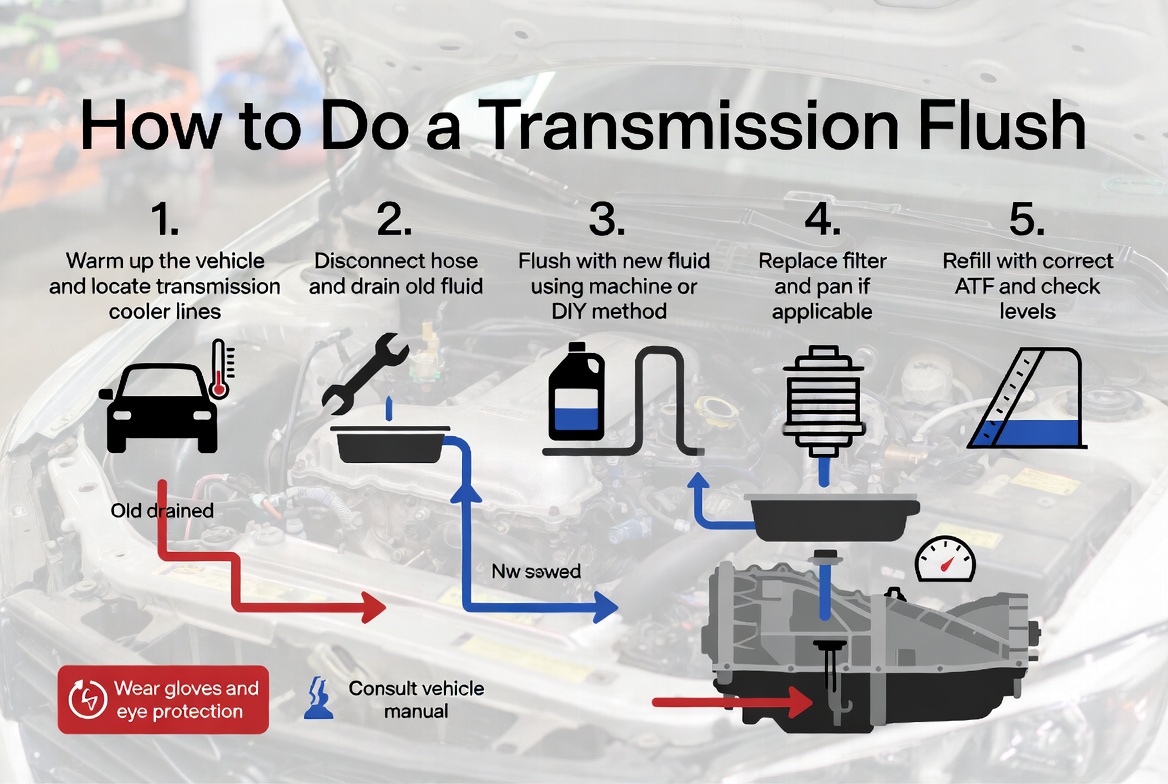
Step-by-Step Guide to Flushing Your Transmission
Ready to dive in? Here’s how to flush your transmission at home.
Step 1: Gather Everything and Prepare
Collect all your tools and supplies. Read your car’s manual for specific instructions for your model. Every car is slightly different. Clear a workspace in your garage. Make sure you have good lighting.
Step 2: Warm Up Your Transmission
Start your car and let it idle for a few minutes. Warm fluid drains better than cold fluid. Let your transmission get up to normal temperature. Then turn off the engine. Don’t make it scalding hot though, or you’ll burn yourself.
Step 3: Lift Your Car Safely
Use your jack to lift the front of your car. Place jack stands under the frame to hold it securely. Never work under a car held up only by a jack. Double-check that your car is stable and secure before getting underneath.
Step 4: Remove the Transmission Pan
Look under your car for the transmission pan. It’s the large metal pan bolted to the bottom of your transmission. Remove the bolts holding it. Some bolts come out easy. Some might be tight or stuck. Be patient. Work around the pan, loosening bolts gradually rather than removing one side completely first.
Step 5: Drain the Old Fluid
Once the bolts are loose, carefully lower the pan. Old fluid pours out. Let it drain completely into your drain pan. This takes a few minutes. Be careful because the fluid might still be warm.
Step 6: Clean the Pan and Replace the Filter
While fluid drains, locate your transmission filter. It usually sits inside the pan or at the bottom of your transmission. Remove the old filter. Install the new filter. Replace the gasket on the pan with a new one or use gasket maker as needed. Clean the pan with shop towels to remove sludge and dirt.
Step 7: Reinstall the Transmission Pan
Place the clean pan back on your transmission. Thread the bolts back in. Tighten them in a crosshatch pattern, like tightening wheel lugs. This ensures even pressure. Don’t overtighten. Follow your manual for the correct tightness.
Step 8: Lower Your Car
Carefully remove the jack stands and lower your car back to the ground. Make sure it’s on solid, level ground.
Step 9: Refill with New Fluid
Start your car. Let it run at idle. This gets the pump moving and helps fluid circulate. Turn off the engine. Use your funnel to pour new transmission fluid into the fluid check hole or fill port. Pour slowly to avoid spilling. Most cars need between four and ten quarts. Check your manual for the exact amount for your car.
Step 10: Check Your Fluid Level
Start your car again. Shift through all the gears. Put it back in Park. Let it idle for a minute. Then turn off the engine and wait five minutes. Check your fluid level using the dipstick. The level should be in the safe zone. Add a bit more if needed.
Step 11: Test Drive
Take your car for a short test drive. Feel how the transmission shifts. Listen for any strange sounds. Everything should feel smooth. If something feels wrong, go back and check your work.
Step 12: Check Everything Again
After your test drive, park on level ground and check the fluid level one more time. Make sure there are no leaks under your car.
Common Mistakes to Avoid
Learn from others’ mistakes so you don’t make them yourself.
Using the Wrong Fluid
This is the biggest mistake people make. Wrong fluid ruins transmissions fast. Always double-check your owner’s manual. Call a parts store if you’re unsure. Get it right.
Overfilling the Transmission
Too much fluid is as bad as too little. It causes foaming and pressure problems. Follow your manual’s recommendations exactly. Don’t guess. Don’t add extra because you think more is better.
Not Replacing the Filter
The filter catches all the junk in your fluid. A clogged filter means dirty fluid keeps circulating. Always replace the filter when you flush. It’s inexpensive compared to transmission damage.
Forgetting the Gasket
The pan gasket seals everything and prevents leaks. Using the old gasket causes leaks. Always use a new gasket. It’s cheap insurance.
Working on a Cold Transmission
Cold fluid is thick and doesn’t drain well. Warm up your transmission first. But not so hot that you burn yourself. Find that balance.
Not Securing Your Vehicle
Jacks fail. Always use jack stands. Never trust a jack alone. Your safety is worth the extra minute it takes.
Mixing Old and New Fluid
Don’t add new fluid to old fluid and call it a flush. The whole point is replacing old fluid. If your car still has tons of old fluid in it, you’re not really flushing. Aim to replace as much as possible.
When to Call a Professional
Some situations call for professional help.
If your transmission is leaking, get it checked by a pro. Leaks mean seals are failing. A mechanic can pinpoint the source and fix it properly.
If you hear grinding or your car won’t shift into gear, don’t wait. Get to a shop. These are serious problems. A flush might not fix them. You might need bigger repairs.
If you don’t feel confident working on your car, hire a mechanic. Transmission work requires attention to detail. A small mistake costs thousands. If you’re unsure, professional help is worth the money.
If your car’s transmission is complicated or requires special tools, go pro. Some transmissions are not DIY-friendly. Know your limits.
Cost of Professional Transmission Flushes
Prices vary based on your location and the shop you choose.
A basic drain and refill costs between one hundred and three hundred dollars usually. This includes new fluid and filter but not a full flush.
A machine flush runs between one hundred fifty and three hundred fifty dollars. Some shops charge more in expensive areas.
High-end shops in big cities charge more. Small town shops usually cost less.
If there are complications, like removing the pan to clean internal parts, cost goes up. Additional repairs for leaks also add to the bill.
Always get a quote before work starts. Ask what’s included. Ask if other problems show up during the flush and how much those will cost.
DIY Versus Professional: Which Is Right for You?
DIY saves money but takes time and skill. Professional work costs more but guarantees quality.
Do it yourself if you have mechanical ability, proper tools, and a safe workspace. If you enjoy working on cars and feel confident, go for it.
Get professional help if you lack experience, don’t have proper tools, or feel uncertain. Transmission damage from mistakes is expensive. Professional work includes a guarantee too.
Many people do the simpler parts themselves but take complicated work to a shop. This hybrid approach gets you the best of both worlds.
Be honest with yourself about your skill level. Pride isn’t worth a destroyed transmission.
Transmission Fluid Maintenance Between Flushes
Keep your transmission healthy between major flushes with these simple steps.
Check Your Fluid Regularly
Check transmission fluid every month. A quick dipstick check takes one minute. You’ll catch problems early before they become expensive.
Keep Your Engine Cool
Hot engines make hot transmissions. Make sure your cooling system works properly. Radiator problems lead to transmission problems.
Drive Smoothly
Aggressive driving with hard acceleration and sudden braking puts stress on your transmission. Smooth, steady driving keeps your transmission healthier.
Don’t Tow Beyond Your Limit
Towing strains your transmission. Know your car’s towing capacity. Don’t exceed it. If you tow, plan for more frequent flushes.
Fix Leaks Immediately
Fluid leaks are a problem. Get them fixed right away. Low fluid destroys transmissions fast.
Follow Maintenance Schedules
Stick to your car’s maintenance plan. Regular checks catch problems early.
Final Thoughts on Transmission Flushing
Your transmission is critical to your car’s operation. Keeping it clean through regular flushes makes a huge difference in how long your car lasts and how much you spend on repairs.
A transmission flush isn’t complicated once you understand the basics. The hardest part is just getting started. Whether you do it yourself or hire a professional, the important thing is that you do it on schedule.
Pay attention to your transmission. Listen for strange sounds. Feel how it shifts. Check your fluid color. These small actions help you catch problems before they become disasters.
Spend a few hundred dollars on a flush now, or spend thousands on repairs later. The choice is easy. Take care of your transmission, and your transmission will take care of you.
Your car will shift smoother. It’ll feel more responsive. You’ll drive with confidence knowing your transmission is clean and healthy. That’s what proper maintenance does. It keeps your vehicle running strong for years to come.

Peterson is an automotive enthusiast and auto parts reviewer with a passion for vehicle maintenance, upgrades, and performance. He enjoys researching and testing car parts, tools, and accessories to help drivers make informed buying decisions. Through AutoPartsTalk.com, Peterson shares honest reviews, practical maintenance tips, and expert guides to keep vehicles running safely and efficiently.