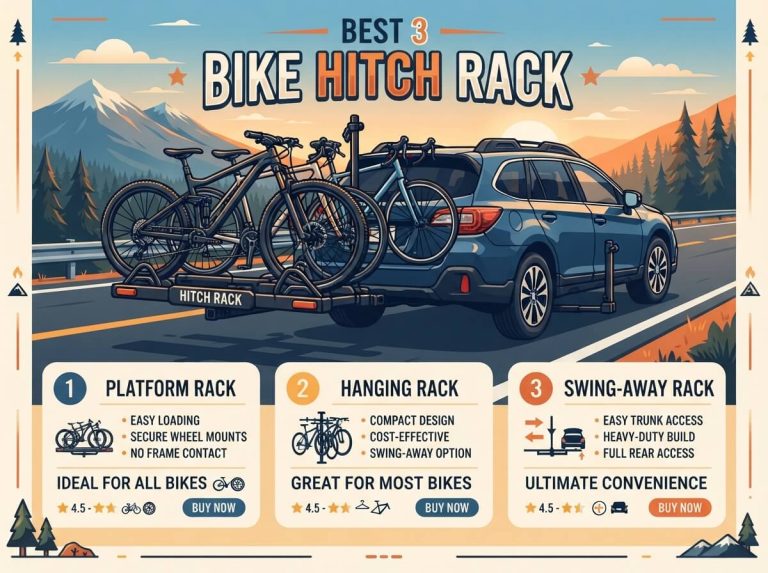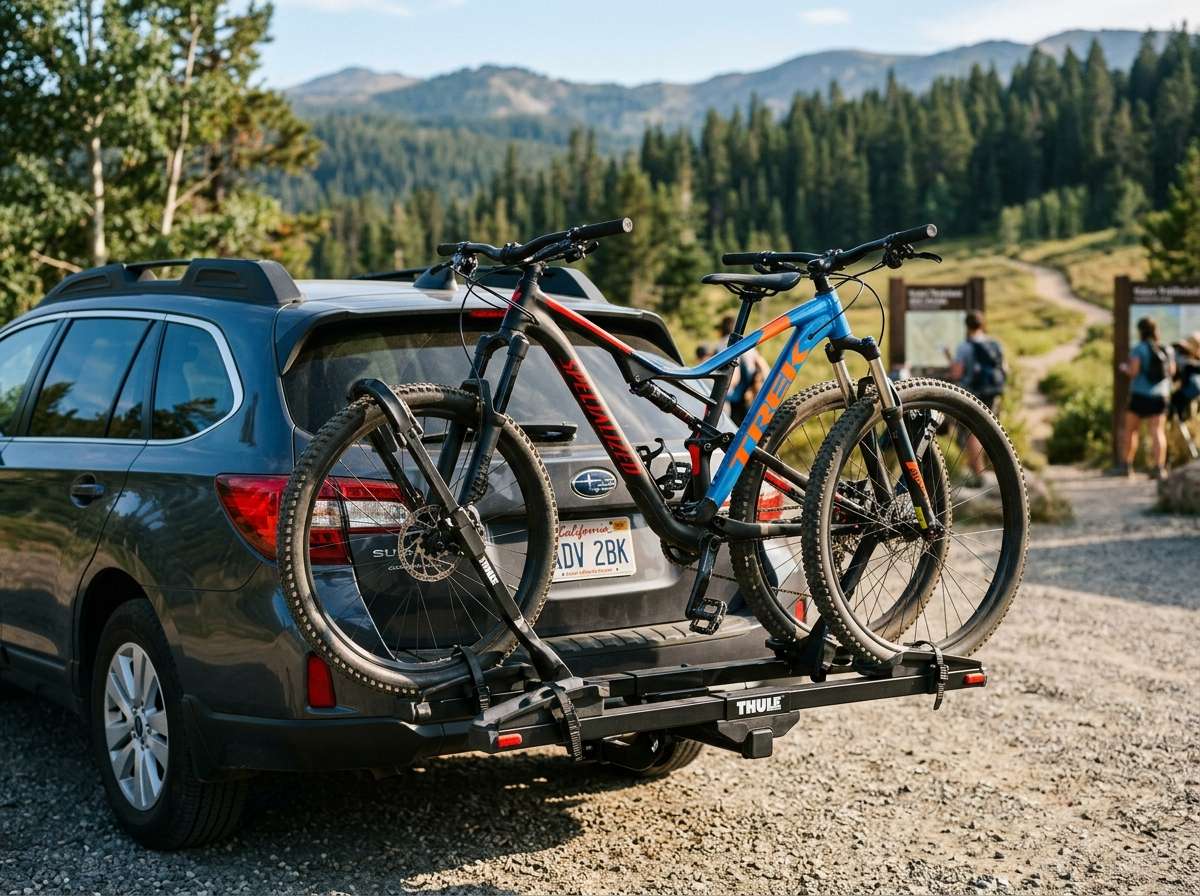
5 Best 2 Bike Hitch Rack In 2026
When you want to take your bikes on an adventure, you need a rack that actually works. A good hitch-mounted bike rack makes life so much easier than throwing your bicycles in the back of your car and hoping for the best. Not only do they keep your bikes safe and secure, but they also free up space inside your vehicle for other gear.
In this roundup, we’ve tested and researched five of the most popular 2-bike hitch racks on the market. Each one brings something different to the table, whether it’s extra weight capacity, ease of use, or innovative tilting features. We’re going to walk you through every option so you can find the perfect fit for your needs.
What Makes a Great 2-Bike Hitch Rack
Before jumping into the specific products, let’s talk about what matters when you’re looking for a bike hitch rack. The best ones balance several key factors that affect your real-world experience.
Weight capacity is your starting point. Most people carrying two bikes need at least 100 pounds of capacity, but if you’re hauling electric bikes or fat bikes, you want something that can handle 200 pounds or more. Heavy e-bikes can weigh 60 to 70 pounds each, so a standard 100-pound rack simply won’t cut it.
Hitch receiver compatibility matters a lot too. Most vehicles have either a 1.25-inch or 2-inch receiver. Some racks work with both, while others are locked into one size. If you ever plan to sell your car or buy a different vehicle, a rack that fits multiple sizes gives you flexibility.
Stability keeps your bikes from wobbling around while you drive. Nobody wants to arrive at the trail head with bent wheels or scratched paint. Look for anti-rattle features and solid cradles that grip each bike firmly.
Tilt or fold features let you access your trunk or hatchback without removing the entire rack. This is a game-changer if you need to get your spare tire or emergency kit out of the back.
Tire size accommodation matters more than ever with the rise of fat bikes and e-bikes. If your bikes have wider tires, some racks just won’t work. Standard road bike tires are about 1.25 inches wide, but fat bike tires can be 4 to 5 inches wide.
Young Bike Rack Hitch for Car – Platform Style
Product Overview
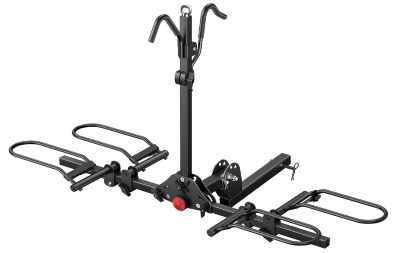
The Young Bike Rack Hitch for Car is a platform-style hitch rack that stands out for its generous 200-pound weight capacity. This rack fits 2-inch hitch receivers and works with fat tires up to 5 inches wide, making it a solid choice for people with diverse bike setups.
The platform design means your bikes sit on a flat surface rather than hanging from clamps. This design philosophy appeals to riders who want their bikes supported from underneath rather than squeezed at specific points.
Key Features Explained
This rack comes with smart tilting capability, which means you can tilt the entire rack down to access your trunk. The easy fold design lets you collapse the rack when not in use, saving garage space. The construction uses steel that’s designed to handle daily use without breaking down.
The cradles are designed to accommodate tires up to 5 inches wide, which covers everything from standard road bikes to chunky fat bikes. The 200-pound capacity means you can load two heavy e-bikes without worry. The 2-inch hitch receiver means it fits the most common hitch size on modern vehicles.
Best Use Cases
If you own e-bikes or fat bikes, this rack makes sense. The weight capacity means you’re not even close to overloading it. The platform design works well for people who want their bikes cradled rather than clamped. The tilt feature is great if you frequently need to access your trunk while the rack is installed.
The 5-inch tire accommodation makes it perfect if you have one standard bike and one fat bike, or if you’re planning to upgrade to wider tires later.
Real-Life Usage Insights
People who buy this rack often mention that assembly takes about 20 to 30 minutes with basic tools. The instructions are pretty clear, and most people get it right the first time. The tilt feature actually works as advertised, though it does require some muscle to tilt it down when loaded.
Once installed and dialed in, the rack feels rock-solid on the road. There’s virtually no wobble even at highway speeds. Drivers report that their bikes arrived in perfect condition after long road trips.
The platform design means there’s less chance of your bike frame getting pinched or scratched. Riders with expensive frames appreciate this detail.
Honest Pros and Cons
What users love about this rack includes the hefty 200-pound capacity, the tilt-down feature that actually works, the ability to handle fat tires, and the solid steel construction that feels like it’ll last years. The price point is reasonable for everything you get.
The drawbacks are few, but they’re worth knowing. Some users find assembly a bit fiddly, especially getting the hitch pin to line up perfectly. The tilt mechanism requires real effort to operate when fully loaded. The rack is on the heavier side itself, which matters if you want to remove it frequently. It only fits 2-inch receivers, so if your truck has a 1.25-inch hitch, you’ll need an adapter or a different rack.
Performance and Stability
On the road, this rack performs excellently. Even on bumpy roads, the bikes stay completely still. The steel construction means no creaking or groaning over potholes. Acceleration and braking don’t cause any movement whatsoever.
The tilt function works smoothly once you get used to the release mechanism. The bikes remain secure while tilted, so you can safely access your trunk.
Ease of Use Breakdown
Loading bikes onto this rack is straightforward. You wheel the bike up onto the platform and secure it with the provided straps. Most people can load and secure two bikes in about five minutes once they know the routine.
The folding feature is simple—just undo a couple of bolts and it collapses flat. This is a one-person job, though having help makes it easier.
Removing the entire rack from your hitch takes two minutes once you get the hitch pin out.
Value for Money
At around the mid-range price point for hitch racks, this rack offers excellent value. You’re getting 200-pound capacity, tilt functionality, and quality construction for a reasonable investment. If you own expensive bikes, the platform design that protects your frames is worth the cost alone.
Young Electric E-Bike Rack with Ramp
Product Overview
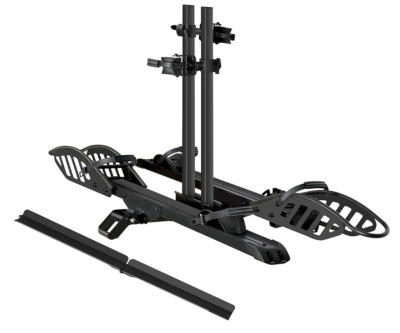
The Young Electric E-Bike Rack with Ramp takes a different approach specifically designed for heavier bikes. This 2-bike rack matches the weight capacity of its sibling at 200 pounds, but adds a ramp for easier loading and is engineered specifically with e-bikes in mind.
The inclusion of a ramp is a big deal for e-bike owners. When your bikes weigh 60+ pounds, rolling them onto a rack is way easier than lifting them.
Key Features Explained
The ramp feature is the star here. Instead of lifting your heavy e-bike onto the rack, you just roll it up the ramp. This makes loading so much easier, especially if you’re loading and unloading bikes multiple times a day.
The 200-pound capacity means this rack can handle two e-bikes without any stress. The foldable platform design lets you collapse it when not in use. Like its counterpart, it fits 2-inch receivers and handles 5-inch tires.
The platform mount design cradles your bikes safely from underneath. The ramp angle is designed to be not too steep—steep enough to roll a bike up, but not so steep that it’s dangerous or awkward.
Best Use Cases
This rack is the obvious choice if you own e-bikes. The ramp solves the heaviest problem that e-bike owners face: getting a 70-pound bike onto a standard rack. It’s also excellent if you’re planning to switch to e-bikes in the future.
The ramp makes sense even if you have mobility issues or injury concerns. It’s just easier on your back and shoulders than lifting.
If you’re someone who frequently loads and unloads your bikes, the convenience of the ramp justifies the slightly higher price.
Real-Life Usage Insights
E-bike owners consistently report that the ramp is a game-changer. Loading a heavy e-bike without a ramp is genuinely hard work. With the ramp, it becomes just rolling a bike, which feels effortless by comparison.
The ramp design is sturdy enough that you don’t worry about your bike tipping over while you’re rolling it up. The angle is forgiving—you don’t need to be strong or athletic to use it successfully.
People mention that the ramp adds about 20 pounds to the overall rack weight, but most think that’s a worthwhile tradeoff for the convenience.
Honest Pros and Cons
The strengths of this rack include the game-changing ramp feature, the 200-pound capacity perfect for e-bikes, the platform cradle design, easy folding, and compatibility with fat tires up to 5 inches wide.
The limitations include that the ramp does add weight to the overall package, assembly takes a bit longer than the non-ramp model because there are more components, and it still only fits 2-inch hitch receivers.
Some people also mention that the ramp takes up more space in your garage when the rack is folded, though it’s still manageable.
Performance and Stability
With loaded e-bikes, this rack delivers excellent stability. The weight is evenly distributed across the platform, and the cradles grip each bike securely. Even loaded to its 200-pound capacity, there’s no flex or movement at highway speeds.
The ramp doesn’t compromise stability at all. Once your bike is rolled onto the platform and secured, it’s just as solid as the non-ramp model.
Ease of Use Breakdown
This rack shines in the loading phase. Rolling up the ramp takes about 30 seconds per bike. Securing the bikes with the provided straps takes another couple of minutes.
Assembly takes about 30 to 40 minutes because of the additional ramp component. The instructions are clear and most people manage it without issues.
Removing the rack is the same as any other platform model—just two minutes to pull the hitch pin.
Value for Money
If you own e-bikes, this rack is worth the extra money over the standard model. The ramp eliminates a real pain point in your loading routine. For daily or frequent use, the convenience pays for itself quickly in terms of your time and comfort.
If you own lighter road bikes, the ramp is a luxury feature that’s nice to have but not essential.
MaxxHaul 50025 Hitch Mount 2-Bike Rack
Product Overview
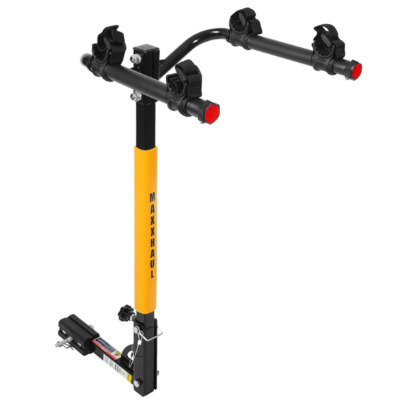
The MaxxHaul 50025 takes a completely different approach than the platform-style racks. This is a traditional clamp-style rack where your bikes hang from individual cradles. It’s heavier-duty in design and built from steel that’s meant to last through years of regular use.
The big difference here is that MaxxHaul designed this rack to fit both 1.25-inch and 2-inch hitch receivers. That flexibility alone makes it attractive to a wider range of vehicle owners.
Key Features Explained
The dual-receiver compatibility is huge. You get adapters that let you use this rack no matter what hitch size your vehicle has. This matters because not all trucks and SUVs come with the same hitch dimensions.
The 100-pound weight capacity is enough for two standard bikes or one very heavy road bike and one lighter bike. It’s not ideal for e-bikes, but it works fine for standard bicycles and lighter hybrid bikes.
The anti-rattle design includes specific engineering to eliminate the clicking and clacking that some bike racks develop over time. The secure cradles grip each bike at multiple points, keeping everything tight and still.
The heavy-duty steel construction means this rack is built to last. It’s not flashy, but it’s designed for functionality and longevity.
Best Use Cases
If you drive a vehicle with a 1.25-inch hitch and you want a 2-bike rack, this is one of your best options. Many older trucks and some foreign vehicles use the smaller hitch size, and your choices become limited.
The 100-pound capacity works perfectly if you ride standard road bikes, gravel bikes, or lightweight hybrids. This covers a big portion of regular cyclists.
The anti-rattle technology makes sense if you’re sensitive to noise while driving or if you’ve had problems with other racks developing squeaks and creaks.
Real-Life Usage Insights
Owners of MaxxHaul racks often comment on how solid these products feel. The heavy steel is reassuring. People feel confident loading their bikes onto it and driving away.
The dual-receiver adapters work smoothly. Most people appreciate having that flexibility, even if they only use one hitch size.
Drivers report that these racks stay completely quiet on the road, even over rough terrain. This is actually a distinguishing feature compared to some cheaper alternatives.
The clamp-style design works great for protecting your frame if you have expensive road bikes. The cradles grip the frame at the seatstay, so there’s minimal pressure on your frame.
Honest Pros and Cons
What makes this rack stand out includes the ability to fit both hitch receiver sizes, the solid anti-rattle construction, the heavy-duty materials, and the secure cradles. The price is reasonable for the build quality.
The drawbacks are that the 100-pound capacity limits you if you ever want e-bikes, it doesn’t tilt or fold so you can’t access your trunk with it installed, and it doesn’t accommodate really wide tires like the platform models do.
The clamp design means you’re relying on the cradles to hold your bikes, which works great for standard frames but can be tricky if you have very thick or very thin tubing.
Performance and Stability
This rack is extremely stable. The heavy steel doesn’t move, and the anti-rattle design means your bikes stay absolutely silent while you drive. Even fully loaded, there’s zero flex.
The clamp design means your bikes are held at specific points on their frames. For standard frames, this is perfect. For unusual geometries, it might require some adjustment.
Ease of Use Breakdown
Installing this rack involves attaching the cradles and setting up the adapters for your hitch size. Assembly takes about 15 to 25 minutes for most people.
Loading bikes is a straightforward two-step process: open the cradles, position your bike, tighten the clamps. Each bike takes about three minutes to load.
Since it doesn’t tilt or fold, you need to remove it completely if you want to access your trunk. This takes about five minutes.
Value for Money
For the price, this rack offers solid value if you have standard bikes. The heavy-duty construction means it should outlast cheaper alternatives. The dual-receiver compatibility adds flexibility that justifies the cost.
If your bikes are very light and your hitch size is standard, other options might be more affordable, but you’re sacrificing durability.
Bike Racks for Ebikes – Fat Tire Bike Rack for Tow Hitch
Product Overview
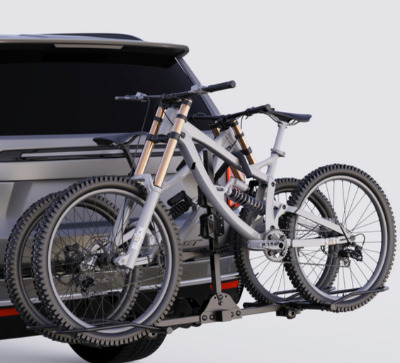
This fat tire bike rack is specifically engineered for heavier bikes and wider tires. With a 160-pound capacity, it sits between the 100-pound MaxxHaul and the 200-pound Young racks. The wobble-free design and smart tilting feature make this a middle-ground option.
The 2-inch receiver fitment and ability to handle standard and fat tires gives you flexibility in what bikes you can load.
Key Features Explained
The wobble-free engineering means the designers spent time eliminating movement. The cradles and support structure are designed to keep everything still while you drive. This is especially important when carrying expensive bikes.
The 160-pound capacity handles two lighter e-bikes, two standard bikes, or one heavy e-bike plus one standard bike. It’s not as generous as the 200-pound racks, but it’s significantly better than 100 pounds.
The smart tilting feature lets you angle the rack down to access your trunk without removing the whole unit. The design allows the tilt action without the rack drooping or flexing while tilted.
The heavy-duty foldable design means you can collapse it when not in use. The construction uses quality materials throughout.
Best Use Cases
This rack makes sense if you own one lighter e-bike and one standard bike. The 160-pound capacity handles this combination easily.
If you ride fat bikes but they’re not extremely heavy, this rack works well. It accommodates the wide tires without any special adjustments.
The wobble-free design is perfect if you’re concerned about your bikes moving during transport, especially if you have high-end bikes.
The tilting feature is great if you need to access your trunk regularly while keeping the rack installed.
Real-Life Usage Insights
Owners appreciate the focus on stability. This rack doesn’t move around while you drive, which gives peace of mind. The tilting feature works smoothly and holds its angle without slipping.
The wide tire accommodation works for fat bikes, but some riders mention that extremely thick tires might be a tight fit depending on the tire sidewall profile.
The folding action is smooth and doesn’t require excessive force. People find it easy to fold and unfold the rack when moving between vehicles or storing it.
Honest Pros and Cons
The strengths include the wobble-free design that actually delivers on the promise, the 160-pound capacity that bridges the gap between light and heavy bikes, the smart tilting feature, wide tire accommodation, and folding capability.
The limitations are that 160 pounds might be slightly limiting if you own two heavy e-bikes, it only fits 2-inch receivers, and it costs slightly more than some comparable models due to the engineering focus.
The foldable design adds a bit of complexity that might require occasional maintenance of hinges and moving parts.
Performance and Stability
On the road, this rack delivers on its stability promise. There’s essentially zero movement even on rough roads or during rapid acceleration. The bikes arrive completely undisturbed.
The tilting mechanism works smoothly and the rack doesn’t sag or flex while tilted, which is important for safety and protecting your trunk area.
Ease of Use Breakdown
Loading bikes takes about five to seven minutes for two bikes. The cradles are designed to make this intuitive, though you do need to adjust each one for your specific tire width.
Assembly takes about 25 to 30 minutes and involves more steps than simpler racks because of the tilting mechanism.
The folding action requires flipping a couple of safety pins and then collapsing the frame. It’s a one-person job that takes about five minutes.
Value for Money
This rack occupies a smart middle ground in the market. You’re paying more than basic racks but less than premium options, and you’re getting thoughtful engineering that focuses on stability and functionality. If wobble-free transport matters to you, this is worth the investment.
YAKIMA HoldUp Hitch Mount Tray Bike Rack
Product Overview
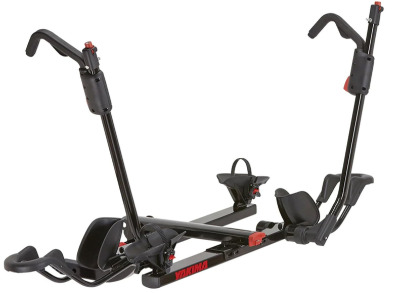
YAKIMA brings decades of gear experience to their HoldUp rack. This is a tray-style platform rack that combines the company’s engineering expertise with practical features for real-world use. It’s a complete system designed for serious cyclists.
The HoldUp uses a platform or tray design similar to some other models we’ve reviewed, but YAKIMA’s approach focuses on security and ease of use.
Key Features Explained
The tray design keeps your bikes cradled from underneath, which protects your frame better than clamp-style racks. YAKIMA engineered the trays to hold various frame sizes without adjustment in most cases.
The safety strap system is more sophisticated than basic models. Instead of simple hook-and-loop straps, the HoldUp uses a security system that’s harder to accidentally open while driving.
The compact folding design means it takes minimal space when stored. Unlike some chunky competitors, this rack collapses neatly.
YAKIMA’s customer service reputation is excellent. If you run into issues, the company stands behind its products.
Best Use Cases
If you want a rack from an established outdoor company with a proven track record, YAKIMA is a safe choice. The company has been making bike carriers since before hitch racks were even common.
The security-focused design makes sense if you’re carrying expensive bikes through urban areas where someone might try to tamper with your rack.
The superior folding design is great if you frequently take your rack on and off your vehicle or if garage space is limited.
The frame-protection approach is perfect for riders with high-end bikes where even small scratches are unacceptable.
Real-Life Usage Insights
YAKIMA owners frequently mention the peace of mind that comes with using a trusted brand. People feel confident that the rack will perform as expected.
The strap system is more secure than expected. It’s harder to open accidentally, which is actually a benefit even though it means slightly more effort when you’re loading and unloading.
The compact storage footprint gets appreciation from people with small garages or limited storage space.
The tray design works extremely well for protecting expensive frames. Many people specifically choose tray racks for this reason, and YAKIMA executes this well.
Honest Pros and Cons
The strengths of this rack include the proven YAKIMA brand reputation, the secure strap system, excellent frame protection, compact storage design, and thoughtful engineering throughout.
The potential drawbacks are that it tends to be at the higher end of the price spectrum, the weight capacity isn’t explicitly stated at the top of marketing materials (though it’s sufficient for most uses), and the security strap system requires a bit more effort to operate compared to simple straps.
Some users find that the compact design means less visual feedback about whether your bikes are secured, so you need to double-check more carefully.
Performance and Stability
YAKIMA racks are known for reliability, and the HoldUp lives up to this reputation. The tray design is stable and the bikes don’t move around while driving. The rack feels premium in its materials and execution.
The security system performs its job—your bikes stay put and aren’t going anywhere.
Ease of Use Breakdown
Loading a bike onto the HoldUp requires positioning it in the tray and then securing it with the strap system. This takes about three to five minutes per bike as you get used to the system.
Assembly takes about 20 to 25 minutes. YAKIMA provides good instructions and most people complete it without issues.
Removing the rack involves pulling the hitch pin, which is a two-minute job.
The folding action is intuitive and takes about three minutes.
Value for Money
This rack is priced at the premium end of the market. You’re paying for YAKIMA’s reputation, engineering quality, and customer service. If you value a trusted brand and plan to own your rack for many years, this investment makes sense.
If you’re budget-conscious and your bikes aren’t extremely expensive, other options provide better value. But if you want the best overall package and don’t want to compromise on brand reputation, YAKIMA delivers.
Comparison Insights: Head-to-Head Overview
Let’s look at how these five racks stack up against each other across the most important factors.
Weight Capacity Comparison
The MaxxHaul handles 100 pounds, making it the lightest capacity option. This works for standard bikes but rules out heavier e-bikes.
The fat tire rack from our fourth review offers 160 pounds, which is the middle ground.
The two Young racks both deliver 200 pounds, the highest capacity here. This is significantly better if you own e-bikes or plan to upgrade.
YAKIMA doesn’t advertise a specific capacity number prominently, but it’s in the standard range suitable for most bike combinations.
Hitch Receiver Compatibility
MaxxHaul wins here with dual 1.25-inch and 2-inch compatibility. This flexibility matters if you own multiple vehicles or plan to switch cars.
All the other racks fit 2-inch receivers only. The majority of newer vehicles have 2-inch receivers, but older trucks and some imports use 1.25 inches.
Tilt and Fold Features
The Young racks both tilt, letting you access your trunk. The fat tire rack also tilts. MaxxHaul doesn’t tilt—you have to remove it completely.
All the racks except MaxxHaul fold for storage, which matters if you take your rack off between trips.
YAKIMA’s folding is the most compact.
Tire Size Accommodation
The Young racks handle 5-inch tires, which covers fat bikes. The fat tire rack from review four handles wide tires, though the exact limit isn’t always clear.
MaxxHaul handles standard and slightly wider tires but isn’t marketed for fat bike use.
YAKIMA handles standard frame sizes without special accommodation information.
Price and Value Positioning
MaxxHaul positions itself as a budget-friendly, heavy-duty option. YAKIMA sits at the premium end. The Young racks offer mid-range pricing with strong features.
The fat tire rack sits just above MaxxHaul in price, offering better capacity for a slight premium.
Real-World Stability
All five of these racks deliver excellent stability on the road. The specific engineering varies—platform racks cradle from underneath while clamp racks secure from specific points—but all keep your bikes completely still.
Complete Buying Guide: How to Choose the Right 2-Bike Hitch Rack
Now that you know what’s available, let’s talk about how to pick the right one for your situation.
Step One: Determine Your Hitch Receiver Size
Start by checking what hitch your vehicle has. Most modern cars, trucks, and SUVs have a 2-inch receiver. Some older vehicles and certain imports use 1.25 inches. A few specialized vehicles have different sizes.
You can find this information in your owner’s manual, or you can simply look at the hitch under your vehicle. The receiver is the metal tube that sticks out from your bumper, and its width is clearly marked.
If you have a 1.25-inch hitch, MaxxHaul is one of your best options because of its adapter system. This flexibility is valuable.
If you have a 2-inch receiver, you have the most options. All these racks work with 2-inch receivers.
Step Two: Calculate Your Weight Capacity Needs
Think about the bikes you actually own and the ones you might own in the future. Weigh your bikes if possible, or estimate: standard road bikes weigh 15 to 25 pounds, hybrids run 25 to 35 pounds, fat bikes vary wildly from 35 to 50+ pounds, and e-bikes typically weigh 45 to 75 pounds depending on the motor and battery.
If you’re hauling two standard road bikes, 100 pounds is plenty. MaxxHaul works fine.
If you have one standard bike and one e-bike, or two lighter e-bikes, the 160-pound option works.
If you own two e-bikes or heavy bikes, go for 200-pound capacity. The Young racks provide this.
Step Three: Consider Tire Size
Fat bikes have tires that are much wider than standard bikes. If you own fat bikes or plan to, you need a rack that explicitly handles wide tires. The Young racks do this. If you’re exclusively a road or gravel bike rider, this matters less.
Step Four: Think About Your Usage Pattern
Do you load and unload your rack frequently, or do you install it once and leave it? This changes the math.
If you frequently remove your rack, a lighter option or one that folds very compactly matters more. YAKIMA’s compact design shines here.
If your rack stays installed most of the time, the tilt-down feature becomes valuable because you might want to access your trunk without removing the whole rack. The Young racks and fat tire rack have this.
Do you ever load heavy bikes while standing at your car? The Young e-bike rack with the ramp makes this genuinely easier.
Step Five: Evaluate Brand and Warranty
YAKIMA is the established name here with decades of outdoor gear experience. If brand reputation matters to you, YAKIMA is the safe choice.
Young racks are newer to many markets but offer strong specs for the price. They’re building a reputation for delivering good value.
MaxxHaul is a solid, no-frills brand that gets the job done without marketing hype.
All of these companies provide warranties, though the specifics vary. Check the warranty information before buying if this is important to you.
Step Six: Test Drive the Fit
If possible, visit a store and see these racks in person. Hold them, look at the cradles, imagine your bikes in the rack. This tactile experience helps you make a better decision than reading alone.
If you’re buying online, check the return policy. Some retailers are extremely generous about returns and exchanges, which takes the risk out of purchasing.
Who Should Buy These Products
Let’s be direct about who each rack serves best.
Buy the MaxxHaul if: You have a 1.25-inch hitch receiver, you own standard road or hybrid bikes, you value a heavy-duty build and don’t need tilting or folding features, you’re budget-conscious, and you want a rack that will last years with minimal maintenance.
Buy a Young Bike Rack Hitch if: You own e-bikes or fat bikes, you want the maximum weight capacity, you value the tilt-down feature for trunk access, you don’t mind assembling your rack yourself, and you want good value for serious capability.
Buy the Young Electric E-Bike Rack with Ramp if: You specifically own electric bikes, you load and unload frequently, you want to minimize physical strain while loading, you appreciate the convenience of a ramp, and you’re willing to pay a bit extra for this smart feature.
Buy the Wobble-Free Fat Tire Rack if: You want the sweet spot between capacity and price, you carry either lighter e-bikes or fat bikes, you value stability above all else, you like the smart tilting feature, and you want something less expensive than premium brands but better than budget options.
Buy the YAKIMA HoldUp if: You own expensive bikes that need frame protection, you value brand reputation and customer service, you want a long-term investment rack, you store your rack and want minimal space footprint, and you don’t mind paying premium pricing for premium quality.
Common Mistakes to Avoid When Buying a 2-Bike Hitch Rack
People make predictable mistakes when shopping for bike racks. Let’s talk about how to avoid them.
Mistake One: Ignoring Hitch Receiver Size
This is the number one error. People buy a rack only to discover it doesn’t fit their hitch. Check your hitch size before shopping. This is literally 30 seconds of research that saves you time and frustration.
Mistake Two: Underestimating Weight Capacity Needs
People often think they’ll only carry light bikes, then they buy an e-bike or want to lend their rack to someone with heavier bikes. It’s almost always better to have more capacity than you think you need. The price difference between 100-pound and 200-pound racks is usually small enough that the extra capacity is worth it.
Mistake Three: Choosing a Rack Without Considering Tire Size
If you even might own fat bikes, get a rack that handles them. Otherwise, you’ll be shopping again in a few years.
Mistake Four: Buying Without Reading About Real Assembly
Some racks are genuinely easy to assemble while others are frustrating. Don’t buy a rack that requires two hours of assembly if you hate working with tools. Read real reviews about assembly difficulty.
Mistake Five: Overlooking the Tilt-Down Feature
If you frequently need to access your trunk, the tilt feature is actually really valuable. Don’t dismiss it as unnecessary until you live without it and realize how often you need your trunk.
Mistake Six: Ignoring Anti-Rattle Technology
A rack that clicks and clacks on every bumpy road gets annoying fast. Look for racks that specifically address rattling. It’s a real quality-of-life improvement on long drives.
Mistake Seven: Buying Solely Based on Price
Cheap racks often stay cheap because they’re flimsy. They wobble, they creak, they don’t protect your bikes well. Spend a bit more and you’ll get years of trouble-free use instead of constant annoyance.
Mistake Eight: Not Considering Future Changes
Your bike situation will probably change. You might get an e-bike, upgrade to fat tires, or buy a different vehicle. Think about future-proofing as much as current needs. A versatile rack is usually a better investment than a rack that barely fits your current situation.
Detailed Comparison Table
Here’s a quick reference for comparing the five racks:
| Feature | Young Bike Rack Hitch | Young E-Bike with Ramp | MaxxHaul 50025 | Fat Tire Rack | YAKIMA HoldUp |
|---|---|---|---|---|---|
| Weight Capacity | 200 lbs | 200 lbs | 100 lbs | 160 lbs | Standard* |
| Hitch Receiver | 2″ only | 2″ only | 1.25″ & 2″ | 2″ only | 2″ only |
| Tire Size | 5″ fat tires | 5″ fat tires | Standard | Fat tires | Standard |
| Tilt Feature | Yes | Yes | No | Yes | No |
| Folds | Yes | Yes | No | Yes | Yes |
| Tray Style | Platform | Platform | Clamp | Platform | Tray |
| Anti-Rattle | Yes | Yes | Advanced | Wobble-Free | Yes |
| Price Range | Mid | Mid-High | Budget | Mid | Premium |
| Best For | Heavy bikes | E-bikes | Budget + dual hitch | Balanced capacity | Premium brand |
*YAKIMA doesn’t advertise a specific number but handles standard bike combinations
Installation and Setup Tips
Getting your rack right makes a huge difference in your experience.
Before Installation
Clean your hitch receiver and dry it completely. Dirt and moisture cause rust and make the hitch pin stick.
Have your tools ready: socket set, wrench set, maybe a rubber mallet for stubborn connections. Don’t start the job if you’re missing tools.
Read the instructions completely before starting. Don’t skip steps or assume you know what’s happening.
During Installation
Tighten bolts firmly but don’t over-tighten. You’re looking for snug and secure, not crushed.
If the hitch pin is hard to insert, tap it gently with a rubber mallet. Don’t force it or you’ll damage the threading.
Install any anti-rattle pads or shims that come with your rack. These exist for a reason.
After Installation
Test the rack without bikes first. Pull on it, shake it, make sure everything is secure.
Load your bikes and do a final check. Nothing should move.
Look at your setup from different angles. Make sure your bikes don’t interfere with your exhaust pipe or rear visibility.
Regular Maintenance
Every few months, check that all bolts are still tight. Vibration from driving can loosen things over time.
Clean your rack regularly, especially if you use it in winter with salt and sand. Rust shortens the lifespan of steel racks.
Check the condition of any straps or cradles. Replace worn items before they fail.
Final Verdict: What We Recommend
After reviewing these five solid options, here’s our straightforward assessment.
Best Overall: Young Bike Rack Hitch for Car
If we had to pick one rack to recommend to most people, it’s the Young Bike Rack Hitch. It delivers 200-pound capacity, tilt functionality, wide tire accommodation, solid construction, and reasonable pricing. It covers the widest range of uses without compromise.
Best for E-Bike Owners: Young Electric E-Bike Rack with Ramp
If you own e-bikes, the ramp feature changes the game. Loading heavy bikes becomes easy. The 200-pound capacity means you’re never stressed about weight. This is the smartest choice if electric bikes are in your life.
Best for Budget-Conscious Buyers: MaxxHaul 50025
If you have standard bikes, a tight budget, and especially if you need a 1.25-inch hitch fit, MaxxHaul delivers everything you need without waste. The heavy-duty construction means your rack will last.
Best for Balanced Capacity: Wobble-Free Fat Tire Bike Rack
If you want something between basic and premium, with solid stability and practical tilt features, this middle-ground option is clever buying.
Best for Premium Quality: YAKIMA HoldUp
If your bikes are expensive, if you value brand reputation, if you want a rack you’ll own for a decade without problems, YAKIMA earns your investment.
Conclusion: Your Next Adventure Awaits
Picking the right 2-bike hitch rack doesn’t have to be complicated. You now understand what matters: hitch size, weight capacity, tire compatibility, stability, and features like tilting that improve real-world use.
Each of the five racks we’ve reviewed serves a real purpose. None of them are bad choices—they’re just good for different situations. Your job is matching your situation to the right rack.
Start by knowing your hitch size and thinking honestly about the bikes you own and might own. Then match your needs to one of these racks. All of them will reliably carry your bikes to your next adventure.
The investment in a good hitch rack pays off immediately. Your bikes stay safe, your vehicle stays clean inside, and you have more room for gear. Whether you’re heading to the trail, the beach, or just across town, a quality 2-bike hitch rack makes the trip easier.
Take your time with the decision, but don’t overthink it. Any of these five racks will serve you well. Now go get out and ride.

Peterson is an automotive enthusiast and auto parts reviewer with a passion for vehicle maintenance, upgrades, and performance. He enjoys researching and testing car parts, tools, and accessories to help drivers make informed buying decisions. Through AutoPartsTalk.com, Peterson shares honest reviews, practical maintenance tips, and expert guides to keep vehicles running safely and efficiently.