How to Release an Emergency Brake When Stuck?
Your car won’t move, your emergency brake light is on, and you’re wondering what went wrong. You’re not alone in this frustrating situation. Many drivers face the problem of a stuck emergency brake at some point in their driving life. The good news is that releasing a jammed brake is often something you can handle yourself with the right knowledge.
This guide walks you through everything you need to know about unsticking your emergency brake. Whether you drive a modern car or an older model, the solutions here will help you get back on the road safely.
What Is an Emergency Brake and Why Does It Get Stuck?
An emergency brake is a backup braking system in your car. Most people call it the hand brake, parking brake, or e-brake. This system keeps your vehicle from rolling when you park it. The emergency brake works separately from your main braking system, which is why it matters so much.
Your car has a hand brake because it provides extra safety. If your primary brakes fail, the emergency brake can slow you down. It also keeps your car from sliding when you’re parked on a slope.
So why does it get stuck? Several reasons explain this common problem. Rust builds up on brake cables over time. This rust prevents the brake from moving smoothly. Cold weather makes cables contract and freeze. Dirt and debris get stuck in the brake mechanism. Lack of use causes the brake to seize. Sometimes the brake lever or pedal gets pushed too hard and jams.
The good news is that most stuck emergency brakes are fixable at home without expensive repairs.
Signs Your Emergency Brake Is Stuck
Before you try to fix anything, confirm that your brake is actually stuck. Here are the main signs:
The brake warning light stays on even when the brake is fully released. Your car pulls to one side when you drive. Your car moves slower than normal or feels heavy. You hear a grinding sound from the wheels. The brake lever won’t move up or the pedal won’t move down. Your car feels like it’s dragging when you accelerate.
If you see these signs, your emergency brake needs attention right away.
Method One: The Simple Release Technique
Start with the easiest approach first. This method works when the brake is stuck due to being engaged too tightly.
Step One: Sit in the driver’s seat with the engine off. Make sure the car is on a flat, safe surface.
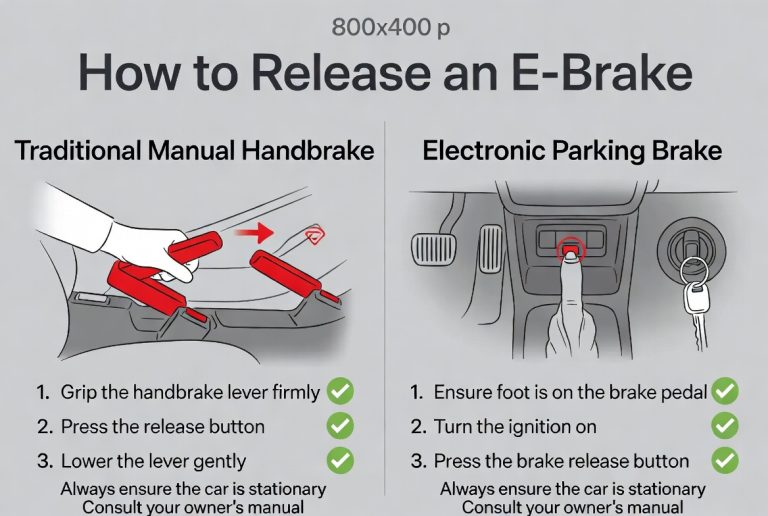
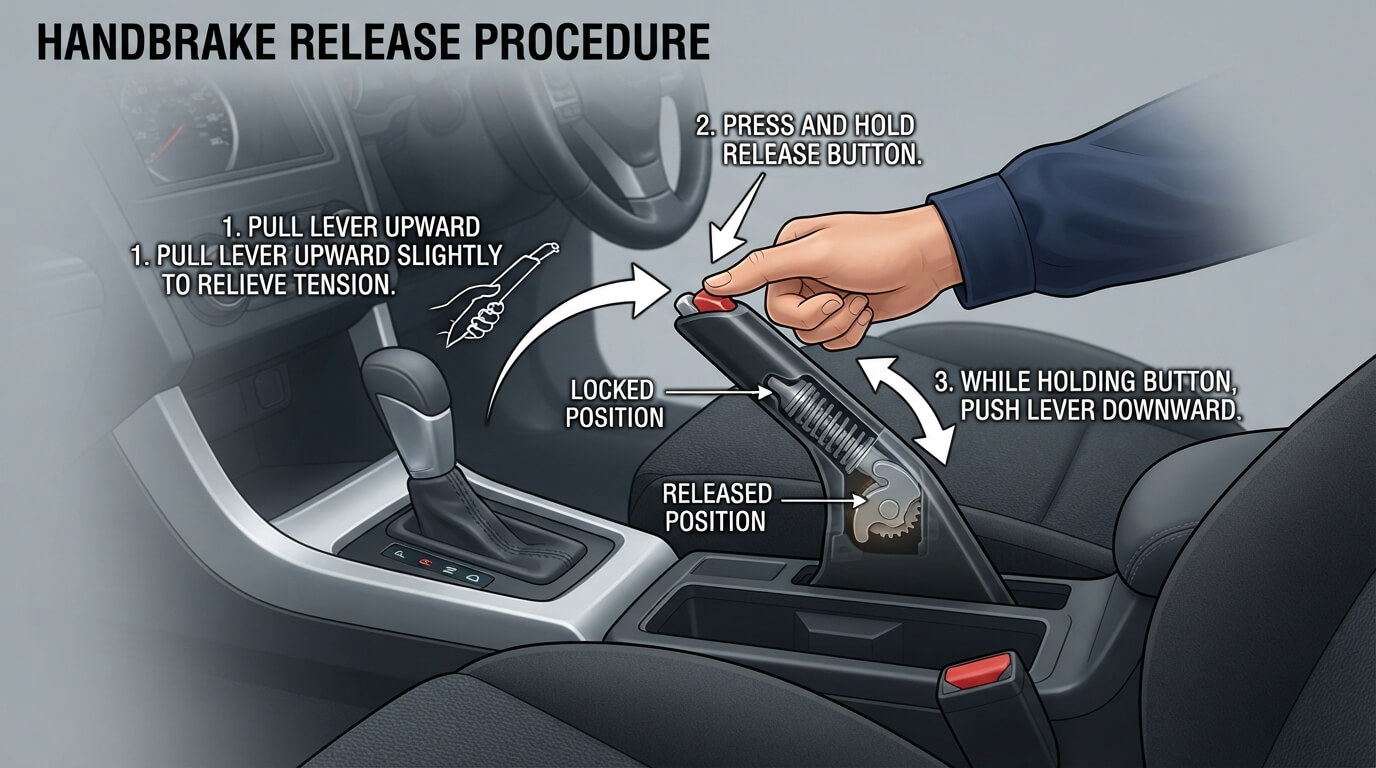
Step Two: For hand brakes, grab the lever firmly and jiggle it side to side gently. Don’t pull hard. Use small motions and let the brake mechanism settle. For foot pedal brakes, press down on the brake pedal slowly, then release it several times. The repeated motion helps loosen the mechanism.
Step Three: After jiggling or pumping, try to fully release the brake. Listen for a clicking sound. This means the brake is releasing properly. If it works, drive slowly to check that everything feels normal.
Step Four: If this doesn’t work after a few tries, move to the next method.
Method Two: Using Heat to Free Up Stuck Brakes
Cold weather and rust often cause brakes to stick. Heat can help break the grip.
Here’s what you do:
Start your car and let it run for a few minutes. The engine heat will warm up the brake system. Turn on the heating to full blast inside your car. This raises the overall temperature under the hood. Drive slowly in a safe area like an empty parking lot. The wheel friction generates heat that helps loosen the brake. Combine this with gentle jiggling of the brake lever or pedal.
This method takes time but works well for freeze-related problems. Give the heat at least ten to fifteen minutes to do its job.
Method Three: The Rock and Roll Method
This technique uses your car’s movement to loosen the brake. Only try this in a safe location with plenty of open space.
The process works like this:
Put your car in reverse and back up slowly while jiggling the brake lever gently. Stop and put the car in drive. Move forward slowly while jiggling the brake. Repeat this back and forth motion several times. The weight shifting in your car can help break the brake free.
This method works best on hand brakes rather than foot pedal brakes. The repeated motion combined with the car’s movement creates enough stress to release the jam. Never do this on a public road or in traffic.
Method Four: Spray and Penetrating Oil
Rust and dirt respond well to penetrating oil. This solution targets the root cause of many stuck brakes.
What you need:
A can of penetrating oil like WD-40 or similar product. A thin tube or spray extension if your oil can has one. Newspaper or rags to catch drips.
Steps to follow:
Open your car’s hood and locate the brake cable. It runs from your brake lever or pedal to the wheels. Spray the penetrating oil around the cable connection points and along the cable itself. Let the oil sit for fifteen to thirty minutes. This gives it time to break down rust and loosen dirt. After waiting, try releasing the brake with gentle motions. Spray again if needed and wait another fifteen minutes.
Repeat this process several times over a few hours if necessary. Patience pays off with this method. The oil gradually loosens the seized parts.
Method Five: Release the Brake Cable Directly
If other methods fail, you can manually release the cable. This requires a bit more mechanical know-how but is still manageable.
Here’s the approach:
Turn off your engine before starting. Open the hood and find the brake cable. Look for where it connects to the brake mechanism or wheel. Sometimes there’s a nut or bolt you can loosen to release tension on the cable. Loosen this bolt gently with a wrench. Don’t remove it completely. Just loosen it enough to take pressure off the cable.
Try releasing the brake now. If it works, tighten the bolt back up slowly. The brake should function normally. If the cable doesn’t come loose easily, stop and try a different method.
This approach works best if you have mechanical experience. If you’re not comfortable working under your car, call a professional instead.
Method Six: Cleaning the Brake Mechanism
Built-up dirt and rust inside the mechanism require cleaning.
You’ll need:
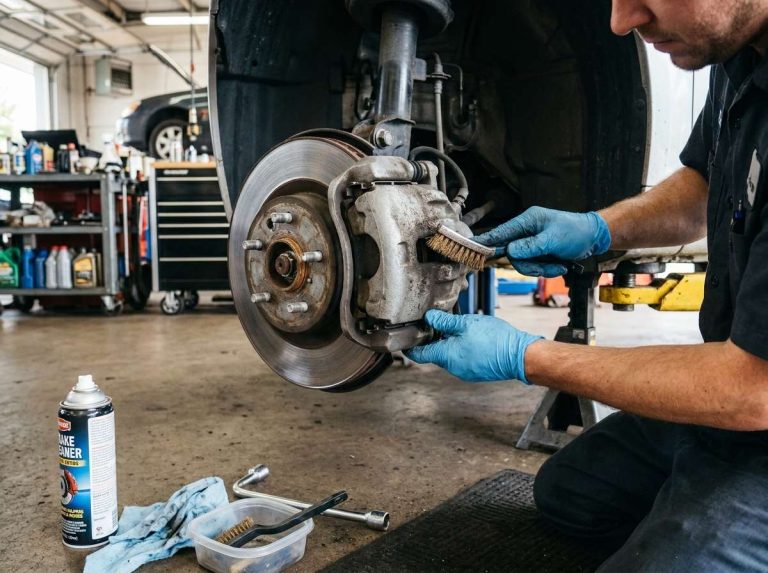
A brush or old toothbrush. A can of brake cleaner. Rags or paper towels. Safety glasses.
The cleaning process:
Wear safety glasses to protect your eyes. Spray brake cleaner on all visible parts of the brake mechanism. Let it soak for a minute. Use the brush to scrub away rust, dirt, and debris. Spray again and scrub harder if needed. Wipe everything clean with rags. Let it dry completely before testing the brake.
This method removes the gunk that prevents brakes from releasing smoothly. It often solves the problem completely.
What to Do If Your Brake Still Won’t Release
If you’ve tried all these methods and the brake remains stuck, you need professional help.
A stuck emergency brake that won’t release can indicate serious problems like cable damage or internal brake system failure. Continuing to drive with a stuck brake damages your car. It creates excessive heat and wears out brake pads faster. You also risk brake failure.
Call a qualified mechanic or visit an auto repair shop. They have specialized tools and expertise to fix complex brake problems. They can identify exactly why your brake is stuck and fix the root cause.
Don’t ignore this problem hoping it will fix itself. It won’t. The earlier you get help, the cheaper the repair usually costs.
Prevention Tips to Avoid Stuck Brakes
Now that you know how to fix a stuck brake, learn how to prevent it from happening again.
Use your brake regularly. Even when parked, engage and release the brake several times a month. This keeps the mechanism from seizing. Clean your brake system annually. Inspect the cables and mechanism for rust and dirt. Clean off anything you find. Park on level ground when possible. Flat surfaces put less stress on the brake system. Avoid extreme heat exposure. Don’t park in the hot sun for extended periods. Heat can damage brake components. Check your brake cables twice yearly. Look for fraying, cracking, or corrosion. Replace damaged cables before they fail. Keep your car’s undercarriage clean. Wash underneath your car regularly to remove salt and dirt that cause rust.
These simple steps keep your brake system healthy and prevent problems before they start.
Foot Pedal Brake vs Hand Brake Release
Some cars have hand brakes while others have foot pedal brakes. The release methods differ slightly.
For hand brakes: The jiggling method works best. Grab the lever firmly and move it side to side with consistent gentle motions. Pull and release repeatedly. The goal is to create movement that loosens the jam. Penetrating oil also works well around the lever mechanism.
For foot pedal brakes: Pump the pedal repeatedly rather than jiggle it. Press down and release several times in quick succession. This pumping motion often breaks free stuck foot pedals. Spraying oil around the pedal assembly helps as well. Apply heat under the car to warm the cable and mechanism.
Both types respond to heat, oil, and repeated motion. The location and design just require slightly different techniques.
Emergency Situations and Safety
If your brake won’t release while driving, stay calm. You’re probably not in immediate danger.
A stuck brake creates resistance but doesn’t prevent steering or primary braking. You can still control your car. Drive slowly to a safe location like a mechanic’s shop or the side of the road. Don’t push the car hard. Excessive speed makes the brake hotter and can cause real problems.
Once you stop, try the gentle release methods. Call for roadside assistance if nothing works. Never ignore warning signs like smoke from the wheels or burning smells. These indicate serious brake issues that need immediate attention.
Your safety matters most. If you feel unsafe driving, call a tow truck and have a professional move your vehicle.
When DIY Isn’t Enough
Some brake problems require professional tools and knowledge.
You need professional help if: The brake won’t release after trying multiple methods at home. You hear grinding or scraping sounds that persist after cleaning. Fluid leaks appear near the brake system. The brake light won’t turn off even when fully released. The cable shows visible damage like fraying or kinks.
Professional mechanics have brake system diagnostic equipment. They can pinpoint exactly what’s wrong and fix it properly. Attempting complex repairs without proper tools can cause more damage and cost you more money later.
Summary: Quick Action Steps
You’re stuck with an emergency brake that won’t release. Here’s what to do right now.
First: Try the simple jiggling or pumping method. This works often and takes only minutes. Second: Apply heat by running the engine and using warm air. Let this work for ten to fifteen minutes. Third: Use penetrating oil on the brake cables and mechanism. Wait for it to soak. Fourth: Try the rock and roll method in a safe empty space. Fifth: Clean the brake mechanism with brake cleaner and a brush.
If none of these work after giving each one time to work, call a mechanic. Your brake system is complex, and professional diagnosis prevents costly mistakes.
Final Thoughts
A stuck emergency brake is frustrating but rarely a cause for panic. Most of the time, you can fix it yourself using simple tools and techniques. The methods in this guide cover nearly every situation you’ll encounter.
Start with the easiest approaches. Progress to more complex solutions only if needed. Use patience and let your chosen method have time to work. And remember that calling a professional is always better than causing additional damage through trial and error.
Your car’s brake system keeps you safe every single day. When something goes wrong with your emergency brake, treat it seriously and fix it promptly. The time you invest now prevents bigger problems down the road and keeps you driving safely.
Take care of your brake system, and it will take care of you. Happy and safe driving ahead.