How to Know If Brake Pads Are Worn?
Your car’s brakes are among the most important safety features you have. They keep you safe. They protect your passengers. They stop your vehicle when you need to slow down or come to a complete halt. But have you ever thought about what actually makes your brakes work? The answer lies in your brake pads.
Brake pads wear out over time. This happens naturally with regular use. The question is: do you know when yours need replacement? Many drivers don’t. They wait until they notice a problem. By then, they might already be driving an unsafe vehicle.
This guide will teach you everything you need to know about detecting worn brake pads. We’ll cover the signs. We’ll explain what you should listen for. We’ll show you what to look for. By the end, you’ll feel confident identifying when your brake pads need attention.
What Are Brake Pads and Why Do They Matter?
Let’s start with the basics. Your brake pads are small metal and friction material components. They sit inside your brake calipers. When you press the brake pedal, hydraulic pressure pushes these pads against your brake rotors. This friction stops your wheels from spinning. Your car slows down and stops.
The friction material on brake pads wears down with use. It’s designed to do this. The material sacrifices itself to keep you safe. Eventually, you’ll wear through most of that friction material. At that point, you need new pads.
Knowing when to replace your brake pads matters for several reasons:
Safety: Worn pads reduce your stopping power. Your car takes longer to stop. This increases accident risk.
Cost: Waiting too long to replace pads can damage your rotors. Rotor repair or replacement costs much more than pad replacement.
Performance: Fresh pads provide better braking performance. Your vehicle responds faster when you hit the brake pedal.
Noise: Worn pads squeak and squeal. You’ll hear annoying sounds every time you brake.
The Obvious Signs: What You’ll Hear
One of the easiest ways to know your brake pads are worn is by listening. Your ears can tell you plenty about your braking system’s health.
High-Pitched Squealing
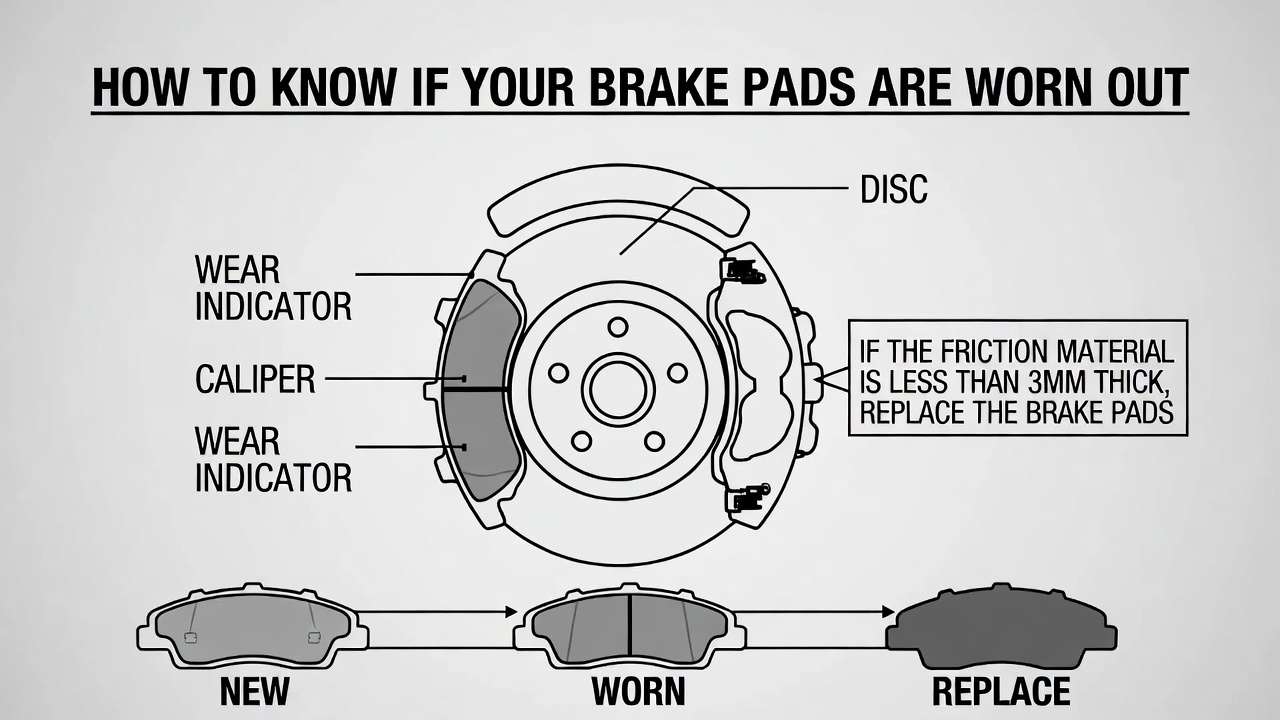
Do you hear a high-pitched squealing sound when you brake? This is often the first warning sign. Most brake pads have a wear indicator built in. This indicator is a small metal tab. As your pads wear down, this tab gets closer to the brake rotor.
When the tab touches the rotor, it creates that squealing sound. Think of it as your brake system talking to you. It’s saying, “Hey, replace me soon.”
Here’s the thing: some brake pads squeal even when they’re not worn. Cold brakes, moisture, or certain pad materials can cause squealing. But if you hear it frequently, especially when braking, worn pads are likely the culprit.
Grinding Noises
Grinding sounds are more serious. If you hear a grinding noise when you brake, your pads might be completely worn down. You could be metal-on-metal. This means the brake pad backing plate is grinding directly against the rotor.
Grinding indicates you’ve waited too long for replacement. You may have already damaged your rotors. This is expensive. Stop driving immediately and get your brakes checked. Don’t delay on this one.
Metallic Scraping
A light scraping or metallic clicking sound during braking is another warning. This could mean your pads are very thin. The backing plate is making contact with the rotor. Again, you need replacement soon.
Visual Inspection: What You Can See
Listening is helpful, but seeing is even better. You can visually inspect your brake pads. Some people feel nervous about doing this, but it’s actually quite easy.
Checking Pad Thickness
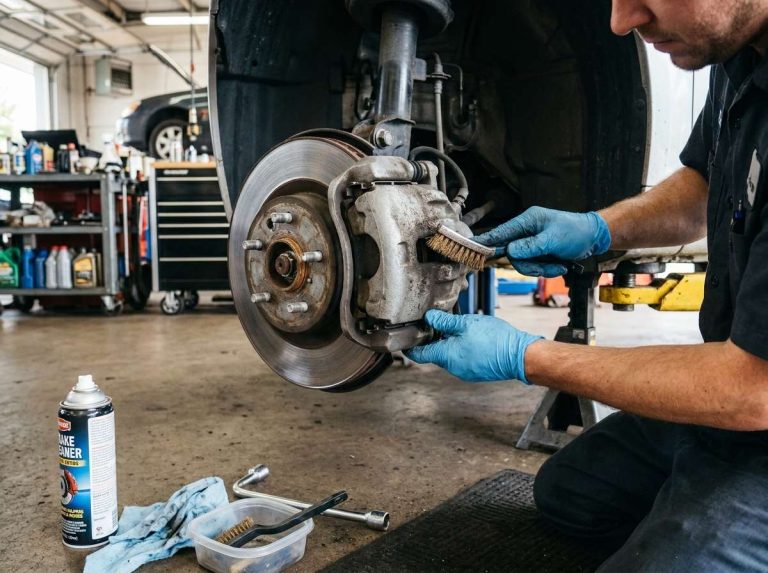
Park your car on a flat, safe surface. Let the brakes cool completely. Look at your wheels. You’ll see the brake caliper behind the wheel. Inside the caliper, you’ll find the brake pad.
Look for the thickness of the friction material. Healthy brake pads are usually about a quarter-inch thick (6mm). When pads wear down to about 2-3mm, they’re getting close to replacement. At 1mm or less, they’re dangerous.
If you can barely see the friction material, replace them now. If the pad looks paper-thin, don’t drive the car anywhere except to the mechanic.
You can also try the penny test. Place a penny into the groove of your tread with Lincoln’s head facing down. If you can see the top of Lincoln’s head, your pads might be too thin. This test works better for tires, but some people apply it to brake pads too.
What to Look For
Examine the pad surface itself. Is it smooth or cracked? Cracks indicate the pads are failing. Do you see uneven wear on the pad surface? Uneven wear suggests other brake system problems. Uneven wear means you might need more than just pad replacement.
Look at the rotor too. If it’s scored, scratched, or grooved, your pads wore too long. The rotor might need replacement or resurfacing.
Check both sides. Your car has pads on all four wheels. Front pads wear faster than rear pads. Check the front pads first. But don’t forget to look at the rear pads too.
The Visual Red Flags
Some signs demand immediate action. See any of these, and your pads need replacement today:
- Friction material is less than 2mm thick
- Cracks or missing chunks of material
- Uneven wearing across the pad surface
- Deep scoring on the rotor
- Fluid pooling near the caliper (indicates a leak)
- Rust covering the entire pad surface
How Your Brakes Feel: Performance Clues
Beyond sounds and sights, your brakes communicate through how they feel. Pay attention to these sensations when you drive.
Soft or Spongy Brake Pedal
Does your brake pedal feel soft or mushy? Does it sink toward the floor? This suggests air in your brake lines or low brake fluid. While air in the lines isn’t directly related to pad wear, low brake fluid often is. As pads wear, you need more fluid to push them fully. If you don’t top up your fluid, the level drops. The system doesn’t work right.
Check your brake fluid level. It’s usually a clear or light amber color in a translucent reservoir. Top it off if needed. If it keeps dropping, you have a leak. Get it checked.
Longer Stopping Distance
One of the most important clues is how quickly your car stops. Do you need to brake harder to stop the same distance? Does your car take longer to come to a complete halt? This means your pads aren’t gripping the rotor as well. Worn pads provide less friction. Less friction means longer stopping distances.
This is a serious safety concern. Test this on a safe, empty road at different speeds. If you notice increased stopping distance, have your brakes inspected immediately.
Brake Pedal Pulsing
Does your brake pedal pulse or vibrate when you brake? This feeling usually happens during hard braking. Pulsing can indicate worn pads, but it also suggests warped rotors. Warped rotors often happen because pads wore too far. The rotor overheated and warped.
Hard Brake Pedal
Sometimes worn pads create the opposite problem. Your brake pedal feels hard and requires extra pressure. This usually means your brake booster isn’t working right. But it can also develop as pads wear. You might need to press harder to engage the worn pads.
Your Car’s Dashboard: Technology Is Helping
Modern cars have technology on your side. Many vehicles include brake pad wear sensors. These sensors monitor your pads automatically.
Dashboard Warning Lights
Look at your dashboard. Do you see a brake light? Some cars display a brake pad warning light. It looks like a circle with curved lines (like a brake symbol) or it might say “BRAKE PAD WEAR” in text.
This light comes on when a sensor detects low pad thickness. Different cars have different sensor systems. Some activate at 2-3mm remaining. Others activate at different levels.
When this light appears, don’t panic. You usually have some time left. But schedule service soon. Don’t wait weeks or months.
Checking Your Manual
Your owner’s manual contains information about your specific car’s brake pad sensor. It might explain the warning light’s meaning. It might tell you when to expect service. Reference your manual if you’re unsure.
Brake Pad Wear: What Causes Faster Wearing?
Brake pads don’t all wear at the same rate. Several factors affect how quickly your pads degrade.
Driving Habits
How you drive impacts brake pad life significantly. Aggressive braking wears pads faster. Constant stop-and-go driving burns through pads quickly. Long mountain drives with continuous braking accelerate wear. Towing heavy loads creates more friction and faster wear.
Conversely, smooth, gentle braking extends pad life. Avoiding hard stops preserves your pads. Anticipating stops and slowing gradually reduces wear.
Road Conditions
Where you drive matters. City driving with frequent stops wears pads faster than highway driving. Mountains with steep descents generate more heat and wear. Salt on winter roads corrodes brake components and can accelerate wear.
Desert heat affects brake performance. Cold climates can cause delayed braking initially. All these conditions impact how fast your pads wear down.
Brake Pad Quality
Not all brake pads are equal. Cheap pads might wear faster. They often use lower-quality friction material. Premium pads sometimes last longer. They cost more upfront but might save money over time.
Some pads are designed for performance. Others prioritize quiet operation. Ceramic pads typically last longer than semi-metallic pads. Organic pads wear fastest but are gentler on rotors.
Rotor Condition
Warped or damaged rotors cause brake pads to wear unevenly and faster. Poorly maintained brakes create more friction and heat. This accelerates pad degradation. Bad rotors force pads to work harder to stop your car.
Vehicle Weight
Heavier vehicles put more stress on brake pads. An SUV with several passengers and cargo wears pads differently than a light sedan with one driver. Weight distribution affects brake pad wear patterns.
How Often Should You Replace Brake Pads?
There’s no universal answer. Brake pad life varies widely. But here are some general guidelines.
Typical Lifespan
Most brake pads last between 25,000 and 70,000 miles. This is a huge range because it depends on the factors mentioned above. Some pads last only 15,000 miles. Others make it to 100,000 miles or more.
Regular Inspections
The best approach is regular inspections. Have your brakes checked during oil changes. Make it part of your routine maintenance. Tell your mechanic to inspect brake pad thickness. Ask them to check for uneven wear.
Don’t rely on memory. Write down the inspection results. Track the pad thickness over time. When you see the trend heading toward replacement, you’ll be prepared.
Professional Assessment
Your mechanic can predict when you’ll need replacement based on wear patterns. If your pads lose 1mm every 10,000 miles, you can calculate when you’ll hit the minimum thickness.
What to Do When You Find Worn Brake Pads
You’ve identified that your brake pads are worn. What now?
Schedule Service Immediately
Contact your trusted mechanic or dealership. Describe what you’ve noticed. Tell them about sounds, feelings, or visual inspection results. Schedule an appointment as soon as possible.
Don’t procrastinate. Worn brakes are a safety issue. They put you, your passengers, and other drivers at risk.
Get a Professional Inspection
A qualified technician will do a thorough brake system inspection. They’ll measure pad thickness precisely. They’ll check rotor condition. They’ll inspect brake fluid, brake lines, and all components.
This inspection reveals whether you need only pads or additional work. You might need new rotors. You might need brake fluid replacement. You might need caliper service.
Consider All Recommendations
Listen to your mechanic’s recommendations carefully. Ask questions if you don’t understand. Sometimes the cheapest option isn’t the best. Quality brake work is worth the investment.
Don’t ignore recommendations for rotor replacement or resurfacing. Using new pads on damaged rotors wastes money. The new pads will wear out quickly.
Budget for the Work
Brake pad replacement costs vary. Front pad replacement might cost $150-$300 per axle. Rear pads typically cost similar amounts. If you need rotors replaced, add another $150-$400 per axle.
It’s an expense, but it’s necessary. Compare quotes if you want, but don’t choose based solely on price. Choose based on quality and reputation.
Prevention: Making Your Brake Pads Last Longer
You can extend brake pad life with smart driving habits.
Drive Smoothly
Anticipate stops. Brake gently and gradually. Avoid sudden, hard stops when possible. Smooth braking creates less heat and friction. Your pads will last longer.
Reduce Weight
Don’t carry unnecessary cargo. Extra weight forces brakes to work harder. Remove items from your trunk. Store your roof rack when not using it.
Avoid Riding the Brake
Don’t rest your foot on the brake pedal while driving. This creates constant friction. It heats the brakes unnecessarily. Keep your foot off the pedal between stops.
Use Engine Braking
When going downhill, shift to a lower gear. Use engine braking instead of constant brake application. This reduces brake pad wear on long descents. It’s especially important on mountains.
Maintain Other Brake Components
Keep your entire brake system healthy. Replace brake fluid as recommended. Have rotors resurfaced when needed. Keep brake lines free of leaks. Good maintenance of everything extends pad life.
Choose Quality Pads
Invest in good-quality brake pads when you replace them. Quality materials last longer. They perform better. They might cost more initially, but they often save money over time.
Common Brake Pad Myths Debunked
Let’s clear up some confusion about brake pads.
Myth: All Squealing Means Worn Pads
False. New pads sometimes squeal. Moisture, temperature, and pad material affect noise. Squaling alone doesn’t always mean replacement time. But consistent squealing warrants inspection.
Myth: Pads Last the Lifetime of Your Car
Absolutely false. Brake pads require regular replacement. If someone claims their pads never need replacement, they’re mistaken. Every car needs new pads eventually.
Myth: You Don’t Need to Replace Pads Until They’re Completely Worn
Wrong. You should replace pads when they reach 2-3mm thickness. Waiting until they’re nearly gone damages rotors. This increases cost significantly.
Myth: Warranty Covers Brake Pad Replacement
Usually false. Most car warranties don’t cover brake pad replacement. Brake wear is considered normal maintenance. You pay for replacement yourself.
Myth: Cheaper Pads Work Just as Well
Not necessarily. Cheap pads often use poor-quality materials. They might wear faster. They might not perform as well. They might create more noise. Spending a bit more on quality pays off.
DIY Brake Pad Inspection vs. Professional Service
Can you inspect brake pads yourself? Yes, partially. Can you replace them yourself? Maybe, depending on your skill level.
Self-Inspection Benefits
Visual inspection costs nothing. You can check pad thickness anytime. You can look for obvious problems. This gives you a starting point.
Self-inspection helps you understand your brake system. You become more aware of your car’s needs. You can catch problems early.
Self-Inspection Limitations
Self-inspection can’t measure rotor condition accurately. You can’t check brake fluid quality. You can’t test brake system pressure. You can’t diagnose all problems.
Trust professional inspection for accuracy. Mechanics have specialized tools. They have training and experience. They’ll spot problems you might miss.
DIY Replacement Considerations
Replacing brake pads yourself requires tools and knowledge. You need a jack, jack stands, lug wrench, and brake tools. You need to know proper procedures. Mistakes can create safety hazards.
If you’re experienced with car work, DIY replacement is possible. If you’re unsure, let professionals handle it. Brake safety is too important for mistakes.
Key Takeaways: Remember These Points
You now understand how to detect worn brake pads. Let’s recap the most important information:
- Listen carefully. Squealing often means wear is coming. Grinding means serious problems.
- Look at your pads. Check thickness regularly. Replace when they reach 2-3mm.
- Pay attention to how brakes feel. Longer stopping distances are serious. Soft pedals need attention.
- Monitor dashboard warnings. Brake pad warning lights indicate service time.
- Drive smoothly. Gentle braking extends pad life.
- Get professional inspections. Have your brakes checked regularly.
- Replace pads promptly. Don’t wait until pads are completely worn.
- Maintain your whole brake system. Quality work now prevents expensive problems later.
Final Thoughts on Brake Pad Maintenance
Your brakes are critical for safety. You trust them every time you drive. Maintaining brake pads is one of the simplest ways to ensure your car remains safe.
You don’t need advanced mechanical knowledge to understand brake pad wear. You don’t need expensive tools to inspect them. You just need to pay attention. Listen to your car. Look when you get a chance. Feel how your brakes respond.
Start checking your brake pads today. Look at your front pads this weekend. Make a note of what you see. Check again in a few months. Track the wear pattern. Schedule service when you see the thickness decreasing.
Your future self will appreciate your attention now. Your passengers will be safer. Your wallet will thank you when you avoid expensive rotor damage. And your car will perform better with fresh, healthy brake pads.
Take brake maintenance seriously. Your safety depends on it. Now that you know the signs, you’re equipped to keep your brakes in top condition. Drive safely out there.

Peterson is an automotive enthusiast and auto parts reviewer with a passion for vehicle maintenance, upgrades, and performance. He enjoys researching and testing car parts, tools, and accessories to help drivers make informed buying decisions. Through AutoPartsTalk.com, Peterson shares honest reviews, practical maintenance tips, and expert guides to keep vehicles running safely and efficiently.