How to Change Fuel Pump?
Your car’s fuel pump is like the heart of your vehicle’s fuel system. It pushes gas from your tank to the engine so your car can run smoothly. When your fuel pump starts to fail, you might notice your engine hesitates, stalls, or won’t start at all. The good news? You can replace a fuel pump yourself without spending a fortune at a repair shop.
This guide walks you through everything you need to know about fuel pump replacement. We’ll cover the signs that your pump needs replacing, what tools you’ll need, and the exact steps to get the job done right.
Why Your Fuel Pump Matters
Your fuel pump does a simple but critical job. It sits inside your fuel tank and sucks fuel up through fuel lines to your engine. Without a working pump, gas just sits in your tank going nowhere. Your car won’t start, or if it does, it will run rough and unpredictable.
The fuel pump works hard every time you drive. Over time, it can wear out, rust, or fail. When this happens, you need to replace it fast. Many people panic and head straight to a dealership, but a fuel pump replacement doesn’t have to drain your wallet if you know what you’re doing.
Signs Your Fuel Pump Is Failing
Before you start any fuel pump repair work, make sure you really need to replace your pump. Here are the most common warning signs that point to a failing fuel pump:
Engine Won’t Start Your car turns over, but the engine refuses to start. You turn the key and hear the starter motor, but nothing fires up. This is often the first clue that your fuel pump has stopped working.
Engine Sputtering and Stalling You’re driving down the road and your engine suddenly coughs and sputters. The car might even cut out completely for a few seconds before it starts running again. This happens because the pump can’t deliver a steady flow of fuel to your engine.
Difficulty Starting Your car takes several tries to start. You might hear the engine cranking several times before it finally turns over. A dying fuel pump often gives warning signs like this before it totally quits.
Loss of Power Under Pressure When you step on the gas, your car doesn’t respond the way it should. Instead of accelerating smoothly, it hesitates or jerks. This means the fuel pump isn’t pushing enough gas to the engine when you demand it.
Whining Noise from the Tank A healthy fuel pump makes a quiet, smooth sound. If you hear a loud whining or buzzing noise coming from under your car near the fuel tank, your pump is struggling and needs replacement soon.
Check Engine Light The dreaded check engine light comes on. While this light can mean many things, it sometimes points to a fuel pressure issue caused by a bad pump.
Tools and Parts You’ll Need
Replacing a fuel pump is doable for a beginner, but you need the right equipment. Here’s what you should gather before you start:
Essential Tools
- Socket set and wrenches
- Screwdrivers (both Phillips and flathead)
- Fuel pressure gauge
- Gasket scraper (plastic or wood, never metal)
- Container for fuel that drips out
- Drain pan for any remaining fuel
- Flashlight or work light
- Jack and jack stands
- Rags and shop towels
- Safety glasses
- Work gloves
The New Fuel Pump Buy a replacement fuel pump that matches your vehicle’s make and model exactly. You’ll also need a new fuel pump gasket and seal kit. These parts wear out during removal and can’t be reused safely.
Optional but Helpful
- Fuel line disconnect tool (makes removing fuel lines easier)
- Fuel filter replacement kit (while you have the tank open, it’s smart to replace this too)
- Siphon pump (to remove excess fuel)
Getting Ready: Safety First
Safety matters most when you work with fuel. Your fuel tank holds flammable liquid, so you have to be smart about this project.
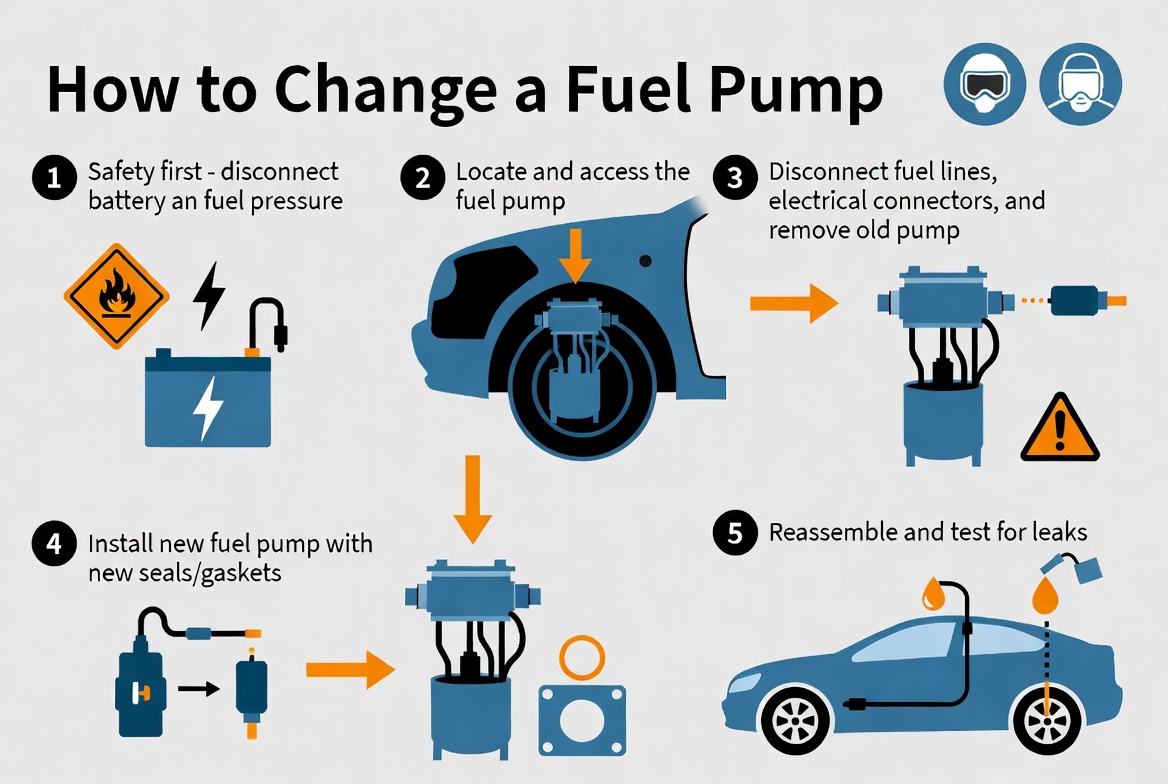
Disconnect the Battery Always disconnect the negative battery cable first. This stops any electrical spark that might ignite fuel vapor. Leave it disconnected during the entire replacement process.
Release Fuel Pressure Your fuel system holds pressure even when the engine is off. You need to release this pressure before you open anything. Find the fuel pump fuse in your fuse box and pull it out. Start your engine and let it run until it dies. Now crank it a few more times. This empties the fuel lines of pressure so you can work safely.
Park on Flat Ground Work in a safe location where your car sits level. You need stable ground under your jack stands. Never work under a car supported only by a jack.
Have Plenty of Ventilation Fuel vapors are dangerous. Work outside or in a well-ventilated garage with the door open. Never work in a closed space.
Steps to Replace Your Fuel Pump
Step One: Lift and Support Your Vehicle
Jack up your car using the proper jack points. Your owner’s manual shows you exactly where these are located. Once your car is high enough to work under safely, lower it onto jack stands. Never trust just a jack to hold your car up while you work under it.
Step Two: Locate Your Fuel Tank Access Panel
Most cars have an access panel in the trunk or under the back seat. This panel lets you reach the fuel pump without dropping the entire tank. Open it up and look inside. You’ll see the fuel pump assembly sitting on top of the fuel tank.
Some vehicles require you to drop the entire fuel tank. Check your owner’s manual to know what your specific car needs. Tank removal is more complex, so if your car allows access through a panel, you’re in luck.
Step Three: Disconnect the Fuel Lines
Look at the fuel pump assembly. Several fuel lines connect to it. These lines carry fuel in and out. Gently pry off or press the quick-disconnect fittings to remove each line. Have your drain pan ready because fuel will drip out.
Work slowly and carefully. These connections are small and easy to damage. If fuel spills out, let it drain into your pan and clean it up completely.
Step Four: Unplug the Electrical Connector
The fuel pump has an electrical plug that powers it. This connector usually sits on top of the pump assembly. Gently pull it straight out. Don’t yank or twist it, or you might break the delicate wires inside.
Step Five: Remove the Pump Assembly
Most fuel pump assemblies hold down with bolts around the perimeter. Use your socket wrench to remove these bolts. Keep them in a safe place so you don’t lose them. They’re small but essential.
Once all bolts are out, carefully lift the entire assembly straight up. It should pop out of the fuel tank. Inside your tank, you’ll see a rubber gasket or seal where the pump sat. This gasket almost always needs replacing, so plan on buying a new one.
Step Six: Drain the Old Pump
The old pump probably still has fuel in it. Hold it over your drain pan and let the fuel come out. Wipe off any excess fuel with a clean rag.
Step Seven: Install the New Pump
Before you install your new fuel pump, check that all the new gaskets and seals come with it. You should have a complete seal kit in your replacement part.
Install any new seals or gaskets onto the new pump assembly. Take your time here because these seals prevent fuel leaks later. Make sure they sit flat and straight.
Carefully lower your new pump assembly into the fuel tank opening. It should slide in smoothly. If you feel resistance, stop and check that everything is lined up correctly.
Step Eight: Bolt Everything Down
Once your pump sits right in the tank, line up the bolt holes. Insert your bolts and tighten them evenly. Don’t over-tighten these bolts or you might strip them. Snug them up until they feel firm, then give each one a final quarter turn.
Step Nine: Reconnect the Fuel Lines
Take your fuel lines and push them back onto the pump assembly. You’ll feel them click into place when they’re seated properly. Give each one a gentle tug to make sure it’s locked on tight.
Step Ten: Plug in the Electrical Connector
Now reconnect the power cable to your fuel pump. Push it straight on until it clicks. Listen for that click sound that tells you it’s fully seated.
Testing Your Work
Before you put your car back together completely, test your fuel pump installation.
Reconnect your negative battery cable. Turn your ignition on without starting the engine. You should hear a brief whirring sound from your fuel tank area. This is your new pump priming the fuel system. It should run for just a few seconds and then stop.
If you don’t hear anything, there’s a problem. Turn the ignition off and check all your connections again. Make sure the electrical plug is fully seated and fuel lines are clicked on tight.
If everything sounds good, you can start the engine. It might take a few extra seconds to start since the fuel system needs to build up pressure again. That’s completely normal. Don’t panic and keep cranking.
Once your engine starts, listen for any unusual sounds. Check under your car for fuel leaks where you worked. Look around the fuel lines and the pump assembly. Any drips mean you have a connection problem that needs fixing before you drive the car.
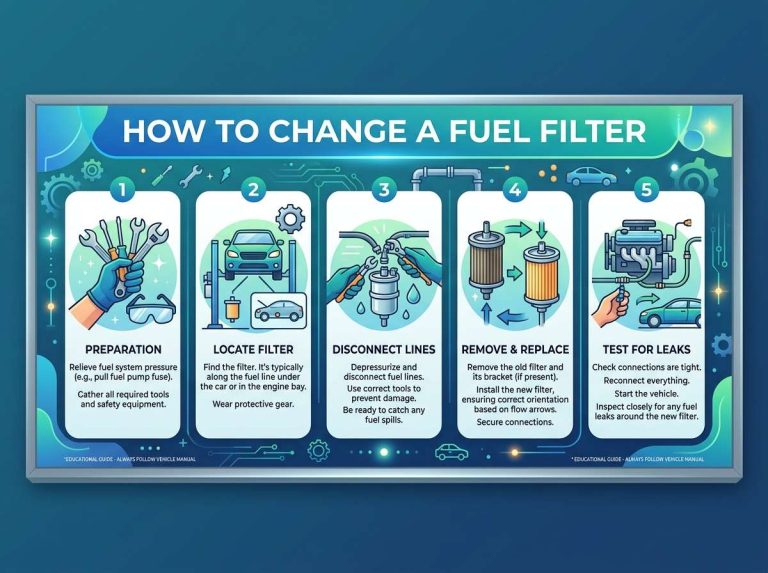
Replacing Your Fuel Filter While You’re At It
Since you have access to your fuel system already, now is the perfect time to replace your fuel filter too. A clogged fuel filter slows down your new pump and makes it work harder than it should.
Most fuel filters sit along the fuel line under your car or inside the engine bay. They’re simple to replace. Just disconnect the lines, unbolt the old filter, and install a new one. It takes about ten minutes and saves you problems down the road.
Reassemble and Drive
Once everything is connected and tested, put your access panel back on. Lower your car off the jack stands carefully. Make sure nothing is under your vehicle before you do this.
Tighten your lug nuts back on if you removed a wheel. Do a final check around the fuel tank area for any leaks. Start your engine one more time to confirm everything still works.
Now take your car for a test drive. Listen for the engine to run smoothly. Feel how it accelerates and responds. Your fuel pump replacement is complete when your car runs like it used to.
Common Mistakes to Avoid
Don’t rush through fuel pump replacement. Take your time and avoid these common errors that people make:
Skip fuel pressure testing. Always check your fuel pressure with a gauge after installation to make sure it’s in the right range.
Reuse old seals and gaskets. Always buy a complete seal kit with your new pump. Old seals can leak and cause fuel system problems.
Over-tighten the bolts. Snug them firmly but don’t crank down on them with all your might. You can strip threads and cause bigger problems.
Forget to release fuel system pressure. This is dangerous and can cause fuel to spray everywhere. Always release pressure before you touch anything.
Work in a closed garage. Fuel fumes are toxic and flammable. Always work outside or with excellent ventilation.
When to Call a Professional
If you don’t feel confident about doing this work, a professional mechanic can handle it. If your vehicle requires dropping the entire fuel tank, this job gets harder and messier. Some cars also have fuel tanks positioned in difficult spots that make access tough for a beginner.
Signs you should take it to a shop include: You can’t locate the fuel pump access panel, your car’s fuel tank is hard to reach, you feel nervous working with fuel systems, or you don’t have the proper tools.
Save Money on Fuel Pump Replacement
Changing your fuel pump yourself saves you hundreds of dollars compared to a dealership repair. A fuel pump installation at a shop can cost between 400 to 1000 dollars depending on your vehicle. The parts alone cost 150 to 500 dollars, so if you do the work yourself, you only pay for parts and save all that labor cost.
Buy quality replacement parts. A cheap fuel pump might save you money now but fail again in a few years. Invest in a pump that will last.
Final Thoughts on Your Fuel Pump Installation
Replacing your fuel pump is not as scary as it sounds. Take your time, follow these steps, and you’ll have your car running smoothly again. Remember to work safely, disconnect your battery, and release fuel system pressure before you start.
Your car will thank you with reliable starts and smooth acceleration. You’ll feel proud knowing you fixed your own vehicle and saved a bunch of money doing it. The fuel pump replacement skills you learn here will help you tackle other fuel system issues in the future too.
Don’t let a bad fuel pump stop you. Get the right tools, take precautions, and change that pump yourself. You’ve got this.