5 Best Ignition Coils for Honda Civic In 2026
If your Civic has started to shake at idle, stumble when you hit the gas, or throw a check engine light with a misfire code, there’s a good chance one or more ignition coils are on their way out. The good news is that this is one of the cheapest and easiest repairs you can do on a Civic, even if you’ve never popped the hood for anything more than checking oil.
In this guide, we dig into five of the most popular ignition coil options sold for Honda Civic models, covering the 1.7L, 1.8L, and mixed-engine setups that span several generations of this car. We’ll walk through what each one offers, who it’s really built for, and where it falls short, so you can pick the right part instead of guessing.
Before we jump into the reviews, here’s a quick rundown of how ignition coils work and why they fail, so the rest of the article makes more sense even if this is your first time replacing one.
Why Ignition Coils Fail on a Honda Civic
An ignition coil takes the low voltage from your battery and steps it way up, enough to fire a spark plug and ignite the fuel-air mix in the cylinder. Every cylinder on a Civic has its own coil sitting right on top of the spark plug, which is why this setup is often called “coil-on-plug.”
Over time, heat cycles, engine vibration, and plain old age wear down the internal windings and the rubber boot that seals the coil to the spark plug well. Oil leaks from a valve cover gasket can also seep into that well and slowly cook the coil from the outside. Once a coil starts to break down, you’ll usually notice one or more of these signs:
- A rough idle or a noticeable shake at a stop light
- Reduced power or hesitation when accelerating
- A check engine light with a P0301 through P0304 code (or higher, depending on cylinder count)
- Poor fuel economy that seems to come out of nowhere
- Occasional stalling, especially in damp weather
Since all four coils go through the same heat and mileage, it’s common for one to fail first and the rest to follow not long after. That’s why nearly every product on this list is sold as a full set of four rather than a single unit.
Quick Comparison Table
| Product | Best For | Included Spark Plugs | Terminal Type | Approx. Price Range |
|---|---|---|---|---|
| A-Premium Set of 4 Ignition Coil Pack – 3-Pins | Budget buyers wanting coils only | No | 3-pin | $$ |
| UF672 Coil & 97390 Double Iridium Spark Plug | One-stop tune-up | Yes | 3-pin | $$$ |
| UF400 Set of 4 for 1.7L Civic | Older Civic owners (1.7L engine) | No | 2-pin | $$ |
| A-Premium Set of 4 Coil Pack and Iridium Spark Plugs | Full tune-up on a budget | Yes | 3-pin | $$$ |
| UF582 4-Pack for 1.8L Civic | Direct OE-style replacement | No | 3-pin | $$ |
Keep in mind that fitment on a Civic depends heavily on engine size and generation, not just the model name. A 1.7L seventh-generation Civic and a 1.8L eighth-generation Civic use completely different coils, so always confirm your engine displacement before you add anything to your cart.
It’s also worth knowing that a failing coil rarely fails alone in silence. Most drivers get some kind of warning first, a flicker in idle smoothness, a slight lag off the line, or a check engine light that comes and goes. Catching those early signs before a full stall or a stuck-in-limp-mode drive home saves both time and a possible tow bill, which is part of why this repair is worth tackling as soon as symptoms show up rather than waiting for a cylinder to drop out completely.
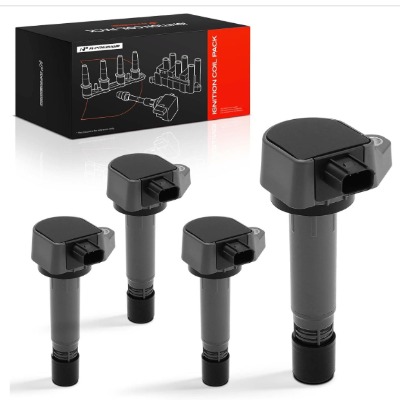
1. A-Premium Set of 4 Ignition Coil Pack – 3-Pins
Product Description
This is A-Premium’s entry-level ignition coil set, sold as a pack of four with a standard 3-pin connector layout that matches the factory wiring harness on many Civic trims. It’s a coils-only kit, meaning it does not come bundled with spark plugs, so it’s aimed at drivers who only need to replace the coil itself and plan to keep their current plugs or buy them separately.
Best Use Cases
This set works well if you’ve already diagnosed a coil issue through a code reader and just want to swap the failing parts without paying extra for plugs you don’t need yet. It’s also a solid pick for a full preventive replacement across all four cylinders once one coil starts acting up, since coils from the same batch of mileage tend to fail close together.
Key Features Explained Simply
- 3-pin plug design: This matches the factory-style connector, so you won’t need to cut or splice any wires during install.
- Bolt-on mounting: The coil bolts straight to the valve cover in the stock location, using the same single bolt setup as the factory part.
- Set of four: You get one coil for every cylinder, which keeps spark output even across the engine instead of leaving one old coil mismatched with three new ones.
Real-Life Usage Insight
A common scenario for this kind of coil is a Civic owner who gets a misfire code on one cylinder, then decides to just replace all four at once rather than dealing with a repeat trip to the parts store a few months down the road. Because the coils don’t include plugs, this approach tends to appeal to drivers who recently replaced their spark plugs already and don’t want to pay twice for parts still in good shape.
Pros and Cons
Pros:
- Lower price point since there are no bundled plugs
- Straightforward plug-and-play install with the factory connector
- Good option for a same-part replacement after a diagnostic scan
Cons:
- You’ll need to buy plugs separately if they’re also worn
- Aftermarket coils in this price bracket sometimes have shorter service life than OE parts, so keep receipts for warranty claims
- Fitment varies by trim and engine code, so double-checking compatibility before buying matters more here than with kits that list broader coverage
Performance Discussion
In day-to-day driving, a fresh set of these coils typically smooths out idle roughness and restores the snap you lost from a weak cylinder. Spark strength on aftermarket coils in this tier is usually adequate for stock engines, though drivers running higher boost or a tune sometimes report needing to step up to a higher-output coil down the road.
Ease of Use
Installation is about as beginner-friendly as engine work gets. On most Civic engine bays, you disconnect the negative battery terminal, unplug the coil connector, remove the single mounting bolt, pull the old coil straight up, and drop the new one in. Expect around fifteen to twenty minutes per coil if this is your first time, faster once you’ve done one.
Value for Money
For drivers who only need the coil itself, this set delivers solid value. You’re not paying for plugs you may not need, which keeps the total cost down compared to combo kits.
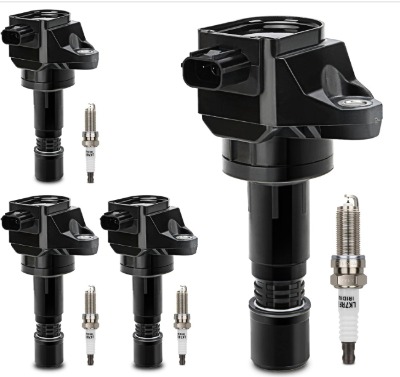
2. UF672 Ignition Coil & 97390 Double Iridium Spark Plug OE# 30520R1AA01 C1823
Product Description
This kit pairs the UF672 ignition coil with a matching set of 97390 double iridium spark plugs, giving you a complete tune-up in one box. The OE reference number 30520R1AA01 lines up with the coil used on later Civic models running the 1.8L engine, along with some Acura and HR-V applications that share the same platform.
Best Use Cases
This kit is built for anyone doing a full ignition system refresh rather than a single-part swap. If your Civic is due for both new plugs and new coils, or if you just want to knock out the entire job once and not think about it again for a long stretch, this combo saves you a separate parts run.
Key Features Explained Simply
- Double iridium spark plugs: Iridium tips resist wear far better than standard copper plugs, which usually means a longer gap between replacements.
- OE cross-reference numbers: Matching the 30520R1AA01 and C1823 reference codes makes it easier to confirm fitment against your Civic’s original part sticker or a parts lookup tool.
- Complete four-cylinder kit: Both coils and plugs are included for all four cylinders, so nothing gets left half-finished.
Real-Life Usage Insight
Drivers who buy this kit are often working on a Civic that’s overdue for maintenance across the board, maybe after inheriting the car secondhand or catching up on service history. Doing coils and plugs together also avoids a smaller annoyance: if you replace only the coils and leave old, worn plugs in place, you may still get occasional misfires that make it look like the new coils are the problem.
Pros and Cons
Pros:
- Saves time and a second purchase by bundling plugs with the coils
- Iridium plugs generally last longer than the copper plugs some cheaper kits include
- OE reference matching reduces the guesswork around fitment
Cons:
- Higher upfront cost than a coils-only set
- Not the right kit if your plugs are still fairly new, since you’d be replacing good parts
- Compatibility is tied closely to specific engine codes, so a quick VIN or engine bay check is worth doing first
Performance Discussion
With both new coils and new iridium plugs, most drivers notice a crisper throttle response and a smoother idle compared to replacing coils alone. Iridium plugs also tend to hold their gap more consistently over time, which helps keep spark timing accurate as the miles add up.
Ease of Use
The install difficulty here is only slightly higher than a coils-only kit, since you’re also swapping spark plugs, which means using a spark plug socket and torque wrench in addition to the basic coil removal steps. A full four-cylinder job typically takes under an hour for someone comfortable with basic hand tools.
Value for Money
Buying coils and plugs together usually costs less than buying each separately at retail, so this kit holds up well on a cost-per-part basis. It’s a smart buy if you were planning to replace both anyway.
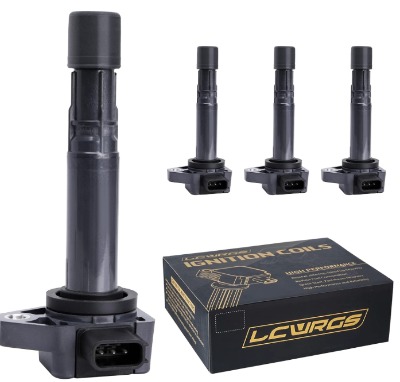
3. Set of 4 Ignition Coil Packs for Honda Civic 1.7L L4 UF400
Product Description
This set is built specifically around the UF400 coil, which fits the 1.7L four-cylinder engine used in the seventh-generation Civic lineup. Unlike the 3-pin coils covered elsewhere in this roundup, this style typically uses a 2-pin connector, matching the simpler ignition wiring used on this older engine platform.
Best Use Cases
If you’re keeping an older 1.7L Civic on the road, this is the direct match for your engine rather than a universal or cross-application part. It’s a good fit for drivers doing routine maintenance on a car they plan to keep running well past typical trade-in mileage.
Key Features Explained Simply
- Engine-specific fit: Built around the 1.7L L4 platform, so there’s no guessing about compatibility with newer 1.8L or 2.0L Civic engines.
- 2-pin connector: Matches the simpler wiring harness used on this generation, so installation doesn’t require any adapter or wiring changes.
- Full four-coil set: Covers every cylinder in one purchase.
Real-Life Usage Insight
Owners of older Civics often reach for this kind of part after their check engine light comes on following a cold, damp morning, a classic sign of a coil boot letting moisture into the spark plug well. Replacing all four at once tends to be the more practical route here, since these coils have usually logged similar mileage and wear.
Pros and Cons
Pros:
- Purpose-built for the 1.7L engine, so fitment is more predictable than universal kits
- Reasonably priced compared to combo kits with plugs included
- Straightforward 2-pin design keeps the wiring side of the install simple
Cons:
- Only fits the 1.7L engine, so it won’t work if you have a later 1.8L or 2.0L Civic
- No spark plugs included, so budget for those separately if needed
- Parts for older engine platforms sometimes have fewer manufacturer options, so build quality can vary between batches
Performance Discussion
On a well-maintained 1.7L engine, fresh coils from this set typically restore a stable idle and eliminate the small hesitation that shows up when one coil starts to weaken. Since this engine isn’t a high-output platform, stock-spec coils like these are generally more than enough for daily driving.
Ease of Use
Installation follows the same basic pattern as other coil-on-plug setups: disconnect the battery, unplug the connector, remove the mounting bolt, and swap the coil. The 2-pin connector is arguably even easier to work with than the 3-pin versions, since there’s less chance of forcing the clip in the wrong orientation.
Value for Money
Given that this part targets an older, simpler engine, the price tends to sit on the lower end of the ignition coil market, which makes it a smart choice for anyone trying to keep repair costs down on an aging but reliable Civic.
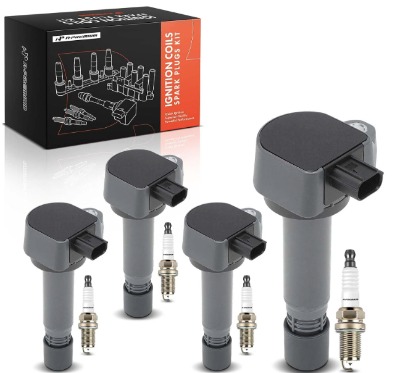
4. A-Premium Set of 4 Ignition Coil Pack and Iridium Spark Plugs
Product Description
This is A-Premium’s combo kit, pairing their coil pack with a matching set of iridium spark plugs for a complete four-cylinder tune-up. It sits alongside the brand’s coils-only option covered earlier in this list, giving buyers a choice between a lighter purchase and a full bundle.
Best Use Cases
This kit suits drivers who want to handle both coils and plugs in a single order without shopping around for a separate plug brand that matches their engine. It also works well as a preventive maintenance purchase if you’re already deep into the engine bay for another repair and want to knock out ignition service at the same time.
Key Features Explained Simply
- Bundled iridium plugs: Iridium construction generally holds up longer than basic copper plugs under normal driving conditions.
- Matched coil and plug set: Buying both from the same kit removes the guesswork of cross-referencing plug gap and thread specs separately.
- Bolt-on coil design: Uses the same single-bolt mounting method as the factory coil.
Real-Life Usage Insight
This kind of kit tends to appeal to drivers who like the idea of doing the job once and being done with ignition maintenance for a good long while. It’s a common pick for someone who just bought a used Civic and wants a clean baseline for the ignition system before putting real miles on the car.
Pros and Cons
Pros:
- Covers both coils and plugs without needing two separate orders
- Iridium plugs offer better longevity than standard copper alternatives
- Reasonably competitive pricing for a bundled kit
Cons:
- Costs more upfront than the coils-only version from the same brand
- Not ideal if your current plugs are still within their service life
- As with most aftermarket combo kits, individual coil lifespan can vary a bit more than OE parts
Performance Discussion
Drivers typically report a noticeably smoother idle and better throttle response after installing this kit, especially if the car had been running on old plugs alongside a failing coil. Because the plugs and coils are matched as a set, spark delivery tends to feel consistent across all four cylinders.
Ease of Use
The installation process mirrors the UF672 combo kit above: coil removal is simple, but budget extra time for the spark plug swap, including torquing each plug to spec so you don’t risk stripping the aluminum cylinder head threads.
Value for Money
For a full ignition refresh, this kit lands in a reasonable middle ground on price, cheaper than paying dealer rates for OE coils and plugs, while still covering both parts in one purchase.
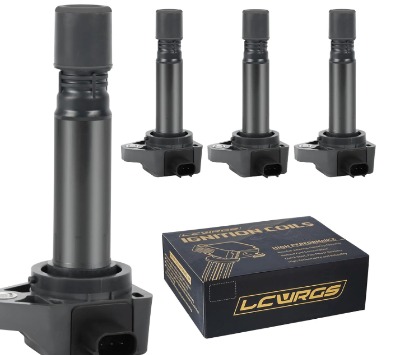
5. 4-Pack Ignition Coils for Honda Civic 1.8L L4 UF582
Product Description
This set is built around the UF582 coil, which matches the 1.8L engine used in the eighth-generation Civic. It’s a coils-only kit with a 3-pin connector, designed as a direct swap for the factory coil without any wiring modification.
Best Use Cases
This is the right pick if your Civic runs the 1.8L engine from this specific generation and you’ve confirmed through a code scan or visual inspection that the coils, not the plugs, are the source of your misfire.
Key Features Explained Simply
- 1.8L-specific fit: Matches the R18-series engine used in this generation of Civic, so you’re not stuck guessing between multiple displacement options.
- 3-pin factory-style connector: Plugs directly into the existing harness with no splicing needed.
- Set of four: Replaces every cylinder’s coil in one purchase, which helps keep spark output balanced across the engine.
Real-Life Usage Insight
A typical use case here is a Civic owner who notices a rough idle that gets worse when the engine is cold, then confirms through a scan tool that multiple cylinders are misfiring rather than just one. Replacing the full set at once tends to resolve this cleanly, since coils from the same production era usually wear down at a similar pace.
Pros and Cons
Pros:
- Purpose-built for the 1.8L Civic engine, reducing fitment guesswork
- Straightforward 3-pin plug-and-play design
- Competitive pricing compared to OE-branded coils
Cons:
- No spark plugs included, so factor that into your total repair cost if yours are also due
- Aftermarket coil lifespan can be shorter than genuine Honda parts in some cases
- Won’t fit the 1.7L or later 2.0L-based Civic engines, so engine confirmation matters
Performance Discussion
Once installed, this coil set generally restores smooth idle quality and removes the hesitation that shows up under load when a coil starts to fail. For a stock, non-modified Civic, output from these coils is typically more than sufficient for daily driving needs.
Ease of Use
The install process is identical to the other 3-pin coil sets in this roundup: battery disconnect, unplug, unbolt, swap, rebolt, reconnect. Most drivers can finish all four coils inside thirty minutes once they’ve done the first one.
Value for Money
Since this is a direct match for a widely owned Civic generation, it tends to be priced competitively and offers strong value for anyone who just needs the coil itself without extra parts bundled in.
Comparison Insights
Looking at these five options side by side, the biggest dividing line isn’t brand, it’s engine fitment and plug inclusion. The UF400 set only works on the 1.7L engine, the UF582 set only works on the 1.8L eighth-generation engine, and the UF672 kit lines up with the later 1.8L platform shared with some Acura and HR-V models. Getting this wrong is the single most common mistake buyers make, so treat the engine code as your starting point rather than the Civic model year alone.
On the plug question, both combo kits (UF672 and the A-Premium bundle) use iridium plugs, which tend to outlast the basic copper plugs sometimes found in cheaper bundles. If your plugs are already newer, the coils-only options save you money without sacrificing anything on the coil side itself.
Price generally scales with what’s in the box: coils-only kits sit at the lower end, combo kits with iridium plugs sit higher. None of these five options stand out as dramatically better or worse in terms of raw build quality, they’re all aftermarket parts aimed at the budget-to-mid tier of the market, well below genuine Honda coil pricing but generally reliable for daily driving use.
Buying Guide: What to Check Before You Order
Confirm Your Engine, Not Just the Model Name
“Civic” alone doesn’t tell you enough. The same model name has been paired with a 1.7L, 1.8L, and 2.0L engine across different generations, and each uses a different coil. Check your engine bay sticker, owner’s manual, or VIN decoder before adding anything to your cart.
Match the Connector Pin Count
Coils typically come with either a 2-pin or 3-pin connector depending on the engine generation. If the connector doesn’t match your factory harness, the part won’t plug in without modification, so this is worth double-checking against your current setup.
Decide If You Need Plugs Too
If your spark plugs have significant mileage on them already, a combo kit saves you a second purchase and a second round of labor. If your plugs are newer, a coils-only set keeps your total cost lower.
Look at OE Cross-Reference Numbers
Part numbers like UF582, UF400, and UF672, along with Honda’s own OE codes, are the most reliable way to confirm a match, more reliable than trusting a listing title alone. Cross-check these against your old coil’s printed number if you can access it.
Factor in Warranty Coverage
Aftermarket ignition coils vary in how long their manufacturer warranty runs. A longer warranty period is a reasonable sign the manufacturer trusts the part’s durability, and it gives you a safety net if a coil fails early.
Who Should Buy These Products
- DIY drivers on a budget who want to handle their own maintenance without dealer labor rates will find the coils-only kits (A-Premium 3-pin, UF400, UF582) the most cost-effective path.
- Owners overdue for a full tune-up who haven’t touched spark plugs in a long stretch are better served by the combo kits (UF672 and the A-Premium coil-and-plug bundle), since they knock out two jobs at once.
- Owners of older, higher-mileage Civics running the 1.7L engine should look specifically at the UF400 set rather than any of the 1.8L-focused options.
- Newer Civic and shared-platform owners (later 1.8L engine, some Acura and HR-V models) should focus on the UF672 kit, since its OE cross-reference lines up with that specific platform.
Common Mistakes to Avoid
- Buying based on model name alone. Always confirm engine displacement and generation, since the wrong coil simply won’t fit or function correctly.
- Replacing only the worst coil. Since all four coils typically share similar mileage, replacing just one often leads to a repeat repair a short time later.
- Skipping the spark plug check. A misfire can come from a worn plug even after a coil replacement, so inspect plug condition rather than assuming the coil was the only issue.
- Overtightening the mounting bolt. These bolts thread into aluminum, and overtightening can strip the hole, turning a simple job into a bigger repair.
- Forgetting to disconnect the battery first. Working on live ignition wiring isn’t dangerous in the way high-voltage systems are, but disconnecting the battery avoids accidental shorts and protects the car’s electronics during the swap.
- Ignoring oil leaks around the spark plug wells. If oil is pooling around the coil boots, a valve cover gasket leak is likely the root cause, and a new coil won’t fix that underlying problem.
Final Verdict
For most Civic owners chasing a misfire code and looking for a straightforward, budget-friendly fix, the engine-specific coils-only kits, the UF400 for the 1.7L engine and the UF582 for the eighth-generation 1.8L engine, offer the best balance of accurate fitment and low cost. They’re direct swaps with no wiring changes and get the job done without paying for parts you may not need.
If your plugs are also overdue, either combo kit is worth the extra spend. The UF672 bundle is the stronger pick for later 1.8L Civic and shared-platform vehicles thanks to its close OE cross-reference match, while the A-Premium coil-and-plug bundle works well as a general option for drivers who want iridium plugs bundled in without hunting for platform-specific part numbers.
The A-Premium 3-pin coils-only set rounds out the list as a solid, no-frills choice for anyone who already has good plugs installed and just needs the coil itself replaced.
No matter which one you land on, the most important step happens before you click buy: confirm your engine size and connector type against the part listing. Get that right, and any of these five options will get your Civic running smooth again without a trip to the dealer.
Frequently Asked Questions
How many ignition coils does a Honda Civic need? Most Civic engines are four-cylinder, so you’ll need four coils, one per cylinder, for a full set replacement.
Can I replace just one ignition coil instead of all four? You can, and it will technically fix the immediate misfire. That said, since all four coils usually share similar mileage and heat exposure, replacing only one often means the others fail soon after, so a full set is generally the more cost-effective route in the long run.
Do I need special tools to replace a Civic ignition coil? No. A basic ratchet set, a socket that matches the mounting bolt, and a spark plug socket if you’re also swapping plugs cover nearly every step. No specialty diagnostic tools are required for the physical swap itself, though a code reader helps confirm which cylinder is misfiring beforehand.
How long do aftermarket ignition coils typically last? This varies by brand and driving conditions, but well-built aftermarket coils commonly hold up for tens of thousands of miles under normal use. Genuine Honda coils tend to edge out aftermarket parts slightly in longevity, though at a noticeably higher price.
Will a bad ignition coil hurt my catalytic converter? It can. A misfire sends unburned fuel into the exhaust system, and over time that raw fuel can overheat and damage the catalytic converter. This is one of the better reasons not to put off a coil replacement once you notice symptoms.
Do I need to replace spark plugs at the same time as ignition coils? Not always, but it’s worth inspecting them while the coil is already out. If your plugs are near or past their recommended service interval, replacing both at once saves you from doing the same labor twice in a short span of time.

Peterson is an automotive enthusiast and auto parts reviewer with a passion for vehicle maintenance, upgrades, and performance. He enjoys researching and testing car parts, tools, and accessories to help drivers make informed buying decisions. Through AutoPartsTalk.com, Peterson shares honest reviews, practical maintenance tips, and expert guides to keep vehicles running safely and efficiently.