
5 Best Battery Charger for Dead Batteries In 2026
A dead battery usually shows up at the worst time. The car won’t start in a parking lot, the mower sits silent in the shed, or the motorcycle clicks once and goes quiet. A good battery charger can bring that battery back, and it can also keep a healthy battery from dying in the first place. The problem is that chargers look alike on store shelves, and the labels throw around numbers like “1A,” “10A,” and “25A” without much explanation.
This guide looks at five popular chargers and maintainers from NOCO, E-FAST, and Schumacher. Each one can help with dead or weak batteries, but each one fits a different job. Some are small and gentle, some are powerful enough for trucks, and one even includes a booster mode for quick starts. You’ll find a clear look at each product, honest notes on what each one does well and where it falls short, and a buying guide that explains the terms in plain language.
The goal is simple. By the end, you should know which charger matches your battery, your vehicle, and your budget, and you should know how to use it safely.
How This Roundup Is Organized
Every charger in this list gets the same treatment. You’ll see a product description, the best use cases, the main features explained in simple terms, a look at how it performs in everyday situations, an honest list of pros and cons, notes on ease of use, and a value-for-money section. Specs come from manufacturer information and the product listings. Performance notes come from how these types of chargers typically behave and from common feedback owners share. Where a number depends on battery condition or the manual’s fine print, the article says so.
Before reading the reviews, keep one idea in mind. A charger’s amp rating tells you how fast it can push power into a battery. It doesn’t tell you how good the charger is. A 1-amp charger that finishes a small battery safely is often a better tool than a 25-amp charger used on the wrong battery.
Quick Look at the Five Chargers
Here is a short snapshot before the details. Think of this as a map, not the full story.
| Charger | Amp Rating | Voltage Support | Best For |
|---|---|---|---|
| NOCO GENIUS1 | 1A | 6V and 12V | Motorcycles, small batteries, seasonal storage |
| NOCO GENIUS5 | 5A | 6V and 12V | Cars, SUVs, light trucks, general maintenance |
| NOCO GENIUS10 | 10A | 6V and 12V | Larger batteries, faster recovery, deep cycle use |
| E-FAST 25A | Up to 25A, adjustable | 12V and 24V | Heavy-duty recovery, multiple battery types, booster use |
| Schumacher SC1280 | 15A | 6V and 12V | Mid-size recovery, engine start assist |
Keep in mind that battery capacity, age, and condition all change how a charger performs. Always check the manufacturer’s listed capacity range for your specific model before you buy.
Individual Product Reviews
1. NOCO GENIUS1 1A 6/12V Smart Battery Charger, Trickle Charger and Maintainer

Product Description
The GENIUS1 is the smallest charger in this group. It delivers 1 amp, which sounds modest, but that slow pace is exactly why it works well for many smaller batteries. It handles both 6-volt and 12-volt batteries, so you can use it on older equipment as well as modern vehicles. It’s compact, light, and designed to sit connected to a battery for long periods without causing trouble.
Best Use Cases
This charger shines on small batteries. Think motorcycles, ATVs, lawn tractors, snowblowers, boats with small starting batteries, and garden equipment. It’s also a great pick for keeping a car battery topped up when the vehicle sits for weeks. If you own a classic car, a vehicle used only on weekends, or a seasonal machine, the GENIUS1 is the kind of tool that lets you forget about the battery until spring.
Key Features Explained Simply
The charger uses smart, multi-stage charging. In plain terms, it doesn’t just push power in at one steady rate. It checks the battery, charges it in steps, and then switches to a gentle mode once the battery is full. That gentle mode, often called maintenance or float, keeps the battery at full strength without overcharging it.
It also has reverse polarity protection. If you clip the leads on backward, the charger won’t send power through the wrong path and cook your battery or the charger itself. That feature alone earns a lot of trust from beginners.
Temperature compensation adjusts the charging voltage based on the surrounding temperature. Batteries behave differently in cold and heat, and this feature helps them charge more safely across seasons.
Real-Life Usage Insight
In practice, the GENIUS1 is patient. A small battery that’s only slightly low might take several hours to bring back, and a deeply drained one can take much longer. That’s normal for a 1-amp charger, and it’s the trade-off for a gentler charge. Many people leave it connected overnight or while they’re at work, which works well with this type of tool.
It’s not the right choice when you need a car running in thirty minutes. A 1-amp charger simply can’t move that much energy that fast. Use it as a planning tool, not an emergency fix.
Performance Discussion
Performance on small batteries is solid. The charge process is steady, the maintenance mode is reliable, and the charger tends to stay cool in normal use. On larger batteries, such as a full-size car battery that is deeply discharged, the charge time stretches out considerably. The charger does its job, but it asks for patience.
Recovering a badly sulfated battery is a different story. Sulfation is a buildup of lead sulfate crystals that makes a battery hold less charge over time. Some NOCO models include a repair or recondition mode, but results depend heavily on how damaged the battery already is. Gentle reconditioning can help a battery that’s only moderately sulfated. A battery that’s very old or physically damaged may not come back, no matter how good the charger is.
Ease of Use
This is one of the easiest chargers to set up. You connect the red clamp to the positive terminal, the black clamp to a solid unpainted metal ground point or the negative terminal, plug it in, and let it work. The indicator lights show the stage the charger is in, so you don’t need to guess what it’s doing. The cable length is reasonable for most motorcycles and mowers, though you may need an extension if you’re working with a vehicle parked far from an outlet.
Pros
- Very gentle charging that’s safe for small batteries
- Good for long-term maintenance and seasonal storage
- Reverse polarity protection helps prevent mistakes
- Compact and easy to store
- Works with both 6V and 12V batteries
- Simple, clear indicator lights
Cons
- Slow for large or deeply drained batteries
- Not suitable for quick jump-starts
- Limited use for heavy trucks or large deep cycle batteries
Value for Money
For the right job, this charger offers excellent value. You’re paying for careful charging and reliable maintenance, not raw power. If your needs are small batteries and long-term upkeep, you won’t find a better match for the price. If you need fast recovery on a truck battery, it’s a poor value because you’ll be frustrated by the speed.
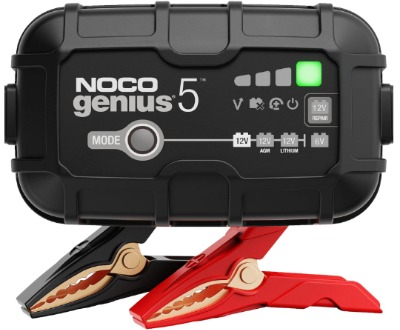
2. NOCO GENIUS5 5A 6/12V Smart Battery Charger, Trickle Charger and Maintainer
Product Description
The GENIUS5 steps up to 5 amps, which makes it a more versatile everyday charger. It supports 6V and 12V batteries and uses the same smart, multi-stage approach as its smaller sibling. It sits in the middle of the NOCO lineup, and that middle position is where a lot of car owners will find the best balance.
Best Use Cases
This is a strong choice for cars, SUVs, pickups, and light trucks. It works well for recovering a moderately drained battery overnight, keeping a battery healthy during winter, and maintaining a battery in a vehicle that doesn’t get driven every day. It’s also useful for larger motorcycles and riding mowers with bigger batteries.
Key Features Explained Simply
The GENIUS5 uses the same protective features you’ll find across the NOCO range. There’s reverse polarity protection, spark-proof connections when the clamps are connected correctly, and temperature-compensated charging. The multi-stage process checks the battery, charges it, and then shifts into maintenance mode when the battery is full.
Some versions of this model include a reconditioning function for batteries that have lost capacity due to sulfation. Like all reconditioning features, it’s most useful for batteries that are still physically sound. It won’t rescue a battery with a cracked case or a shorted cell.
Real-Life Usage Insight
The GENIUS5 hits a sweet spot for many drivers. A car battery that’s been left with the dome light on for a day, or a battery that’s struggling in cold weather, can often come back within a reasonable overnight window. It’s also a practical tool for people who park a car in a garage and want to prevent slow self-discharge.
It’s still not a jump-start tool, though. If the battery is nearly flat, the charger needs time to bring it up to a level where the engine can crank. Think of this charger as a restoration tool that works on a timeline measured in hours.
Performance Discussion
On a typical car battery in moderate condition, the GENIUS5 tends to charge steadily and finish without drama. The indicator lights help you understand the stage, and the maintenance mode keeps the battery stable afterward. The charger runs warm during heavy charging, which is normal, but it’s not something that should cause concern if the unit has room to breathe.
For a deeply discharged battery, expect a longer wait. Also expect that a very old battery may not reach full capacity even after a full cycle. A charger can only restore what the battery’s chemistry still allows.
Ease of Use
Setup is easy, and the process is almost identical to the GENIUS1. The clamps are clear, the lights are easy to read, and the unit can stay connected for long periods without much attention. Beginners will feel comfortable with it quickly.
Pros
- Good balance of speed and gentleness
- Suitable for most cars, SUVs, and light trucks
- Smart charging helps protect battery health
- Reverse polarity protection adds a safety margin
- Good for winter storage and regular maintenance
- Easy setup for first-time users
Cons
- Slower than higher-amp chargers on large batteries
- Not designed for instant jump-starts
- Reconditioning results vary with battery condition
Value for Money
The GENIUS5 is one of the most practical buys in this lineup. It handles the everyday jobs most drivers face, and it does so without asking for advanced knowledge. For many households with one or two vehicles, it’s a sensible first charger that can stay in the garage for years.
3. NOCO GENIUS10 10A 6/12V Smart Battery Charger, Trickle Charger and Maintainer

Product Description
The GENIUS10 is the most powerful NOCO charger in this roundup. At 10 amps, it can move energy into a battery much faster than the GENIUS1 or GENIUS5. Like its siblings, it supports 6V and 12V batteries, uses multi-stage charging, and switches to maintenance mode when the battery reaches full charge.
Best Use Cases
This charger suits larger batteries and situations where time matters. It’s a good match for trucks, SUVs, RVs, boats with larger starting or house batteries, and deep cycle batteries used in golf carts or off-road setups. It’s also helpful if you run a small fleet or multiple vehicles and need faster turnaround.
Key Features Explained Simply
The main feature is speed. A 10-amp charger can bring a large battery back to a usable state in a fraction of the time a 1-amp or 5-amp charger would need. The multi-stage charging still protects the battery during the process, so the speed doesn’t mean the charger rushes recklessly.
The safety features match the rest of the NOCO line. Reverse polarity protection, spark-proof connections, and temperature compensation are all part of the design. Some versions also include a repair mode for sulfated batteries.
Real-Life Usage Insight
The GENIUS10 changes how you plan. Instead of leaving a battery on a charger for a full day, you might be able to get a large battery to a useful level during a single afternoon or overnight stay. That’s helpful if you use a vehicle regularly and can’t afford to wait.
Keep your expectations realistic. The charger can only move energy as fast as the battery can accept it, and very cold or very old batteries may accept charge more slowly. A higher amp rating doesn’t turn a worn-out battery into a new one.
Performance Discussion
The GENIUS10 performs well when the battery and the charger are properly matched. You’ll notice faster progress through the bulk stage, and the charger handles the transition to absorption and maintenance without much fuss. On a healthy large battery, the speed difference is obvious.
Heat is worth watching. Fast charging generates more warmth, so the charger and the battery should sit in a well-ventilated space. Avoid covering the unit with bags, boxes, or old blankets while it runs.
Ease of Use
Using the GENIUS10 is just as simple as the smaller models. You connect the clamps, check that the polarity is correct, and let the charger take over. The indicator lights are clear, and the process requires little hands-on attention. The main extra step is making sure the battery is in a safe, ventilated area, especially when working in a garage.
Pros
- Fast recovery for large batteries
- Multi-stage charging helps protect battery health
- Good for trucks, RVs, boats, and deep cycle batteries
- Reverse polarity and spark-proof features add safety
- Useful for people who need quick turnaround
- Simple controls for a powerful charger
Cons
- Larger and heavier than the smaller NOCO models
- Can run warm during heavy charging
- Overkill for small batteries or light maintenance
- Speed depends heavily on battery condition
Value for Money
The GENIUS10 costs more than the smaller chargers, and that’s worth it only if you need the speed. For a large battery used every day, the time savings can justify the price. For occasional maintenance on a small battery, the extra power is wasted, and a GENIUS1 or GENIUS5 will serve you better.
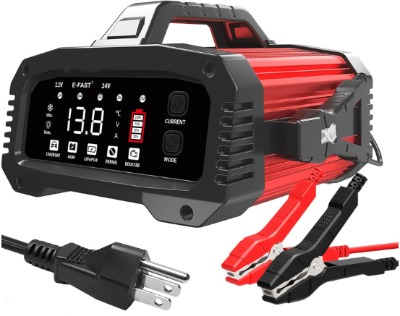
4. E-FAST 25A Smart Car Battery Charger, 12V/24V Automatic Automotive Battery Maintainer and Desulfator with 200s Booster Mode
Product Description
The E-FAST 25A is a different kind of tool from the NOCO chargers. It supports 12V and 24V systems and offers an adjustable amp setting, which means you can dial the output to suit the job. The listing also highlights a desulfation function, a booster mode for short starting assistance, and settings for several battery chemistries, including lead-acid, AGM, gel, and LiFePO4.
Best Use Cases
This charger fits people who work with heavier vehicles or a wider range of batteries. It’s useful for trucks and commercial vehicles that run on 24V systems, for shops that handle different battery types, and for owners who want more control over charging speed. The booster mode can also serve as a short-term assist when a battery is too weak to crank the engine but still has some life left in it.
Key Features Explained Simply
The adjustable amp setting is the biggest difference. Instead of one fixed rate, you can choose a lower current for gentle maintenance or a higher current for faster recovery. That flexibility is helpful when you’re working with different batteries.
The desulfation function uses pulses intended to break up sulfate buildup on the battery plates. The booster mode provides a brief burst of higher current to help a weak battery start an engine. The listing describes a 200-second booster window, which is a short, focused assist rather than a long charging session.
Battery type selection matters here. Lead-acid, AGM, gel, and LiFePO4 batteries each accept charge differently. Setting the wrong mode can shorten a battery’s life, and in the case of lithium batteries, using the wrong profile can create safety problems. Always confirm the battery type before you start.
Real-Life Usage Insight
The E-FAST works best when you know what you’re charging. A user with a flooded lead-acid battery in a truck can take advantage of the high-amp setting for faster recovery. A user with an AGM battery in a boat or motorcycle can select the right profile and let the charger handle the rest.
The booster mode is useful for a quick push, but it’s not a replacement for a proper jump start from another vehicle or a dedicated jump starter. Think of it as a helpful assist during a tough moment, not a fix for a battery that has truly failed.
Performance Discussion
On paper, the E-FAST offers a lot of power, and in use it can recover discharged batteries quickly when set correctly. The adjustable amp range gives you room to match the charge rate to the battery’s needs. That’s a real advantage when you’re dealing with mixed battery types.
The desulfation function should be treated with realistic expectations. Pulse desulfation can help some batteries that are only moderately sulfated, but it won’t restore a battery with internal damage, dried-out cells, or a shorted cell. Results vary, and the best outcome comes from catching a weak battery early.
Because the charger can deliver significant current, it’s important to keep the clamps secure and the connection clean. Poor contact can create heat and reduce performance.
Ease of Use
The E-FAST is more involved than the NOCO chargers. There are more settings to understand, and beginners may need a few minutes with the manual before they feel comfortable. The display and buttons are functional, but the learning curve is steeper. Once you know the menu, the process becomes routine.
The most important step is verifying the battery type and voltage before you connect anything. Mistakes here are the most common source of trouble with this kind of charger.
Pros
- High amp output for faster recovery
- Adjustable charging rate for different needs
- Supports 12V and 24V systems
- Covers multiple battery chemistries, including LiFePO4
- Booster mode can provide short starting assistance
- Desulfation function may help some weakened batteries
Cons
- More complicated than the NOCO line
- Requires careful battery type selection
- Booster mode is short and not a true jump-start substitute
- Desulfation results vary widely with battery condition
- Heavier current demands good connections and proper handling
Value for Money
The E-FAST offers strong value for people who need flexibility and power. You get a lot of features for the price, especially if you work with different battery types or heavier vehicles. The trade-off is complexity. If you only need simple maintenance on one car battery, the extra features may not add much to your daily routine.
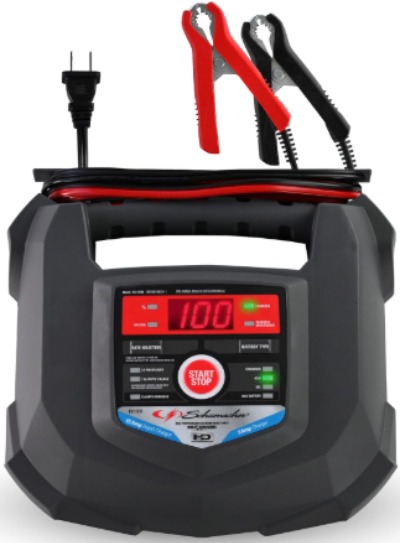
5. Schumacher Electric 15A Car Battery Charger and Maintainer, 6V/12V, SC1280
Product Description
The Schumacher SC1280 is a 15-amp charger that supports 6V and 12V batteries. It’s built for people who need more power than a basic maintainer but don’t want the complexity of a full professional unit. Schumacher is a long-established name in battery equipment, and the SC1280 reflects that focus on practical, workshop-friendly design.
Best Use Cases
This charger fits mid-size recovery jobs. It works well for car, SUV, and truck batteries that are moderately to heavily discharged, and it’s a reasonable choice for garages, small shops, and households with several vehicles. Its engine start feature also makes it useful in situations where a battery needs a short burst of extra current to crank an engine.
Key Features Explained Simply
The 15-amp rating allows faster charging than the NOCO GENIUS5, which can save time on a large battery. The charger also includes an engine start function. In simple terms, this sends a short, higher current into the battery to help the starter turn over. It’s a helpful feature, but it works best when the battery still holds some charge.
The charger includes automatic charging stages and a maintenance mode. These features help prevent overcharging and keep the battery in a healthy state after it reaches full charge. The unit also supports both 6V and 12V systems, which is useful for older equipment.
Real-Life Usage Insight
The SC1280 is a practical tool for households that rely on vehicles and want to avoid being stranded. A battery that’s been sitting through a cold snap, or one that needs a bit more power than a slow charger can deliver, often responds well to this charger. The engine start feature can also be a useful backup when a battery is weak but not completely dead.
Like every charger, it has limits. If a battery is badly damaged or has been fully discharged for a long time, the charger may not bring it back to full strength. Engine start should be used sparingly, since repeated high-current attempts can add stress to the battery and the starter.
Performance Discussion
The SC1280 delivers solid performance on mid-size batteries. The 15-amp output speeds up recovery, and the automatic stages keep the charge process controlled. The engine start function can provide a useful boost for cranking, though the exact rating should be confirmed in the manual before relying on it.
Heat management matters here as well. The charger should be placed in a ventilated area and should not be used in a closed container. Keep an eye on the battery during long charges, especially if it feels hot to the touch.
Ease of Use
Operation is straightforward. The controls are simple, and the indicator lights give enough information for most users. The main learning point is knowing when to use the charge mode and when to use engine start. Beginners should read the manual once before using the boost function.
Pros
- Good speed for mid-size and large car batteries
- Engine start feature can help with weak starts
- Supports both 6V and 12V systems
- Automatic charging stages help protect the battery
- Simple controls suitable for home and garage use
- Established brand with a practical design
Cons
- Engine start should be used carefully and sparingly
- Larger and heavier than the smaller NOCO units
- Not as gentle as the GENIUS1 for small battery maintenance
- Performance depends on battery condition
Value for Money
The SC1280 offers good value for people who need faster recovery and an engine start feature without paying for a commercial-grade unit. It’s a sensible middle-ground option for households with cars, trucks, or several vehicles. If you mainly need slow maintenance for small batteries, a NOCO GENIUS1 or GENIUS5 may be a better fit.
Comparison Insights
Once you look at the five chargers side by side, a few patterns stand out.
The NOCO line is the most consistent and beginner-friendly group. All three NOCO models share the same basic approach: smart multi-stage charging, reverse polarity protection, and a clear maintenance mode. That consistency makes them easy to understand, and it means you can move from one model to another without relearning the process. The choice between them comes down to amp rating and battery size.
The E-FAST 25A is the most feature-rich option and the one with the steepest learning curve. Its adjustable amp setting, support for 24V systems, and multiple battery chemistry modes make it attractive for people who work with a range of equipment. It’s also the one that rewards careful reading of the manual.
The Schumacher SC1280 sits in a useful middle space. It’s faster than the GENIUS5, offers engine start assistance, and uses a simple interface. It’s less gentle than the GENIUS1 for small batteries, but it’s more practical for mid-size vehicles that need a quicker turnaround.
If you measure these chargers by speed, the order from fastest to slowest is roughly E-FAST 25A, Schumacher SC1280, NOCO GENIUS10, NOCO GENIUS5, and NOCO GENIUS1. If you measure them by gentleness and simplicity, the order flips, with the GENIUS1 and GENIUS5 leading the pack. Neither approach is better in every case. The right answer depends on the battery and the job.
Price is another factor, though exact pricing changes often and varies by retailer, so check current listings before you buy. In general, the smaller NOCO units cost less, while the higher-amp and multi-feature models cost more. Focus on matching the charger to your battery first and your budget second.
Buying Guide: What to Know Before You Buy
Buying a charger is easier when you know what the labels mean. This section breaks down the most important terms and features in plain language.
Battery Type
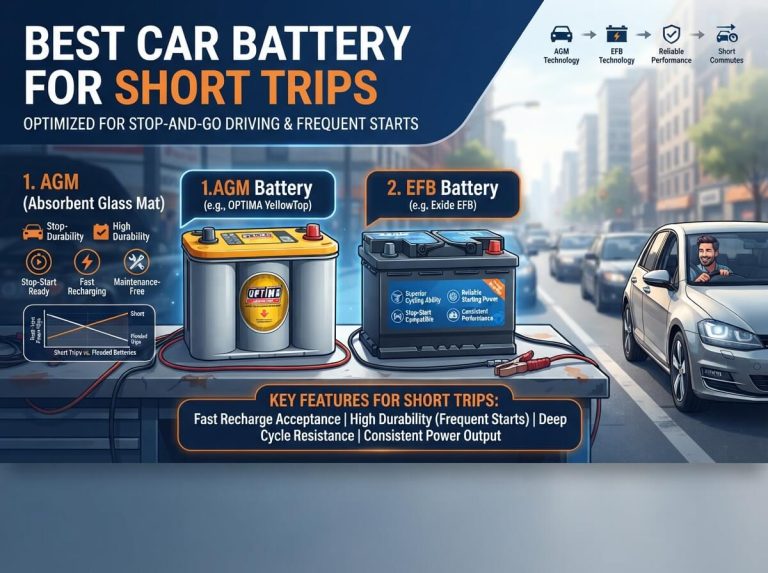
Most car, truck, and motorcycle batteries are lead-acid batteries. Within that group, you’ll find flooded batteries, which have removable caps, and sealed batteries, such as AGM and gel types. AGM batteries are common in modern vehicles and start-stop systems. Gel batteries are often used in certain marine and off-road applications.
Lithium iron phosphate batteries, often labeled LiFePO4, are increasingly common in powersports, marine, and solar setups. They charge differently from lead-acid batteries and need a charger with the correct profile. Using a standard lead-acid setting on a lithium battery can damage it or create safety risks.
Before buying, check the battery label or the vehicle manual. The battery type affects which charger you should use and which settings you need.
Voltage
Most passenger vehicles use 12-volt batteries. Some older equipment and small vehicles use 6-volt batteries. Heavy trucks and some commercial vehicles use 24-volt systems, typically made from two 12-volt batteries wired in series. Make sure your charger supports the voltage of your battery before you connect anything.
Amp Rating
The amp rating shows how much current the charger can deliver. Lower amps charge more slowly and gently, which is ideal for maintenance and small batteries. Higher amps charge faster but generate more heat and put more demand on the battery.
A simple rule of thumb is that a slower charge is easier on a battery over time, while a faster charge is useful when you’re short on time. For most car batteries, a charger in the 5-amp to 10-amp range offers a good balance. For small motorcycle or mower batteries, 1 to 2 amps may be enough. For large trucks or deep cycle batteries, higher amps can help when you need speed.
Battery Capacity
Battery capacity is usually listed in amp-hours, abbreviated as Ah. A larger number means the battery stores more energy. A 50Ah battery holds more energy than a 20Ah battery, so it takes longer to charge at the same rate. Check the capacity range listed for the charger and compare it to your battery’s label.
Smart Charging and Maintenance Mode
A smart charger adjusts its output based on the battery’s condition. Most modern units move through stages: an initial bulk stage that delivers the most current, an absorption stage that tapers the charge as the battery nears full, and a maintenance or float stage that keeps the battery topped up without overcharging.
A maintainer is designed to stay connected for long periods. This is useful for seasonal vehicles, stored equipment, and cars that sit for extended stretches. Make sure the charger you buy has a true maintenance mode if you plan to leave it connected.
Desulfation and Reconditioning
Sulfation happens when lead sulfate crystals build up on the battery plates. Over time, this reduces the battery’s ability to hold a charge. Some chargers include desulfation or reconditioning modes that use special pulses or charge patterns to break up these crystals.
These modes can help batteries that are moderately sulfated. They won’t fix batteries with physical damage, internal shorts, or severe age-related wear. Treat these features as a bonus, not a guarantee.
Engine Start and Booster Modes
Some chargers offer a short high-current mode to help start an engine. This can be useful when a battery is weak but still has some charge. It’s not the same as a dedicated jump starter or a jump from another vehicle, and repeated use can stress the battery and the starter.
Safety Features
Look for reverse polarity protection, which prevents damage if the clamps are connected backward. Spark-proof connections reduce the risk of sparks when the clamps are attached. Temperature compensation adjusts charging based on heat or cold. Overcharge protection and short-circuit protection are also worth checking for.
Build Quality and Cables
Cable length matters more than most buyers expect. If your battery is in an engine bay, you may need a longer cable to reach an outlet. Clamp quality also matters. Solid, well-built clamps make better contact and are easier to use safely. Check that the cables are thick enough for the charger’s output.
Who Should Buy Which Charger
For small motorcycles, ATVs, and mowers: The NOCO GENIUS1 is the most sensible choice. It charges gently, handles 6V and 12V batteries, and works well as a long-term maintainer for seasonal equipment.
For everyday cars and SUVs: The NOCO GENIUS5 is a strong all-around option. It’s fast enough for overnight recovery, gentle enough for regular maintenance, and simple enough for first-time users.
For large batteries, trucks, RVs, and boats: The NOCO GENIUS10 offers the speed and power these batteries need. It’s a good pick for people who need quicker turnaround and use their vehicles often.
For users who work with mixed battery types or 24V systems: The E-FAST 25A gives you the most flexibility. Its adjustable amp setting, multiple battery chemistry modes, and 24V support make it useful in shops, fleets, and mixed-equipment setups. Expect to spend some time learning the menu.
For households with mid-size vehicles that need an engine start backup: The Schumacher SC1280 is a practical middle-ground choice. It’s faster than a basic maintainer, includes an engine start function, and uses a simple interface that most people can handle.
For beginners who want the least complicated option: Start with the NOCO GENIUS5 or GENIUS1. Both are easy to set up, clearly marked, and forgiving of simple mistakes.
Common Mistakes to Avoid
Connecting the clamps backward. This is the most common and most avoidable mistake. Always connect the red clamp to the positive terminal and the black clamp to the negative terminal or a solid ground point. Even chargers with reverse polarity protection deserve careful attention.
Charging a frozen battery. A battery that has frozen can be damaged if you try to charge it. Let it warm up to a safe temperature before connecting the charger. Check the manufacturer’s guidance on cold conditions.
Using the wrong battery mode. Lead-acid, AGM, gel, and lithium batteries each need different settings. Using the wrong mode can shorten battery life or create safety problems, especially with lithium batteries.
Ignoring the battery’s age and condition. A charger can’t fix a battery that’s worn out. If a battery repeatedly dies, won’t hold a charge, or shows swelling, cracks, or leaks, it may need replacement rather than another charge cycle.
Skipping ventilation. Batteries can release hydrogen gas during charging, especially flooded lead-acid types. Charge in a well-ventilated area, away from open flames, sparks, and cigarettes.
Leaving the clamps touching. Never let the clamps touch each other while connected to the charger. This can create sparks and damage the equipment.
Expecting instant results. Most chargers need time. A deeply discharged battery may take many hours to recover. Plan ahead rather than waiting until you’re stranded.
Relying on engine start too often. Short bursts of high current can help in an emergency, but repeated use can stress the battery and the starter. Use it as a backup, not a routine.
Forgetting to disconnect in the right order. When you’re done, turn off or unplug the charger first, then remove the clamps. Remove the black clamp first and the red clamp last, which reduces the risk of sparks.
Storing the charger in a damp or dirty place. Keep the charger dry and clean. Corrosion on clamps and cables reduces contact quality and can cause problems later.
Frequently Asked Questions
Can a battery charger bring a completely dead battery back to life? Sometimes. A battery that’s only deeply discharged may recover with a slow, careful charge. A battery that’s physically damaged or has been dead for a very long time may not come back. A charger can’t repair internal damage.
How long does it take to charge a dead battery? It depends on the battery size, the charger’s amp rating, and the battery’s condition. A small battery on a 5-amp charger may take a few hours, while a large battery on a 1-amp charger can take a day or more.
Is it safe to leave a charger connected overnight? Smart chargers with maintenance modes are designed for extended connection. Still, use a charger with automatic shutoff or maintenance features, and check that the battery and charger are in a ventilated, safe place.
Can I use a car charger on a motorcycle battery? Often yes, but only if the charger supports the battery’s voltage and you choose a lower amp setting or a gentle mode. A high-amp charger can overheat a small battery.
Do I need a maintainer if I only drive my car once a week? A maintainer can help, especially if the car sits for long periods in cold weather. Cars that aren’t driven often can lose charge through parasitic drain, which is small but steady power use by electronics even when the car is off.
What’s the difference between a charger and a jump starter? A charger refills a battery from an outlet over time. A jump starter provides a short burst of power to start an engine, usually from its own internal battery. Some chargers include a booster mode, but a dedicated jump starter may be better for emergencies.
Final Verdict
No single charger is the best for every dead battery, and that’s the most important takeaway from this roundup. The right choice depends on the battery you own, how fast you need results, and how comfortable you are with more advanced settings.
For most people with a small vehicle, motorcycle, or mower, the NOCO GENIUS1 is the easiest and safest starting point. It charges gently, handles both 6V and 12V batteries, and works well as a long-term maintainer.
For the typical car or SUV owner, the NOCO GENIUS5 is the best all-around pick. It balances speed and gentleness, stays simple to use, and handles everyday recovery and maintenance without fuss.
For larger batteries and situations where time matters, the NOCO GENIUS10 delivers the speed you need. It costs more than the smaller models, so it’s worth buying only if you’ll use that power regularly.
For people who work with multiple battery types, 24V systems, or want maximum control over charging, the E-FAST 25A offers the most features. It takes more effort to learn, but it rewards that effort with flexibility and power.
For households with mid-size vehicles that could use an engine start backup, the Schumacher SC1280 is a solid middle-ground option. It’s faster than a basic maintainer, includes a useful boost function, and stays straightforward to operate.
Whichever charger you choose, match it to your battery, read the manual before your first use, and keep safety in mind. A good charger can save you from a stranded morning, extend the life of a healthy battery, and bring a weak one back to useful service. Start with the right tool for your battery, and the rest of the process becomes much easier.

Peterson is an automotive enthusiast and auto parts reviewer with a passion for vehicle maintenance, upgrades, and performance. He enjoys researching and testing car parts, tools, and accessories to help drivers make informed buying decisions. Through AutoPartsTalk.com, Peterson shares honest reviews, practical maintenance tips, and expert guides to keep vehicles running safely and efficiently.
One Comment