5 Best Windshield Washer Fluid For Winter In 2026
As an Amazon Associate we earn from qualifying purchases.
Winter driving brings frost, slush and road salt, and a good windshield washer fluid can make a real difference in how clearly you see the road. Picking the best windshield washer fluid for winter can feel confusing at first, especially if you have never looked at the label before. This guide is written for beginners who want a simple, honest overview of the options.
The five products covered here share a common purpose: they are windshield washer fluids made to work in cold temperatures and to help clear ice, frost and grime. The comparison rests on the listed features, the typical use of each product type and the general information shown for each item. It does not rest on personal testing, so think of it as a careful reading of the facts rather than a hands-on trial.



1. Prestone AS250 De-Icer / Winter Windshield: best for a single-bottle winter refill
What this product is and who it suits
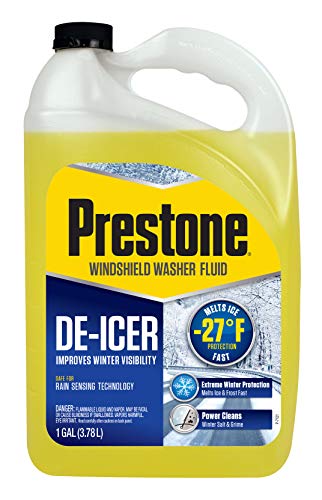
The Prestone AS250 is a one-gallon winter windshield washer fluid sold under the Prestone brand. It is designed for drivers who want a cold-weather fluid they can top up with and keep on hand. It suits people who need one bottle to get through the season.
The listed protection level is -34 degrees Fahrenheit. That is the temperature at which the fluid is designed to resist freezing in the reservoir. Winter fluids of this kind are meant to stop the spray from icing over the glass.
Key features in simple words
The product is marketed to melt ice and frost quickly. It is also described as helping prevent refreezing on the windshield, which matters when temperatures swing around the freezing point. Drivers who park outside overnight often notice refreeze first.
The fluid is also described as cutting through winter salt and grime. It is listed as streak and glare free and as safe for rain-sensing windshields. Rain-sensing windshields have sensors that respond to moisture, so compatibility with them is a helpful detail to check.
Daily use and performance
In everyday use, a winter fluid like this is mostly about the spray doing its job on a cold morning. Buyers usually expect the washer to clear frost and salt film without leaving a haze. Because the features emphasize streak-free results, that is the outcome the product aims for.
Performance in very heavy ice will depend on conditions, so it is wise to still scrape the glass. A washer fluid supports the wipers but does not replace a proper defrost routine.
Ease of use and value for money
The one-gallon size makes it simple to pour directly into most washer reservoirs. There is no mixing needed for a standard bottle of this type, though you should always confirm the label instructions. At a listed price of $15.85, it sits at the lower end of this group for a single gallon.
Value here comes from a low upfront cost and a familiar size. The trade-off is that a single gallon may run out quickly in a harsh season.
Pros
- Listed protection down to -34 degrees Fahrenheit
- Features mention melting ice and preventing refreeze
- Described as safe for rain-sensing windshields
- Low listed price for a one-gallon bottle
Cons
- Only one gallon, so heavy users may need to refill often
- Does not replace scraping ice from the glass
- Customer standing is moderate rather than strong
2. Clean Revolution Advanced All Season Windshield: best for low-emission and all-year use
What this product is and who it suits
The Clean Revolution Advanced All Season Windshield Washer Fluid is made in the USA and is marketed as a two-in-one product. It is meant for winter ice and frost and also for summer bug cleaning. It suits drivers who want one fluid for the whole year rather than switching bottles between seasons.
The label lists protection down to -27 degrees Fahrenheit, which is -33 degrees Celsius. The product is also described as lab tested to melt ice and frost and keep the windshield clear in winter. Buyers in colder regions usually look for this kind of number first.
Key features in simple words
The formula is described as ultra low VOC. VOC stands for volatile organic compounds, which are chemicals that can evaporate into the air. A lower VOC level is generally seen as better for air quality, and the listing says it is designed to meet clean air standards in several states.
The product is also described as water beading, which means water tends to form drops and roll off the glass. Less water on the windshield can make night driving in rain feel clearer. It is listed as safe for rain-sensing windshields as well.
The listing states that the fluid removes bugs, dirt and grime. That makes it a practical choice for spring and summer, when insects often smear across the glass.
Daily use and performance
In daily use, the appeal is mainly consistency across seasons. A driver who does not want to store separate winter and summer fluids may find this simplifies things. The fluid is described as leaving the windshield streak free, which is the result most drivers want.
On the other hand, a summer bug cleaner and a winter de-icer do different jobs. Because this product claims both, buyers should look at the stated temperature rating and decide if it fits their climate.
Ease of use and value for money
The listing describes the product as a ready-to-use fluid. Buyers should still check the bottle size and label directions before pouring. At a listed price of $19.99, it costs more than the one-gallon Prestone bottle but sits in the mid-range of this group. Value depends on how much you use it.
If you want a single fluid for all seasons, the price may feel reasonable. If you only need winter protection, a dedicated winter product may cost less.
Pros
- Listed protection down to -27 degrees Fahrenheit
- Works as both a winter de-icer and a summer bug cleaner
- Described as low VOC and made in the USA
- Strong customer standing overall
Cons
- Its cold-weather rating is lower than some other products in this group
- A combined formula may not match a dedicated winter fluid in extreme cold
- Costs more than the basic one-gallon Prestone bottle
3. Hathoro (6-Gallons) -35F All Season Blast: best for very cold winters
What this product is and who it suits
The Hathoro All Season Blast is a premium winter washer fluid made in the USA. It is designed for drivers in regions where temperatures often drop well below freezing. It is available as a single one-gallon bottle or as a six-pack. The listed protection is -35 degrees Fahrenheit, the lowest rating in this group. That makes it a natural fit for buyers who expect harsh cold for long stretches.
Key features in simple words
The product is described as blasting away frost, light ice and road grime. The label also says it leaves no streaks or residue. A residue-free finish helps keep the glass clear when the sun is low. The bottle has an easy-grip handle, which is a small but useful detail when pouring in the cold. A six-pack option is listed for buyers who want to stock up for the whole season.
Daily use and performance
In everyday use, the main expectation is that the fluid stays liquid and sprays well at very low temperatures. The -35 degree rating suggests it is built for that. Drivers who face frequent deep freezes will likely value this most. Light ice and frost are the stated targets. Thick, hard ice still needs to be removed by hand or with a scraper before driving.
Ease of use and value for money
The one-gallon bottle is easy to handle, and the six-pack gives buyers a way to keep a supply ready. Both options are simple to pour into a standard washer reservoir. Buyers should still confirm their vehicle’s reservoir fits the reservoir size before pouring, since fill capacity varies between vehicles.
At a listed price of $61.99 for the group shown, this product sits at the higher end of the price range here. The six-pack bundle is priced at a level that suggests a per-gallon saving when compared with buying single bottles, though the exact difference depends on what you buy and when.
Buyers should compare the listing details before picking.
Pros
- Listed protection down to -35 degrees Fahrenheit, the lowest in this group
- Described as removing frost, light ice and road grime
- Streak-free and residue-free finish according to the listing
- Available in a single bottle or a six-pack
Cons
- Higher listed price than most other options here
- Handles light ice only, not thick or hard ice
- Customer standing is moderate rather than strong
4.
Prestone AS250-6PK De-Icer / Winter Windshield: best for a bulk winter supply
What this product is and who it suits
The Prestone AS250-6PK is the six-pack version of the Prestone AS250 one-gallon bottle. It is built for drivers who want a full season of winter fluid on hand.
It also suits households with more than one vehicle. The product carries the same listed protection of -34 degrees Fahrenheit as the single bottle. Buyers who already like the single-gallon version may find the bulk pack a simple next step.
Key features in simple words
The features match the single bottle. The fluid is described as melting ice and frost fast, preventing refreeze, and cleaning away salt and grime. It is also listed as streak and glare free and safe for rain-sensing windshields. Because the formula is the same, the main difference is the pack size. Six one-gallon bottles give a larger supply in one purchase.
Daily use and performance
In daily use, performance should feel the same as the single bottle. The benefit is convenience, since refills are less frequent. A household that drives in snow for months may find that useful. Like any winter fluid, it supports the wipers but does not remove thick ice. Scraping and a short warm-up remain part of a good winter routine.
Ease of use and value for money
Each bottle is a one-gallon pour, which is straightforward for most drivers. Storing six bottles takes more space, so a dry spot in a garage or basement helps. Always check the label instructions before use.
At a listed price of $59.50 for six gallons, the cost per bottle works out lower than buying six single gallons at the listed single-bottle price. That makes the six-pack a practical value choice for steady winter use. The trade-off is the upfront spend.
Pros
- Same listed -34 degree protection as the single bottle
- Six gallons in one purchase for a full season
- Lower cost per gallon than buying single bottles
- Described as safe for rain-sensing windshields
Cons
- Larger upfront purchase may not suit occasional drivers
- Takes up more storage space than a single bottle
- Customer standing is moderate rather than strong
5. Clean Revolution EV Windshield Washer Fluid: best for electric and performance vehicles
What this product is and who it suits
The Clean Revolution EV Windshield Washer Fluid is a pre-mixed, 128-ounce ethanol-based fluid. It is methanol-free and is marketed for electric vehicles and performance cars. It suits owners whose vehicle manuals call for an ethanol-based washer fluid. The listing notes that some Tesla owner’s manuals specify ethanol-based windshield washer fluid. That is a useful point for owners to check in their own manual before buying.
Key features in simple words
The formula is plant-derived and described as a renewable alternative to petroleum and methanol. It is also described as biodegradable and it is described as safer for families and pets. The product is listed as cleaning road salt, grime and dirt, which suits all-season driving.
Daily use and performance
In daily use, the fluid is meant to work like any other washer fluid. The listing describes it as streak-free and as designed for cold weather. The stated protection is -15 degrees Fahrenheit, which is a narrower range than some other products here.
Because of this, the fluid suits drivers in milder winter climates better than those facing deep freezes. Owners of electric and performance vehicles should still confirm the fit with their manual.
Ease of use and value for money
The 128-ounce bottle is pre-mixed and ready to pour, so no dilution is needed. That keeps the process simple for beginners. At a listed price of $26.03, it costs more than the basic Prestone bottle but less than the premium Hathoro option. Value depends mainly on if the vehicle calls for an ethanol-based fluid.
For those owners, the specific formula may be worth the extra cost. For others, a general winter fluid with a lower price may serve just as well.
Pros
- Ethanol-based and methanol-free formula
- Plant-derived and described as biodegradable
- Pre-mixed and ready to pour
- Made in the USA and listed as strong in customer standing
Cons
- Listed protection of -15 degrees Fahrenheit is lower than the other winter options here
- Not the right choice unless the vehicle manual calls for ethanol-based fluid
- Costs more than basic winter fluids
Comparison insights: how the five products differ
The five products share a winter purpose, but they differ in a few clear ways. The main differences are the listed cold-weather protection, the pack size, the formula type and the price. Looking at these four points side by side helps narrow the choice. Protection levels range from -15 degrees Fahrenheit to -35 degrees Fahrenheit.
The Hathoro bottle offers the lowest listed temperature, while the Clean Revolution EV fluid offers the highest, which is the least cold-resistant of the group.
Performance claims are similar across the group. Each product is described as melting ice, removing grime and leaving a streak-free finish. Because the claims overlap, the protection rating and the formula type matter more than the cleaning wording. Ease of use is largely the same. All five are sold ready to pour, and the main difference is the bottle or pack size. The six-pack options suit steady use, while the single bottles suit occasional top-ups.
Value for money depends on how much fluid you need and how cold it gets. The Prestone six-pack offers the lowest cost per gallon. The Hathoro and Clean Revolution EV products cost more but target more specific needs, such as very cold climates or ethanol-based vehicles.
Buying guide: key factors for picking winter washer fluid
Picking a winter washer fluid comes down to a few simple factors. Start with the temperature rating, which tells you the lowest temperature the fluid is designed to resist freezing. Match that number to the coldest weather in your area. Next, look at the formula type. Most winter fluids are alcohol-based or methanol-based, while some, such as the ethanol-based option here, are designed for specific vehicles. Check your owner’s manual before picking a non-standard formula.
Pack size is the third factor. Single bottles suit occasional drivers, while bulk packs suit households that drive through long winters. Storage space matters too, so consider where the bottles will sit. Finally, think about the cleaning claims. Terms like streak-free, residue-free and water beading describe how the glass looks after use. These are useful, but they should not outweigh the temperature rating and vehicle compatibility.
Who should buy these products
Each product suits a different type of buyer. The right match depends on climate, vehicle type and how often you refill. The short guide below matches common buyer types to the product that fits best. A driver who wants a simple, low-cost bottle for occasional winter use may prefer the single Prestone AS250.
A driver who wants one fluid for all seasons may look at the Clean Rev Advanced All Season fluid. Someone in a very cold region may consider the Hathoro, while a household that drives daily through a long winter may find the Prestone six-pack more practical.
Owners of electric and performance vehicles should check their manual before picking the Clean Revolution EV fluid.
Final verdict
No single product is the best choice for every driver. The right pick depends on how cold your winters get, what your vehicle requires and how much fluid you expect to use.
A careful match between those factors matters more than any one feature. For most beginners in moderate winter climates, the Prestone AS250 single bottle or six-pack offers a familiar, straightforward option. For very cold regions, the Hathoro bottle has the lowest listed protection rating.
For owners whose manuals call for ethanol-based fluid, the Clean Revolution EV is the specific match.
Frequently Asked Questions
What does the temperature rating on washer fluid mean?
The temperature rating shows the lowest temperature at which the fluid is designed to stay liquid. Choose a rating that is lower than the coldest temperatures you expect where you live.
Can I mix winter washer fluid with water?
Most of the products here are sold ready to use and do not need dilution. Always read the label, because mixing can change the protection level listed on the bottle.
Do I still need to scrape my windshield if I use winter fluid?
Yes. Winter fluid helps the washer clear light frost and grime, but it does not remove thick ice. Scraping and allowing a short warm-up remain sensible habits.
Is an ethanol-based washer fluid the same as a standard winter fluid?
No. Ethanol-based fluids are a different formula and are specified by some vehicle makers. Check your owner’s manual before using a non-standard fluid.
Is a six-pack always cheaper than single bottles?
A six-pack often works out to a lower cost per gallon, but it is a larger upfront purchase. The best value depends on how much fluid you use over a season and if you have space to store it.

Peterson is an automotive enthusiast and auto parts reviewer with a passion for vehicle maintenance, upgrades, and performance. He enjoys researching and testing car parts, tools, and accessories to help drivers make informed buying decisions. Through AutoPartsTalk.com, Peterson shares honest reviews, practical maintenance tips, and expert guides to keep vehicles running safely and efficiently.