How to Release an E-Brake?
If you’ve ever gotten behind the wheel and felt confused about your parking brake, you’re not alone. Many new drivers wonder about the emergency brake and how to use it correctly. The good news is that releasing an e-brake is simple once you know what to do. This guide walks you through everything you need to know about your emergency brake system.
What Is an E-Brake, Anyway?
Let’s start with the basics. An e-brake sits in your vehicle as a safety feature designed to keep your car stationary when parked. People call it by different names: emergency brake, parking brake, hand brake, or foot brake. Your car has one, and you’ll use it regularly.
The emergency brake works separately from your main brake system. When you push on your regular brake pedal, you activate hydraulic brakes that slow down all four wheels. The parking brake operates on a different system entirely. It typically grabs just the rear wheels, keeping your vehicle locked in place while you’re parked.
Your e-brake serves important purposes. It prevents your car from rolling down hills. It keeps your vehicle still when you park on flat ground. It even acts as a backup if your regular brakes fail during an emergency. That’s why it’s called an “emergency” brake.
Types of Parking Brake Systems
Cars come with different types of e-brake setups. Knowing which one you have makes releasing it much easier.
Hand Brake System
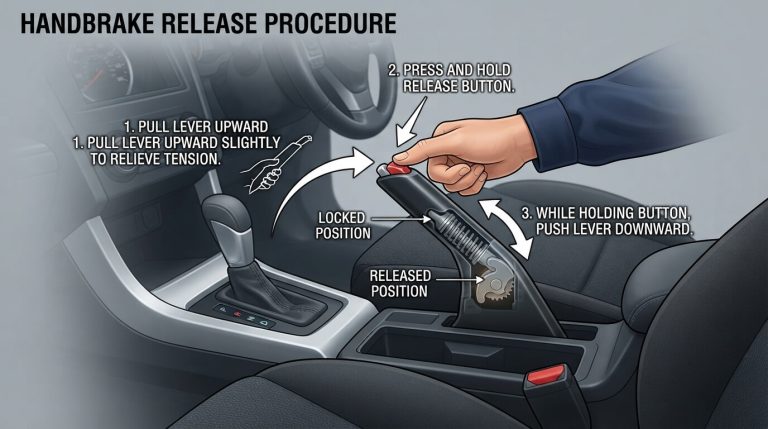
The hand brake looks like a lever that sits between your front seats. This lever rises up from the center console. To engage it, you pull the lever toward you. To release it, you push the lever down or pull a handle attached to the lever. Your hand directly controls this system, which is why people call it a hand brake.
Foot Brake System
A foot brake looks like a pedal mounted on the floor to the left of your main brake pedal. You press down on this pedal with your foot to engage the parking brake. To release it, you press the pedal down again, or sometimes you pull a handle near the steering wheel. These systems work great because your foot already knows how to operate pedals.
Button-Activated System
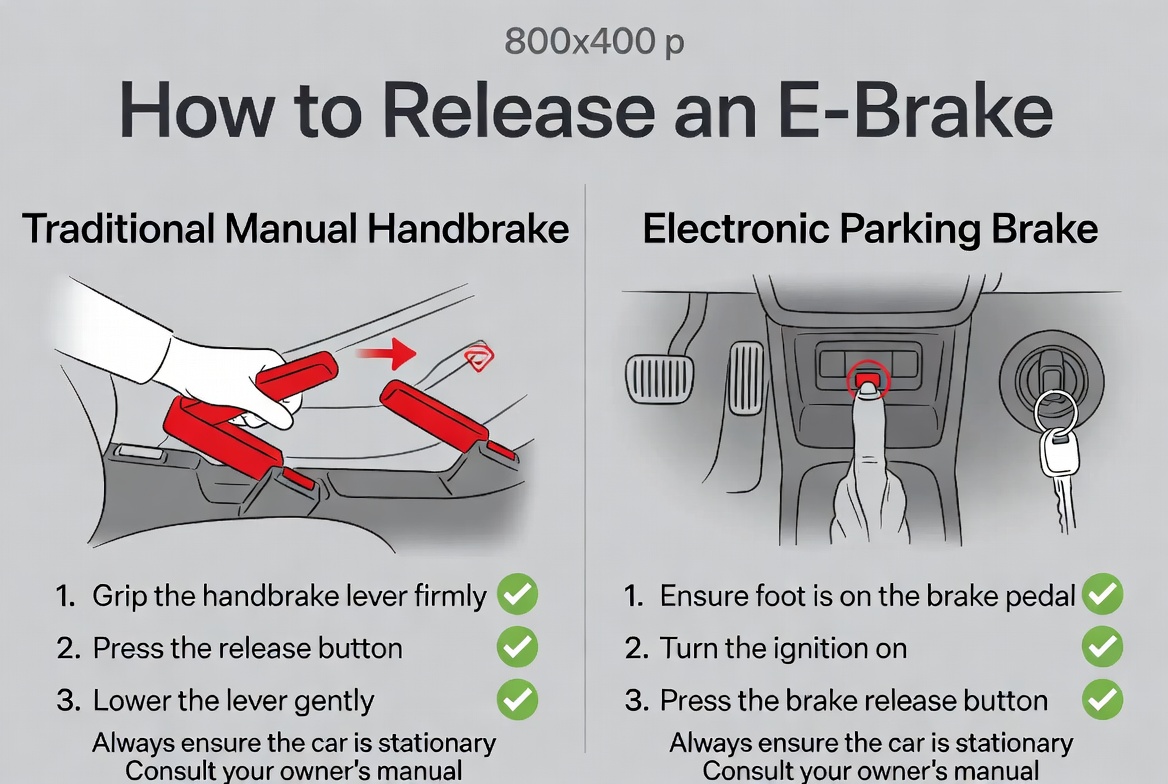
Many newer vehicles have switched to electronic parking brake systems. These brakes activate at the push of a button. The button sits on your dashboard or steering wheel. You press it once to engage the brake. You press it again to release it. Some cars with this system automatically release the parking brake when you start driving.
Lever-and-Release Handle System
Some vehicles have a hand brake lever with a separate release handle. You pull the lever to engage the brake. To release it, you pull a small handle at the base of the lever. This system combines hand operation with a dedicated release mechanism.
Step-by-Step Instructions for Releasing Your E-Brake
Now let’s get to the main event. Here’s how to release your parking brake based on your vehicle type.
Releasing a Hand Brake
First, locate your hand brake lever. You’ll find it between the front seats. Look at it and make sure you understand its current position. If it’s pulled up toward you, your brake is engaged.
Next, determine if your lever has a button. Many hand brakes have a small button on top of the lever. Press this button with your thumb while holding the lever. This button allows the lever to move freely. Once you press the button, pull the lever slightly toward you, then push it down as far as it goes. The lever should move smoothly without resistance.
You should hear or feel a subtle click as the brake releases. This click indicates that the brake mechanism has disengaged. Your parking brake is now off.
If your hand brake doesn’t have a button, you can usually just push the lever down gently. Apply steady pressure downward. The lever will move into its lowest position. This action releases the brake without any need to push a button.
Always confirm your parking brake is fully released before driving. Look at the dashboard for a light or warning indicator. Most vehicles display a warning light when the parking brake stays engaged. When you release the brake, this light should turn off immediately.
Releasing a Foot Brake
Foot-activated parking brakes require a different approach. Sit in your driver’s seat and look for the foot brake pedal. It sits to the left of your main brake pedal, near the floor.
Press the foot brake pedal down with your foot. You’ll feel resistance as you press. Keep pushing until you hear a click or feel the brake release. The resistance should decrease significantly once the brake disengages.
Some foot brake systems work differently. You might need to pull up a handle near the steering wheel to release the brake. Check your vehicle’s owner’s manual to learn your specific system. The manual explains exactly how your brake releases.
After releasing a foot brake, check your dashboard for warning lights. Your vehicle should show you that the brake is no longer engaged. You’re ready to drive once this light disappears.
Releasing a Button-Activated Electronic Brake
Electronic parking brakes are the easiest to release. Locate the button on your dashboard or steering wheel. The button usually has a parking brake symbol on it or a label that says “Park.”
Press this button once with your finger. You should feel the button click. Most electronic systems release immediately when you press the button. Some vehicles release the brake automatically when you press the accelerator pedal after starting the engine.
Wait a moment for the system to respond. Electronic brakes take a second to disengage. Your dashboard light should turn off, indicating the brake has released. If the light stays on, press the button again.
Releasing a Lever-and-Handle System
This system requires two steps. First, locate the hand brake lever between your seats. Look for a small release handle at the base of the lever.
Grab the release handle with your fingers. Pull this handle toward you or downward, depending on your vehicle’s design. While pulling the handle, push the hand brake lever downward. The two actions work together to release the brake.
You might need to apply steady pressure to both the handle and the lever simultaneously. Once the brake releases, both the handle and lever should move into their resting positions. Check your dashboard to confirm the brake is off.
What You Should Know About Engaging Your Brake
While we’re discussing your e-brake, let’s talk about engaging it correctly. Proper engagement means proper release later.
When you park your vehicle, always engage the parking brake. Even on flat ground, this brake keeps your car secure. Simply reverse the release process. Pull up your hand brake, press down your foot brake, or hit your electronic button. You should hear or feel a click confirming engagement.
Don’t apply excessive force when engaging the brake. Gentle, steady pressure works fine. You don’t need to yank a hand brake or stomp on a foot brake. Normal pressure does the job every time.
If your vehicle has an automatic transmission, always set your brake before shifting into park. The transmission’s parking pawl alone isn’t strong enough to hold your car securely on a slope. Your parking brake provides essential backup protection.
Common Problems and Solutions
Sometimes releasing your parking brake doesn’t go smoothly. Here are common issues and how to fix them.
The Brake Won’t Release
If your brake resists release, first check that you’re using the correct technique. Consult your owner’s manual to verify your method. You might be releasing the wrong control.
The brake might not release due to rust or corrosion, especially on older vehicles or cars parked in damp conditions. Try engaging and releasing the brake several times. Repeat this motion a few times to help clear any debris. If this doesn’t work, have a mechanic inspect your brake system.
An electronic brake that won’t release might need a battery check. If your car’s battery is low, electronic systems sometimes malfunction. Start your engine to charge the battery, then try releasing the brake again.
The Warning Light Stays On
A dashboard light that won’t turn off means your brake hasn’t released completely. Try releasing the brake again using the proper technique. Make sure you apply full pressure.
If the light persists, the brake might be partially engaged. This condition is unsafe for driving. Don’t drive your vehicle until you resolve this issue. Have a professional mechanic examine your brake system.
Strange Sounds When Releasing
Clicking or grinding sounds when you release your brake aren’t normal. These sounds suggest mechanical problems inside your brake system. Professional servicing is needed to fix this issue safely.
The Brake Feels Stuck
A stuck brake needs professional attention. Don’t force it excessively, as you might damage the brake mechanism. Call a mechanic to inspect and repair your system.
Why Your Parking Brake Matters
Your emergency brake serves critical safety functions. Understanding its importance helps you use it correctly.
Parking on hills becomes possible because of your brake. Without engaging your parking brake, your vehicle could roll backward. This danger increases on steep slopes. Your brake prevents disasters by holding your vehicle in place firmly.
Your brake also protects against vehicle theft in some situations. While it won’t stop a determined thief, it makes your car harder to steal. A secured vehicle requires more effort to move.
In emergency situations, if your main brakes fail, your parking brake can slow or stop your vehicle. This backup system has saved lives. That’s exactly why it gets called an “emergency” brake.
Tips for Maintaining Your Parking Brake
Keeping your parking brake in good condition ensures it works when you need it.
Use your parking brake regularly. Every time you park, engage it. This regular use keeps the mechanism working smoothly. Brakes that sit unused sometimes develop problems.
Never drive with your parking brake engaged. If you accidentally leave it on while driving, you’ll hear grinding sounds or notice poor vehicle performance. Stop driving immediately and release the brake.
Check your owner’s manual for maintenance schedules. Some vehicles need brake system inspections at regular intervals. Follow these recommendations to keep everything functioning properly.
If you notice any changes in how your brake operates, get it checked. A brake that suddenly feels different might need servicing. Early detection prevents bigger problems later.
Electronic Brake Systems: Special Considerations
If your vehicle has an electronic parking brake, you should know a few additional things.
Electronic brakes integrate with your vehicle’s computer system. They often work automatically in certain situations. Some cars release the brake automatically when you shift out of park and press the accelerator.
These systems require adequate battery power. A dead battery might prevent electronic brake release. Keep your battery charged and in good condition.
Electronic brake systems sometimes display error codes if something goes wrong. Your dashboard might show a message about the brake system. If this happens, consult your owner’s manual or see a mechanic. Don’t ignore these warnings.
Many electronic systems have a manual override. If the electronic release fails, you can often release the brake manually using a special tool or process. Your owner’s manual explains how to do this in your specific vehicle.
Key Differences Between Vehicles
Not all vehicles have identical brake systems. The differences matter when you’re learning to release your specific brake.
Luxury vehicles often have more sophisticated electronic systems. These systems offer convenience features like automatic release. They also have complex computer controls that require professional servicing if something breaks.
Trucks and SUVs might have more powerful brake systems to handle their extra weight. These systems require more forceful engagement but release using the same basic techniques.
Older vehicles have simpler mechanical systems. These brakes rarely malfunction and work predictably every time. They require no electronic components.
Hybrid and electric vehicles sometimes have unique parking brake designs tailored to their systems. Check your owner’s manual to learn about your specific vehicle’s design.
Safety First: Important Reminders
Releasing your parking brake safely requires attention to a few important points.
Always release your parking brake before driving. Driving with the brake engaged damages your brake system and heats up your tires. This condition creates a safety hazard for you and other drivers.
Check that no obstacles are behind your vehicle before releasing the brake and driving away. Children or pets might sit behind your car without your knowledge. Look around carefully.
Make sure your vehicle is on level ground before releasing the brake to move. The brake prevents rolling, but it’s not designed to hold your vehicle against gravity on steep slopes for extended periods.
If your brake fails to release and you need to drive somewhere, go slowly to a nearby mechanic. Don’t attempt long drives with your brake engaged.
Testing Your Brake Release
After releasing your brake, you want to confirm it’s actually off. Here’s how to test it.
Shift your vehicle into drive or reverse, depending on which direction you want to test. Gently press the accelerator. Your car should move smoothly without any resistance. If you feel resistance or hear grinding, your brake might still be engaged.
A properly released brake allows your vehicle to accelerate and move normally. You shouldn’t feel any dragging sensation in the wheels.
Listen carefully for unusual sounds. A released brake produces no sounds at all. Any clicking, grinding, or scraping indicates a problem.
Look at your dashboard lights. A parking brake warning light should be completely off once you release the brake. If it stays illuminated, release the brake again or have it serviced.
When to Call a Professional
Some brake situations require professional help. Know when to stop trying and call a mechanic.
If your brake won’t release after several attempts using the correct technique, stop trying. Forcing it can cause damage. Have a professional mechanic diagnose the problem.
If you hear unusual sounds from your brake system, have it inspected. Professionals can identify and fix mechanical problems safely.
If warning lights stay on after you release the brake, professional servicing is necessary. These lights indicate system failures that need expert diagnosis.
If your parking brake has never worked reliably, get it serviced before it fails completely. Regular maintenance prevents emergency situations.
Quick Reference Guide
Here’s a quick summary for each brake type:
Hand Brake: Press the button on top and push the lever down, or simply push the lever down if there’s no button.
Foot Brake: Press the pedal down until you hear a click, or pull the handle near the steering wheel.
Electronic Button: Press the button once and wait for the system to respond.
Lever-and-Handle: Pull the handle while pushing the lever down simultaneously.
Always verify release by checking your dashboard warning light and testing vehicle movement.
Conclusion
Releasing your e-brake is straightforward once you understand your vehicle’s specific system. Take time to learn which type your car has. Read your owner’s manual to understand your exact mechanism. Practice releasing your brake until the motion becomes automatic.
Your parking brake is an essential safety feature. Treat it with respect and maintain it properly. Regular use and proper technique keep it functioning reliably. When you need it to work, you want confidence that it will.
The next time you sit in your driver’s seat, take a moment to locate your parking brake. Try releasing it using the techniques described here. Familiarity builds confidence, and confidence makes you a safer driver. Your parking brake exists to keep you and your vehicle secure. Now you know exactly how to operate it correctly.