Exhaust Manifold vs Headers
So you want more power from your engine. Or maybe your old exhaust manifold cracked and you’re deciding what to replace it with. Either way, you’ve probably heard people argue about exhaust manifolds and headers like it’s a religion.
Don’t worry. This guide breaks it all down in plain English. No fluff. No confusing jargon. Just the real stuff you need to know so you can make a smart call for your car and your budget.
Let’s get into it.
What Is an Exhaust Manifold?
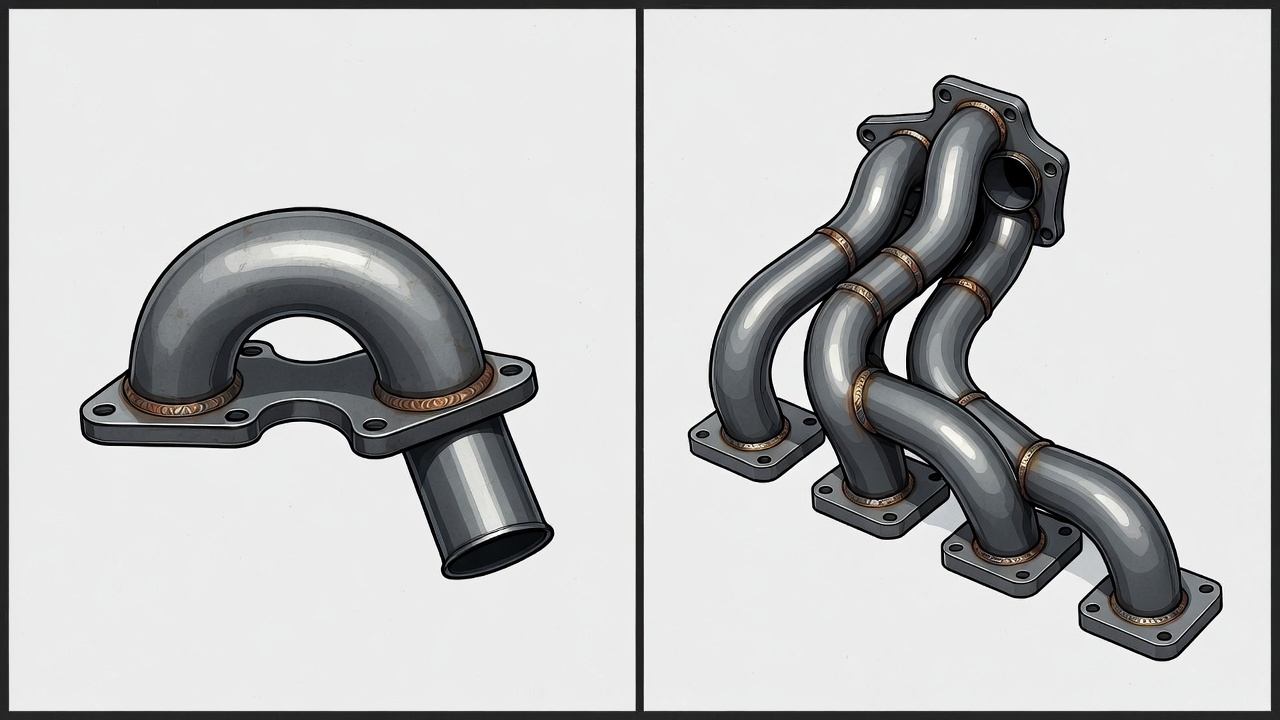
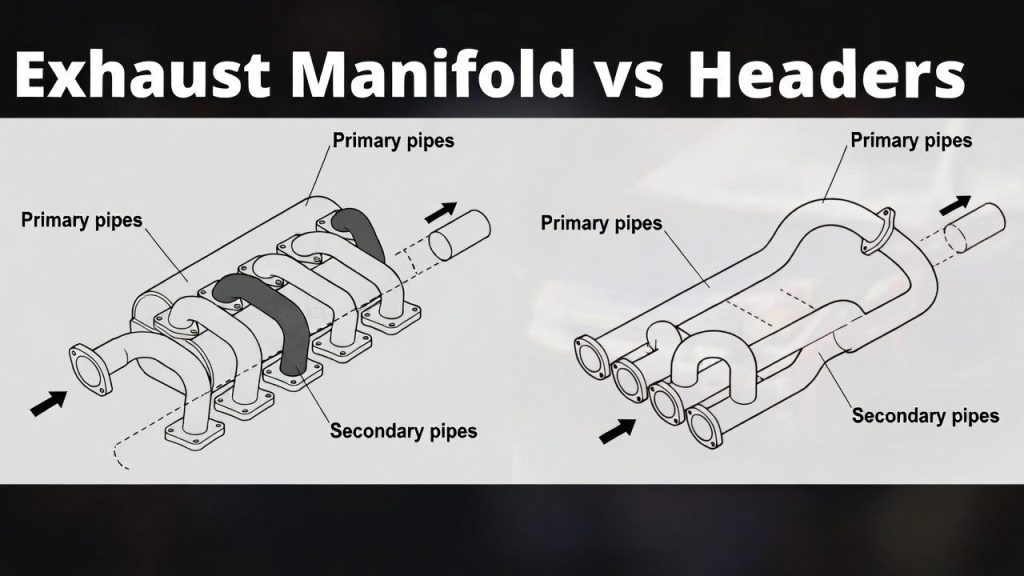
An exhaust manifold is the cast iron or stainless steel piece that bolts directly onto the engine’s cylinder head. Its job is simple — it collects all the exhaust gases from each cylinder and sends them into one pipe, which eventually leads to the catalytic converter, muffler, and out the tailpipe.
Think of it like a funnel. All those burning gases need somewhere to go, and the exhaust manifold is the first stop on that journey.
Most stock vehicles come with cast iron exhaust manifolds from the factory. Car makers love them because they’re cheap to produce, they last a long time, and they handle heat really well. They don’t need much maintenance. They just sit there and do their job quietly.
But here’s the thing — exhaust manifolds are built for function, not performance. They’re designed to meet emission standards, pass noise tests, and survive daily driving without costing the manufacturer much money. Speed and horsepower? That’s not really the priority.
What Are Headers?
Headers are the performance-focused alternative to exhaust manifolds. They’re usually made from thin steel tubing — often stainless steel or mild steel — and they’re designed with one goal in mind: get exhaust gases out of the engine as fast and efficiently as possible.
Instead of a single chunky casting that all cylinders dump into, headers use individual tubes for each cylinder. Each tube is carefully sized and shaped. They all meet at a collector at the end. This design is called a “four-into-one” or “four-into-two-into-one” depending on the style.
The idea behind headers comes from a concept called scavenging. When exhaust gases exit a cylinder at high speed, they create a slight vacuum behind them. With the right tube length and diameter, that vacuum actually helps pull exhaust out of the next cylinder that’s firing. It’s like drafting in cycling — the lead rider creates a low-pressure zone that helps the rider behind them move faster.
This scavenging effect means the engine doesn’t have to work as hard to push out exhaust. That frees up energy that can go toward making power instead.
The Core Difference: Flow vs. Durability
Here’s the simplest way to look at it:
Exhaust manifolds = built tough, built cheap, built to last Headers = built for flow, built for power, built for performance
A stock exhaust manifold restricts exhaust flow. The passages inside are often uneven, rough, and not optimized for speed. When multiple cylinders dump exhaust into the same cramped space at the same time, the gases bump into each other. That creates back pressure.
Back pressure is the enemy of horsepower. Your engine has to push harder to get rid of exhaust. That energy could have gone to moving your car forward.
Headers fix this. Each cylinder gets its own dedicated tube. The gases don’t fight each other. They flow out cleanly and quickly. Less back pressure means the engine breathes better, and better breathing means more power.
Types of Headers
Not all headers are the same. There are a few main types, and each one fits a different situation.
Short Tube Headers (Shorty Headers)
Short tube headers are a middle ground. The primary tubes are shorter than full-length headers, which means they don’t produce as much scavenging effect. But they’re much easier to install. They fit in tight engine bays without major modifications. They also keep emissions equipment in place, which matters if you drive a street car that needs to pass inspection.
Shorty headers are great for mild performance upgrades. You’ll get some extra power, a better exhaust note, and you won’t have to tear apart your whole engine bay to install them.
Long Tube Headers (Full-Length Headers)
Long tube headers are the real deal for performance. The primary tubes are longer, which gives exhaust gases more time to build up velocity before they hit the collector. This maximizes the scavenging effect.
The result? More power, especially in the mid-range and upper RPM range. These are popular for track cars, muscle cars, and any build where maximum performance is the goal.
The downside? They’re harder to install. They often require moving or removing parts under the hood. They may also interfere with emissions equipment, which can cause issues if you need to pass a smog test.
Equal-Length Headers (Tri-Y Headers)
Equal-length headers go one step further. Every primary tube is the exact same length. This means every cylinder’s exhaust pulse arrives at the collector at exactly the same time. The scavenging effect is perfectly balanced across all cylinders.
You’ll see equal-length headers on high-performance sports cars and racing applications. Some flat-four engines, like the ones in certain Subarus and Porsches, use equal-length headers for that signature burble sound you might recognize.
Power Gains: What Can You Actually Expect?
This is the question everyone wants answered.
With shorty headers on a naturally aspirated engine, you might see gains of 5 to 15 horsepower depending on the engine. That’s noticeable but not dramatic.
Long tube headers can push gains higher — sometimes 20 to 30 horsepower or more on the right engine. Pair them with a performance tune, a cold air intake, and a free-flowing exhaust, and the numbers add up fast.
Keep in mind, these numbers vary wildly based on the engine, the car, how the headers are made, and what other modifications you have. Headers work best as part of a complete exhaust system upgrade, not as a standalone bolt-on.
On turbocharged engines, the game changes. Turbo headers (often called turbo manifolds) focus more on directing exhaust into the turbocharger efficiently. The goal shifts from scavenging to spool time — how fast the turbo builds boost pressure.
Sound Difference
This matters to a lot of people, and it should.
A stock exhaust manifold is quiet. It’s designed to be. The thick cast iron absorbs vibration. The passages muffle the exhaust note. The result is the tame, almost anonymous sound you get from a brand-new car off the lot.
Headers open things up. They let the exhaust tone come through more clearly. The engine sounds more aggressive, more mechanical, more alive. Long tube headers especially give engines that deep, throaty rumble that performance car fans love.
If you’re building a sleeper or need to keep the neighbors happy, stick with the stock manifold or go with shorties. If you want your car to announce itself at every light, long tube headers are the move.
Heat Management
This is one area where exhaust manifolds have a clear advantage.
Cast iron holds and distributes heat well. It’s a thermal sponge. The manifold gets hot, sure, but it radiates that heat slowly and evenly. In cold climates, this actually helps warm up the engine faster and gets the catalytic converter up to operating temperature quickly, which matters for emissions.
Headers run hot. Very hot. Thin steel tubes with high-velocity exhaust gases blasting through them get scorching. That heat radiates outward into the engine bay. It can bake nearby wiring, hoses, sensors, and other components.
Most quality headers come with some kind of heat management solution — ceramic coating, heat wrap, or heat shields. These help manage the heat, but they add cost and require maintenance. Heat wrap especially can trap moisture over time if not maintained properly, which leads to corrosion.
If you live somewhere cold and your car sits outside, or if your engine bay is already a tight squeeze with lots of components nearby, heat management is something to take seriously before buying headers.
Installation Difficulty
Let’s be real. Exhaust manifold replacement is annoying but manageable for most DIYers with basic tools and some patience. Bolts corrode, studs snap, and there’s never enough clearance — but the job is straightforward. You can usually do it in an afternoon.
Headers are harder.
Short tube headers are close to a manifold swap in difficulty. Tight spaces, tricky angles, and careful torque specs, but doable.
Long tube headers? That can be a full-day job or more. You might need to lift the engine, remove the starter, drop the cross-member, or work around the steering rack. On some cars, it’s a two-day job even for experienced mechanics.
Factor labor cost into your decision if you’re not doing it yourself. Header installation at a shop can add a significant chunk to the total bill.
Emissions and Street Legality
This is a big deal depending on where you live.
Stock exhaust manifolds are designed to work perfectly with your car’s emissions system. Everything downstream — the O2 sensors, catalytic converter, EGR system — is tuned to work with the manifold’s flow characteristics.
Headers can mess with all of that.
Long tube headers often push the catalytic converter further downstream. This means it takes longer to heat up, which can increase cold-start emissions. Some headers delete the cat entirely, which is flat-out illegal on public roads in most places.
Shorty headers generally keep everything in place, which makes them the safer choice for emissions compliance. But even shorties can trigger a check engine light if they affect O2 sensor readings.
If your car needs to pass a smog test or emissions inspection, do your homework before buying headers. Check if the headers are CARB-compliant (California Air Resources Board) if you’re in California or a state that follows California standards. Look for headers that are designed specifically to keep all emissions equipment functional.
Racing headers are for the track. Period.
Cost Breakdown
Stock exhaust manifolds are inexpensive. A replacement cast iron manifold for most common vehicles runs from $50 to $200 for the part. Gaskets and hardware might add $20 to $50 more.
Short tube headers typically cost $150 to $500 for most popular vehicles. Quality brands cost more, but they fit better, seal better, and last longer.
Long tube headers usually run $300 to $1,000 or more depending on the vehicle and material. Ceramic-coated headers cost extra but save you money on heat management down the road.
Installation costs depend heavily on the vehicle and the job’s complexity. Manifold replacement might be $200 to $400 at a shop. Long tube header installation could run $400 to $800 or more.
And don’t forget the tune. If you put long tube headers on a modern fuel-injected car without updating the ECU tune, you’re leaving performance on the table and possibly setting off error codes. A proper tune can cost $300 to $600 for a custom dyno tune.
Add it all up and headers are a real investment. Make sure the performance gain is worth it for how you use your car.
Exhaust Manifold vs Headers: The Head-to-Head Summary
| Feature | Exhaust Manifold | Headers |
|---|---|---|
| Power output | Stock / moderate | Improved / significant gains |
| Exhaust flow | Restricted | Optimized |
| Durability | Excellent | Good (depends on quality) |
| Heat output | Managed | High |
| Install difficulty | Moderate | Moderate to difficult |
| Emissions compliance | Full compliance | Depends on type |
| Sound | Quiet / stock | Aggressive / performance |
| Cost | Low | Moderate to high |
| Best for | Daily drivers | Performance builds |
Who Should Stick with an Exhaust Manifold?
Keep your stock manifold (or replace it with another OEM-style manifold) if:
- You drive a daily commuter and just want reliable transportation
- You live somewhere with strict emissions laws
- Your engine bay is packed tight and heat is already an issue
- You’re on a tight budget and every dollar counts
- You drive in cold weather regularly and need fast warm-up times
- Your car is under warranty and you don’t want to risk voiding it
There’s nothing wrong with a stock manifold. Millions of cars run perfectly on them for hundreds of thousands of miles. They’re proven, reliable, and trouble-free.
Who Should Upgrade to Headers?
Headers make sense if:
- You’re building a performance car or track car
- You’ve already done other power upgrades like a cam, intake, or forced induction
- You’re willing to get a proper tune after installation
- You don’t need to pass emissions testing
- You want a more aggressive exhaust note
- You have the budget to do the job right the first time
Headers shine when they’re part of a complete build. Bolting headers onto an otherwise stock car gives you some gain, but the real magic happens when your whole exhaust system, air intake, and engine tune work together.
Common Mistakes to Avoid
Buying cheap headers. Thin tubing, bad welds, and poor fitment lead to exhaust leaks, cracked tubes, and installation headaches. Spend a little more for a reputable brand.
Skipping the tune. Modern cars are sensitive. Headers change how exhaust flows, which affects O2 sensor readings and fuel trim. A tune makes sure the engine adapts properly and you get the full power benefit.
Ignoring heat management. Ceramic coating or quality heat wrap is not optional on long tube headers. Protect your wiring and hoses.
Not checking legality first. Don’t buy headers and then find out they fail your state’s inspection. Check emissions compliance before you spend money.
Doing it halfway. If you’re going to install headers, do the rest of the exhaust too — a cat-back exhaust, high-flow cat, and tune. Half measures mean mediocre results.
Final Thoughts
Exhaust manifolds and headers both do the same basic job — move exhaust out of your engine. But they do it in very different ways, for very different goals.
If you want reliability and simplicity, the stock manifold is your friend. It does exactly what it needs to do, day after day, without drama.
If you want performance and you’re ready to put in the work and the money, headers open up real gains. They’re not a magic bullet, but they’re one of the best bolt-on upgrades you can do for a naturally aspirated engine.
Know your goals. Know your budget. Know your local laws. Make the call that makes sense for your specific situation.
And when you finally fire up that engine with a fresh set of headers and a proper tune, that sound alone makes it worth it.
Related topics: exhaust back pressure, scavenging effect, cat-back exhaust systems, exhaust tuning, performance engine modifications, naturally aspirated vs turbocharged exhaust, O2 sensor placement, exhaust gas flow, high-flow catalytic converters, engine breathing mods