
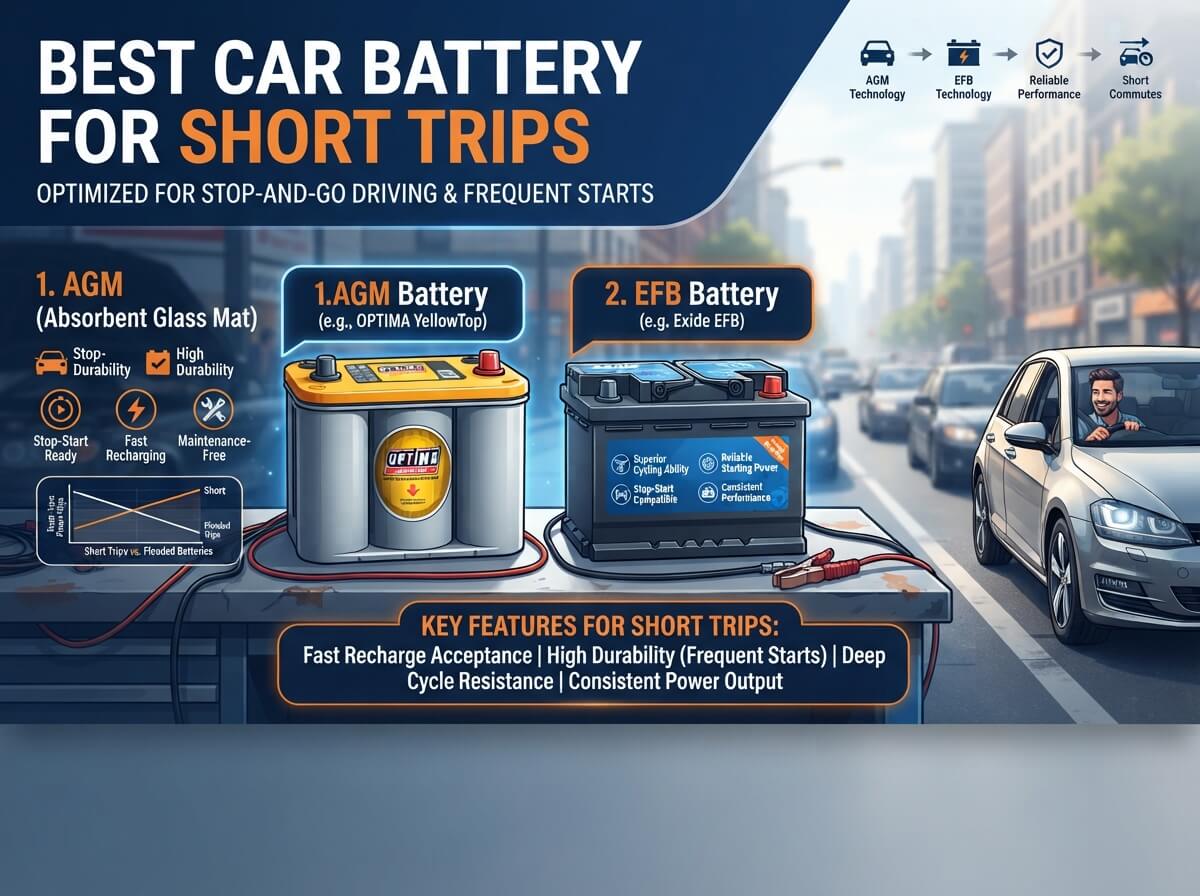
5 Best Car Battery for Short Trips In 2026
If your car sits in the driveway most of the day and only goes out for quick school runs, grocery hauls, or a five-minute drive to the coffee shop, your battery has a harder job than you think. Short trips do not give the alternator enough time to fully recharge the battery. Over weeks and months, that small gap adds up, and one cold morning your engine just clicks instead of starting.
This guide walks you through five products that solve this exact problem in different ways. Two are compact jump starters you toss in your glove box for emergencies. One is a smart charger and maintainer that keeps your battery topped up between drives. And two are actual AGM replacement batteries built to handle the stop-and-go life of short-trip driving better than a regular flooded battery.
We will go product by product, explain who each one is really for, and cover the honest pros and cons so you do not end up buying something that does not fit your situation. By the end, you will know exactly which option (or combo of options) makes sense for your car and your driving habits.
Why Short Trips Are Hard on a Car Battery
Every time you start your engine, the battery loses a chunk of power. On a long drive, the alternator has plenty of time to push that power back in and then some. On a short trip, the engine barely gets warm before you shut it off again, and the alternator never fully catches up.
Add in short winters or hot summers, a few accessories running (AC, seat heaters, phone chargers), and infrequent driving, and you get a battery that is almost always sitting at a partial charge. A partial charge speeds up sulfation, which is basically a buildup of crystals on the battery plates that reduces how much charge the battery can hold. This is the number one reason short-trip drivers burn through batteries faster than highway commuters.
There are three ways to fight back against this: carry a jump starter for backup, use a smart charger to top off the battery regularly, or upgrade to a battery type built for frequent partial-charge cycles, like AGM. This list covers all three angles so you can pick what fits your budget and habits.
Quick Comparison Table
| Product | Type | Best For | Peak Power | Price Range |
|---|---|---|---|---|
| AstroAI S8 | Jump Starter | Emergency backup, small-to-mid cars | 1500A | Budget-friendly |
| Schumacher SC1280 | Charger/Maintainer | Long-term battery health | 15A charging | Mid-range |
| TREKURE Jump Starter | Jump Starter | Bigger engines, diesel trucks | 4000A | Mid-range |
| Mighty Max MM-G35 | AGM Replacement Battery | Daily short-trip drivers | 650 CCA | Mid-range |
| ACDelco Gold 48AGM | AGM Replacement Battery | Stop-start & accessory-heavy cars | Varies by trim | Mid-to-high |
Now let’s break each one down in detail.
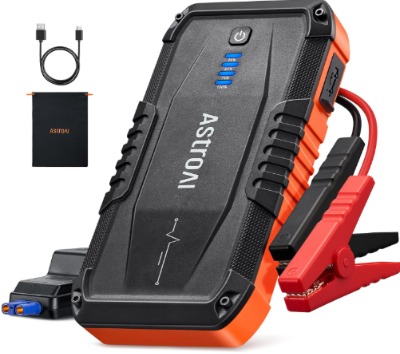
1. AstroAI S8 Car Battery Jump Starter 1500A
What It Is
The AstroAI S8 is a small lithium jump starter that fits in a glove box or door pocket. It is built for the moment your battery dies and you need a quick jump without waiting for roadside help or flagging down a stranger. Instead of jumper cables and a second car, you just clip it to your battery terminals and turn the key.
Best Use Cases
This tool shines for anyone who drives a sedan, hatchback, or small SUV and wants cheap insurance against a dead battery. It is also handy for people who lend their car to family members, since a weak battery from a week of short trips can leave anyone stranded at the worst time. Think of it as a backup plan that lives in your car at all times, not something you plan around.
Key Features Explained Simply
- 1500A peak output: This is the burst of power used to crank the engine. For most gas engines up to around 6.0L, this is more than enough.
- Lithium battery pack: Lighter and smaller than the old lead-acid jump packs, and it holds a charge for months without needing a top-up.
- Built-in flashlight: Comes with SOS and strobe modes, useful if you break down at night.
- USB output: Lets you charge a phone in a pinch, since a dead car battery often means a dead phone from GPS use.
- Safety protection: Reverse polarity and short-circuit protection stop it from sparking if you clip the cables the wrong way around.
Real-Life Usage Insight
For someone who mostly drives short errands around town, a jump starter like this becomes the safety net for those mornings when the battery just will not turn over. You clip the red cable to positive, black to negative or a bare metal ground point, wait for the light to confirm a good connection, then start the car like normal. Most jump starts take under a minute once it is hooked up correctly.
Pros
- Small enough to fit in a glove box or center console
- Fast jump start in cold weather, where cheaper units often struggle
- Doubles as a phone charger and flashlight
- Keeps a charge for a long time in storage
- Simple to use even for someone who has never jumped a battery before
Cons
- 1500A is not enough for larger trucks, vans, or diesel engines
- Battery capacity is modest, so it may need a recharge after a couple of jump starts in a row
- Clamps are on the smaller side, which can be a bit fiddly on corroded terminals
Performance Discussion
In everyday conditions, this unit starts a typical four or six-cylinder engine without drama. Cold weather is where jump starters usually lose steam, and this one holds up reasonably well down to freezing temperatures, though extreme cold will always cut some performance from any lithium pack. If your area sees harsh winters regularly, keep the unit somewhere insulated, like inside the cabin rather than the trunk.
Ease of Use
The whole process is color-coded and straightforward. Clip on, wait for the green light, start the engine, unclip. No manual reading required after the first use.
Value for Money
Given the compact size and reliable performance for smaller vehicles, this sits in a fair price bracket for what is essentially peace of mind you carry with you. It will not replace a proper battery upgrade, but it buys you time and avoids the stress of being stuck.
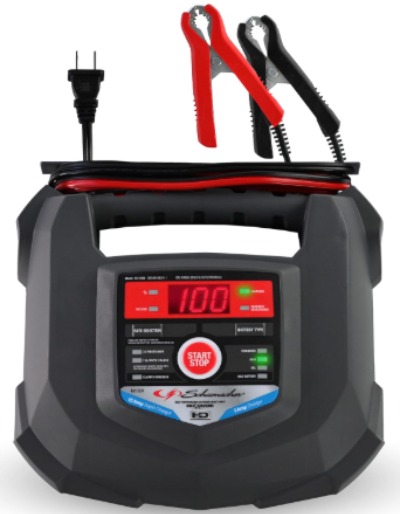
2. Schumacher Electric 15A Car Battery Charger & Maintainer – SC1280
What It Is
The SC1280 is not a jump starter. It is a full charger and maintainer that plugs into a wall outlet and slowly brings your battery back up to full charge, then switches to a maintenance mode so it does not overcharge. This is the tool for people who want to stop the short-trip battery problem before it happens, rather than fix it after the fact.
Best Use Cases
This charger is ideal for anyone whose car sits parked for days at a time, seasonal vehicles like a second car or a project car, and anyone who noticed their battery struggling to start after a string of short drives. It works on both 6V and 12V systems, so it covers most passenger vehicles, motorcycles, and even some lawn equipment batteries.
Key Features Explained Simply
- 15A charging rate: Fast enough to bring a drained battery back up in a reasonable amount of time, without being so aggressive that it stresses the battery.
- Automatic mode selection: The unit reads the battery and adjusts voltage and current on its own, so you do not need to guess settings.
- Maintainer mode: Once the battery hits full charge, it trickles just enough power to offset natural discharge, keeping the battery at 100 percent without overcharging.
- Digital display: Shows charging progress and battery voltage in real time.
- Works on AGM, flooded, and gel batteries: One charger covers most battery chemistries you would find in a household garage.
Real-Life Usage Insight
Owners who drive short distances a few times a week often hook this charger up overnight once every week or two, especially before a longer weekend trip is planned. It is also a smart move to connect it any time the car will sit unused for more than a few days, like during a work trip or a slow week where the car barely leaves the garage.
Pros
- Genuinely extends battery lifespan by preventing chronic partial charging
- Safe to leave connected for extended periods thanks to the maintainer mode
- Easy digital readout removes the guesswork
- Works across multiple battery types and voltages
- Solid build quality that holds up to garage use over time
Cons
- Needs access to a wall outlet, so it is not a portable emergency solution
- Charging a fully dead battery from scratch can take several hours
- Not useful if you are stranded somewhere without power access
Performance Discussion
Where this charger stands out is consistency. It does not just dump power in and hope for the best. The microprocessor-controlled charging curve adjusts as the battery accepts charge, which protects the plates inside the battery from damage that comes with crude, unregulated chargers. For short-trip drivers, this steady approach directly counters the sulfation problem mentioned earlier.
Ease of Use
Setup takes a couple of minutes: connect the clamps or use the included ring terminals for a permanent hookup, plug into the wall, and select the battery type if it is not auto-detected. After that, it runs on its own with no supervision needed.
Value for Money
This is one of those tools that pays for itself by adding real years to your battery’s working life, which usually costs far more to replace than the charger itself. For anyone doing mostly short trips, this is arguably the single most useful item on this whole list.
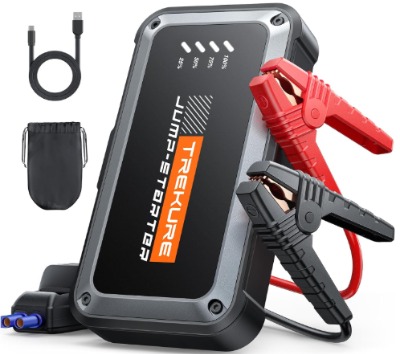
3. TREKURE Portable Car Battery Jump Starter 4000A 16800mAh
What It Is
The TREKURE jump starter is a heavier-duty version of a portable jump pack, built for bigger engines including some diesel trucks up to 6.5L and gas engines up to 8.0L. It is the pick for anyone with an SUV, pickup, or work van that needs more cranking power than a compact jump starter can offer.
Best Use Cases
This is the right tool for truck and SUV owners, small fleet operators, or anyone who occasionally jumps other people’s vehicles and wants enough headroom to handle a bigger engine confidently. It also suits colder climates where diesel engines especially need a strong, sustained burst of current to turn over.
Key Features Explained Simply
- 4000A peak output: A big jump in power over standard jump starters, giving it enough muscle for large gas and diesel engines.
- 16800mAh battery capacity: A sizable internal battery that allows for several jump starts before it needs a recharge.
- Bright LED light with multiple modes: Steady light, strobe, and SOS, useful for roadside visibility as well as basic work light needs.
- Fast charging port: Recharges the unit itself quickly through USB-C, so it is ready again soon after use.
- Smart clamps: Designed to reduce sparking and warn you if the connection polarity is wrong.
Real-Life Usage Insight
Truck and van owners who make frequent short hauls around town often keep a unit like this in a tool bag or under the seat, since bigger engines are more sensitive to the kind of partial-charge cycle that short trips create. When the truck refuses to start after sitting overnight in cold weather, this jump starter provides enough amperage to get it running without needing a second vehicle or roadside assistance.
Pros
- Strong enough for trucks, vans, and diesel engines
- Multiple jump starts possible on a single charge
- Compact considering how much power it delivers
- Useful extra features like the flashlight and USB charging for phones or tablets
- Good option for households with more than one type of vehicle
Cons
- Bulkier and heavier than compact jump starters like the AstroAI S8
- Higher power output means it should always be handled carefully around terminals
- Slightly higher price point than smaller units, though justified by the added capability
Performance Discussion
The extra amperage here is not just a marketing number. Bigger engines, especially diesels, need a stronger and more sustained current draw to crank over compression. Units with lower peak amps can technically claim to jump a diesel but often struggle in real conditions, especially in the cold. The 4000A rating on this unit gives a real safety margin rather than a bare minimum.
Ease of Use
Operation mirrors other jump starters: connect the clamps, confirm the indicator light shows a proper connection, then start the vehicle. The unit gives clear audio or visual feedback if something is connected incorrectly, which is a nice safety touch for less experienced users.
Value for Money
For truck, SUV, or diesel owners, this is a smart buy given how much more capable it is than the compact jump starters made for smaller cars. It is priced above entry-level units but well below what a tow truck or roadside service call would cost you.
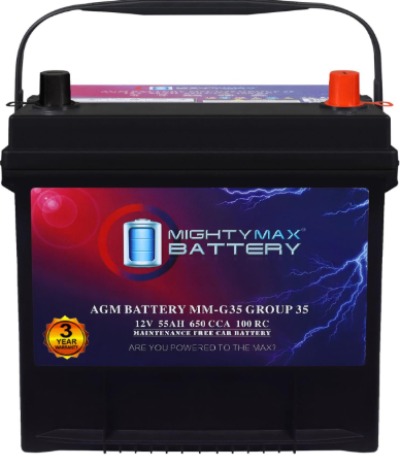
4. Mighty Max Battery MM-G35 AGM Battery (Group 35, 55Ah, 650 CCA)
What It Is
This is not a backup tool. It is a full replacement car battery, and it uses AGM (Absorbent Glass Mat) construction rather than a traditional flooded lead-acid design. AGM batteries handle partial-charge cycles, vibration, and deep discharges noticeably better than standard batteries, which makes this a strong fit if your current battery keeps dying from short-trip driving.
Best Use Cases
This battery fits BCI Group 35 applications, which covers a range of sedans and smaller SUVs, many of them Japanese makes. It is a solid pick for anyone whose driving pattern is mostly short hops around town, and for anyone who has replaced a standard battery once already only to have it die again within a year or two from the same short-trip pattern.
Key Features Explained Simply
- 55Ah capacity: This tells you how much energy the battery can store, giving a decent buffer for accessories and stop-start driving.
- 650 CCA (Cold Cranking Amps): This is the number that matters most for cold-weather starting power. Higher CCA means an easier start on cold mornings.
- 100 minute reserve capacity: This is roughly how long the battery can run essential systems if the alternator stops charging, useful if you accidentally leave a light on.
- AGM construction: Sealed and spill-proof, resistant to vibration, and far more tolerant of the partial-charge lifestyle that short-trip driving creates compared to flooded batteries.
- Maintenance-free design: No need to check or top up fluid levels, unlike older-style batteries.
Real-Life Usage Insight
Drivers who swap a worn-out flooded battery for an AGM unit like this one in a short-trip vehicle typically notice the difference within the first cold snap, since AGM batteries are simply more forgiving of the kind of partial charging that comes from frequent short drives. It also handles the extra draw from things like dash cams, phone chargers, and infotainment systems better than a basic battery.
Pros
- AGM design tolerates partial charging far better than standard flooded batteries
- Strong cold cranking amps for reliable starts in cool weather
- Sealed, maintenance-free, and resistant to vibration and minor spills
- Solid reserve capacity for accessory-heavy vehicles
- Compatible with a wide range of common car models in the Group 35 size
Cons
- Costs more upfront than a basic flooded battery
- Needs a compatible charger if you ever want to recharge it manually, since standard chargers without an AGM setting can undercharge it
- Physical size must match your vehicle’s tray and clamp setup exactly, so double-check your car’s battery group size before buying
Performance Discussion
AGM batteries are built with tightly packed plates and a glass mat that holds electrolyte in place instead of it sloshing around freely. This design lowers internal resistance and lets the battery accept and release charge more efficiently, which directly helps with the shallow charge cycles that short trips create. In testing done by various battery manufacturers and independent reviewers, AGM units consistently outlast flooded batteries in stop-and-go, short-distance driving conditions.
Ease of Use
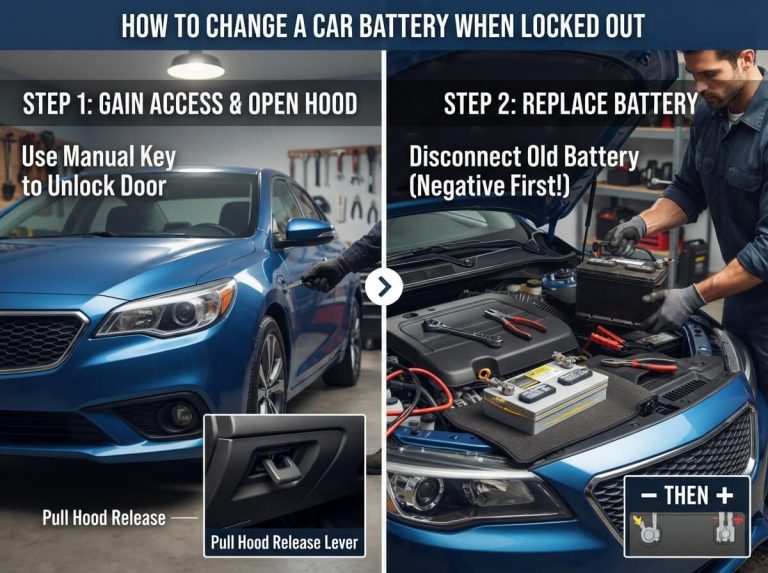
Installation is the same as swapping any standard car battery: disconnect negative first, then positive, remove the old battery, place the new one, and reconnect in reverse order. No special tools or AGM-specific installation steps are needed for a straightforward swap.
Value for Money
The higher price tag compared to a basic battery is easy to justify once you factor in the longer service life under short-trip conditions. Spending a bit more upfront to avoid a repeat battery failure within a year or two makes this a smart long-term investment rather than an extra expense.
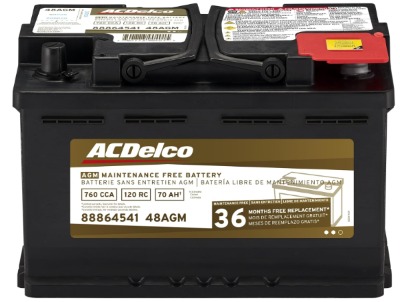
5. ACDelco Gold 48AGM (BCI Group 48, 36-Month Warranty)
What It Is
The ACDelco Gold 48AGM is another full AGM replacement battery, sized for Group 48 applications, which tend to be common in many mid-size and larger sedans and crossovers, especially ones built with stop-start engine technology. ACDelco is the OEM battery brand for General Motors vehicles, so this option leans toward buyers who want a trusted, widely available name.
Best Use Cases
This battery is a strong match for stop-start vehicles, since those cars turn the engine off and on constantly at traffic lights, which is basically an extreme version of the short-trip charging problem. It also suits drivers running a lot of onboard electronics, like heated seats, advanced infotainment, or safety systems that draw power even with the engine off.
Key Features Explained Simply
- AGM chemistry: Same core benefit as the Mighty Max option, better tolerance for partial charging and frequent cycling.
- Group 48 sizing: Fits many GM vehicles and a range of other mid-size cars that call for this size and terminal layout.
- 36-month free replacement warranty: A longer warranty window than many competing batteries, which reflects confidence in the build quality.
- Vibration-resistant construction: Holds up well to rougher roads and daily stop-and-go driving without internal damage.
- Designed for stop-start systems: Built to handle the rapid, repeated cycling that auto stop-start technology demands, which is tougher on a battery than normal starting.
Real-Life Usage Insight
Owners of stop-start vehicles who install this battery often notice smoother stop-start operation, since a weak or aging standard battery sometimes causes stop-start systems to disable themselves automatically as a protective measure. Getting a battery built specifically for that kind of duty cycle keeps the system working the way it was designed to.
Pros
- Excellent match for stop-start and hybrid-adjacent systems
- Long 36-month warranty gives real peace of mind
- OEM-grade quality from a well-known, trusted brand
- Handles frequent short cycles without a quick drop-off in performance
- Widely available for easy replacement or warranty service
Cons
- Pricier than many aftermarket AGM options
- Like all AGM batteries, needs a compatible AGM-aware charger for manual charging
- Group 48 sizing will not fit every vehicle, so confirm your car’s battery group before ordering
Performance Discussion
Stop-start systems are genuinely demanding on a battery, since the engine can restart dozens of times during a single short trip through town. A standard flooded battery wears out fast under that kind of repeated load. The AGM build here, combined with the internal design tuned for stop-start duty, keeps voltage more stable through each restart cycle, which is exactly what a short-trip, stop-and-go driver needs.
Ease of Use
Like the Mighty Max option, installation follows the standard battery swap process. No special tools needed, though it is worth double-checking terminal orientation and hold-down bracket compatibility before finalizing the purchase, since Group 48 batteries come in a couple of terminal configurations.
Value for Money
The higher price reflects the OEM-level build and the long warranty period, both of which matter a lot for stop-start vehicles that are especially hard on a standard battery. For the right car, this is money well spent rather than an unnecessary upgrade.
Comparison Insights
Looking at these five products side by side, they split cleanly into three categories rather than competing head-to-head.
The AstroAI S8 and TREKURE jump starter are both emergency tools, not fixes for the underlying short-trip problem. The AstroAI suits smaller cars and tighter budgets, while the TREKURE is the better call for trucks, SUVs, and diesel engines that need more raw cranking power.
The Schumacher SC1280 stands alone as the only preventive tool on this list. Rather than reacting to a dead battery, it stops the battery from getting weak in the first place, which makes it the best long-term companion for anyone doing mostly short trips.
The Mighty Max MM-G35 and ACDelco Gold 48AGM are both full battery replacements using AGM technology, and the choice between them mostly comes down to your vehicle’s battery group size and how much you value a longer warranty versus a lower price. The ACDelco leans toward stop-start vehicles and buyers who want OEM-level trust, while the Mighty Max is a strong value pick for standard Group 35 applications.
A smart setup for many short-trip drivers actually combines two of these: an AGM battery built for partial-charge tolerance, paired with a maintainer like the Schumacher to keep that battery topped off between drives. Add a compact jump starter in the glove box as a final safety net, and you have covered all three angles of the short-trip battery problem.
Buying Guide: What to Look For
1. Match the Product to the Actual Problem
Before buying anything, figure out what you are actually trying to solve. If your battery already died once and you just need a backup, a jump starter is enough. If it keeps dying repeatedly, the real fix is either a maintainer, a better battery, or both.
2. Know Your Vehicle’s Engine Size for Jump Starters
Jump starter power ratings matter. Compact cars generally do fine with 1000 to 1500A units. Trucks, SUVs, and diesel engines need more headroom, often 3000A or higher, to reliably start in cold weather.
3. Check Your Battery Group Size Before Buying a Replacement
Every vehicle has a specific BCI group size, which determines the physical dimensions and terminal layout of the battery it needs. This information is usually printed on your current battery or listed in your owner’s manual. Buying the wrong size means it simply will not fit your battery tray.
4. Look at Cold Cranking Amps (CCA), Not Just Capacity
CCA tells you how much starting power a battery can deliver in cold temperatures. If you live somewhere with real winters, prioritize a battery with strong CCA numbers rather than just focusing on Ah capacity.
5. Consider AGM Over Flooded for Short-Trip Driving
AGM batteries handle partial charging, vibration, and accessory drain far better than older flooded lead-acid designs. For anyone doing mostly short trips, this upgrade alone can add real years to battery life.
6. Confirm Charger Compatibility With Your Battery Type
Not every charger works safely with AGM batteries. Make sure any charger or maintainer you buy either auto-detects the battery chemistry or has a dedicated AGM setting.
7. Factor in Warranty Length
A longer warranty, like the 36-month coverage on the ACDelco Gold, is a good sign of manufacturer confidence and gives you a safety net if the battery underperforms early.
Who Should Buy These Products
Short-trip city drivers with a smaller car should look at the Mighty Max MM-G35 or a similar AGM battery, paired with the Schumacher maintainer for regular top-ups, plus the AstroAI S8 as a low-cost emergency backup.
Truck and SUV owners, especially those running diesel engines, will get the most value from the TREKURE jump starter for emergencies, combined with a properly sized AGM battery matched to their vehicle’s group size.
Owners of stop-start vehicles should prioritize the ACDelco Gold 48AGM, since standard batteries wear out fast under that kind of repeated cycling, and pair it with a maintainer if the car also sees a lot of short-distance driving.
Anyone with a second car, seasonal vehicle, or a car that sits unused for stretches of time should treat the Schumacher SC1280 as a near-essential tool, since infrequent use is one of the fastest ways to wear down any battery, short trips or not.
Families sharing one car among multiple drivers benefit from having both a jump starter in the glove box and a maintainer at home, since usage patterns tend to be inconsistent and harder to predict.
Common Mistakes to Avoid
Ignoring the problem until the battery dies completely. By the time a battery refuses to start the car, it has often already lost a meaningful chunk of its lifespan. Catching weak charging patterns early with a maintainer prevents this.
Buying a jump starter based on price alone without checking amp ratings. A jump starter that is too weak for your engine size will fail exactly when you need it most, usually in cold weather.
Using a basic charger on an AGM battery. Standard chargers not designed for AGM chemistry can undercharge or, in some cases, damage the battery over time. Always confirm compatibility first.
Skipping the battery group size check. A battery that does not physically fit, or has the wrong terminal layout, is a wasted purchase and a returned order.
Leaving accessories plugged in and running during short trips. Phone chargers, dash cams, and other accessories left running while the engine is off, even briefly, add extra drain that short trips already struggle to replace.
Assuming a jump start “fixes” the battery. A jump start only gets you moving again. If the battery keeps needing jumps, it is a sign of a deeper charging problem that a maintainer or full replacement will actually solve.
Storing a jump starter somewhere it gets extremely hot or cold. Extreme trunk temperatures can shorten the working life of the internal battery in a jump starter. Cabin storage is usually a safer bet.
Final Verdict
There is no single “best” pick here because these five products solve different pieces of the same puzzle. If you want a straightforward answer, though, here is how it breaks down.
For the best all-around emergency backup in a smaller car, go with the AstroAI S8. It is compact, reliable, and easy for anyone to use.
For bigger vehicles and diesel engines, the TREKURE 4000A jump starter gives you the extra power headroom that smaller units cannot match.
For the single most effective way to prevent short-trip battery problems before they start, the Schumacher SC1280 charger and maintainer is hard to beat, and honestly deserves a spot in almost every garage regardless of what else you buy.
For a full battery replacement built to handle short-trip and partial-charge driving, the Mighty Max MM-G35 offers strong value for Group 35 vehicles, while the ACDelco Gold 48AGM is the smarter call for stop-start systems and anyone who wants OEM-level reliability backed by a longer warranty.
The smartest long-term approach combines a proper AGM battery with a maintainer for regular top-ups and a compact jump starter tucked away for backup. That trio covers prevention, daily support, and emergency recovery all at once, and it is the most reliable way to stop short trips from quietly wearing down your car battery over and over again.

Peterson is an automotive enthusiast and auto parts reviewer with a passion for vehicle maintenance, upgrades, and performance. He enjoys researching and testing car parts, tools, and accessories to help drivers make informed buying decisions. Through AutoPartsTalk.com, Peterson shares honest reviews, practical maintenance tips, and expert guides to keep vehicles running safely and efficiently.
One Comment