5 Best Cabin Air Filter For Allergies In 2026
As an Amazon Associate we earn from qualifying purchases.
If you sneeze, itch or feel stuffy every time you drive, your car’s cabin air filter may be part of the story. This guide helps people who are looking for the best cabin air filter for allergies, especially beginners who are not sure what the parts do or how to choose one. It is written for drivers who want clearer air inside the car without needing deep mechanical knowledge.
The five products below share a few things in common. Each one is a replacement filter that fits specific vehicles, and each one is sold through a major online marketplace. The comparison rests on the listed features, the stated fit information and how these filter types usually work in everyday driving, not on personal testing.


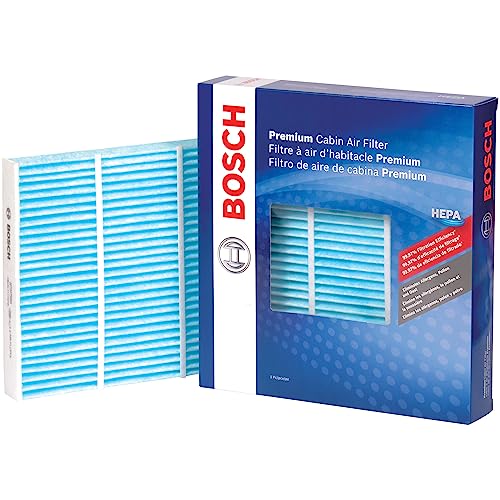
1. Cabin Air Filter w/Activated Carbon: best for Honda owners on a budget
This is a replacement cabin air filter sold for a long list of Honda and Acura models. It is a good fit for drivers who want a simple, low-cost swap for a Honda or Acura and who do not need a special allergy-grade filter. Its listed price is the lowest in this round-up.
What it is and who it suits
A cabin air filter sits behind the dashboard or under the glovebox and cleans the air that enters the car through the vents. This product uses an activated carbon layer, which is a material with many tiny pores that can trap odors and some gases. It suits owners of the listed Honda and Acura models who want an odor-reducing filter at a modest price.
Key features in plain words
The filter is built around activated carbon. The listing also includes a long set of reference numbers, which help you confirm that the part matches the original filter in your vehicle. Always check the fitment list against your model year before you buy.
Daily use and performance
Most drivers notice a cabin filter mainly through airflow and smell rather than through a dramatic change in air quality. Because this model relies on activated carbon for odor control, it may help with smells from traffic or outside air. It does not describe a fine particle filter, so it is less likely to be the strongest choice for heavy pollen or dust sensitivity.
Ease of installation and value
Cabin filters are usually replaced in a few minutes behind a panel or under the glovebox, and many drivers do this themselves. The price is low, which makes it easy to replace on a regular schedule. Value is strong for owners whose needs are mostly about odor and general freshness.
Pros
- Low listed price in this round-up
- Wide list of compatible Honda and Acura models and reference numbers
- Activated carbon layer helps with odors
- Simple, familiar replacement part
Cons
- Not described as a fine particle or HEPA filter
- Fitment is limited to Honda and Acura models
- Owners with strong allergies may want a higher-filtration option
2. CARORY Cabin Air Filter w/Activated Carbon: best for Toyota, Lexus and Subaru drivers
This is a budget-friendly replacement filter aimed at Toyota, Lexus, Subaru and Mazda owners. It works well for drivers whose car is on the long compatibility list and who want a basic activated carbon filter. It is a similar style to the Honda option above, with a different fitment focus.
What it is and who it suits
This is an activated carbon cabin filter designed to replace the original part in selected Toyota, Lexus, Subaru and Mazda CX-9 models. It suits owners who want a clear replacement at a low price. Drivers should pay close attention to the notes on the listing, including the Japan-built note for Toyota C-HR.
Key features in plain words
The filter uses activated carbon to help reduce of the odors that come in with outside air. The listing includes a wide set of Toyota, Lexus, Subaru and Mazda reference numbers, so you can match it to your original part. It is a practical choice when fit is the main concern.
Daily use and performance
For everyday driving, a filter like this mostly helps with smell and general freshness. Airflow through the vents usually feels the same as with a standard replacement.
The product does not present itself as a fine particle or HEPA filter, so it may not be enough for people with strong pollen or dust reactions.
Because of this, drivers with serious allergies may want to compare it with the Spearhead or Bosch options below. Even so, it can be a sensible choice for everyday comfort on a tight budget.
Ease of installation and value
Most cabin filters slide in through a small access panel, and the process is usually quick. The listed price is very close to the Honda filter, which keeps the cost of regular replacement low. Value depends mostly on if your vehicle is on the compatibility list.
Pros
- Low listed price, close to the lowest in this round-up
- Long list of compatible Toyota, Lexus, Subaru and Mazda models
- Activated carbon layer helps reduce odors
- Includes reference numbers to help confirm fit
Cons
- Not described as a fine particle or HEPA filter
- Toyota C-HR fitment is limited to Japan-built models
- Less suited to strong allergy needs than higher-filtration options
3. Spearhead Odor Defense Breathe Easy AC: best for longer life and odor control
This filter sits in the middle of the price range and focuses on longer service life and odor reduction. It is a good fit for drivers who want a sturdier activated carbon filter for a wide set of Toyota, Lexus, Subaru and Mazda models. It is also a clear step up in build detail from the two budget options above.
What it is and who it suits
This is a cabin air filter that combines an electrostatic media layer with activated carbon. It is designed as a replacement for many recent Toyota, Lexus, Subaru and Mazda CX-9 models. It suits drivers who want a filter that is built to last a bit longer and handle outside odors well.
Key features in plain words
The listing says the filter is engineered to last up to 15,000 miles, which it describes as 25 percent longer than a standard 12,000 mile filter. Electrostatic media uses a small electric charge to attract tiny particles, which can help with dust and pollen. The activated carbon layer adds odor control on top of that.
Daily use and performance
The extra filter density may help capture finer particles than a basic carbon-only filter. This can make the cabin feel fresher and may suit people who notice dust or pollen inside the car. Actual results vary with driving conditions, climate and how often the filter is replaced.
Because the listing describes a denser media, airflow may feel slightly more restricted than with a thinner filter. Many drivers find this difference small in daily use. In short, it is a balanced choice between particle capture and odor control.
Ease of installation and value
The filter is a direct replacement, so installation follows the same steps as a standard cabin filter. The price is higher than the budget options, but the longer listed life can spread out the cost over time. Value is good for drivers who want a middle ground between price and performance.
Pros
- Listed to last up to 15,000 miles
- Electrostatic media and activated carbon work together
- Wide list of compatible Toyota, Lexus, Subaru and Mazda models
- Good balance of particle capture and odor control
Cons
- Higher listed price than the budget filters
- Denser media may feel slightly more restrictive to airflow
- Life figure depends on driving and climate conditions
4. BOSCH 6055C HEPA Cabin Air Filter: best for a true HEPA option
This filter is built around a HEPA style design, which is a type of media known for trapping very small particles. It suits drivers who want a stronger focus on fine dust and pollen. It is a strong choice for people who feel sensitive to outdoor allergens during the drive.
What it is and who it suits
A HEPA cabin filter uses dense layers of fine fibers to catch small particles before they reach the cabin. The listing describes this model as having three layers of protection. It suits owners of select Lexus, Subaru and Toyota models, including several popular 4Runner, Camry, RAV4 and Highlander variants.
Key features in plain words
The filter is sold as a single unit and does not require a core charge, which means you do not need to return an old part to get the price. It weighs about 0.28 pounds, a small figure that reflects a compact filter. The three-layer design is the main feature to understand, since it is meant to capture more than a basic filter would.
Daily use and performance
For allergy-minded drivers, the main appeal is the focus on particles rather than odor alone. A dense filter like this may reduce the amount of pollen and dust that reaches the cabin. Some drivers may notice slightly less airflow, which is normal for denser media.
Because it is aimed at particle capture, it is less of a pure odor solution than a carbon-heavy filter. Still, many people find that a cleaner-feeling cabin helps with general comfort. The results depend on the vehicle, the climate and how often the filter is changed.
Ease of installation and value
Installation is a standard cabin filter swap, which most owners can handle with basic tools or none at all. The price is in the mid-to-upper range for this round-up. Value is strongest for drivers who prioritize fine particle capture and are on the compatibility list.
Pros
- HEPA style design focused on fine particles
- Three layers of protection described in the listing
- No core charge required
- Compact and lightweight
Cons
- Higher price than the budget carbon filters
- Denser media may slightly reduce airflow
- Less focused on odor than carbon-heavy options
5. BOSCH 6091C HEPA Cabin Air Filter: best for GM truck and SUV owners
This is a HEPA style cabin filter aimed at select Chevrolet, GMC and related models. It suits drivers of trucks and SUVs who want a dense particle filter without adding a chemical odor product. It is the best fit in this round-up for owners of the listed GM vehicles.
What it is and who it suits
This filter uses a melt-blown electrostatic layer with a dense media design to trap fine particles. The listing adds a static cotton layer to increase how much it can hold. It suits owners of select Chevrolet Camaro, Cruze, Impala, Malibu, Silverado and Traverse, and GMC Sierra, Terrain and Yukon models.
Key features in plain words
The filter uses an electrostatic layer, which means it carries a small charge that helps grab tiny particles. Structural ribs add stability so the filter holds its shape in the housing. The listing says it does not rely on a formulated chemical odor neutralizer, which is a different approach from some carbon filters.
Daily use and performance
Drivers who notice dust or pollen inside the cabin may find this type of filter useful. The dense layers aim to capture particles that a basic filter might let through. The listing recommends replacing the filter at least once every 12 months or every 12,000 miles, whichever comes first.
Because it is built mainly for particles, it is not the first pick for strong odor problems. Odors are better handled by a filter with a thicker activated carbon layer. Even so, a cleaner-feeling cabin is a common goal for allergy-minded driv ers, and this filter aims at that goal.
Ease of installation and value
Installation is a standard cabin filter replacement, usually done behind a panel or under the glovebox. The price sits in the middle of the range, which is lower than the Bosch 6055C. Value is good for GM owners who want a dedicated particle filter with clear replacement guidance.
Pros
- Dense electrostatic media aimed at fine particles
- Static cotton layer adds capacity
- Structural ribs help the filter keep its shape
- Clear replacement guidance in the listing
Cons
- Fitment is limited to select GM models
- Not built mainly for strong odor control
- Denser media may slightly reduce airflow
Comparison insights: how these five filters differ
The five filters fall into two main groups. The Honda, Toyota and Lexus carbon filters focus on odor and general freshness at a low price. The Spearhead, Bosch 6055C and Bosch 6091C filters lean toward denser media that aims to catch more fine particles.
In terms of performance, the particle-focused filters are the better match for pollen and dust sensitivity. The carbon-focused filters are often the better match for smells from traffic and outside air. Neither type is a medical device, so results will vary from driver to driver.
Ease of use is similar across all five. Each one is a replacement part that goes into a standard cabin filter housing. The main difference is fit, so checking the compatibility list matters more than the product type.
For value, the budget carbon filters cost the least up front. The Spearhead filter sits in the middle and offers a longer listed life. The Bosch HEPA style filters cost more but focus on fine particle capture. Because of this, the best value depends on if odor or particles matter more to you.
Buying guide: how to choose a cabin air filter for allergies
A cabin air filter cleans the air that comes through your car’s vents. It is a simple part, but its type and fit make a real difference. The first step is always to confirm that the filter matches your exact vehicle.
Check the fit first
Each filter lists the makes, models and years it fits. Compare your car’s make, model and year with the list before buying. Reference numbers can also help you match the original part.
Understand the filter type
Activated carbon filters are good at reducing odors from outside air. HEPA style and electrostatic filters use dense media to catch fine particles like pollen and dust. Many filters combine both approaches, so read the product description carefully.
Think about your sensitivity
If you mainly notice smells, a carbon filter may be enough. If you sneeze or itch from pollen or dust, a particle-focused filter is usually a better choice. Your own reactions and the season will shape what feels right.
Plan for replacement
Cabin filters need regular replacement to keep working well. The Bosch 6091C listing recommends replacing at least once every 12 months or every 12,000 miles. Follow the guidance for your vehicle and driving conditions.
Consider airflow
Denser filters can slightly reduce airflow through the vents. This is normal, and most drivers do not find it a problem. If you notice weak airflow after a change, check that the filter is installed correctly.
Who should buy these products
If you drive a Honda or Acura on a tight budget, the first Honda filter is a straightforward option. It suits people who mainly want odor control and a simple swap. It is a practical starting point for everyday freshness.
If you drive a Toyota, Lexus, Subaru or Mazda CX-9 and want a low price, the second CARORY filter fits the bill. It works well for basic odor reduction. Drivers with stronger allergies may want to look at the Spearhead or Bosch options instead.
If you want a balance of particle capture, odor control and a longer listed life, the Spearhead filter suits you. It is a good middle-ground choice for many compatible Toyota, Lexus, Subaru and Maz
Mazda CX-9 owners who want more than a budget filter will find it a sensible match. It offers a solid mix of features at a moderate price.
If you have strong pollen or dust sensitivity and drive a supported Toyota, Lexus or Subaru, the Bosch 6055C HEPA style filter is worth a close look. Its focus on fine particles suits people who want the cabin to feel cleaner. It costs more than the carbon filters, so the extra spend should match your needs.
If you drive a select Chevrolet, GMC or related truck or SUV, the Bosch 6091C is the most fitting option. It is designed for particle capture and does not rely on a chemical odor product. Owners who mostly care about dust and pollen will likely appreciate its focus.
Final verdict: which cabin air filter for allergies is right for you
There is no single winner for everyone. The best choice depends on your vehicle, your sensitivity and your budget. Fit always comes first, because a filter that does not match your car will not work properly.
For a low-cost odor filter, the Honda and CARORY carbon options are the simplest picks. For longer life and a balance of features, the Spearhead filter stands out. For a stronger focus on fine particles and allergens, the Bosch HEPA style filters are the more targeted choice.
In short, match the filter type to your main concern and confirm the fit before you buy. Replace the filter on a regular schedule to keep the cabin air as clean as possible. This approach gives you the most useful result without guesswork.
Frequently Asked Questions
What is a cabin air filter?
A cabin air filter cleans the air that enters your car through the heating and cooling vents. It usually sits behind the dashboard or under the glovebox. It helps catch dust, pollen and some odors before they reach you.
Can a cabin air filter help with allergies?
A cabin air filter may help reduce pollen and dust inside the car, especially a particle-focused filter. Results vary with climate, driving habits and how often the filter is replaced. It is not a medical treatment, so talk to a doctor about serious allergy symptoms.
What is the difference between activated carbon and HEPA style filters?
Activated carbon filters are mainly good at reducing odors and some gases. HEPA style filters use dense fibers to catch fine particles like pollen and dust. Many filters combine both features, so check the product description.
How often should I replace my cabin air filter?
Most cabin filters need replacing about once a year or every 12,000 miles, depending on the product and driving conditions. The Bosch 6091C listing gives that guidance. Check your vehicle’s owner manual for the recommended schedule.
Will a denser cabin filter reduce airflow?
A denser filter can slightly reduce airflow through the vents, which is normal for this type of media. Most drivers find the difference small. If airflow feels weak after a change, check that the filter is installed correctly and facing the right way.

Peterson is an automotive enthusiast and auto parts reviewer with a passion for vehicle maintenance, upgrades, and performance. He enjoys researching and testing car parts, tools, and accessories to help drivers make informed buying decisions. Through AutoPartsTalk.com, Peterson shares honest reviews, practical maintenance tips, and expert guides to keep vehicles running safely and efficiently.