5 Best Brake Fluid For ABS Systems In 2026
As an Amazon Associate we earn from qualifying purchases.
If you are new to car maintenance, brake fluid can feel like a mystery. Yet it plays a central role in how your brakes respond when you press the pedal. This guide helps beginners who want the best brake fluid for ABS systems, the anti-lock braking system that keeps wheels from locking up during hard stops. It also covers a few related tools that many home mechanics use when they service brakes.
The five products below share a common purpose: they either supply hydraulic fluid for brake systems or help you add and replace that fluid. Each one is compared on its listed features and typical use, not on personal testing. Read this as a starting point, then check your vehicle manual before you buy.


1. STP Synthetic DOT 4 Brake Fluid: a versatile choice for everyday drivers
STP Synthetic DOT 4 Brake Fluid is a 12 ounce bottle of synthetic brake fluid. DOT 4 is a grade rating set by the US Department of Transportation that describes minimum boiling performance. This fluid is marketed for disc, drum and ABS systems, which makes it a broad option for many cars and light trucks.
Who it suits and how it is used
This fluid suits drivers whose owner manual calls for DOT 3 or DOT 4 fluid. Because it is ready to use, you pour it straight into the master cylinder reservoir with no mixing. Always confirm the grade in your manual before you pour anything in.
Key features in plain words
The formula is described as resistant to vapor lock. Vapor lock happens when heat turns fluid into gas, which makes the pedal feel soft. The product also highlights protection against corrosion and wear inside the brake lines and parts.
Everyday feel and performance
In daily driving, brake fluid does its job quietly, so most people notice it only when something goes wrong. A good fluid helps the pedal feel firm and consistent over time. This product is positioned for steady performance across many conditions rather than for extreme use.
Ease of use and value
Pouring fresh fluid into the reservoir is simple. The price is modest, and the wide compatibility means you may not need to hunt for a specialty product. For many owners, that makes it an easy budget-minded pick.
Pros
- Works across ABS, disc and drum systems
- Ready to use with no mixing required
- Modest price for a 12 ounce bottle
- Designed to resist vapor lock and corrosion
Cons
- Not suited to vehicles that require DOT 5.1 or DOT 5 fluid
- Performance claims are general and not backed by detailed test figures in the listing
- Smaller bottle may not be enough for a full system flush on larger vehicles
2. STP Heavy Duty Brake Fluid: a simple DOT 3 option for older vehicles
STP Heavy Duty Brake Fluid is a DOT 3 fluid in a 12 ounce bottle. It is designed for brake systems that call for DOT 3, including many older vehicles. The listing states that it works with ABS, disc and drum setups.
Who it suits
This product fits owners who need DOT 3 fluid specifically. Mixing grades is generally discouraged, so matching your manual matters more than picking the newest product. Check the label before you buy, because DOT 3 and DOT 4 are different specifications.
Features explained simply
The listing says the fluid helps guard against vapor lock and helps prevent corrosion in the brake system. It also states that it meets a federal safety standard for brake fluid and an
The listing also mentions that the fluid meets SAE specification J1703.
SAE stands for the Society of Automotive Engineers, which publishes industry standards for vehicle parts. In plain words, the label says the fluid is built to a recognized set of rules for brake fluid.
Everyday feel and performance
Most of the benefit from brake fluid is quiet and long term. Fluid that resists heat and moisture helps the pedal stay firm when you need it. This product is aimed at steady, routine service rather than demanding driving.
Ease of use and value
Like the other STP bottle, this one is ready to use and pours directly into the reservoir. It sits at a similar price point, which makes it easy to compare. For a basic DOT 3 need, the cost is kept low.
Pros
- Clearly labeled as DOT 3, which helps with matching older specs
- Works with ABS, disc and drum systems
- States it meets a recognized federal safety standard and SAE J1703
- Low cost for a routine top-up or replacement
Cons
- Not a fit for vehicles that require DOT 4 or DOT 5.1 fluid
- Listing offers general performance language rather than detailed figures
- Smaller 12 ounce size may need more than one bottle for a full flush
3. Motul DOT 5.1 Synthetic Brake Fluid: a high-performance option for modern braking systems
Motul DOT 5.1 Synthetic Brake Fluid is a non-silicone synthetic fluid sold in a two pack of 500 milliliter bottles. Non-silicone means the fluid does not use silicone as its base, which matters for some systems. It is marketed for modern brake systems that include ABS, electronic stability control and similar electronic aids.
Who it suits
This fluid suits owners whose manual specifies DOT 5.1 or who want a higher-grade fluid where DOT 4 is allowed. It is also listed for motorcycles, light trucks and performance-focused vehicles. Confirm compatibility first, since DOT 5.1 is not interchangeable with every system.
Features in simple language
The listing highlights a high boiling point, which helps reduce the risk of vapor lock and brake fade during repeated or heavy braking. Brake fade means the brakes feel weaker after prolonged use because of heat. The formula is also described as low in viscosity, meaning it flows easily, which the maker links to quicker response in cold weather.
Real-life use and feel
For ordinary commuting, a fluid like this simply sits in the system and does its job. Drivers who tow, drive hills often or use their brakes hard may find the added heat margin more relevant. The listing describes steady performance during prolonged use and high heat conditions.
Value for money
This is the most expensive product in this group, at roughly three times the price of the STP bottles for a similar task. If that extra cost makes sense depends on your vehicle and your driving. If your manual calls for a standard DOT 3 or DOT 4 fluid, a cheaper option may do the job.
Pros
- Non-silicone synthetic formula suited to modern electronic brake systems
- High boiling point listed for heat resistance
- Two pack gives enough fluid for a full service job
- Compatible with DOT 3, DOT 4 and DOT 5.1 systems, according to the listing
Cons
- Higher price than the STP options
- Usually more than most daily drivers need
- Must not be mixed with silicone-based DOT 5 fluid
4. EWK 1L Master Cylinder Brake Fluid Refilling Bottle: a helper for bleeding brakes alone
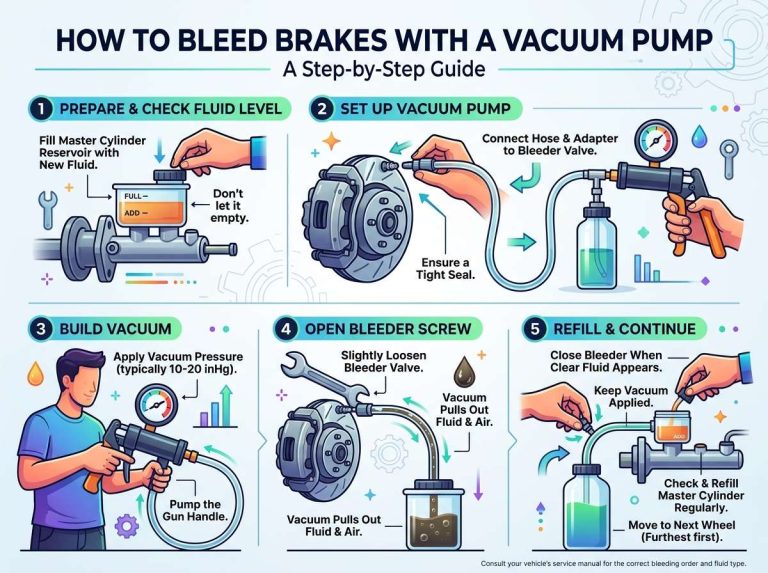
The EWK refil bottle is a refill tool rather than a fluid. It clamps onto the master cylinder and keeps fluid topped up while you bleed the brake lines. Bleeding means pushing old fluid and any trapped air out of the system.
Who it suits
This tool suits home mechanics who want to bleed brakes without a helper. It is listed for standard and ABS systems on cars, trucks and motorcycles. Because it works with many setups, it can be a useful add-on to an existing kit.
How it works in simple terms
The adjustable clamp fits most master cylinders, and clear volume markings show the fluid level at a glance. A built-in flow valve is meant to limit overfilling and spills. The bottle keeps the reservoir from running dry, which helps prevent air from entering the lines.
Real-life feel during a job
Bleeding brakes is slow, and a dry reservoir can force you to start over. This bottle is designed to reduce that risk. Many people find the job easier when they are not juggling a second pair of hands.
Ease of use and value
Setup is straightforward: fit the clamp, add fluid and work through the bleeding sequence. It is priced in the middle of this group and does not include brake fluid itself. Plan to buy fluid separately.
Pros
- Helps keep the master cylinder from running dry during bleeding
- Clamp is adjustable for many master cylinder shapes
- Clear volume markings make the fluid level easy to read
- Useful for one-person bleeding jobs
Cons
- Does not include brake fluid
- Works best as part of a careful bleeding routine, not as a shortcut
- Fit and results depend on your vehicle’s master cylinder design
5. SMOTIVEPRO 2L Manual Brake Bleeder Kit: a full set for one-person brake service
The SMOTIVEPRO kit is a manual pressure bleeder with a 2 liter refill tank, a 1 liter waste bottle and four master cylinder adapters. It is built for one person to flush and bleed the system. The kit is the most complete tool in this round-up.
Who it suits
This kit suits owners who do brake service regularly, or who want a single tool that covers many vehicles. It is a better fit for someone planning a full flush than for a quick top-up. Check the adapter list to confirm your vehicle is covered.
Features explained
The four adapters are sized for different groups of makes, including BMW, Mercedes, Audi and VW, plus Ford, Honda and others, and GM and Chrysler models. A built-in gauge lets you monitor pressure during the job. A safety relief valve is meant to stop pressure from building too high.
Real-life use
Using a pressure bleeder usually means fewer steps with one person. The waste bottle keeps old fluid contained, which helps keep the work area clean. Careful setup is still important, since pressure tools need to be handled with care.
Value for money
This is the priciest item in the round-up, but it covers several tasks in one purchase. If you would otherwise pay someone to bleed your brakes, the kit may pay off over time. For a one-off job, a simpler tool might be enough.
Pros
- Allows one-person brake bleeding and fluid replacement
- Four adapters cover many common vehicle groups
- Built-in pressure gauge and safety relief valve
- Includes both a refill tank and a waste bottle
Cons
- Highest price in this group
- Adapter fit must be checked for your specific vehicle
- Still needs brake fluid bought separately
Comparison insights: how these five products differ
The five products fall into two groups. Three are brake fluids, and two are tools for adding or replacing of the fluid. Each group serves a different need, so comparing them directly is only partly useful. Start by sorting the products by what you actually need to do.
Among the fluids, the STP options are the simplest and lowest cost. Both are ready to use and labeled for specific grades, which makes them easy to match to a manual. The Motul DOT 5.1 is a different class, aimed at owners who want a higher-grade fluid and are willing to pay more for it.
Ease of use varies more among the tools. The EWK refill bottle is a simple add-on that works alongside your existing bleeding setup. The SMOTIVEPRO kit is more involved, since it needs adapter fitting and pressure handling, but it removes the need for a helper.
Value for money depends on your situation. For a basic top-up, the STP bottles offer the lowest cost per job. For regular service or a full flush, the kit may save money over time, even though its upfront price is the highest here.
Buying guide: key factors explained in plain words
The most important factor is the grade your vehicle requires. Brake fluid is sold in grades such as DOT 3, DOT 4 and DOT 5.1, and your owner manual lists the correct one. Using the wrong grade can cause problems, so always check first.
Next, consider the type of fluid. Glycol-based fluids such as DOT 3, 4 and 5.1 absorb moisture over time, which is why regular replacement matters. Silicone-based DOT 5 fluid is different and should not be mixed with other grades. Read labels carefully.
Boiling point is another useful idea. A higher boiling point means the fluid is less likely to turn to vapor under heat. That helps reduce the risk of brake fade, so it matters more for heavy use, towing or hilly driving.
If you plan to bleed the brakes yourself, think about tools. A simple refill bottle can help with a two-person job. A pressure kit can make a one-person job easier, though it costs more and needs careful setup.
Finally, weigh the size of the bottle. Most home jobs need more than a single small bottle for a full flush, so plan your quantity before you start.
Who should buy these products: matching buyers to the right choice
If you have an everyday car that calls for DOT 3, the STP Heavy Duty Brake Fluid is a clear match. It is simple, labeled for that grade and low in cost. Confirm the grade in your manual before you buy.
If your manual calls for DOT 4 and you want a ready-to-use option for a wide range of systems, the STP Synthetic DOT 4 Brake Fluid fits well. It is a practical choice for routine service.
If your vehicle specifies DOT 5.1, or you drive a modern car with electronic stability systems and want a higher heat margin, the Motul DOT 5.1 is worth a look. Expect to pay more for that extra performance.
If you do your own brake work and want to avoid a second person, the SMOTIVEPRO kit covers the most ground. If you only need help keeping the reservoir full during a two-person job, the EWK refill bottle is a more modest addition.
Final verdict: which product makes sense for most readers
For most beginners, the right choice starts with the grade in your owner manual. Once you know that, the decision becomes much simpler. The STP options are the easiest entry point for routine fluid needs.
The Motul DOT 5.1 stands out for owners who need that grade or want extra heat resistance. It costs more, so it is not necessary for every car. The tools are best chosen after you decide if you plan to bleed the brakes yourself.
In short, match the fluid to your manual first. Then pick a tool only if you plan to do the work at home. A careful choice here supports safe, predictable braking for years.
Frequently Asked Questions
What does DOT mean on brake fluid?
DOT stands for Department of Transportation. The number after it, such as 3, 4 or 5.1, is a grade that describes minimum performance and compatibility. Always match the grade your owner manual lists.
Can I mix different brake fluid grades?
Mixing grades is generally discouraged, since each grade has its own spec and performance limits. Stick with the grade your manual lists, and avoid mixing unless a qualified guide says it is acceptable. When in doubt, ask a professional before you pour.
How often should brake fluid be replaced?
Brake fluid absorbs moisture from the air over time, which can lower its boiling point. Many owner manuals suggest replacement at set intervals, so check yours. Regular service helps keep the braking system predictable.
Is DOT 5 fluid the same as DOT 5.1?
No, they are different. DOT 5.1 is glycol-based, while DOT 5 is silicone-based and does not mix with other fluids. Read the label carefully and confirm your vehicle’s requirement before you buy.
Do I need a bleeder kit to change brake fluid?
Not always. Some people bleed brakes with a helper and a simple tool, while others prefer a pressure kit for one-person work. Choose based on your skills, your vehicle and how often you plan to do the job.

Peterson is an automotive enthusiast and auto parts reviewer with a passion for vehicle maintenance, upgrades, and performance. He enjoys researching and testing car parts, tools, and accessories to help drivers make informed buying decisions. Through AutoPartsTalk.com, Peterson shares honest reviews, practical maintenance tips, and expert guides to keep vehicles running safely and efficiently.