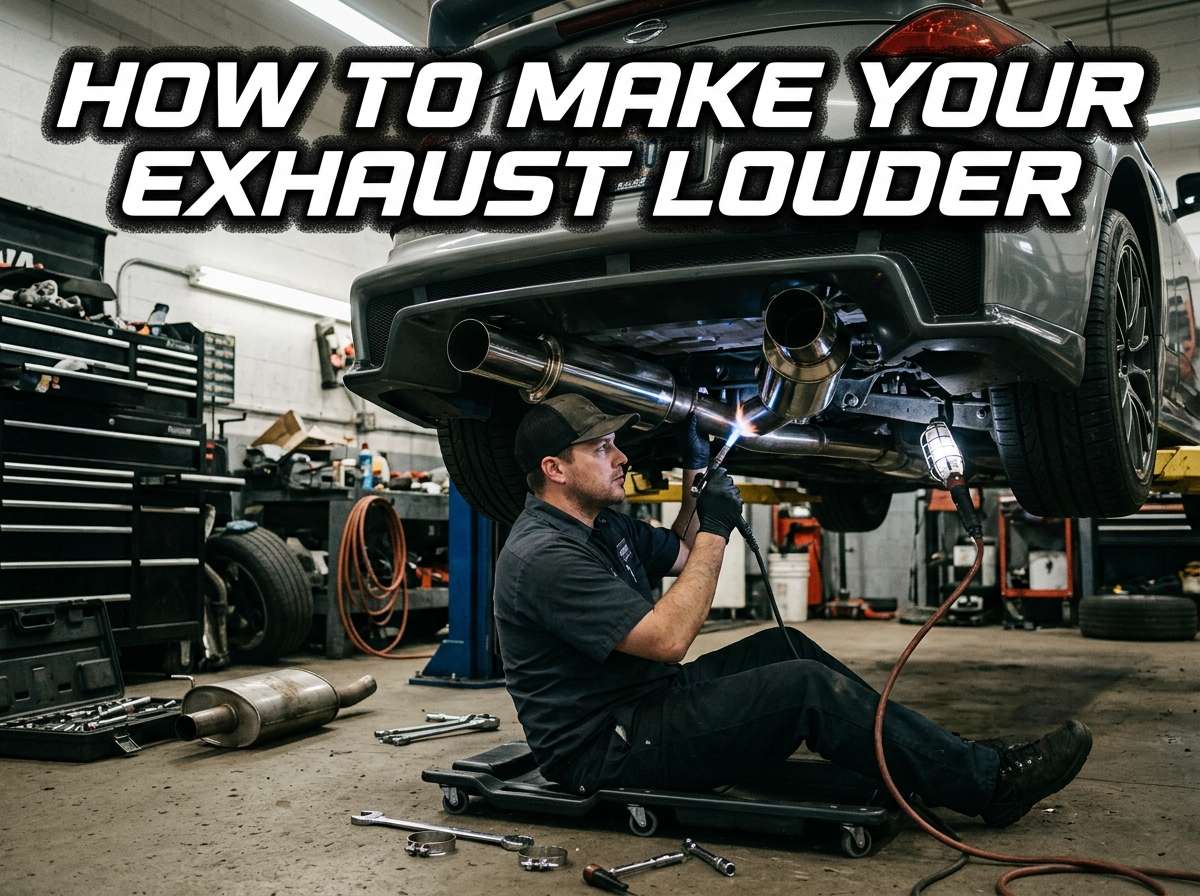
How to Make Your Exhaust Louder?
Want your car to sound like a beast? You’re not alone. Many car enthusiasts dream of having a louder, more aggressive exhaust sound that turns heads when they drive down the street. The good news? You can absolutely make your exhaust louder without spending a fortune or tearing your car apart.
In this guide, we’ll walk you through everything you need to know about upgrading your exhaust system. We’ll cover simple mods, the best products, and tips that actually work. Let’s get started.
Why People Want Louder Exhausts (And Why It Matters)
Before we jump into how to do this, let’s talk about why people care about exhaust noise in the first place.
When your engine runs, it makes noise. That noise comes from the combustion process inside the cylinders. Your stock exhaust system has a muffler that absorbs a lot of this sound. It’s designed to keep noise levels low and legal.
But here’s the thing: many drivers enjoy the sound of a powerful engine. A louder exhaust makes your car feel more aggressive and performance-oriented. It gives your vehicle a distinctive personality. When people hear you coming, they know you’ve got something special under the hood.
Louder exhaust systems also come with practical benefits. Better flow means your engine breathes easier. This can lead to small performance gains. Your car might gain a few extra horsepower. The engine runs cooler and more efficiently.
The key is doing this the right way. You want your car to sound amazing without becoming a rolling noise violation.
Understanding Your Current Exhaust System
Your exhaust system has several parts working together. Each one affects how loud your car is.
The engine produces hot gases as it burns fuel. These gases need to go somewhere. The exhaust manifold connects to your engine and collects these gases. It channels them away from the engine block and toward the rest of the system.
Next comes the catalytic converter. This part cleans your exhaust fumes to meet environmental laws. It’s also a big restriction that muffles sound.
The muffler is what you hear the most. It’s basically a chamber filled with baffles and tubes. These internal parts bounce the sound waves around until the noise dies down. Your stock muffler is really good at killing sound.
Finally, the exhaust tip is the part sticking out the back. This is what people see, but it doesn’t do much for sound.
To make your exhaust louder, you’ll be working with some or all of these components. The more restrictions you remove, the louder your exhaust will be.
The Simplest Way: Get a Louder Muffler
If you want results fast and don’t want to mess with your entire system, start here.
Your stock muffler is like a sound-killing machine. Manufacturers design them to be as quiet as possible. But many aftermarket mufflers are built differently. They let more sound escape while still meeting noise regulations.
How mufflers work:
A muffler is basically a metal can with stuff inside. Sound waves bounce around in there. The more bounces, the quieter it gets. Some mufflers have straight-through designs with a perforated tube. Others have traditional chamber designs.
Straight-through mufflers create more noise. They let the exhaust gases flow straight through with minimal restrictions. Sound still happens, but less of it gets trapped.
You have tons of options here. Brands like Borla, Magnaflow, and Flowmaster make mufflers that sound amazing. They’re not cheap, but they deliver real results.
The price range: Most aftermarket mufflers run between $200 and $600. Installation usually costs $50 to $150 if you take it to a shop.
The installation: This is a DIY project for most people. You can get under your car, unbolt the old muffler, and bolt on the new one. It takes about an hour.
Go Bigger: Install a Full Exhaust System
Want serious results? Replace your entire exhaust system.
A full exhaust system includes a new downpipe, mid-pipe, and muffler. Some systems also include the exhaust manifold. When you replace all these parts at once, you get maximum sound and performance gains.
What a full system does:
Each stock part is designed to muffle noise and meet regulations. Remove them all and replace them with performance parts? Now your car is loud. Really loud.
Full exhaust systems are engineered to work together. The diameter of the pipes, the length, the materials – all of this is calculated. A good system will flow the exhaust gases smoothly without turbulence.
The sound is usually the best part. You get that aggressive rumble that car guys love. Your car will sound like it has serious power.
The price: Full systems are expensive. Expect to pay between $800 and $3,000 depending on your car and brand. Premium brands cost more but deliver better quality and sound.
Installation: You can definitely do this yourself, but it’s harder than a muffler swap. You’ll need jack stands, the right tools, and some mechanical knowledge. Many people take their cars to a shop for this job. Labor usually runs $200 to $400.
Remove the Resonator (The Budget Option)
Here’s a trick that costs almost nothing and actually works.
Your car probably has a resonator. This is a chamber that kills specific sound frequencies. It’s usually located between your engine and muffler. It’s basically another muffler that you didn’t know about.
Remove it, and your car gets noticeably louder. The sound becomes more aggressive and raw.
How to do it:
Get under your car and find the resonator. It looks like a small metal can with pipes going in and out. You can unbolt it from the system. Then you have two choices:
- Just delete it and cap the pipes. This is the cheapest option.
- Install a straight pipe resonator delete kit. These cost $50 to $150.
This is a very doable DIY project. Takes maybe 30 minutes if you know what you’re doing.
The catch: Some areas have strict emissions laws. Removing the resonator might affect your emissions numbers, even if you keep the catalytic converter. Check your local laws before doing this.
The Nuclear Option: Catback Exhaust Systems
Catback means everything behind the catalytic converter. These systems replace the stock resonator, pipes, and muffler all at once.
Catback systems are really popular because they’re legal in most places. You keep the catalytic converter, so emissions are fine. But you remove everything else that makes your car quiet.
The sound: Dramatic. Your car goes from sounding normal to sounding like a performance machine. The difference is honestly shocking.
The parts: A catback system includes new pipes made from stainless steel or aluminized steel. The diameter is often larger than stock, maybe 2.5 or 3 inches instead of 2.25 inches. A new muffler comes with it, plus new hangers and mounting hardware.
The price: $600 to $2,000 for most cars. Higher-end brands cost more. Installation might add another $200 to $400.
The installation: This is doable as a DIY project, but it’s more work than a muffler alone. You’ll need jack stands, basic tools, and some patience. The job takes 2 to 3 hours.
Modify Your Intake (The Bonus Trick)
Here’s something most people don’t think about: your intake system affects exhaust sound too.
Your engine pulls in air through an intake system. It goes through an air filter, then into the engine. Stock air filters and intake tubes are wrapped in plastic and foam. They’re designed to be quiet.
Replace the stock intake with a performance intake, and your engine sounds louder. The air rushing through the pipes makes a cool sucking sound. Your exhaust also sounds slightly louder because the engine is running differently.
What to buy: Intake systems run $150 to $400. Brands like K&N and Spectre are popular and reliable.
The installation: Super easy. Just pop off the old plastic intake box and bolt on the new system. Takes 30 minutes, no special tools needed.
The bonus: You might get a tiny bit more horsepower. Some intakes add 5 to 10 hp. The real benefit is the sound and the fact that you can see into your engine bay now (some intake systems are open air designs).
Header Installation: For the Serious People
A header replaces your exhaust manifold. This is where the exhaust gases first exit the engine.
Stock manifolds are made from cast iron. They’re heavy, they’re restrictive, and they’re not optimized for flow. Headers are welded tubes bent to the perfect angle. The pipes start small and gradually increase in diameter. This is called “primacy tuning.”
The engineering is impressive. Each cylinder gets its own tube. These tubes merge together at just the right point. The timing of the merge actually helps scavenge exhaust gases out of the cylinders more efficiently. This can add 15 to 30 horsepower, depending on your engine.
And yes, it makes your car louder. A header adds a unique aggressive tone that stock manifolds can’t match.
The price: Headers are expensive. Between $300 and $1,500. Installation is also complex. Many shops charge $300 to $600 to fit them.
The catch: Headers don’t fit all cars equally well. Some cars have tight engine bays. Installation might be annoying or require custom work. Do your research for your specific vehicle before buying.
The legal issue: Long-tube headers sometimes require custom downpipes. This can affect emissions. Check local laws. In some areas, headers aren’t legal on street cars.
The Cheapest Hacks That Actually Work
Not everyone wants to drop serious money on upgrades. Here are some budget tricks:
Muffler tape mod: Tape up holes in your muffler with high-temperature tape. This removes muffling material and makes the exhaust louder. Costs about $10. Does it work? Kind of. Your car gets louder, but the sound quality might be weird.
Exhaust tip change: Swap your exhaust tip for a larger one. A bigger opening lets more sound escape. Tips cost $30 to $100. Installation is bolt-on. The sound change is subtle but noticeable.
Drill holes in the muffler: Some people drill holes in the perforated tube inside their muffler. This makes it louder. But be careful. You can damage the muffler and get uneven sound. Plus, the sound might be raspy instead of good.
Jack it up and listen: Sometimes your car sounds louder just because you’re more aware of it. Park your car, get under it with a jack stand, and listen to the engine. Sounds pretty cool already, right? Sometimes half the battle is just noticing.
What About Sound Deadening?
Here’s a counterintuitive idea: sound deadening inside your car can make your exhaust sound better.
When you add sound deadening material to your doors, floors, and trunk, you reduce interior road noise and wind noise. This makes the exhaust tone stand out more. Your car doesn’t sound louder in absolute terms, but it sounds louder and cleaner to you sitting inside.
You hear the exhaust more clearly. Background noise is gone. The engine sound is pure and crisp.
This is especially effective if you already have a louder exhaust. You’re not paying attention to tire noise anymore. You’re hearing your beautiful exhaust system in all its glory.
Choosing Between Bolt-On and Welded Systems
Some exhaust systems bolt together. Others are welded.
Bolt-on systems:
- Easier to install
- You can remove them easily
- Joints might develop leaks over time
- Usually cheaper
- Sound might change as joints loosen
Welded systems:
- Permanent installation
- Better seals, no leaks
- Professional welding required
- More expensive
- Better quality overall
For beginners, bolt-on systems are great. You can do the installation yourself, and you’re not committed forever. If you don’t like the sound, you can swap it out.
Sound Quality vs. Just Being Loud
Here’s the thing: loud isn’t always good.
Some cheap exhaust systems sound terrible. They’re just noise. Raspy, tinny, or weird popping sounds. It’s annoying instead of cool.
Good exhaust systems sound like music. There’s a deep rumble, a clear tone, and good note separation. You can hear your engine revving. It sounds purposeful and powerful.
The difference comes down to engineering. Good manufacturers spend time tuning their systems. They test different pipe diameters, lengths, and internal designs. They listen to how the sound resonates.
Cheap systems are just tubes welded together. No tuning. No testing.
Spend a little more and get a system that sounds good. You’ll drive past people and they’ll smile. They’ll hear your car and think, “that sounds awesome.” That’s the goal.
The Sound at Different RPMs
Your exhaust doesn’t sound the same at 2,000 RPM and 6,000 RPM.
At low RPM, the sound is a rumble. The exhaust gases come out slowly. You get that deep, beefy tone that people love. This is cruising sound.
At medium RPM, the sound gets louder and more aggressive. The gas flow increases. You get more grunt in the tone.
At high RPM, it’s pure chaos. The engine is screaming. The exhaust is roaring. This is the sound that gets people’s attention.
Good exhaust systems sound good across all these ranges. Bad systems might sound terrible at one RPM and good at another. Again, this comes back to engineering.
When you’re shopping for an exhaust system, watch videos. Listen to how it sounds at different speeds. Make sure it sounds good to your ears at the RPMs you actually drive at.
Installation Tips for DIYers
If you’re planning to install your own exhaust system, here are some practical tips:
Get the right jack stands. Never work under a car held up by a jack alone. Use proper jack stands rated for your car’s weight. Put them on both sides, in the right spots. Your life depends on this.
Get the right tools. You’ll need a basic socket set, some wrenches, and probably a breaker bar. An exhaust system can be stuck on tight. You might need penetrating oil to loosen bolts.
Drain fluids if needed. Some cars require you to drain the fuel tank or remove components. Check your car’s manual before you start.
Take pictures. Before you remove anything, take photos. This helps you remember how everything connects.
Take your time. Don’t rush. These projects take longer than you think. Start in the morning and plan to spend the whole day.
Get help. Some parts are heavy and awkward. It’s nice to have a friend helping you support things while you bolt them on.
Test everything. After you’re done, start the engine and listen. Then drive around the block. Make sure nothing is dragging or sounds wrong.
Legal Considerations and Noise Laws
Before you start modifying your exhaust, check your local laws.
Many areas have noise ordinances. Your car might have a maximum sound level it can produce. In some places, this is 95 decibels. In others, it’s 100 decibels.
Getting pulled over for noise is annoying. Cops can issue citations. You might have to remove the modifications and pass an inspection.
Some states check emissions. If you remove your catalytic converter, you might fail inspection. Even if your car runs great, you won’t be legal.
Check your local Department of Transportation or Department of Motor Vehicles website. Look up the noise ordinance for your area. Find out what parts are legal to modify.
The safest bet is to keep the catalytic converter and go with a catback exhaust system. Most places allow these because emissions are fine.
The Real Cost of Your Exhaust Upgrade
Let’s talk money for a second.
If you go cheap and do the resonator delete yourself: $0 to $50.
If you swap the muffler yourself: $200 to $600 for the part.
If you install a catback system yourself: $600 to $2,000 for the part.
If you hire a shop to install a catback system: $600 to $2,000 for the part, plus $200 to $400 for labor.
If you want a full exhaust with headers: $1,500 to $3,000+ for parts, plus $500 to $1,000 for labor.
Most people spend between $500 and $1,500 total. You get a dramatic sound improvement that’s definitely worth it.
Maintenance and Long-Term Care
Once you install a louder exhaust, you want it to last.
Inspect your system occasionally. Look for rust or corrosion. Stainless steel lasts longer than painted steel. If you see rust forming, sand it down and paint it with high-temperature paint.
Check all the bolts and hangers regularly. Vibration can loosen bolts over time. Tighten them if needed.
Listen for rattles. If something is loose, it’ll rattle at a specific RPM. Find it and tighten it.
Most quality exhaust systems last many years. As long as you maintain them, they’ll keep sounding awesome.
Pairing Your Exhaust With Other Mods
An exhaust system really shines when you pair it with other modifications.
A performance intake makes the engine sound better. A louder exhaust complements it perfectly.
A tune can optimize your engine for your new exhaust. The engine runs better, breathes better, and sounds better.
Lowering springs give your car a more aggressive stance. It looks and sounds like a performance machine now.
These mods don’t have to happen all at once. Start with the exhaust. Then add other things as budget allows.
FAQ About Louder Exhausts
Will a louder exhaust hurt my car? No, not if it’s a quality system. You’re just removing restrictions and letting air flow better. Your engine might even run cooler.
Will I get worse fuel economy? Generally no. Sometimes you get slightly better mileage because your engine is flowing better. You might get slightly worse mileage if you drive more aggressively because it sounds cool. That’s on you, not the exhaust.
Will it void my warranty? It might. Check your warranty terms. Many manufacturers consider exhaust modifications to be a waiver of warranty. Some specific parts might still be covered.
Can I drive on the highway with a louder exhaust? Absolutely. As long as it meets local noise ordinances, it’s perfectly legal. You might get some wind and tire noise on the highway, but your exhaust will still sound good.
How loud is too loud? If people consistently tell you it’s too loud, or if you get warnings from police, dial it back. A good rule is the sound should be noticeable and cool, not annoying. There’s a line between aggressive and obnoxious.
Can I make a quiet car loud? Not easily. Some cars just have quieter engine designs. A four-cylinder won’t sound like a V8 no matter what exhaust you put on. A V6 might sound pretty good though.
Conclusion: Get That Sound You Want
Making your exhaust louder is one of the most satisfying car modifications you can do.
The process is straightforward. The results are immediate. The cost is reasonable.
Start simple if you want. Do a resonator delete. It costs nothing and works. Then later, if you want more, upgrade to a full exhaust system.
Listen to videos before you buy anything. Find a system that sounds the way you want. Then install it yourself or take it to a shop.
Your car will turn heads. People will ask what you did. You’ll smile and tell them it’s just the exhaust. Then drive away, listening to that beautiful sound.
That’s what it’s all about. Enjoying your car. Making it uniquely yours. Having fun.
Go get that louder exhaust. Your engine has been waiting to sound like it should all along.

Peterson is an automotive enthusiast and auto parts reviewer with a passion for vehicle maintenance, upgrades, and performance. He enjoys researching and testing car parts, tools, and accessories to help drivers make informed buying decisions. Through AutoPartsTalk.com, Peterson shares honest reviews, practical maintenance tips, and expert guides to keep vehicles running safely and efficiently.