Conventional vs Synthetic Oil Change
Your car’s engine is like the heart of your vehicle. Just like your heart needs good blood flow, your engine needs good oil to work properly. But here’s the thing—not all engine oil is the same. You’ll hear people talk about conventional oil and synthetic oil, and it can feel confusing. Let me break this down in a way that makes sense.
What Is Engine Oil and Why Does It Matter?
Before we jump into the differences between conventional and synthetic oil, let’s talk about what engine oil actually does.
Engine oil is a liquid that flows through your engine. Its job is to keep everything running smoothly. Think of it as a lubricant—like how a door hinge needs a little oil to move easily, your engine needs oil to let all its parts move smoothly together.
Oil does more than just lubricate. It also:
- Cools the engine – The oil carries heat away from hot parts
- Cleans the engine – It picks up dirt and keeps things clean
- Protects against rust – It creates a protective layer on metal parts
- Helps the engine start – Good oil flows easily when cold
Without proper oil, your engine would overheat, seize up, and break. That’s why oil changes matter so much.
What Is Conventional Oil?
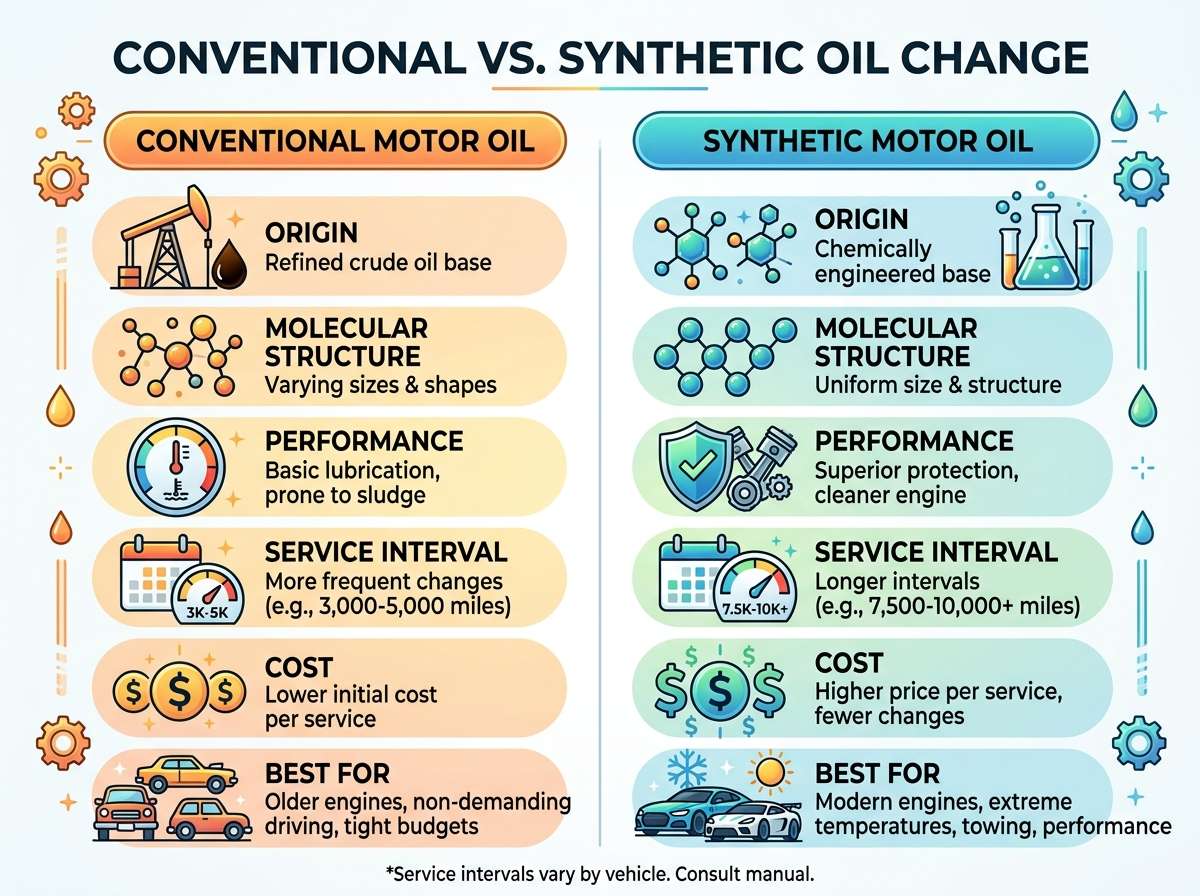
Conventional oil is the traditional motor oil that’s been used for decades. It comes straight from crude oil that’s pumped from the ground. The oil is refined and cleaned, but it’s still basically the same stuff that comes from nature.
Conventional motor oil is made through a simple process. Crude oil gets extracted, refined to remove impurities, and then bottled. That’s it. It’s a straightforward approach.
How Conventional Oil Works
When you use conventional engine oil, the molecules are different sizes. Some are thick and some are thin. This mix works okay, but it’s not perfect. When your engine gets hot, the oil gets thinner and flows faster. When it’s cold, the oil gets thicker and moves slower. This change in thickness means conventional oil doesn’t protect your engine equally well in all conditions.
Cost of Conventional Oil
Here’s the good news about conventional oil—it’s cheap. A conventional oil change costs less than other types. You can get a bottle of conventional oil for just a few dollars. This is why many older cars and trucks still use it.
What Is Synthetic Oil?
Synthetic oil is made in a laboratory. Instead of starting with crude oil, scientists create the oil from scratch. They design the molecules to be uniform and perfect for protecting your engine.
Think of it this way: conventional oil is like a handful of mixed rocks. Synthetic oil is like a pile of identical, perfectly smooth balls. Everything is the same size and shape.
How Synthetic Oil Works
Synthetic oil molecules are all designed to be the same. This consistency means the oil performs the same way whether it’s freezing cold or burning hot. The oil stays at the right thickness in all conditions. This uniform performance is what makes synthetic oil so good at protecting engines.
Synthetic oil also contains special additives that help it last longer and protect better. These additives stick around longer than they do in conventional oil.
Cost of Synthetic Oil
Synthetic oil costs more than conventional oil. A synthetic oil change can cost two to three times more. But here’s why people buy it anyway—it lasts longer and protects better.
Synthetic Blend Oil: The Middle Ground
There’s also something called synthetic blend oil. It’s a mix of conventional and synthetic oil—basically a hybrid.
Synthetic blend oil gives you some of the benefits of synthetic oil without the full price tag. It costs less than full synthetic but protects better than plain conventional. Many car owners like this option because it’s a good balance.
How Long Does Each Type Last?
This is one of the biggest differences between the oil types.
Conventional Oil Change Intervals
Conventional oil breaks down faster. Most cars using conventional oil need an oil change every 3,000 to 5,000 miles. Some newer cars might go a bit longer, but you can’t push it too far.
You also need to check your oil level more often. Conventional oil gets dirty faster and needs more frequent changes.
Synthetic Oil Change Intervals
Synthetic oil lasts much longer. Many cars using synthetic oil can go 7,500 to 10,000 miles between oil changes. Some newer vehicles with synthetic oil can even go 15,000 miles.
This longer lifespan is one of the big reasons people switch to synthetic. Even though each oil change costs more, you’re changing the oil less often. Over time, the cost difference shrinks.
Engine Protection: Which Oil Protects Better?
Let’s talk about how well each oil protects your engine.
Conventional Oil Protection
Conventional oil does protect your engine, but it has limits. The oil molecules are different sizes, so protection isn’t uniform. In very hot conditions, the oil gets too thin. In very cold conditions, it gets too thick. This means your engine doesn’t get the same protection in all situations.
Conventional oil also breaks down faster. As it ages, its protective qualities weaken. This is why you need to change it so often.
Synthetic Oil Protection
Synthetic oil protects better because all molecules are the same. It stays at the right thickness in hot and cold conditions. Your engine gets consistent protection whether you’re sitting in traffic on a hot day or starting your car in freezing weather.
Synthetic oil also resists breaking down. Even after thousands of miles, synthetic oil still provides good protection. This is why it lasts so long between changes.
Wear and Tear
Studies show that synthetic oil leads to less engine wear over time. The consistent protection means metal parts slide past each other more smoothly. Less friction means less damage.
If you plan to keep your car for a long time, synthetic oil can help extend engine life. Your engine will have less wear and should last longer.
Temperature Performance: Hot and Cold Conditions
Let’s talk about how these oils handle extreme temperatures.
Cold Weather Performance
When temperatures drop, conventional oil gets thick and sluggish. In very cold climates, conventional oil can barely flow when you start your car. This means your engine doesn’t get protected right when it needs it most—at startup.
Synthetic oil flows easily even in freezing temperatures. It reaches all the parts that need protection quickly. If you live somewhere cold, synthetic oil starts protecting your engine immediately.
Hot Weather Performance
In hot conditions, conventional oil gets thin. It loses its ability to protect as well. Think of it like water—when oil gets too thin, it can’t protect properly.
Synthetic oil stays at the right thickness even when your engine heats up. It provides consistent protection in hot weather driving and heavy traffic.
Towing and Heavy Driving
If you tow a boat or trailer, or do heavy driving, your engine runs hot. Synthetic oil handles this better because it won’t thin out. Your engine stays protected even under stress.
Engine Cleaning and Detergency
Both conventional and synthetic oil have cleaning properties, but they work differently.
How Conventional Oil Cleans
Conventional oil contains detergents that help loosen dirt and keep it suspended in the oil. The dirt gets carried to the oil filter where it gets trapped. This works okay, but dirt can also build up inside the engine over time.
How Synthetic Oil Cleans
Synthetic oil has better cleaning properties. The uniform molecules and advanced additives work more effectively at keeping the engine clean. Less sludge and varnish builds up inside your engine.
Over time, this means your engine stays cleaner with synthetic oil. Less buildup means better performance and longer engine life.
Impact on Gas Mileage
This might surprise you, but the type of oil you use affects your fuel economy.
Conventional Oil and Fuel Economy
Conventional oil is thicker, especially when cold. This means your engine has to work harder to move the oil around. More friction means your engine uses more fuel to do the same work.
The difference isn’t huge, but it adds up. If you drive a lot, the extra fuel consumption becomes noticeable.
Synthetic Oil and Fuel Economy
Synthetic oil flows more easily. There’s less friction inside your engine. This means your engine doesn’t have to work as hard, and you use less fuel.
You might see a 1-3% improvement in fuel economy with synthetic oil. That doesn’t sound like much, but over a year of driving, it adds up. Some drivers save enough on gas to pay for the extra cost of synthetic oil.
Which Oil Does Your Car Need?
This is the most important question. Not all cars can use all types of oil.
Check Your Owner’s Manual
Your car’s manual tells you exactly which oil to use. It will specify a viscosity rating like 5W-30 or 10W-40. This number tells you the oil’s thickness.
Some car manuals say you must use synthetic oil. Many modern cars, especially luxury vehicles, require synthetic. Other cars say you can use conventional or synthetic—your choice.
Never Ignore What Your Manual Says
This is critical. If your manual says to use synthetic, don’t use conventional. Using the wrong oil type can damage your engine. Warranties might not cover damage from using the wrong oil.
Read your manual. Follow its instructions. This is the safest approach.
Modern Cars and Synthetic Oil
Newer cars are designed to work with synthetic oil. Modern engines have tighter tolerances and run hotter. Synthetic oil handles these conditions better.
If you have a newer car and can choose, synthetic is usually the better choice. It’s made for modern engines.
Switching Between Oil Types
Here’s a common question: Can you switch from conventional to synthetic?
You Can Switch
Yes, you can switch from conventional to synthetic oil. There’s nothing wrong with this. However, you need to do it right.
The first step is to drain all the conventional oil. Don’t just add synthetic on top. You need a complete oil change to remove the old oil.
Clean the Engine First
If your engine has been using conventional oil for a long time, some sludge might have built up inside. When you switch to synthetic, the synthetic oil’s better cleaning power can loosen this sludge. The loose particles might clog your filter or cause problems.
Some people use a flush product before switching to synthetic. This helps clean out built-up sludge. Ask your mechanic if your engine needs this.
Take It Slow
Don’t switch back and forth. Pick one type and stick with it. Constant switching confuses your engine and wastes money. Make a choice and commit to it.
Cost Comparison Over Time
Let’s do some real math to compare costs.
Conventional Oil Costs
Let’s say a conventional oil change costs $30. You need to change it every 4,000 miles. If you drive 12,000 miles per year, that’s three oil changes per year. That’s $90 per year.
Over five years, conventional oil changes cost $450.
Synthetic Oil Costs
A synthetic oil change costs $70. You only need it every 8,000 miles. At 12,000 miles per year, that’s 1.5 oil changes per year, or three every two years. That’s about $105 per year.
Over five years, synthetic oil changes cost about $525.
That’s only $75 more than conventional over five years. But your engine will be in better condition, you’ll get slightly better fuel economy, and you’ll spend less time getting oil changes.
Long-Term Savings
If you keep your car for 10 years, the gap gets even smaller. Plus, the better protection from synthetic oil means fewer repairs. A $10,000 engine repair would destroy the savings from cheaper conventional oil.
Environmental Impact
Both types of oil have environmental effects worth thinking about.
Conventional Oil
Conventional oil comes from crude oil extraction, which impacts the environment. It also breaks down faster, so you change it more often. More frequent changes mean more used oil disposal.
Synthetic Oil
Synthetic oil is manufactured, so it doesn’t require drilling. It lasts longer, so you dispose of less used oil overall. Less oil going to waste is better for the environment.
If the environment matters to you, synthetic oil is the greener choice.
Special Situations and Oil Selection
Different driving habits might change your decision.
Stop-and-Go City Driving
City driving creates a lot of heat and stress on oil. Your engine heats up and cools down repeatedly. Synthetic oil handles this better because it stays consistent through temperature changes.
If you do mostly city driving, synthetic oil is worth considering.
Highway Driving
Highway driving is gentler on oil because your engine runs at a consistent temperature. Conventional oil might be fine for pure highway driving.
Off-Road and Extreme Driving
If you push your car hard—towing, off-roading, or racing—synthetic oil is almost essential. Your engine needs the best protection available.
Older Cars
If you have an older car with high mileage, synthetic oil might help. The better protection could extend your engine’s remaining life. But check your manual first.
How to Choose: Your Decision Process
Here’s how to make the right choice for your car.
Step 1: Read Your Owner’s Manual
This is the first step. Always. Your manual tells you what your engine needs.
Step 2: Consider Your Driving Habits
How do you drive? Do you take long trips or short hops? Do you tow things? How old is your car?
Step 3: Think About the Math
Calculate the real cost difference. Is the extra money for synthetic worth it to you? If you drive a lot, it probably is.
Step 4: Ask Your Mechanic
Your mechanic knows your car. Ask what they recommend. They might have insights based on the specific vehicles they work on.
Step 5: Make Your Choice and Stick With It
Once you pick an oil type, commit to it. Use the right oil and change it on schedule. Consistency matters more than which type you pick.
Common Myths About Oil
Let’s clear up some false information you might have heard.
Myth 1: You Must Change Oil Every 3,000 Miles
This is outdated. Modern engines and oils don’t need such frequent changes. Check your manual. Most cars can go longer now.
Myth 2: Synthetic Oil Leaks Out of Older Engines
This is false. Synthetic oil doesn’t cause leaks. If your old engine leaks with synthetic oil, it would also leak with conventional oil.
Myth 3: You Can’t Use Synthetic in an Older Car
Not true. Older cars can use synthetic oil fine. Just make sure your manual doesn’t forbid it. Many older cars benefit from switching to synthetic.
Myth 4: Synthetic Oil Never Breaks Down
Even synthetic oil breaks down eventually. It lasts much longer than conventional, but it does degrade over time. That’s why you still need to change it.
Myth 5: All Synthetic Oils Are the Same
Different brands and types of synthetic oil vary in quality. A premium synthetic is better than a cheap synthetic. Check the specifications.
Signs You Need an Oil Change
Both oil types need regular changes. Watch for these signs.
Low Oil Level
Check your oil regularly. If it’s low, you need fresh oil. Most cars show oil level on the dashboard or you can check manually with the dipstick.
Dark or Dirty Oil
Fresh oil is light colored. As it ages, it gets darker and dirtier. Really dark oil needs to be changed.
Strange Engine Noises
If you hear grinding or knocking, your engine might not have enough oil. Get it checked immediately.
Check Engine Light
Sometimes this light comes on due to oil issues. Don’t ignore it.
Proper Oil Change Maintenance
Changing your oil properly matters.
Go to a Professional
Unless you know what you’re doing, let a professional change your oil. They have the right equipment and know how to do it correctly.
Change Your Filter
Always change the oil filter when you change oil. A dirty filter defeats the purpose of fresh oil.
Use the Right Grade
Use the exact oil grade your manual specifies. Don’t guess or use what someone else recommends.
Keep Records
Write down when you change your oil and how many miles you had. This helps you remember when the next change is due.
Final Thoughts: What Should You Do?
So, after all this information, what’s the right choice?
If your car’s manual allows a choice, synthetic oil is usually worth it. The better protection and longer intervals make it a smart investment. Even though it costs more per change, the benefits usually outweigh the cost.
If your car requires conventional oil, use it. Don’t spend money on synthetic that won’t help. But when you buy your next car, consider getting one that can use synthetic.
Modern cars are made for synthetic oil. Synthetic provides better protection and longer life. It’s the future of engine oil.
The most important thing isn’t whether you use conventional or synthetic. The important thing is that you change your oil regularly, use the right type for your car, and keep your engine healthy.
Your engine works hard for you. Give it the oil it deserves. Your car will run better, last longer, and give you fewer problems. That’s worth far more than the small difference in price between oil types.
Take care of your engine. Change your oil on schedule. Follow your manual’s recommendations. Do this, and your car will take care of you for thousands of miles to come.

Peterson is an automotive enthusiast and auto parts reviewer with a passion for vehicle maintenance, upgrades, and performance. He enjoys researching and testing car parts, tools, and accessories to help drivers make informed buying decisions. Through AutoPartsTalk.com, Peterson shares honest reviews, practical maintenance tips, and expert guides to keep vehicles running safely and efficiently.