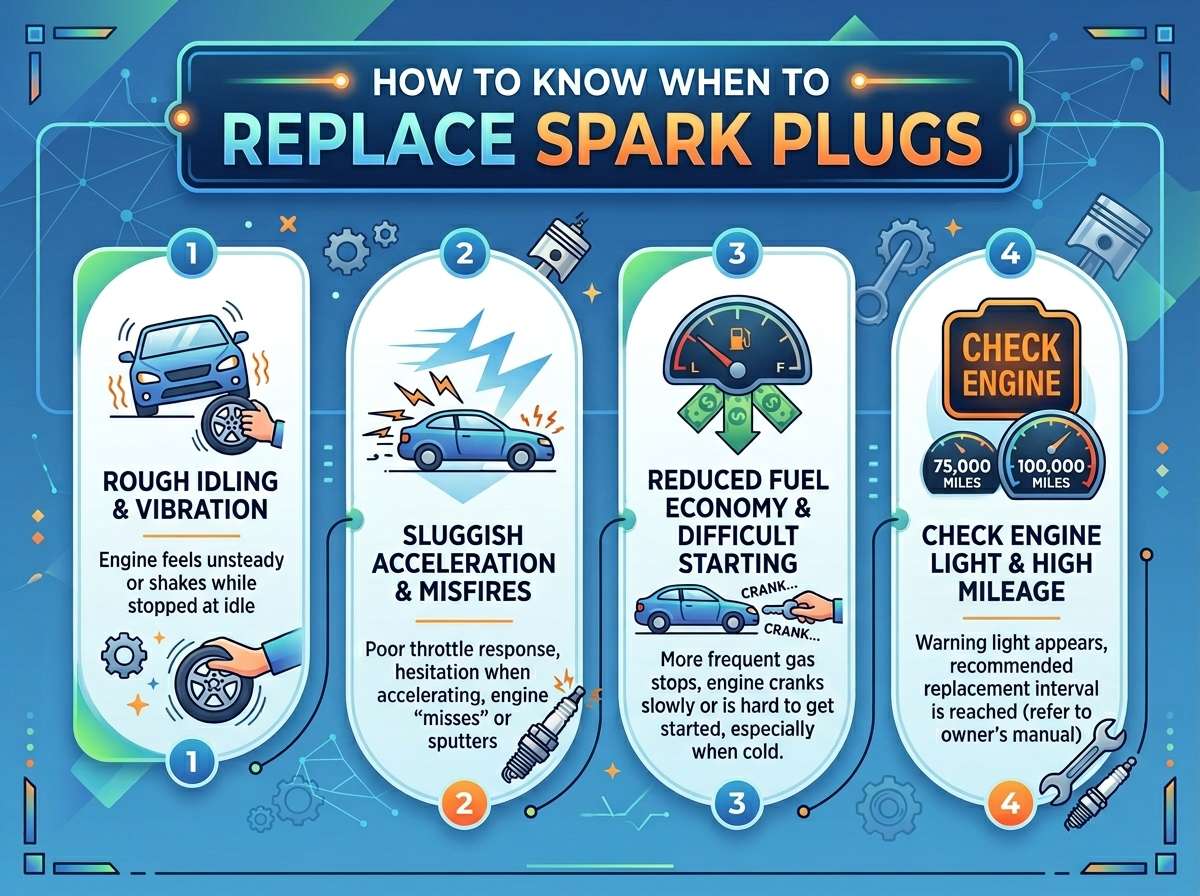
How to Know When to Replace Spark Plugs?
Your car’s spark plugs are small but mighty. They might be tiny components sitting deep in your engine, but they’re responsible for one of the most important jobs in your vehicle. Without spark plugs, your car simply won’t start. That’s it. Your engine needs a spark to ignite fuel and keep running. So when those little devices start to wear out, you need to know about it fast.
The bad news? Most car owners don’t pay attention to their spark plugs until something goes wrong. The good news? It’s actually pretty easy to recognize the warning signs. This guide will teach you everything you need to know about spark plug maintenance and replacement.
What Do Spark Plugs Actually Do?
Let’s start with the basics. A spark plug is a small device that creates an electrical spark. This spark ignites the air-fuel mixture inside your engine’s cylinders. Think of it like a tiny lightning bolt that makes your engine go. Every time your engine fires up, the spark plugs are working hard to make that happen.
Your engine has multiple spark plugs—usually one for each cylinder. A four-cylinder engine has four spark plugs. A six-cylinder engine has six. You get the idea. All of these plugs need to work together perfectly for your engine to run smoothly.
Over time, spark plugs get worn out. The electrode tips erode. Carbon builds up. The gap between the electrodes widens. When this happens, the spark becomes weaker, and your engine suffers the consequences. Eventually, your plugs stop doing their job well enough, and you’ll start noticing problems.
Signs Your Spark Plugs Need Replacing
Your car is pretty good at telling you when something’s wrong. You just need to know what to listen for and what to look for. Here are the main warning signs that your spark plugs are on their way out.
Your Engine is Hard to Start
If you turn the key and your engine cranks but doesn’t fire up right away, that’s a red flag. A reliable engine should start almost instantly. When your spark plugs are worn, they can’t generate a strong enough spark to ignite the fuel. So you might have to turn the key several times before the engine finally catches.
This is especially noticeable on cold mornings. Your engine needs all the help it can get when it’s cold, and weak spark plugs make the situation worse.
Your Engine Misfires or Sputters
An engine misfire is when one or more cylinders fail to ignite properly. You’ll feel this as a sudden jerk or hesitation when you’re driving. The car might feel like it’s stumbling or stuttering, especially when you’re accelerating.
A misfire happens because the spark plug in that cylinder isn’t producing a strong enough spark. Instead of a smooth combustion cycle, the fuel doesn’t ignite, and you get a rough ride. This is annoying to experience, and it’s also bad for your engine long-term.
Rough Idle
When you’re sitting at a red light with the engine running, your car should feel smooth and calm. If your engine feels shaky or vibrates more than usual, that’s a sign something’s not right. Worn spark plugs are one of the most common causes of rough idle.
The vibration happens because multiple cylinders aren’t firing on schedule. Your engine feels unbalanced and rough. If you notice this, get your spark plugs checked soon.
Lower Fuel Economy
Has your gas mileage gotten worse lately? Are you filling up more often than before? This could be a sign that your spark plugs are failing. When spark plugs wear out, your engine has to work harder to produce power. It burns more fuel to do the same job.
Keep an eye on your miles per gallon. If it drops noticeably, don’t ignore it. It could be your spark plugs, but it could also be other issues, so get it checked out.
Engine Knocking or Pinging
You might hear unusual noises coming from your engine. Some people describe it as knocking or pinging. It sounds like something is tapping inside the engine. This noise often happens during acceleration.
Engine knock can be caused by several things, including bad spark plugs. The sound means the fuel is burning incorrectly, and that’s something you want to fix fast. Ignoring it can lead to serious engine damage.
Check Engine Light Comes On
Your vehicle’s check engine light is connected to your onboard diagnostic system. When something goes wrong with your engine, this light comes on. A misfire caused by bad spark plugs is one of the many reasons this light could activate.
If the light comes on, you should get your car scanned with a diagnostic tool to find out what’s wrong. It could be spark plugs, but it could also be something else.
Black, Oily, or Damaged Spark Plugs
The best way to really know if your spark plugs are bad is to look at them. You can pull out a spark plug and inspect it. Here’s what to look for:
Black and sooty: This means the fuel mixture is too rich. Your engine is burning more fuel than it should.
Wet and oily: Oil is getting into the combustion chamber. This is a bigger problem than just bad spark plugs.
Burnt or melted electrode: The spark plug has overheated. This happens when the gap is too wide or there are other engine problems.
Lots of buildup: Carbon and deposits cover the spark plug. This reduces its ability to spark.
If you see any of these conditions, your spark plugs need to be replaced.
How Often Should You Replace Spark Plugs?
The old rule of thumb was to replace spark plugs every 10,000 miles. These days, cars have come a long way. Many modern vehicles have spark plugs that last much longer.
Here’s what you need to know:
Conventional spark plugs: These are the cheapest option and last about 10,000 to 30,000 miles. If your car has these, you’ll need to replace them more often.
Iridium spark plugs: These premium plugs last much longer, often 25,000 to 50,000 miles. They’re more expensive upfront but last longer overall.
Platinum spark plugs: These fall in the middle. They typically last 30,000 to 100,000 miles depending on the brand and your driving conditions.
The best way to know the right maintenance schedule for your specific car is to check your owner’s manual. Your manufacturer has tested your vehicle and knows exactly how often your plugs should be replaced. Follow their recommendation.
Your driving habits also matter. If you do a lot of short trips, towing, or driving in stop-and-go traffic, your plugs might wear out faster. Extreme conditions put extra stress on your spark plugs and the engine overall.
The Real Cost of Waiting Too Long
Some people think they can stretch out their spark plug replacement schedule. They figure the plugs will last longer if they wait. Unfortunately, this doesn’t work.
Waiting too long to replace your spark plugs can cost you money in several ways:
Higher fuel costs: Bad spark plugs make your engine work harder, burning more gas.
Engine damage: Prolonged misfires can damage your catalytic converter. This is an expensive repair, sometimes costing thousands of dollars.
Decreased performance: Your car won’t run as smoothly or as fast as it should.
Starting problems: Eventually, your car might not start at all.
More emissions: Bad spark plugs release more pollution into the air.
It’s much cheaper to replace spark plugs on schedule than to wait and deal with serious engine problems later.
DIY Replacement vs. Taking It to a Mechanic
Some car owners like to replace their own spark plugs. It’s a relatively simple job on many vehicles. If you’re handy and enjoy working on cars, you can save money by doing it yourself.
Here’s what you need to know:
Tools required: You’ll need new spark plugs, a spark plug socket, a socket wrench, and maybe a gap tool. The total cost for tools is small if you don’t already have them.
How long it takes: On most cars, the job takes between 30 minutes and an hour per spark plug. A four-cylinder engine might take two to three hours total.
Potential issues: Some car models make spark plug replacement harder than others. Luxury cars and newer models with tight engine bays can be tricky. You might bend a plug or damage something else if you’re not careful.
When to call a pro: If your car has a complex engine layout, if you’re not comfortable working on cars, or if you value your time, just take it to a mechanic. The labor cost is worth it for peace of mind.
If you do decide to replace your plugs yourself, follow your owner’s manual exactly. Write down the correct gap setting before you start. Take pictures as you work so you remember how everything goes back together.
Types of Spark Plugs Explained
Not all spark plugs are created equal. When it’s time to replace yours, you have options.
Standard Copper Spark Plugs: These are the most affordable option. The center electrode is copper, which conducts heat well. They wear out relatively quickly and need frequent replacement. If your car originally came with copper plugs, they’re a good budget choice.
Platinum Spark Plugs: These have a platinum disc on the center electrode. Platinum is more durable than copper, so these plugs last longer. They’re more expensive than copper but cheaper than iridium. They’re a solid middle-ground option for most drivers.
Iridium Spark Plugs: These are the premium option. Iridium is extremely durable and heat-resistant. These plugs last the longest and provide the best performance. They’re the most expensive, but the extended life makes them cost-effective in the long run.
Double Platinum Spark Plugs: These have platinum on both the center electrode and the ground electrode. They last longer than single platinum plugs. They’re a good choice if you want something better than basic copper but don’t want to spend iridium money.
Your owner’s manual will tell you what type of spark plug to use. Some cars perform better with certain types. Don’t mix and match different types—stick with what your manufacturer recommends or something equivalent.
Getting Your Spark Plugs Checked
You don’t necessarily have to replace your spark plugs yourself. You can take your car to a mechanic and have them inspected.
A good mechanic can pull out your spark plugs and tell you:
- How worn they are
- Whether they need replacement soon or immediately
- Whether your engine has any other issues that might affect spark plug life
- Whether you should upgrade to a better type of spark plug
This inspection is usually pretty inexpensive. It might cost $50 to $100 depending on your location and the mechanic. Getting your plugs checked can save you from bigger problems down the road.
Many mechanics will recommend replacement when they inspect your plugs. Some recommendations are legitimate—your plugs really do need to be replaced. Other times, mechanics might be trying to upsell you. If you’re unsure, get a second opinion.
Spark Plugs and Engine Performance
Healthy spark plugs are essential for good engine performance. When your spark plugs are in great shape, your engine:
- Starts quickly and easily
- Runs smoothly without hesitation
- Delivers good fuel economy
- Produces normal emissions
- Has strong acceleration
- Feels responsive when you push the pedal
The opposite is true when your plugs are worn out. Your car becomes sluggish, hard to start, and inefficient.
If you’ve noticed your car doesn’t perform like it used to, spark plugs might be the culprit. It’s worth getting them checked. Sometimes fixing one small problem like spark plugs can make a huge difference in how your car feels.
Special Situations That Affect Spark Plug Life
Some situations put extra stress on spark plugs and cause them to wear out faster than normal.
Towing: If you tow a trailer or boat, your engine works much harder. This extra load stresses your spark plugs. You might need to replace them more often than the standard interval.
Extreme heat: If you live in a very hot climate, heat stress can shorten spark plug life. The electrodes degrade faster in high temperatures.
High altitude: If you live at high altitude, your engine runs differently. The air is thinner, and combustion conditions are different. Your spark plugs might wear differently than they would at sea level.
Short frequent trips: If most of your driving is just around town for short distances, your engine doesn’t reach full operating temperature often. This can cause carbon buildup on your spark plugs. You might need to replace them more frequently.
Aggressive driving: If you like to accelerate hard and push your engine, you’re putting stress on everything, including spark plugs. Aggressive driving can shorten their life.
Common Myths About Spark Plugs
There’s a lot of bad information out there about spark plugs. Let’s clear up some common misconceptions.
Myth: New spark plugs will automatically make your car run better. False. If your car is already running fine and your plugs are still good, new plugs won’t make any noticeable difference. New plugs only help if your old ones are actually bad.
Myth: You can stretch your spark plugs indefinitely. False. All spark plugs wear out eventually. The electrodes erode, and the gap widens. No spark plug lasts forever.
Myth: Iridium plugs never need replacing. False. Even premium iridium plugs wear out eventually. They last much longer than copper, but they’re not permanent.
Myth: You should replace spark plugs every 10,000 miles. Not necessarily. Modern cars often go 30,000 to 100,000 miles between replacements. Check your owner’s manual for your specific vehicle.
Myth: Any spark plug will work in any car. False. Different vehicles need different types and sizes of spark plugs. Using the wrong plug can damage your engine. Always use the type specified in your owner’s manual.
Getting the Right Spark Plugs for Your Car
When it’s time to buy new spark plugs, you have several options for where to shop.
Auto parts stores: Places like AutoZone, O’Reilly, Advance Auto Parts, and NAPA carry a wide selection. Staff can help you find the right plugs for your vehicle. Prices vary, but you can usually compare options.
Online retailers: Amazon and other online stores sometimes have good deals on spark plugs. Just make sure you’re getting the right type and size for your car.
Dealership: Your car’s dealership carries the exact plugs your manufacturer recommends. They’re often more expensive than aftermarket options, but quality is guaranteed.
Discount stores: Walmart and other discount retailers carry spark plugs at competitive prices.
Before you buy anything, know your vehicle’s year, make, and model. You’ll also need to know your engine size (V4, V6, V8, etc.). With this information, you can find the exact spark plugs you need.
Compare prices between different brands and types. A set of four copper plugs might cost $10 to $20. Iridium plugs could be $40 to $100 per set. Calculate the total cost including installation if you’re not doing it yourself.
Spark Plug Maintenance Tips
Good maintenance practices can help extend spark plug life.
Use quality fuel: Top-tier gasoline has better detergents that keep your fuel injectors and combustion chamber cleaner. This helps your spark plugs last longer.
Change your oil regularly: Regular oil changes keep your engine healthy. A clean engine with proper lubrication puts less stress on spark plugs.
Replace air filters: A clogged air filter makes your engine work harder and can cause carbon buildup. Regular air filter replacement keeps your engine breathing clean air.
Fix any other issues quickly: If your check engine light comes on for any reason, get it diagnosed and fixed. Ignoring problems usually makes them worse and can damage your spark plugs.
Drive smoothly: Aggressive acceleration and hard braking stress your engine. Smooth, steady driving is gentler on all your engine components, including spark plugs.
Don’t ignore warning signs: If your car is hard to start or idles rough, don’t wait. Get it checked out. Catching problems early is always cheaper than letting them develop.
The Bottom Line on Spark Plug Replacement
Spark plugs are crucial to your car’s operation. These small devices pack a big punch, and when they start to fail, your car tells you about it. Pay attention to the warning signs. A hard-to-start engine, rough idle, misfires, and poor fuel economy are all telling you that it’s time to get your spark plugs replaced.
Don’t ignore these signs. Replacing spark plugs is a relatively inexpensive maintenance task. The cost of replacement is tiny compared to the cost of engine damage that can result from running on bad plugs for too long.
Check your owner’s manual to see how often your specific car needs new plugs. Modern spark plugs last longer than older ones, so the intervals have stretched. Some cars can go 100,000 miles between replacements. Others need service every 30,000 miles. Your manual has the answer.
Whether you replace the plugs yourself or take your car to a mechanic, just make sure you do it. Your engine will thank you with reliable starts, smooth running, and good fuel economy. That’s worth the small investment in time and money.
Keep an ear out for strange noises. Keep an eye on how your car feels. When something seems off, don’t assume it’s normal. Chances are your car is trying to tell you something. Often, that something is that your spark plugs need replacing. Listen to what your car is telling you, and take action. Your engine depends on it.

Peterson is an automotive enthusiast and auto parts reviewer with a passion for vehicle maintenance, upgrades, and performance. He enjoys researching and testing car parts, tools, and accessories to help drivers make informed buying decisions. Through AutoPartsTalk.com, Peterson shares honest reviews, practical maintenance tips, and expert guides to keep vehicles running safely and efficiently.