Direct Injection vs Port Injection
If you’ve been learning about cars or diving into automotive technology, you’ve probably heard people talking about direct injection and port injection. These two fuel delivery systems sound confusing at first, but once you break them down, they’re actually pretty easy to understand. Let’s explore what makes each one different, why they matter, and which one might be better for your needs.
What Is Fuel Injection, Anyway?
Before we jump into the details of direct injection versus port injection, let’s start with the basics. Fuel injection is the process of spraying gasoline into an engine’s cylinders. This is way better than the old carbureted system where fuel and air just mixed together in a big bowl.
Modern fuel injection systems are controlled by computers. They spray fuel at exactly the right time, in exactly the right amount, and in exactly the right place. This precision makes engines run cleaner, more efficiently, and with more power. The computer looks at tons of sensors and makes split-second decisions about how much fuel your engine needs.
Fuel injectors are basically fancy nozzles. They open and close many times per second. When they open, fuel shoots out in a fine mist. When they close, nothing comes out. It’s like having a tiny faucet that turns on and off super fast.
Port Injection Explained: The Gentle Approach
Port injection, also called multipoint fuel injection or MFI, is the older of the two systems we’re talking about. Most cars made before 2010 use port injection. It’s still used in plenty of vehicles today, and for good reason.
How Port Injection Works
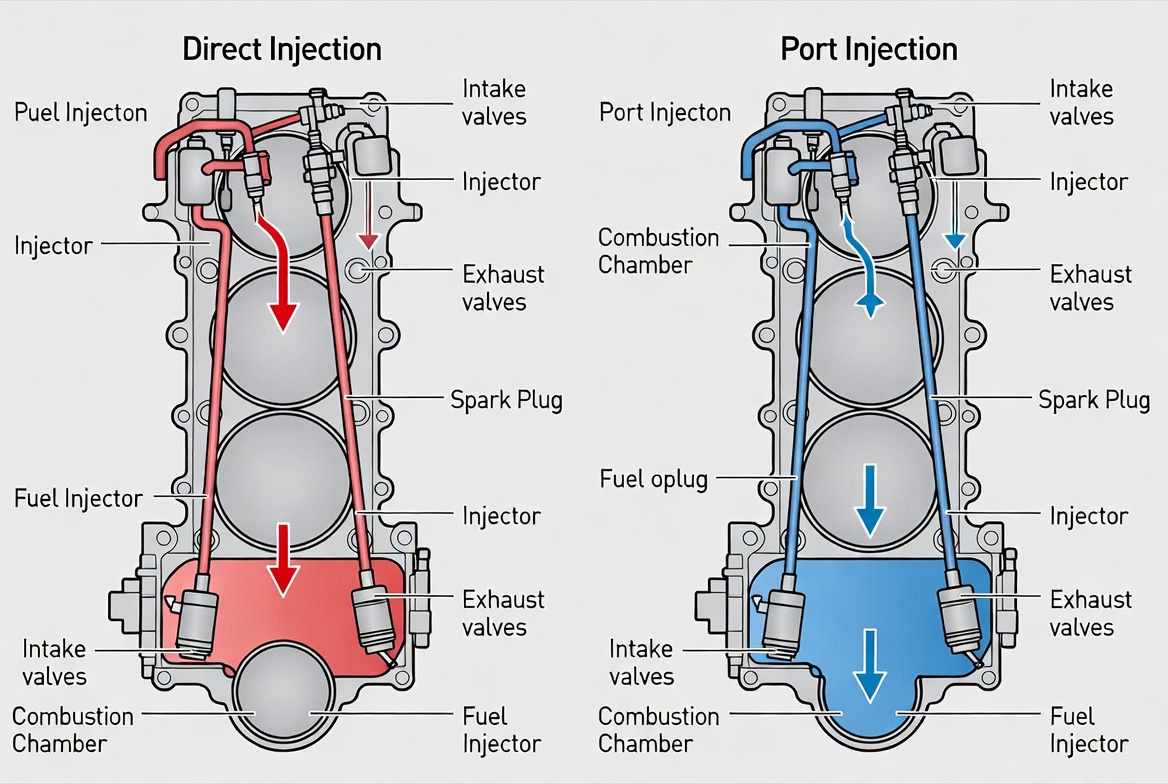
In a port injection system, the fuel injectors sit near the intake valves. Think of them as guards standing right at the entrance to each cylinder. When the intake valve opens up to let air in, the fuel injector sprays fuel right into the intake port. The fuel mixes with the incoming air before it enters the cylinder.
The fuel gets a good amount of time to mix with the air. This creates an even mixture, kind of like when you stir sugar into your coffee. By the time the piston compresses the air and fuel, they’ve already had time to blend really well.
Why Port Injection Became So Popular
Port injection systems worked great for decades. They’re reliable and straightforward. The injectors are easier to reach and replace. Parts are cheap because so many cars use them. If something goes wrong, any mechanic can probably fix it without breaking a sweat.
These systems also helped reduce emissions back in the day. They were a huge step forward from carburetors. Fuel consumption improved, and cars ran smoother. Engineers loved them because they were simple and did the job well.
The Benefits of Port Injection
Port injection systems have some real advantages. The fuel gets a long time to mix with air before combustion. This creates a very homogeneous mixture. You get reliable combustion in almost all conditions. Cold starts work pretty well even in winter because the system has time to prepare the fuel-air mixture.
The injectors themselves last a long time. They don’t deal with super high pressures. Maintenance is easier because mechanics know these systems inside and out. Replacement parts are cheap and easy to find. If you have an older car with port injection, keeping it running won’t cost you an arm and a leg.
The Downsides of Port Injection
Here’s where it gets interesting. Port injection systems have some limitations. Because the fuel spends so much time in the intake port before entering the cylinder, some of it sticks to the walls. This buildup of fuel deposits creates carbon buildup on the intake valves. Over time, these deposits can hurt engine performance and fuel economy.
The fuel-air mixture isn’t as precisely controlled as it could be. The fuel depends on airflow to get mixed properly. This means the system can’t optimize combustion as aggressively as modern engines would like. You don’t get maximum power or maximum efficiency from the same amount of fuel.
Port injection systems also can’t handle certain advanced engine technologies. Newer engines with higher compression ratios need more precise fuel control. Turbochargers and superchargers work better with direct injection. Port injection just can’t keep up with modern demands.
Direct Injection Explained: The Precision Strike
Direct injection is the newcomer on the scene. It started showing up in production cars in the 2000s and has been spreading ever since. Most new cars now use direct injection, at least as their primary fuel delivery system.
How Direct Injection Works
Direct injection does something different. Instead of spraying fuel into the intake port, the injectors spray fuel straight into the combustion chamber itself. We’re talking about spraying fuel right into the cylinder where the actual combustion happens.
This is a more aggressive and precise approach. The fuel goes directly into the chamber with the air that’s already there. There’s no time for the fuel to stick to walls. There’s no distance to travel. The fuel goes exactly where it needs to be, right when it needs to be there.
Direct injection systems operate at much higher pressures than port injection. We’re talking about pressures that can exceed 2000 PSI in some cases. That’s a lot of force. The high pressure allows the fuel to be atomized into a much finer mist. Finer mist means better combustion.
Why Manufacturers Love Direct Injection
Direct injection lets engineers get more power from smaller engines. A direct-injected engine can run at higher compression ratios. Higher compression means more efficiency. You burn the fuel more completely, which means you need less fuel to produce the same amount of power.
Fuel economy improves significantly with direct injection. Car makers love this because it helps them meet government emissions standards and fuel economy regulations. They can make engines smaller, lighter, and more efficient. A turbocharged, direct-injected three-cylinder engine can perform like a naturally aspirated five-cylinder from twenty years ago.
Direct injection also allows for really advanced combustion control. The computer can adjust the fuel injection timing in incredible detail. It can even use different injection strategies at different times during the combustion stroke. This kind of precision just wasn’t possible with port injection.
The Benefits of Direct Injection
The biggest benefit is efficiency. Direct injection makes engines burn fuel more completely. Every drop of fuel contributes to power. Less fuel is wasted. Your fuel economy goes up, and your tank empties more slowly.
Power is another huge advantage. Because the fuel evaporates right in the combustion chamber, it cools the air inside. Cooler air is denser air, and denser air means more combustion. This creates more power without needing a larger engine.
Direct injection allows for more aggressive engine timing. The computer has so much control that it can optimize combustion for different driving conditions. Heavy acceleration needs different fuel timing than cruising. Direct injection handles both beautifully.
These engines produce fewer emissions. The combustion is cleaner and more complete. Less fuel escapes unburned. The oxygen sensor sees less pollution. Your car passes emissions tests more easily.
The Downsides of Direct Injection
Here’s the catch. Direct injection has problems that port injection doesn’t have. Remember how we said fuel doesn’t stick to the walls in the intake port? Well, that’s actually a problem now.
In port injection systems, fuel washes the intake valves. This fuel keeps carbon deposits from building up. With direct injection, fuel never touches the intake valves. Carbon deposits pile up on these valves over time. This is called carbon buildup, and it’s a real headache.
Carbon deposits narrow the intake valves. They restrict airflow. Your engine starts running rough. Fuel economy gets worse instead of better. You might feel hesitation during acceleration. Some engines even knock or ping. It’s frustrating because your expensive new technology creates a problem that older engines didn’t have.
Fixing carbon buildup on direct-injected engines is expensive. You might need to pay for cleaning services. In extreme cases, mechanics need to remove the head and physically clean the valves. We’re talking about thousands of dollars in labor.
Direct injection systems also run at incredibly high pressures. The injectors are complex and expensive. If an injector fails, replacement costs are much higher than a port injection injector. The fuel pump works harder and doesn’t last as long. Any part failure gets expensive fast.
Mechanics need special training to work on direct injection systems. Not every shop can handle them. Diagnostic equipment is more expensive. Parts are harder to find. If you own an older car, you’re happy. If you own a new direct-injected car, repairs can hurt your wallet.
Comparing Fuel Economy: Which One Is More Efficient?
Let’s talk dollars and cents. This is what most car owners care about most.
Direct injection systems are more efficient on paper. They use fuel more completely and require smaller, lighter engines. A direct-injected engine can get better fuel economy than a comparable port-injected engine.
But here’s the thing. Direct injection engines age differently. In the first few years, they shine. Your fuel economy is excellent. But as carbon builds up, fuel economy declines. After 80,000 or 100,000 miles, a direct-injected engine might get worse fuel economy than it did when it was new.
A well-maintained port injection engine doesn’t have this problem. Its fuel economy stays relatively stable throughout its life. It might not be the most efficient system new, but it doesn’t get worse over time.
If you plan to keep your car for a long time, this matters. A port-injected car might end up being more economical overall. If you trade in your car every five years, direct injection looks better.
Carbon Buildup: The Real Difference
Carbon buildup is the biggest practical difference between these two systems. Let’s dig deeper because this affects real car owners.
In port injection, fuel constantly washes the intake valves. This washing action keeps carbon from accumulating. It’s like having a built-in cleaning system. The fuel doesn’t burn completely, but it serves a purpose by preventing deposits.
In direct injection, there’s no fuel washing the intake valves. The fuel goes straight to the combustion chamber. The intake valves just see air. Over time, combustion byproducts stick to them. These deposits harden. They reduce airflow. Your engine performance suffers.
Some engines are worse than others. Volkswagen, BMW, Ford, and Honda have had particular problems with carbon buildup on direct injection engines. Some owners have reported performance issues after only 40,000 miles. Others go 200,000 miles with minimal problems. It depends on driving habits, maintenance, and luck.
Regular oil changes help. Good quality fuel helps. Some people use fuel additives to prevent buildup. But there’s no guarantee. A lot of direct injection engines will eventually need professional cleaning.
When Each System Works Best
Port injection works best in certain situations. If you’re buying an older used car, port injection is proven and reliable. If you want to avoid expensive repairs, port injection is safer. If you prefer simplicity and lower maintenance costs, port injection is your friend.
Direct injection works best in new vehicles with warranties. If you trade in your car before the buildup gets bad, you won’t deal with the carbon problem. If you drive mostly highway miles, your engines tend to stay cleaner. If you value efficiency and power in a new car, direct injection delivers.
Some modern cars actually use both systems. They have direct injectors in the combustion chamber AND port injectors in the intake. This hybrid approach gives you the efficiency of direct injection while the intake valves still get cleaned by the port injectors. It’s the best of both worlds, but it’s more complex and more expensive.
Maintenance Tips for Each System
Port injection owners should focus on basic maintenance. Keep up with oil changes. Use quality gasoline. Check your air filter regularly. These systems are simple, so you’re mostly just preventing general wear and tear.
Direct injection owners need to be more proactive. Consider using fuel additives designed for direct injection engines. Some people think premium fuel is better, but that depends on your engine’s design. Get services at reputable shops that know direct injection systems. Watch for signs of carbon buildup like rough idle, hesitation, or lower fuel economy.
If you own a direct injection car, don’t ignore warning lights. Get any issues diagnosed quickly. The earlier you catch problems, the cheaper they are to fix.
The Technology Keeps Evolving
Here’s something interesting. The industry isn’t standing still. Engineers keep working on the carbon buildup problem. Some newer direct injection engines have features that help prevent deposits. Better fuel injector designs spray fuel differently. Some engines clean their valves as part of normal operation.
Gasoline itself is getting better too. New gasoline contains detergents that help prevent carbon buildup. Using Top Tier gasoline from major brands can help keep your direct injection engine cleaner.
Some manufacturers are improving their design. They’re positioning injectors better. They’re adjusting injection timing to reduce deposits. The whole industry learned from the early problems with direct injection.
Making Your Choice
So which one should you choose? Well, you probably don’t have a choice if you’re buying a new car. Almost everything new uses direct injection. But if you’re shopping used cars, you have options.
If you want reliability and low maintenance costs, look for cars with port injection. These are usually older vehicles, but many are still going strong. They’re proven. The parts are cheap. Your local mechanic can handle them.
If you want modern technology and better efficiency, accept that you might need to deal with carbon buildup eventually. Budget for potential carbon cleaning. Go to reputable shops. Keep good maintenance records. Use quality fuel.
New cars with both systems offer a middle ground. They have the efficiency of direct injection without all the carbon buildup problems. They cost more upfront, but they might save money on maintenance later.
The Bottom Line
Direct injection and port injection are both valid fuel delivery systems. They just work differently. Port injection is simpler, more reliable, and proven over decades. Direct injection is more efficient, more powerful, and more complex.
Port injection stores fuel in the intake, which then gets sprayed. This takes longer but cleans your valves. Direct injection sprays fuel straight into the combustion chamber. This is faster and more efficient but can cause carbon buildup.
For brand new cars, direct injection makes sense. The technology is working better now than it did ten years ago. Warranties cover problems. You probably won’t own the car long enough for carbon to become a serious issue.
For used cars, port injection is often the safer choice. But many direct injection cars are running great with no problems. Don’t let fear of carbon buildup scare you away from a good car.
The best engine is the one you can afford to maintain. Whether it’s direct injection or port injection, consistent maintenance beats everything else. Change your oil on time. Use quality fuel. Get problems fixed quickly. Do these things, and your engine will treat you well no matter what system it uses.
Technology marches forward. Direct injection is here to stay. Engineers will keep solving the remaining problems. In a few years, newer direct injection systems will be even better. But there will always be port injection cars on the road, running great and providing value to their owners.
Key Takeaways
Direct injection sprays fuel straight into the combustion chamber. Port injection sprays fuel into the intake port before the cylinder. Direct injection is more efficient and powerful but can cause carbon buildup. Port injection is simpler and more reliable but less efficient. Modern cars usually use direct injection. Older cars use port injection. Some new cars use both. Carbon buildup is the main challenge with direct injection. Regular maintenance helps prevent problems with either system. Choose based on your car’s age, your driving habits, and your budget. Both systems work well when properly maintained.
The future probably belongs to direct injection, but port injection isn’t going anywhere. Each system has its place. Understanding how they work helps you make smarter choices about buying, maintaining, and caring for your vehicle.