2.7 vs 3.5 EcoBoost
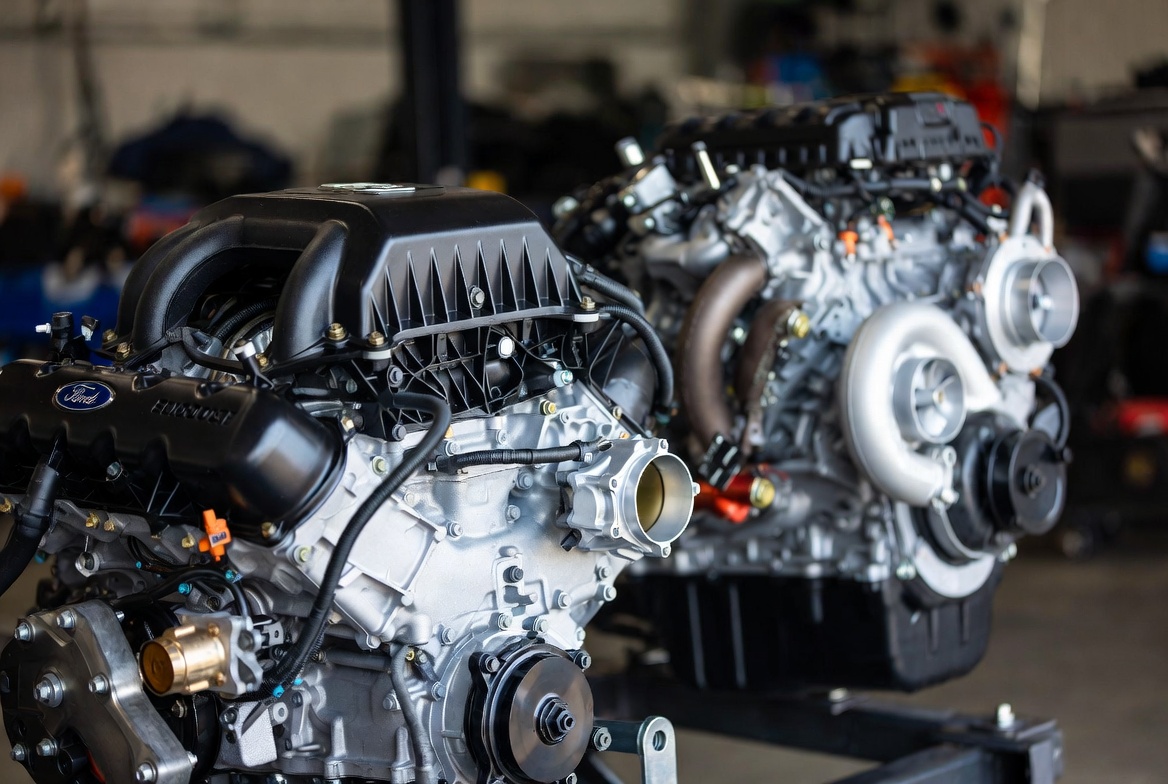
If you’re shopping for a truck or SUV with a turbo engine, you’ve probably heard about Ford’s EcoBoost lineup. The 2.7-liter and 3.5-liter EcoBoost engines are two of the most popular options out there. But what’s the real difference between them? Which one should you actually buy? Let’s break this down in a way that makes sense.
What Is EcoBoost Technology?
Before we jump into the comparison, let’s talk about what makes EcoBoost special. EcoBoost is Ford’s technology that uses turbocharging and direct fuel injection to pack more power into smaller, lighter engines. This means you get better fuel economy and still have plenty of muscle when you need it.
The basic idea is smart. Smaller displacement engines weigh less and burn less fuel when you’re cruising. The turbo kicks in when you need power for towing or merging on the highway. It’s like having two engines in one—the efficiency of a small motor and the strength of a big one.
The 2.7 EcoBoost Engine Explained
The 2.7-liter EcoBoost is the younger, scrappier option in this matchup. This turbocharged V6 engine produces strong power and sits somewhere in the mid-range of Ford’s engine lineup.
Power and Torque Numbers
The 2.7 EcoBoost cranks out around 325 horsepower in most applications. You also get roughly 375 pound-feet of torque. These numbers might sound modest compared to some traditional big-block engines, but remember—this is coming from a much smaller displacement engine.
That torque figure is important for towing. It’s enough to handle serious loads without feeling like you’re pushing too hard. Real truck owners report that the 2.7 pulls steadily and doesn’t feel sluggish in daily driving.
Fuel Economy with the 2.7
This is where the 2.7 shines. Fuel economy is one of its best qualities. You can expect somewhere in the 19-23 MPG range on the highway, depending on your transmission and vehicle setup. In city driving, you might see 16-19 MPG.
Those numbers beat bigger engines by a meaningful margin. If you drive a lot, this adds up to real money in your pocket. Over several years, the fuel savings can help offset the higher cost of turbo technology.
Maintenance and Reliability
The 2.7 uses a single turbo setup. Single turbos are generally simpler than dual turbos, which means fewer parts that can break. Maintenance costs tend to run lower. Oil changes happen on the normal schedule, and most owners report the engine running strong for well over 100,000 miles with proper care.
Turbo engines do require quality oil and regular maintenance. Skip that, and you’ll have problems. But stick to the schedule, and the 2.7 is dependable.
Who Should Choose the 2.7?
The 2.7 EcoBoost is perfect if you want a balance of power and efficiency. It’s ideal for people who drive mostly on roads and don’t tow heavy loads regularly. It’s also great if fuel costs matter to you.
Light to moderate towing works fine. If you’re pulling a trailer occasionally, this engine handles it. If you tow every weekend or haul massive loads, keep reading.
The 3.5 EcoBoost Engine Explained
The 3.5-liter EcoBoost is the heavyweight contender. This is Ford’s most powerful EcoBoost option, and it’s seriously strong.
Power and Torque Numbers
The 3.5 EcoBoost delivers approximately 375 horsepower in most trim levels. More impressive is the torque—around 470 pound-feet. That’s a big jump from the 2.7. More horsepower means faster acceleration. More torque means stronger pulling power.
In real-world driving, that extra power feels significant. Merging on busy highways feels smoother. Towing becomes much easier. The engine has reserve power for those moments when you need it.
Fuel Economy with the 3.5
Here’s where the 3.5 has to compromise. It gets roughly 17-21 MPG on the highway. In the city, expect 15-18 MPG. These numbers are decent for an engine this powerful, but they’re noticeably lower than the 2.7.
The larger displacement and extra power output require more fuel. That’s just physics. If you drive 20,000 miles per, the difference adds up to maybe $400-600 more in fuel costs annually, depending on gas prices.
Maintenance and Reliability
The 3.5 uses dual turbocharging. Two turbos create more power and respond faster, but they’re also more complex. Parts cost more when something fails. Service intervals might be slightly shorter.
That said, dual turbo engines are mature technology. Ford has been refining them for years. Reliability is strong when you maintain them properly.
Who Should Choose the 3.5?
If you tow frequently or carry heavy loads, the 3.5 makes sense. It’s the right choice for people who regularly use their truck for work. It’s also good if you drive in mountainous terrain where extra power helps.
The 3.5 is your pick if performance matters more than efficiency. Some people just like the feeling of extra power, and there’s nothing wrong with that.
Head-to-Head Comparison
Let’s put these engines side by side and see how they stack up across different categories.
Power and Performance
Winner: 3.5 EcoBoost
The 3.5 wins here without question. Fifty more horsepower and nearly 100 more pound-feet of torque make a real difference. Acceleration feels snappier. Passing is easier. Towing is less taxing on the engine.
But here’s the thing—the 2.7 isn’t weak. It’s still a powerful turbocharged engine. For normal driving, you might not notice the difference. It’s only when you demand serious power that the gap becomes obvious.
Fuel Efficiency
Winner: 2.7 EcoBoost
The 2.7 takes this round easily. Real-world fuel economy is noticeably better across all driving conditions. If you’re watching your budget and don’t need max power, the 2.7’s efficiency advantage is huge.
Over the life of the truck, better fuel economy can save you several thousand dollars. That’s meaningful money.
Towing Capacity
Winner: 3.5 EcoBoost
The 3.5’s extra torque gives it a higher towing capacity—typically around 14,000 pounds versus the 2.7’s 10,000-11,000 pounds, depending on the vehicle. That extra capacity matters if you tow heavy.
But watch out—just because an engine can tow doesn’t mean you should push it to the max. Real-world comfort and engine lifespan matter. Towing at 90% capacity stresses the engine more than cruising at 50%.
Repair and Maintenance Costs
Winner: 2.7 EcoBoost
The 2.7’s simpler single turbo design typically costs less to maintain. Parts are cheaper. Service is more straightforward. Over time, maintenance savings add up.
The 3.5 isn’t expensive to fix, but it starts behind the 2.7 on cost.
Everyday Driving Experience
Winner: Tie
Both engines work great for everyday driving. Neither feels weak or underpowered for normal use. The 3.5 feels sportier and more powerful. The 2.7 feels nimble and efficient. Your choice depends on what you value.
Engine Durability and Longevity
Winner: Tie
Both engines are tough and reliable. With proper maintenance, both routinely hit 150,000+ miles. Some owners push them to 200,000 miles. Modern EcoBoost engines are proven technology.
The difference comes down to maintenance discipline. Skip oil changes, ignore warning lights, and either engine will fail. Take care of it, and either will last.
Real-World Towing Scenarios
Let’s talk about actual towing situations because this is where the engine choice really matters.
Light Towing (Under 5,000 Pounds)
For light towing like a small boat, utility trailer, or lightweight camper, the 2.7 excels. It pulls smoothly without strain. You’ll enjoy good fuel economy even while towing. The engine never feels stretched.
The 3.5 also handles this easily, but you’re paying extra horsepower you don’t need. It’s like using a sledgehammer for a nail—effective but overkill.
Moderate Towing (5,000-8,000 Pounds)
This is the 2.7’s sweet spot. A small to mid-size travel trailer, loaded truck bed, or equipment fits right in this range. The engine works a bit harder but stays happy.
The 2.7 does require more attention to fuel economy here. Towing heavier loads burns more gas. Expect efficiency to drop slightly.
Heavy Towing (8,000+ Pounds)
Here’s where the 3.5 pulls away. Heavy trailers, full-size campers, and serious equipment loads all demand the 3.5’s extra torque. The engine stays relaxed even under stress.
The 2.7 can handle it technically, but the engine works at higher RPMs. Engine temperature climbs. Fuel consumption increases noticeably. You might feel okay doing it occasionally, but regularly? The 3.5 is smarter.
Off-Road and Mountain Driving
Both engines handle rough terrain, but differently.
The 2.7 is lighter and more nimble. In technical terrain, that matters. It climbs hills well thanks to turbocharged power kicking in when needed.
The 3.5 feels more planted and powerful. In deep snow or mud, extra torque helps you muscle through. On long mountain passes, the 3.5’s reserve power means less strain.
Neither engine is weak off-road. Your choice should depend on the kind of terrain you tackle and how often.
Price and Value
The 2.7 EcoBoost typically costs several hundred dollars less as a factory option. That’s real money. But here’s the thing—the price difference is small compared to the total truck cost.
The 3.5 commands a premium, but you get noticeably more power. If that power matters to your use case, the extra cost is justified.
Consider resale value too. Both engines are popular and desirable. A truck with either engine will sell. Pickup trucks with big turbos actually hold value well because people want the power.
Common Misconceptions
Myth: Turbo engines require premium fuel.
Both the 2.7 and 3.5 EcoBoost run fine on regular fuel. They’ll knock a tiny bit, but it’s not enough to damage the engine. Premium fuel gives slightly better performance, but it’s not required. You can save money at the pump.
Myth: Turbos are unreliable.
False. Modern turbos are engineered well and tested extensively. Ford has reliability data on millions of turbo engines. They work great when maintained.
Myth: Bigger displacement always means more power.
EcoBoost proves this wrong. The 2.7 produces nearly as much horsepower as larger naturally aspirated engines. Turbo technology is powerful stuff.
Myth: The 3.5 is always better.
Not true. For many people and uses, the 2.7 is the smarter choice. More power isn’t always better.
Maintenance Tips for EcoBoost Engines
Whether you choose the 2.7 or 3.5, these tips keep your engine healthy.
Use quality oil. Synthetic oil flows better through turbo engines. Change it on schedule—don’t skip intervals.
Don’t idle the turbo. After hard driving, let the engine cool for a minute before shutting it off. This protects the turbo.
Keep air filters clean. A clogged filter forces the turbo to work harder. Check it regularly.
Use fuel system cleaner occasionally. Direct injection can cause carbon buildup. A quality fuel additive cleans deposits.
Monitor boost pressure. On later models, the computer handles this, but understand what’s happening under the hood.
Drive smoothly. Hard acceleration stresses any engine. Smooth driving extends engine life.
Customization and Tuning
Both engines respond well to tuning and modification.
The 2.7 can be safely tuned for more horsepower—maybe 350-375 HP with a tune and some bolt-on parts. That brings it closer to stock 3.5 power levels.
The 3.5 can also be tuned higher, potentially reaching 450+ horsepower. That’s serious power.
Tuning costs money but offers real gains. Just remember that increased power stresses engine components. Parts wear faster under stress.
Environmental Impact
EcoBoost engines are genuinely cleaner than older V8s and V10s they replace.
The 2.7, with its smaller displacement and better efficiency, burns less fuel and produces fewer emissions. It’s the greener choice.
The 3.5 still cuts emissions compared to big naturally aspirated engines, but it’s not as clean as the 2.7.
If environmental impact matters to you, the 2.7 is the better option.
Making Your Final Decision
Here’s the simple framework. Pick the 2.7 if:
- You want the best fuel economy
- You don’t tow heavy loads regularly
- Your budget matters
- Maintenance costs concern you
- You drive mostly on roads
Pick the 3.5 if:
- You tow heavy loads often
- Extra power feels important to you
- Your budget has room for it
- You drive in mountains or challenging terrain
- Performance excites you
Long-Term Cost of Ownership
Let’s crunch some numbers. Assume you keep the truck for 10 and drive 15,000 miles per.
2.7 EcoBoost scenario:
- Fuel costs at 21 MPG highway average: $7,140 (at $3.50/gallon)
- Maintenance costs: $4,500 (routine service)
- Total: $11,640
3.5 EcoBoost scenario:
- Fuel costs at 18 MPG highway average: $8,750
- Maintenance costs: $5,200 (slightly higher parts)
- Total: $13,950
The 2.7 saves you about $2,300 over ten. Not huge, but it’s real money. If you tow heavy and the 3.5 prevents abuse to the engine, it could save you thousands in premature repair costs. The math changes when you factor in engine longevity.
Frequently Asked Questions
Can I easily switch from 2.7 to 3.5 power?
In new purchases, sure. Retrofitting is complex and expensive. Choose wisely from the start.
Which engine is quieter?
The 2.7 tends to be slightly quieter. Turbo noise isn’t loud, but it’s noticeable on both engines.
Do these engines have common problems?
Both engines are proven. No widespread issues reported on either. Just maintain them.
Should I buy used or new?
New gives you warranty coverage. Used trucks cost less. Either works if properly maintained.
Can the 2.7 tow my boat?
Probably yes if it’s under 8,000 pounds. Check your specific truck’s rating.
Expert Recommendations from the Field
Truck mechanics and Ford specialists consistently offer the same advice: buy based on your actual needs, not theoretical ones.
If you buy a 3.5 but never tow, you’re wasting money. If you buy a 2.7 and frequently tow heavy, you’re stressing the engine. Match the engine to your life, not your dreams.
One mechanic said it perfectly: “The best engine is the one you can afford and actually use properly.”
Conclusion
The 2.7 and 3.5 EcoBoost engines are both excellent options. Neither is objectively “better”—they’re different tools for different jobs.
The 2.7 is the smart choice for efficiency and value. It’s powerful enough for almost everything, sips fuel, and costs less to own. Pick this if you’re rational about your needs.
The 3.5 is the right call when power and towing matter. Yes, it burns more fuel and costs more to maintain. But it does its job better if you actually need heavy power and towing capacity.
Both will run strong for 150,000+ miles with proper care. Both deserve respect and maintenance.
Don’t overthink it. Do you need to tow heavy stuff regularly? Get the 3.5. You don’t? Get the 2.7. Both choices are solid.
Your next truck will serve you well regardless which engine you choose. Just follow the maintenance schedule, use quality oil, and treat the engine right. That matters more than which badge sits on the hood.
Happy driving.