CRV RD1 Exhaust System Auto Vs Manual
Introduction
The Honda CR-V RD1 generation holds a special place in automotive history. It was the first generation of the CR-V line, which changed how people thought about compact SUVs. If you own one of these vehicles or are thinking about getting one, understanding the exhaust system differences between automatic and manual models is crucial.
Your vehicle’s exhaust system does far more than you might think. It’s not just about making noise or pushing fumes out the back. The exhaust system controls emissions, affects fuel efficiency, influences engine performance, and even impacts your driving experience. When you compare the automatic transmission RD1 with the manual transmission version, the exhaust setup varies in meaningful ways.
In this complete guide, we’ll walk through everything you need to know about the CRV RD1 exhaust system. We’ll explain how auto and manual versions differ, what parts make up the system, and how to keep everything running well.
What Is An Exhaust System And Why It Matters
Before we dig into the specific differences between automatic and manual CRV RD1 models, let’s understand what we’re talking about. An exhaust system collects gases from your engine’s combustion process and safely releases them outside the vehicle.
Think of it this way: your engine burns fuel and air together. This creates power, but it also creates hot gases and harmful emissions. The exhaust system captures these gases, cleans them up, and sends them out. Without a proper exhaust system, you’d have dangerous fumes in your cabin, terrible pollution, and a ride that sounds like a jet engine.
The exhaust system components work together as a team. They include:
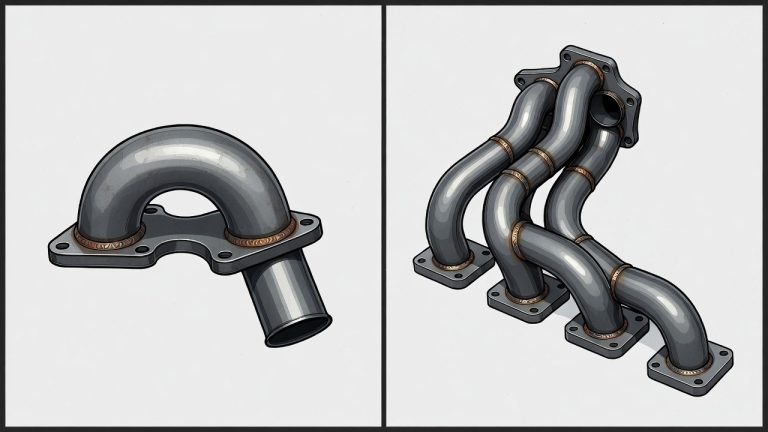
The Exhaust Manifold catches hot gases right as they exit your engine’s cylinders. On the RD1, this is one of the most stressed parts because it deals with extreme heat and pressure.
The Catalytic Converter is the cleanup crew. It uses chemical reactions to turn harmful substances like carbon monoxide and nitrogen oxides into less harmful gases. This part is essential for keeping your RD1 street legal.
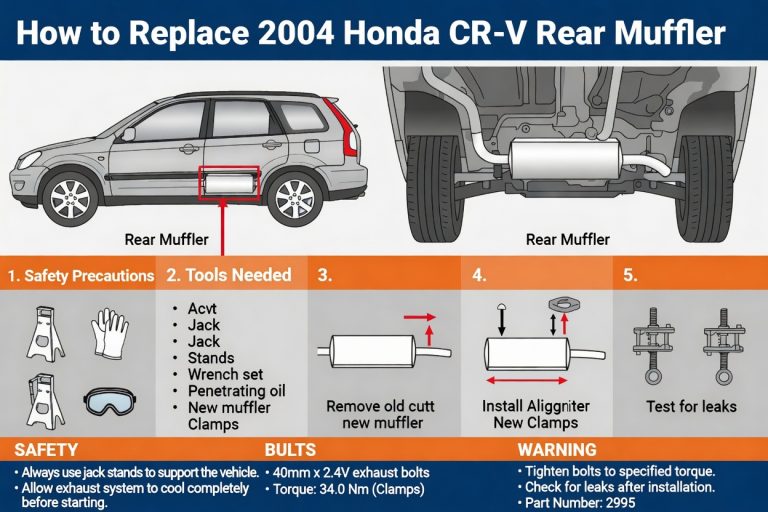
The Muffler is the noise controller. It uses chambers and baffles to quiet the sound. Some people think mufflers just make things quieter, but they also help with exhaust flow and back pressure.
The Resonator is like a helper to the muffler. It catches vibrations and further reduces noise before the gas exits the tailpipe.
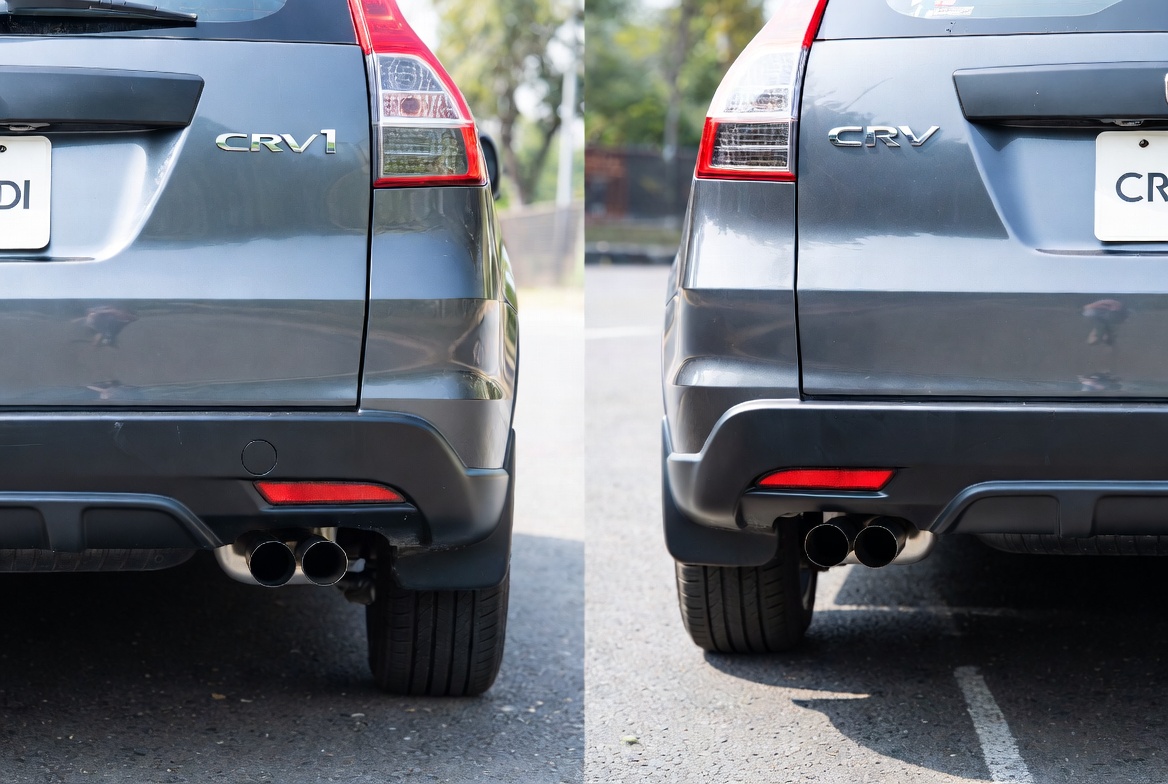
The Tailpipe is the final section where gases exit. On the RD1, this might be single or dual depending on your model and what upgrades you’ve done.
All of these parts connect with pipes and hangers. The hangers hold everything secure without letting the system touch other vehicle parts. This matters because hot exhaust can damage rubber hoses, wiring, and fuel lines if things come into contact.
RD1 Engine Differences Between Auto And Manual
Here’s where things get interesting. The CRV RD1 came with a 2.0-liter four-cylinder engine that made the same basic power in both automatic and manual versions. Both engines produced around 150 horsepower and 130 pound-feet of torque. This is important information because the base engine is the same.
However, the way these engines are tuned and operated differs slightly. Manual transmission RD1s could rev higher in some gears because drivers had direct control. Automatic models had built-in rev limiters that worked differently. These differences affect how exhaust gases flow through the system.
The automatic transmission RD1 runs at different RPM ranges during normal driving. The transmission shifts automatically based on speed and throttle position. This means the engine goes through different operating conditions than a manual RD1 where the driver controls gear selection.
Because of transmission differences, the exhaust manifold in automatic RD1s experiences different stress patterns. The gases pulsate differently through the catalytic converter. These subtle differences mean that some RD1 owners report slightly different engine sounds and feel between the auto and manual versions.
Exhaust Manifold Differences In RD1 Models
The exhaust manifold is where things start to differ noticeably between automatic and manual CRV RD1s. This part is crucial because it directly attaches to your engine block and must be engineered correctly for your transmission type.
Both versions have a cast iron manifold that collects exhaust from all four cylinders. The design is nearly identical, but the actual casting and internal passages differ slightly. Automatic RD1 manifolds are engineered to handle the specific exhaust pulse patterns created by automatic transmission operation. Manual RD1 manifolds work with different pulse patterns from driver-controlled shifts.
These differences are subtle but matter for long-term reliability. The manifold on your RD1 carries exhaust gas temperatures that reach 700 to 900 degrees Fahrenheit. Hot spots develop differently in auto versus manual versions based on how long each cylinder holds its valve open.
One thing many RD1 owners don’t realize is that the manifold bolts directly to the engine. If you try to swap a manual manifold onto an automatic RD1 (or vice versa), the mounting might work, but the system won’t be optimized. You might see thermal issues, strange exhaust sounds, or poor exhaust flow.
Over time, RD1 manifolds crack. This happens on both auto and manual models, but it tends to happen in slightly different locations. Manual RD1s sometimes develop cracks near cylinder two, while automatic models crack near cylinder four more often. This is because of how exhaust pulses hit the manifold walls differently.
If your RD1 manifold cracks, you’ll notice a ticking sound from the engine bay, especially when the engine is cold. The vehicle will fail emissions testing. You might also smell exhaust inside the cabin. The only real fix is replacing the manifold with an OEM unit or quality aftermarket option.
Catalytic Converter Systems Explained
The catalytic converter is the heart of your RD1’s emissions control. This device contains special metals called catalysts that cause chemical reactions. These reactions convert harmful nitrogen oxides and carbon monoxide into carbon dioxide and nitrogen, which are far less harmful to the environment.
On both automatic and manual RD1s, you’ll find a three-way catalytic converter mounted right after the exhaust manifold. The word “three-way” means it handles three different types of harmful gases. This converter must reach its operating temperature quickly to work properly. Cold starts on your RD1 are when emissions are worst because the converter hasn’t warmed up yet.
The main difference between automatic and manual RD1 catalytic converters comes down to exposure and operating conditions. Manual RD1s, especially ones driven spiritedly by enthusiasts, heat the catalytic converter differently than automatic models driven by average owners. The automatic transmission tends to keep engines in more consistent RPM ranges, which means more consistent converter temperatures.
However, both systems use the same converter size and type from Honda. You’ll likely notice that the catalytic converter on your RD1 is one of the most expensive exhaust system components. A quality replacement runs several hundred dollars or more. Some people try to use aftermarket or universal catalytic converters, but OEM Honda parts fit much better and maintain your emissions system properly.
One important warning: RD1 catalytic converters sometimes fail suddenly. You’ll notice a drop in power, rough idling, and poor fuel economy. If your RD1 feels sluggish even when the engine sounds fine, check the converter. Internal substrate failure means you need a replacement immediately.
The converter also affects your RD1’s exhaust tone. A bad or missing converter makes the engine sound completely different. Interestingly, both auto and manual RD1s sound quite similar when the catalytic converter is working properly. The differences in tone come more from muffler design than converter design.
Muffler And Resonator Design
Your RD1’s muffler is where the real personality comes through. This is where you notice the most obvious differences between automatic and manual models when it comes to sound and performance.
Both RD1 versions have a compact muffler mounted toward the rear of the vehicle. The manual RD1 muffler is engineered with slightly different internal chambers because the engine runs at different RPMs and creates different sound frequencies. The automatic RD1 muffler is tuned for the smoother, more consistent sound created by the automatic transmission’s operation.
If you’ve ever heard an automatic RD1 and a manual RD1 side by side, you know they sound different. The manual sounds slightly higher pitched and responds more quickly to throttle changes. The automatic sounds slightly deeper and more muted. These differences come primarily from muffler design, though the catalytic converter also plays a role.
The muffler on your RD1 contains internal chambers and tubes. Sound enters through one pipe and exits through another, bouncing around the chambers in between. Each bounce absorbs sound energy. The muffler also contains baffles, which are internal walls that help direct gas flow and reduce noise.
Both automatic and manual RD1 mufflers need to balance two competing goals. First, they need to be quiet enough to meet noise regulations. Second, they need to allow enough exhaust flow to maintain engine performance. Too much sound dampening and the engine loses power. Too little and it’s too loud.
Many RD1 owners upgrade their mufflers as their first modification. Aftermarket muffler options are plentiful. You can get anything from a slightly louder version that still meets legal requirements to a performance muffler that really lets the engine breathe. Just note that a new muffler for an automatic RD1 needs to be matched to automatic transmission characteristics. Same for manual models.
The resonator on your RD1 sits between the catalytic converter and muffler. It’s a second chamber that catches certain frequencies that the muffler alone can’t handle. Removing or modifying the resonator is a popular modification, but it often makes the system too loud without providing real performance gains.
Tailpipe And Final Assembly
The tailpipe is where your RD1’s exhaust system ends and gas exits to the atmosphere. On stock RD1s, you’ll find a single tailpipe with a relatively small diameter. This keeps the system quiet and maintains proper back pressure.
Interestingly, most differences in tailpipe setup between automatic and manual RD1s are cosmetic rather than functional. The automatic version typically has a slightly larger tailpipe diameter than the manual, but the difference is minor. Both are sized to work well with the rest of the system.
The tailpipe opening has a tip, which is the visible end part. On original RD1s, this tip is relatively plain stainless steel. Some owners upgrade to more stylish tips or dual tips to change the appearance. This doesn’t affect function but can make the car look sportier.
What matters most about the tailpipe is that it’s secure and properly angled. On your RD1, the tailpipe should point downward and slightly backward, not upward or forward. Gravity helps hot gases exit quickly. If the tailpipe angles wrong, you might notice exhaust smell around the rear of the vehicle.
The tailpipe also needs to be protected from moisture. Road salt and water can cause rust from the inside out. Quality stainless steel tailpipes resist this better than standard steel. If you need to replace your RD1’s tailpipe, stainless steel is worth the extra cost.
How Transmission Type Affects Exhaust Flow
Now let’s discuss the real mechanical differences in how automatic and manual RD1s create exhaust flow. This is where understanding your transmission helps you understand your exhaust system.
In a manual transmission RD1, the driver controls when the engine shifts between gears. This means the driver essentially controls the engine’s RPM throughout the driving cycle. A driver who downshifts aggressively creates rapid exhaust pulses. A driver who accelerates smoothly creates gradual pulses. This variability means manual RD1 exhaust systems deal with a wider range of operating conditions.
The automatic transmission RD1 has computers controlling shifts. The transmission aims for smooth, consistent power delivery. The engine stays in consistent RPM ranges longer. This creates more uniform exhaust gas flow through the system. The automatic RD1 rarely experiences the extreme pulse patterns that hard-shifting manual RD1s create.
This difference affects the entire exhaust system. The manifold in an automatic RD1 experiences more regular heating and cooling cycles. The catalytic converter reaches operating temperature more predictably. The muffler encounters smoother sound frequencies.
Because of this, automatic RD1 systems tend to have fewer hotspots and stress concentrations in the manifold. Manual RD1 manifolds sometimes crack at different locations because they experience more aggressive pulse patterns. Both types eventually have issues, but they fail in different ways.
The good news is that both transmission types are well-supported with replacement parts. Honda engineered both exhaust systems to handle their respective driving conditions. The automatic system is optimized for smooth operation. The manual system is optimized for varied, driver-controlled operation. Neither is “better” from an engineering standpoint; they’re just different.
Stock Performance And Efficiency
Your stock RD1 exhaust system is engineered for a specific balance. Honda had to make an exhaust that was quiet, clean, and efficient while still allowing good engine performance. The original system hits this balance remarkably well.
Stock RD1 exhaust systems typically flow around 450 to 500 cubic feet per minute (CFM) of air. This is sufficient for the 2.0-liter engine to produce its intended 150 horsepower. The system also meets all emissions regulations and creates minimal noise pollution.
Automatic RD1s with stock exhaust typically achieve better fuel economy than modified versions. The smooth power delivery of the automatic transmission combines with the optimized stock system to provide good efficiency. Manual RD1s often see slightly different fuel economy depending on driving style.
One thing to note: stock RD1 catalytic converters and mufflers are finely tuned systems. They work well together. If you replace just the muffler and keep the stock catalytic converter, you might not get the performance gains you expect. The system as a whole matters more than individual parts.
Many RD1 owners find that their stock system serves them well without modification. If you drive mostly on highways and streets, not off-road, the stock exhaust probably does everything you need. The sound is acceptable, power is sufficient, and reliability is excellent. There’s nothing wrong with keeping your RD1 stock.
Common RD1 Exhaust Problems And Solutions
Every RD1 that gets old enough eventually faces exhaust system issues. Understanding what can go wrong helps you catch problems early.
Manifold Cracks are the most common issue. As mentioned, both automatic and manual models suffer cracks, just in different locations sometimes. A cracked manifold creates a ticking sound, rough idle, and failed emissions tests. The fix is replacing the manifold. Some people try to weld cracks, but this is temporary; the metal will crack again elsewhere.
Catalytic Converter Failure happens when the internal catalyst material breaks down. You’ll notice reduced power, a rotten-egg smell, and poor fuel economy. The check engine light usually comes on. There’s no fix except replacement. This is expensive but necessary to keep your RD1 running properly.
Muffler Rust And Holes develop naturally on older RD1s, especially in salty climates. The muffler starts leaking, and you hear a loud raspy sound. This doesn’t immediately stop you from driving, but it’s annoying and affects performance. Replacement is the only real solution.
Exhaust Hangers Breaking is common on high-mileage RD1s. These rubber hangers hold the system secure. When they break, the exhaust system vibrates and can damage components. You’ll hear rattling sounds from underneath. Replacing hangers is inexpensive and easy, so don’t ignore this problem.
Rust In Pipes can develop internally, especially in cold climates. Water gets inside the system during winter and rusts the pipes from the inside. This reduces flow and causes odd sounds. Inspection with a flashlight can sometimes reveal this problem.
Oxygen Sensor Issues aren’t strictly exhaust components, but they attach to the exhaust system. Bad oxygen sensors create wrong air-fuel ratios, poor performance, and bad fuel economy. They’re located on the exhaust manifold and downpipe.
Loose Bolts And Clamps cause vibrations and rattling. The bolts holding the manifold to the engine, the clamps holding pipes together, and the hangers can all loosen over time. Regular inspection catches these issues before they become serious.
Maintenance Tips For Long RD1 Exhaust Life
Keeping your RD1 exhaust system healthy is mostly about attention and prevention. You can’t stop aging, but you can slow it down.
Inspect Regularly – Get under your RD1 every six months or so. Look for rust, holes, loose bolts, or cracked components. Early detection prevents bigger problems. Touch hot components carefully to check for weak spots or cracks.
Drive Smoothly – Both automatic and manual RD1 owners benefit from smooth driving. Aggressive acceleration and hard gear changes create stress on the manifold and exhaust components. Easy does it, and your system lasts longer.
Avoid Salt Roads – If you can, avoid driving on roads treated with salt during winter. Salt accelerates rust development in the exhaust system. If you must drive on salted roads, rinse the undercarriage regularly.
Keep Proper Tune – A well-tuned engine with proper fuel mixture creates fewer emissions and less stress on the exhaust system. Bad spark plugs, dirty air filters, and wrong fuel cause excessive heat and stress. Maintain your engine, and the exhaust system follows.
Don’t Skip Oil Changes – Clean oil burns cleaner, creating less ash and carbon buildup in the exhaust system. Dirty oil creates more combustion byproducts that stress the catalytic converter.
Check Hangers And Bolts – Every oil change, take a quick look at exhaust system hangers and bolts. Tighten loose hardware. Replace broken hangers. This preventative maintenance is cheap compared to replacing a damaged muffler or manifold.
Use Quality Fuel – Premium fuel usually has better detergents that keep fuel injectors and combustion chambers clean. This results in better fuel economy and less stress on the exhaust system.
Upgrades And Modifications
If you want to upgrade your RD1 exhaust, you have many options. The key is understanding what you want to achieve.
Full Exhaust Systems are the most comprehensive upgrade. These replace the manifold, catalytic converter, resonator, muffler, and tailpipe as a complete set. Quality full systems from brands like HKS or Skunk2 can improve both sound and performance. You’ll typically see a 10 to 15 horsepower gain and noticeably better engine sound. Both automatic and manual RD1s benefit from full systems designed for their transmission type.
Muffler Replacements are the most popular single upgrade. Brands like Magnaflow or Borla make quality aftermarket mufflers that improve sound without being too loud. This is much less expensive than a full system. You get to enjoy the better sound without the cost.
Intake And Exhaust Combinations often provide better results than exhaust alone. When you upgrade both the intake and exhaust, air flows better through the whole engine. The engine breathes in fresh air more easily and pushes exhaust out more easily.
High-Flow Catalytic Converters maintain emissions compliance while improving flow. These converters use more efficient catalyst material and better internal design. They’re more expensive than stock but less expensive than full system replacements. If your converter is failing anyway, a high-flow replacement makes sense.
Headers are a more aggressive modification. Headers replace the stock exhaust manifold with a specially designed unit that improves scavenging (getting spent gas out quickly). Headers create better sound and typically 20 to 30 horsepower on a naturally aspirated four-cylinder like the RD1. They’re expensive and involve significant engine bay work.
One important note: automatic and manual RD1 owners should get products designed for their transmission. A system designed for smooth automatic operation might not work optimally with a manual transmission’s varied RPM patterns, and vice versa.
Environmental And Legal Considerations
Your RD1 exhaust system exists partly because of laws. The Clean Air Act and EPA emissions regulations require vehicles to meet certain standards. Understanding this context helps you make good decisions about modifications.
The catalytic converter is required by law. Removing it or disabling it is illegal, even if it makes the engine run slightly better. You can get hefty fines and fail inspection. Keep your catalytic converter working or replace it properly.
Stock mufflers meet noise ordinances in most areas. Modifying the muffler might make it too loud for some neighborhoods or highways. Some municipalities have noise laws that let them cite vehicles exceeding certain decibel levels. Before you modify, check your local noise regulations.
Your RD1 produces fewer emissions now than it did when new, thanks to the efficiency of modern catalytic converters. Both automatic and manual versions meet modern emissions standards when functioning properly. Keeping your exhaust system in good condition helps the environment and keeps you legal.
Automatic Vs Manual: Which Is Better For Exhaust Performance?
You might be wondering if one transmission type has an advantage when it comes to exhaust performance. The answer is nuanced.
Manual transmission RD1s can potentially achieve slightly higher peak power due to driver control over RPM. In ideal conditions with an aggressive driver optimizing gear selection, a manual RD1 might squeeze out a couple more horsepower. However, this is theoretical and rarely seen in real-world driving.
Automatic transmission RD1s provide more consistent, linear power delivery. The automatic system ensures more predictable exhaust temperatures and flow. This consistency means less strain on components and potentially longer system life.
For reliability, both are equal when properly maintained. The automatic system is optimized for its operation. The manual system is optimized for its operation. Neither is inherently superior.
If you’re planning significant exhaust modifications, consider your driving style. If you drive the RD1 smoothly and predictably, you’ll benefit from a system designed for automatic transmissions. If you drive dynamically and shift aggressively, manual-tuned systems work better.
In reality, most RD1 owners just want a reliable vehicle that sounds good and runs well. Both automatic and manual versions achieve this with their stock exhaust systems. The differences between them matter mainly to enthusiasts who plan modifications.
Choosing The Right Replacement Parts
When your RD1 needs exhaust work, you face a choice between OEM Honda parts and aftermarket alternatives. Each has advantages.
OEM Honda Parts are original equipment parts made by Honda. They fit perfectly, have the right warranty, and maintain your vehicle exactly as it left the factory. OEM parts cost more but offer reliability and longevity. If your RD1 is still newer or you want maximum life, OEM is the right choice.
Quality Aftermarket Parts from established brands work well and cost less. Brands like Magnaflow, Borla, HKS, and Skunk2 make excellent exhaust components. Aftermarket parts often improve performance and sound compared to stock. The catch is that warranty coverage might be shorter, and quality varies by brand.
Universal Parts are the cheapest but riskiest. Universal catalytic converters and mufflers are made to fit many vehicles with adapters and modifications. They rarely fit as perfectly as specific parts. Performance can be compromised, and reliability is less certain.
For your RD1 specifically, getting parts made for either the automatic or manual transmission version is important. Parts designed for your transmission type fit better and perform optimally. If you’re buying used parts from a donor vehicle, make sure the transmission type matches.
Long-Term Ownership Expectations
If you plan to keep your RD1 long-term, expect to do exhaust work eventually. The good news is that you now understand what you might face.
In the first five to seven years, most RD1 exhaust systems need minimal work beyond maintenance. The stock system is durable. Around 100,000 to 120,000 miles, you might see the first real issues. Manifolds might develop cracks. Catalytic converters might fail. Mufflers might develop rust holes.
At 150,000 miles and beyond, plan for more significant work. By this point, many RD1s have required manifold replacement, converter work, or at least a new muffler. Some owners do full exhaust system replacements because they’re doing other work and want a fresh system.
The good news is that quality aftermarket exhaust parts for RD1s are affordable compared to many other vehicles. Replacement systems exist at every price point. You can keep an old RD1 running well without breaking the bank.
Conclusion
Your Honda CR-V RD1 exhaust system is a remarkable piece of engineering. Honda designed separate systems for automatic and manual transmissions, optimizing each for its specific operating characteristics. Both systems work well when properly maintained.
The differences between automatic and manual RD1 exhaust systems are real but subtle. The automatic system is optimized for smooth, consistent operation with more uniform exhaust pulses. The manual system is designed to handle varied driving patterns with more aggressive pulses. Neither is inherently better; they’re just different.
Keeping your RD1 exhaust system healthy means regular inspection, smooth driving, and addressing problems quickly. When maintenance is needed, you have many quality options for replacement parts. Understanding what you’re working with gives you confidence in maintaining or upgrading your RD1.
Whether you own an automatic or manual RD1, your exhaust system plays a crucial role in your vehicle’s performance, reliability, and legal compliance. Treat it well, and it will serve you faithfully for many more miles of driving.