Bad Torque Converter vs Bad Transmission
If your car is acting weird, you might be worried about transmission problems. But here’s the thing: sometimes it’s not the transmission at all. It could be your torque converter. Both are important parts of your car’s drivetrain. Both can cause serious issues when they fail. But they are not the same thing. And fixing one is very different from fixing the other.
Let me break this down for you in simple terms. By the end of this article, you’ll know the difference between a bad torque converter and a bad transmission. You’ll understand what each one does. You’ll learn the warning signs. And you’ll know what to do if you think your car has a problem.
What Is a Torque Converter and How Does It Work?
Let’s start with the basics. Your car has an engine. The engine runs all the time, even when you’re stopped at a red light. If you have an automatic transmission, you have a torque converter.
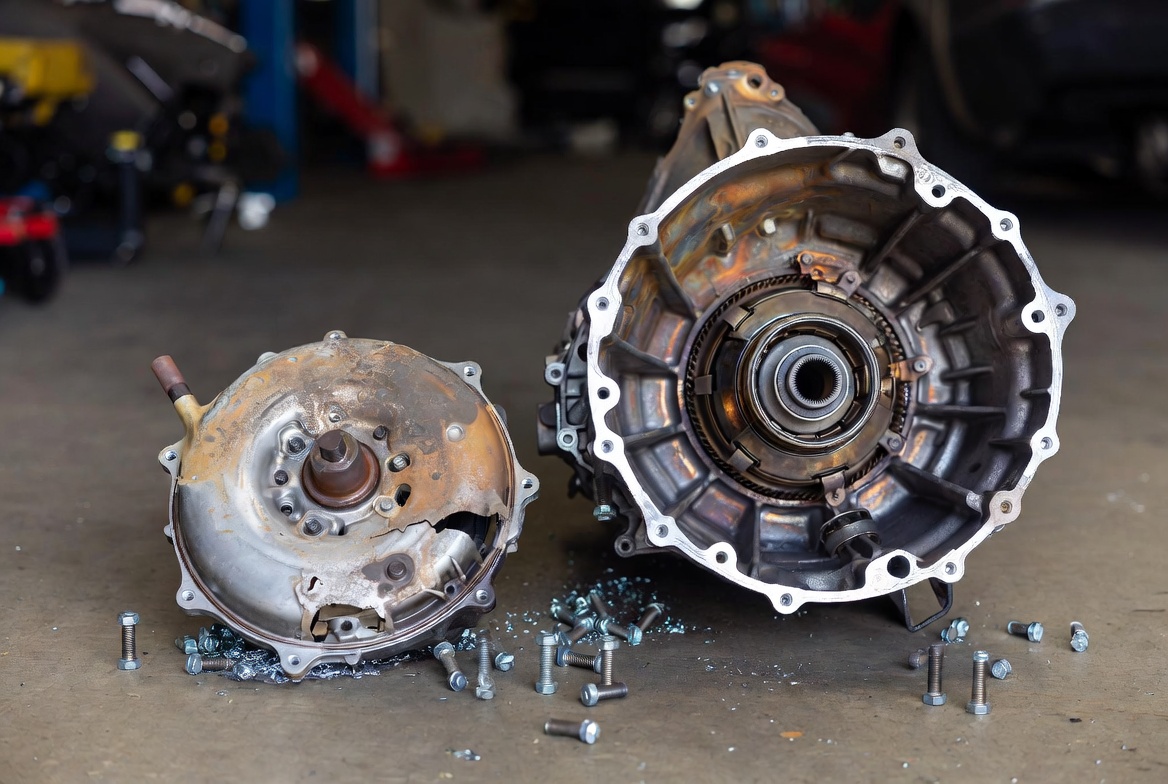
The torque converter connects your engine to your transmission. It’s kind of like the middleman between two important parts. When you’re sitting still with your foot on the brake, your engine is spinning but your wheels are not moving. The torque converter allows this to happen. It keeps the engine running without stalling your car.
Here’s how it works in simple terms: The torque converter is filled with fluid. Your engine spins a part of the torque converter called the impeller. This spinning action makes waves in the fluid. Those waves hit another part called the turbine. The turbine then spins. This spinning motion goes to your transmission. The transmission then sends power to your wheels.
When you press the gas pedal, the torque converter pumps more fluid. This makes the turbine spin faster. It matches the speed of your engine. When your car is going at highway speeds, something special happens. A lock-up clutch inside the torque converter kicks in. This clutch locks the impeller and turbine together. This stops wasting energy and makes your car more fuel efficient.
Think of the torque converter like a water wheel at a mill. The flowing water (the fluid) makes the wheel turn. The faster the water flows, the faster the wheel spins.
What Is a Transmission and What Does It Do?
Your transmission is different. The transmission is what changes your car’s gears. It takes power from the engine and sends it to the wheels. It decides how much power goes to the wheels based on your speed.
When you’re starting from a stop, you need a lot of power. Your transmission puts you in a low gear. This gives you lots of power to get moving. When you’re driving fast on the highway, you don’t need as much power. Your transmission shifts to a higher gear. This makes your engine run more smoothly and uses less gas.
Your transmission can have different types. Older cars had three speeds. Modern cars have eight, nine, or even ten speeds. Some cars have continuously variable transmissions. These are called CVTs. They don’t have set gears. Instead, they can change smoothly between any gear ratio.
Automatics are common. You just press the gas and the transmission does the work for you. Manual transmissions require you to shift gears yourself. But we’re going to focus on automatic transmissions and their torque converters in this article.
The transmission has fluid too. This fluid keeps everything running smooth. It also cools the transmission. The fluid picks up heat from all the moving parts. Then it flows to a cooler where it gets cooled back down. If the fluid gets too hot, bad things happen.
Signs Your Torque Converter Is Bad
A bad torque converter shows up in specific ways. These warning signs are pretty clear if you know what to look for.
Shaking and Vibration
When you stop at a red light, you might feel your car shaking or vibrating. This is a bad sign. Your torque converter should keep things smooth and steady. If it’s not doing its job, you’ll feel rough vibrations. The shaking might get worse when you turn on the air conditioner.
Stalling Problems
Does your car stall when you come to a stop? Does it stall for no reason? This could be a torque converter issue. The torque converter should keep your engine running even when you’re not moving. If it’s failing, your engine might quit.
Transmission Slipping
This feels like you’re driving in a lower gear than you should be. Your RPMs go up. Your car is loud. But your car doesn’t speed up as fast as it should. It feels like the connection between the engine and wheels is weak. Your car might surge forward suddenly. Then it might hesitate. This back and forth motion is annoying and unsafe.
Whining or Buzzing Sounds
Strange sounds are always a warning sign. A bad torque converter might make a whining noise. It might buzz. These sounds come from the fluid not flowing right. They come from parts that are starting to wear out.
Overheating
Your car might run hotter than normal. This happens because the torque converter is not working right. It can’t cool things down properly. You might see your temperature gauge creeping up. You might see a warning light on your dashboard.
Burned Smell
Does your car smell like something is burning? This is serious. A burning smell from near the engine usually means fluid is overheating. The smell might be sweet and sharp. This is a sign that your torque converter is working too hard and getting too hot.
Delayed Acceleration
When you press the gas pedal, there’s a delay before your car speeds up. You might have to wait a second or two. This hesitation is the torque converter not engaging properly. It’s not sending power to your wheels the way it should.
Signs Your Transmission Is Bad
A bad transmission shows different signs. These are usually more serious than torque converter problems.
Grinding or Clunking Sounds
When you shift gears, you might hear grinding sounds. You might hear clunking. These are metal parts rubbing together or banging. This is bad. The gears should shift smooth and quiet.
Refusing to Shift
Your car might get stuck in one gear. It won’t shift up to a higher gear. It won’t shift down to a lower gear. This is a major problem. You might be stuck in low gear. Your engine will be screaming at high RPMs.
Difficulty Shifting or Rough Shifts
Shifting should be smooth. You should barely notice it happening. But a bad transmission makes rough shifts. Your car might jerk or lurch when it changes gears. It might feel like someone is yanking you forward.
Transmission Fluid Leaks
Check under your car sometimes. Look for red fluid on the ground. Transmission fluid is usually bright red and smells like a blend of sweet and metallic. If you see this under your car, you have a leak. Don’t ignore this. Your transmission needs that fluid to work.
Burning Smell
Transmissions can overheat too. The burning smell from a bad transmission is different though. It’s more like hot metal. It’s sharper and more intense than a torque converter smell.
Slipping in All Gears
If your transmission is slipping in all gears, not just one, this is serious. Your car loses power in every gear. It’s not just one bad part. It’s a systemic problem with your transmission.
Check Engine Light
Your transmission has computers and sensors. If something is wrong, you’ll get a check engine light. You might also see a transmission warning light. This is different from a torque converter light in most cases.
Leaking Fluid
Transmission leaks are common. The fluid seals wear out. The pan gasket can fail. You might lose fluid slowly. You might lose it fast. Either way, low fluid will destroy your transmission quickly.
No Power Transfer
In extreme cases, your transmission won’t send any power to the wheels. Your car won’t move at all. The engine runs but nothing happens. This means complete transmission failure.
Key Differences Between a Bad Torque Converter and Bad Transmission
Now let’s compare them directly. This will help you figure out which one might be your problem.
Location and Function
Your torque converter is between your engine and transmission. It acts like a middleman. Your transmission comes after the torque converter. The transmission is the main component that changes gears.
A bad torque converter usually affects smoothness and power transfer while starting and at low speeds. A bad transmission affects your ability to shift gears properly.
How They Affect Driving
A bad torque converter makes your car feel weak at stops. It makes your car feel rough. It makes your car shake. But you can still drive. You can still shift through all your gears normally.
A bad transmission makes it hard to shift. Your car might not want to shift at all. You might hear grinding. Your gears might feel stuck. This is more serious and more dangerous.
Cost of Repair
Replacing a torque converter is cheaper than replacing a transmission. A torque converter replacement usually costs between one thousand and three thousand dollars. This includes parts and labor. A transmission rebuild can cost three thousand to five thousand dollars. A full transmission replacement can cost four thousand to eight thousand dollars or more.
Repair Options
A torque converter can sometimes be repaired instead of replaced. A mechanic might be able to fix the internal parts. But many shops just replace the whole thing.
A transmission can sometimes be rebuilt. A transmission specialist will take it apart, clean it, replace worn parts, and put it back together. But sometimes you need a full replacement.
Warning Signs Pattern
Torque converter problems usually show up when you’re stopped or going slow. They show up at idle. They show up when you’re in stop-and-go traffic.
Transmission problems show up during shifts. They show up during acceleration. They show up when you’re trying to move into different gears.
Fluid Issues
Torque converter fluid is the same as transmission fluid in most cars. But a torque converter problem usually doesn’t cause leaks. Transmission problems often cause leaks because seals fail.
Noise Characteristics
A bad torque converter makes whining, buzzing, or humming sounds. These sounds are smooth but annoying. A bad transmission makes grinding, clunking, or banging sounds. These sounds are harsh and metallic.
What Causes These Problems?
Understanding what goes wrong helps you prevent problems in the future.
Torque Converter Problems
The lock-up clutch is a common failure point. This clutch can wear out or stick. When it sticks, the torque converter stays locked even when it shouldn’t be. This causes shaking and stalling.
The fluid breaks down over time. Old, degraded fluid doesn’t work as well. It loses its ability to transfer power smoothly. It also doesn’t cool as effectively.
The bearings inside the torque converter can fail. These bearings help the parts spin. When they wear out, you get noise and vibration.
Towing heavy loads stresses the torque converter. So does racing or aggressive driving. The fluid gets too hot. Parts wear out faster.
Transmission Problems
Low fluid is the number one cause of transmission problems. If your fluid level is too low, the gears grind together. The fluid can’t cool things down. Everything overheats.
Dirty fluid causes problems. Over time, the fluid picks up debris. It picks up wear particles from metal parts. This dirty fluid clogs the passages. It makes the transmission work harder.
The transmission bands wear out. These bands grip the gears. When they wear thin, you get slipping. You get rough shifts.
The seals fail and fluid leaks out. Once you lose too much fluid, your transmission fails fast.
Overheating is a major cause. High temperatures break down the fluid. They damage the seals and gaskets. They can even warp metal parts.
Towing is hard on transmissions too. Heavy trailers put stress on the transmission. The fluid overheats. The parts wear faster.
Driving rough or racing damages transmissions. Slamming the accelerator or braking hard stresses the transmission. Driving in deep water can get water in your transmission. Water destroys the fluid.
Torque Converter Problems vs Transmission Leaks
Let’s talk about leaks specifically because this is important.
A torque converter leak is rare. The torque converter is a sealed unit. If it leaks, the problem is usually at the seals where it connects to the engine and transmission. Leaks are uncommon because there are few points where fluid can escape.
A transmission leak is much more common. The transmission pan sits underneath. The gasket around this pan can wear out. The fluid seeps out. You might lose a little fluid each day. Or you might lose fluid faster if the gasket is really damaged.
Transmission cooling lines can leak. These rubber hoses carry fluid to and from the cooler. They can crack or burst. Fluid squirts out.
The input shaft seal can fail. This is where the torque converter connects to the transmission. Fluid leaks from this point.
The output shaft seal can fail too. This is where power goes to the rest of your car. Leaks here mean you’re losing fluid.
If you’re losing fluid, you need to find the leak and fix it fast. Driving without enough transmission fluid will destroy your transmission. It will only take a few miles of driving on low fluid to cause permanent damage.
How to Tell Which One Is Your Problem
So how do you know if it’s your torque converter or your transmission? Here’s a simple checklist.
Is it a Torque Converter Problem?
- You feel shaking when stopped at a red light
- Your car feels weak when starting from a stop
- You hear whining or buzzing but not grinding
- Your car occasionally stalls but still starts right back up
- Transmission slipping happens mostly in lower gears
- You don’t see fluid leaking
- Your car runs better when warmed up
- The problem is worse in cold weather
Is it a Transmission Problem?
- You hear grinding or clunking when shifting gears
- Your gears are hard to shift or won’t shift
- You’re losing transmission fluid
- Your car jerks or lurches when changing gears
- You feel rough shifts every time you accelerate
- The problem happens during shifts, not at idle
- You have a grinding feeling as gears engage
- Your check engine light is on with a transmission code
Get a Professional Diagnosis
Here’s the real truth: you should get a professional diagnosis. A good mechanic can hook up a computer to your car. The computer will read error codes. These codes tell you exactly what’s wrong.
A mechanic can also test drive your car. They can feel what you’re feeling. They can listen to the noises. They can check your fluid level and condition.
Some transmission shops offer free diagnostics. This means they’ll plug in their computer and check your car for free. Then they’ll tell you what needs fixing and how much it costs.
Don’t let anyone start work without telling you what’s wrong. Get multiple opinions if the price is high. Transmission and torque converter work is expensive. You want to make sure the diagnosis is right before you pay.
Can You Drive with These Problems?
This is important for safety.
Driving with a Bad Torque Converter
A bad torque converter is annoying but often not dangerous. You can usually drive your car with a bad torque converter. It won’t feel good. Your car will shake. It will feel weak. But it will still work.
However, if your car is stalling, that’s dangerous. You could stall in traffic. You could stall at an intersection. This creates a hazard.
Also, if your torque converter is bad, your transmission might be working too hard. It might be overheating. If you keep driving, the transmission could fail too.
Driving with a Bad Transmission
You should not drive with a failing transmission. It’s dangerous. If your transmission fails completely, your car stops moving. You’ll be stuck on the road. You could be stuck in the middle of traffic or on a highway.
If your transmission is slipping in all gears, stop driving and get it towed. Don’t risk it.
If your transmission is making grinding sounds, stop soon and get it checked. Driving it further will make it worse.
If you’ve lost transmission fluid and your fluid level is low, do not drive your car. Low fluid will destroy your transmission in seconds. Your gears will grind together with no lubrication.
Prevention Tips
Now that you know about these problems, here’s how to prevent them.
Check Your Fluid
Check your transmission fluid every month. Look at the color. It should be bright red. Dark red or brown means it’s old and dirty. Black means you need a change right away.
Check the level too. Get your transmission warm first. Then check the level. It should be full. If it’s low, you have a leak.
Get Regular Servicing
Your transmission needs servicing. Every fifty thousand to one hundred thousand miles, you should change the transmission fluid. This removes old, dirty fluid. It replaces it with fresh fluid.
Some transmissions have sealed fluid. These aren’t supposed to be serviced. But many transmissions do need servicing. Check your owner’s manual.
Don’t Ignore Leaks
If you see fluid leaking, find the leak and fix it. A small leak today becomes a big leak tomorrow. Fix it before you lose too much fluid.
Drive Gently
Aggressive driving stresses your transmission and torque converter. Don’t floor the accelerator. Don’t brake hard. Drive smoothly and steadily.
Avoid Heavy Towing
If you must tow, stay within your vehicle’s rated capacity. Towing that’s too heavy stresses the transmission. Get a transmission cooler if you tow regularly.
Keep Your Engine Cool
Your transmission gets cooled through the transmission cooler. If your engine is overheating, your transmission overheats too. Keep your engine in good shape. Make sure your cooling system works right.
Don’t Drive Through Deep Water
Water can get into your transmission. This ruins the fluid. Avoid driving through deep water or flooded roads.
Let Your Car Warm Up
In cold weather, let your car idle for a few seconds before driving. This warms up the fluid. Thick fluid doesn’t flow well. Warm fluid flows smoothly.
What to Do If You Think You Have a Problem
You’ve read all this and you think something is wrong with your car. What do you do?
Step One: Stop Driving
If your symptoms are severe, stop driving. Get your car towed to a mechanic. Don’t risk it.
Step Two: Find a Mechanic
Not all mechanics are equal. Find someone you trust. Ask friends and family for recommendations. Check online reviews.
Get someone who has experience with transmissions. A general mechanic might not be able to diagnose torque converter problems properly.
Transmission specialists are great. They know transmissions inside and out. They can usually diagnose problems quickly and accurately.
Step Three: Get a Diagnosis
Tell the mechanic what’s happening. Describe the symptoms. Tell them when the problem happens.
Let the mechanic test drive the car. Let them hook up their computer. Get them to run diagnostics.
Ask for a written report. You should get a clear explanation of what’s wrong. You should know what needs to be fixed.
Step Four: Get the Price
Ask for a written estimate. Know the total cost before they start work. Ask if there are any warranties on the work.
Sometimes torque converter replacement includes a transmission fluid change. Sometimes it doesn’t. Ask what’s included.
Step Five: Make Your Decision
If the price is high, get a second opinion. Call another shop. Get another diagnosis. You want to be sure.
Ask about rebuilt parts instead of new parts. A rebuilt torque converter is cheaper than a brand new one. It usually lasts just as long.
Final Thoughts
A bad torque converter and a bad transmission are two different problems. They have different causes. They have different symptoms. They have different costs.
A bad torque converter makes your car feel weak and shaky. A bad transmission makes your car hard to shift.
Both are serious issues. Both need attention. But they need different fixes.
The good news is that modern mechanics have tools to diagnose these problems quickly. They can tell you exactly what’s wrong. Then you can make an informed decision.
Pay attention to how your car feels and sounds. If something seems off, get it checked. Catching problems early saves you money. It keeps you safe.
Get regular maintenance. Change your fluid when scheduled. Check your fluid level regularly. Avoid aggressive driving. These simple steps prevent most transmission and torque converter problems.
If you do have a problem, don’t panic. Find a good mechanic. Get a proper diagnosis. Get a fair price. Then fix it and move on.
Your car will thank you for taking care of it. And you’ll have peace of mind knowing you’re driving safely.