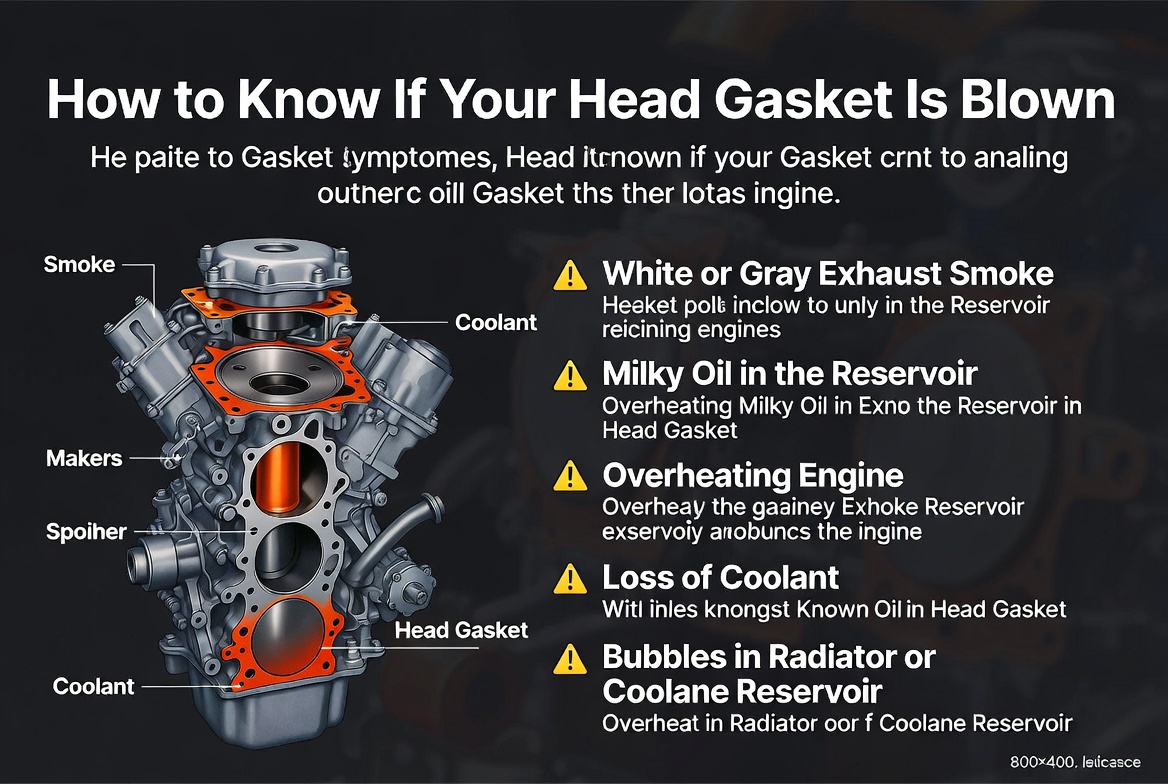
How to Know If Your Head Gasket Is Blown?
Your car’s engine is like a living, breathing thing. When something goes wrong deep inside, your vehicle sends out warning signs. One of the most serious problems you can face is a blown head gasket. This issue can turn into a financial nightmare if you don’t catch it early. Let me walk you through exactly what you need to know and how to spot the signs before it’s too late.
What Is a Head Gasket Anyway?
Before we jump into the warning signs, let’s talk about what this part actually does. Your engine has two main sections: the top part called the cylinder head and the bottom part called the engine block. Between these two parts sits a thin piece called the head gasket.
This gasket is like a superhero shield. It keeps oil, coolant, and combustion away from each other. When your engine runs, explosions happen inside the cylinders. Those explosions create crazy amounts of heat and pressure. The head gasket stops that heat and pressure from damaging everything else.
Think of it like the roof of your house. You don’t want rain leaking inside. The gasket works the same way. It prevents leaks from happening where two important engine pieces connect.
Why Do Head Gaskets Fail?
Now let’s talk about why this important part stops working. Head gaskets don’t just fail for no reason. Several things can cause them to blow.
Heat and Overheating
Your engine produces extreme heat when running. The head gasket has to handle this heat day after day, year after year. Over time, all that heat takes a toll. The gasket material gets tired and breaks down.
If your engine ever overheats badly, it can damage the gasket much faster. When coolant levels get too low, the engine temperature climbs dangerously high. This intense heat can warp the metal parts and destroy the gasket seal in just one bad incident.
Age and Mileage
Everything in life has a lifespan. Head gaskets are no different. As your car gets older and racks up more miles, the gasket weakens. The rubber and metal materials wear out naturally. Some cars go a long time before this happens. Others fail sooner.
Poor Engine Maintenance
Skipping oil changes is a quick way to damage your head gasket. Clean oil keeps your engine cool and lubricated. Dirty oil can’t do either job well. It also gets thick and sludgy, which increases pressure inside the engine. All that extra pressure puts stress on the gasket.
Not maintaining your cooling system properly also hurts the gasket. If you ignore coolant flushes and don’t replace the fluid when needed, corrosion builds up inside the cooling passages. This reduces the gasket’s ability to seal properly.
Defects During Manufacturing
Sometimes the problem isn’t your fault at all. Occasionally, head gaskets come from the factory with defects. You might put a bad gasket in and have trouble almost immediately. This is rare, but it happens.
Engine Knock and Detonation
When your fuel burns wrong inside the cylinder, it creates a shock wave instead of a smooth burn. This is called detonation or engine knock. The shock waves put extreme stress on the head gasket. Using low-quality fuel or the wrong octane rating can cause this.
The Warning Signs: What to Look For
Here’s where you really need to pay attention. Your car will give you clues that something is wrong with your head gasket. The earlier you catch these signs, the easier it is to fix the problem.
White Smoke from the Exhaust
One of the most obvious signs is white smoke pouring out of your tailpipe. This isn’t normal exhaust. Real exhaust is invisible or barely visible.
White smoke means coolant is leaking into the combustion chamber. When the fuel burns, it vaporizes the coolant, creating that cloud of steam. You might see this smoke when you first start your car in the morning. You might see it when you’re driving.
Don’t confuse white smoke with water vapor on cold mornings. That’s normal. Real white smoke from a blown gasket looks thick and smells sweet, like coolant. It happens even on warm days. The smoke might smell like burning or have a chemical odor.
Milky, Foamy Oil
Pop your hood and check your oil. Dip the stick out and look at the color. Healthy oil is brown or dark amber. If it looks like a milkshake or has a foamy, whitish appearance, something is very wrong.
This milky oil means coolant has leaked into the oil. The two liquids are mixing together. This is a bad sign that your gasket isn’t sealing properly. The coolant gets into the oil through the head gasket failure.
Check inside your oil cap too. If you see a white, crusty, foamy buildup inside, that’s called mayonnaise. This sludge is coolant mixed with oil. It’s a dead giveaway of a head gasket problem.
Loss of Coolant
Keep track of your coolant level. If it keeps dropping and you don’t see puddles under your car, the coolant is going somewhere. A failing head gasket is a likely culprit.
When the gasket fails, coolant can leak into the combustion chamber. This means coolant disappears from the radiator without leaving a puddle on the ground. You’ll need to top off the coolant reservoir more and more often.
Overheating Engine
Your temperature gauge is your friend. If the needle climbs higher than normal or the engine overheating warning light comes on, pay attention. A blown head gasket often causes cooling problems.
When the gasket fails, the cooling system can’t work right. Coolant leaks out. The engine can’t maintain the proper temperature. It runs too hot.
Overheating can happen quickly or slowly. You might notice it during highway driving when the engine works hardest. You might notice it sitting in traffic on a hot day.
Rough Idle and Misfire
Feel how your car runs when you’re stopped at a traffic light. Does it shake or vibrate more than usual? Does it feel choppy or uneven? That’s a rough idle.
When a head gasket fails, combustion can leak from one cylinder to another. This throws off the engine’s timing and balance. You feel this as roughness and vibration.
You might also experience misfires. This is when one or more cylinders don’t fire properly. The engine coughs and sputters. The check engine light blinks or stays on.
White Residue on the Engine Block
Pop your hood and look at the engine block. Do you see white, crusty buildup on the block where the cylinder head meets? This residue forms when coolant leaks out slowly and dries on the engine.
This white stuff isn’t always a guarantee of a blown gasket, but it’s definitely suspicious. It means coolant is escaping where it shouldn’t.
Bubble Radiator Circulation
Start your engine and look at the radiator. Watch for bubbles rising in the coolant. Normally, you shouldn’t see bubbles.
When a head gasket fails, combustion gases can leak into the cooling system. These gases create bubbles in the coolant. This is a telltale sign that the gasket isn’t sealing properly.
Open the radiator cap very carefully when the engine is cold. Never do this when hot. Look inside. Do you see bubbling? That’s a red flag.
Increase in Exhaust Emissions
Have you noticed a change in your exhaust? Does it seem thicker, darker, or different than usual? A failed head gasket can affect what comes out of your tailpipe.
You might see smoke that’s slightly blue or gray mixed with white. This indicates a combination of coolant and oil burning in the engine.
Water in Engine Oil
Another clear sign is actual water in your engine oil. Check your dipstick carefully. Wipe it clean, dip it again, and look closely.
Water in the oil is different from the foamy milkshake appearance. You might see actual water droplets or a clear liquid that doesn’t mix with the oil. This means coolant or water is leaking directly into the oil.
Poor Fuel Economy
If your car suddenly drinks more gas than usual, a blown head gasket might be responsible. When the gasket fails, combustion leaks out. The engine has to work harder to maintain power. It burns more fuel to compensate.
If you’re getting fewer miles per gallon and can’t find another explanation, consider getting your head gasket checked.
How to Confirm Your Suspicions
Seeing one or two signs might be coincidence. But seeing multiple signs? It’s time to investigate further.
Visual Inspection
Put on some safety glasses and crawl under your car. Look for puddles or stains on the ground. Check the color. Coolant leaks are usually bright green, orange, or pink depending on the type.
Coolant smells sweet, which makes it easier to identify. Oil leaks smell like oil. You’re looking specifically for coolant evidence.
Open your hood and look at the engine carefully. Check for dried coolant, crusty buildup, or wet spots. Look where the cylinder head bolts to the engine block.
Check Your Oil
This is simple and costs nothing. Warm up your engine by running it for a few minutes. Turn it off and wait five minutes. Pull out the dipstick.
Look at the color and consistency. Feel it between your fingers. Does it feel watery? Does it look milky? These are bad signs.
You can also check inside the oil cap. Look for white, crusty sludge. Smell the oil. If it smells like coolant, that’s a clue.
Pressure Test
Some mechanics perform a pressure test on the cooling system. This pressurizes the radiator and cooling lines to find where coolant is leaking. If pressure drops too fast, the gasket is likely failing.
This test is inexpensive and helpful for diagnosis. If you’re unsure about your head gasket, ask a mechanic about this.
Combustion Leak Test
A special device can detect combustion gases in the cooling system. If gases are present where they shouldn’t be, it points to a head gasket problem.
This test is more involved than others but very accurate. It costs more than a pressure test but less than a full inspection.
Borescope Inspection
A mechanic can use a small camera called a borescope to look inside the combustion chamber. They insert it through a spark plug hole to see if coolant is leaking into the cylinder.
This is more expensive but gives a clear picture of what’s happening inside.
What Happens If You Ignore It
Here’s the truth nobody wants to hear: ignoring a blown head gasket is a bad idea. Really bad.
If you keep driving with a failed gasket, damage keeps spreading. Coolant mixes with oil, destroying the oil’s ability to protect your engine. The oil gets thinner and loses its lubricating power. Metal parts start grinding against each other without proper protection.
The engine overheats more and more. Heat damage spreads to other parts. The cylinder walls warp. The pistons get damaged. The crankshaft suffers.
Combustion leaks damage the cooling system. Pressure builds up and can blow out hoses. The radiator gets stressed.
What started as a gasket problem can turn into complete engine failure. Instead of a few thousand dollars for gasket replacement, you’re looking at a new engine. That’s tens of thousands of dollars.
Your best move is to get the problem fixed as soon as you notice it.
The Cost of Repair
Let’s talk money. How much does it cost to fix a blown head gasket?
The price varies based on your car. Labor is the biggest cost factor. The head has to come off the engine, which takes many hours of work. Eight to twelve hours is common. Some cars need sixteen hours or more.
Labor costs typically run between one thousand and two thousand dollars. Sometimes more if you live in an expensive area.
Parts cost ranges from three hundred to eight hundred dollars depending on your vehicle. You’re paying for a new gasket, bolts, and sometimes additional seals and gaskets that mechanics recommend replacing while they’re in there.
So total repair cost usually lands between fifteen hundred and three thousand dollars. Luxury cars and some newer vehicles cost significantly more.
Getting it fixed early is still cheaper than waiting. Waiting risks engine damage that costs five to ten times more.
Prevention Is Your Best Friend
The good news is you can prevent many head gasket problems through proper maintenance.
Keep Your Coolant Level Right
Check your coolant reservoir every month. Most cars have a clear plastic reservoir with minimum and maximum marks. Keep the level between these marks.
A low coolant level means your engine runs hot. Hot engines stress the gasket. So keep it topped off.
Use the Right Coolant
Don’t just pour any coolant into your car. Different cars need different types. Check your owner’s manual. Some coolant is designed for specific vehicles.
Using the wrong coolant can cause corrosion inside the cooling system. This damages the gasket. So get it right.
Flush Your Cooling System Regularly
Over time, coolant breaks down. It gets dirty and loses its protective ability. Regular flushes keep the system clean.
Ask your mechanic how often your car needs a cooling system flush. Usually it’s every thirty thousand to fifty thousand miles, but check your manual.
Get Regular Oil Changes
This is the most important thing you can do. Clean oil keeps your engine cool, lubricated, and protected. Skip oil changes and you’re asking for trouble.
Change your oil at the intervals recommended in your manual. Don’t stretch it to save money. That penny-wise, pound-foolish approach costs you big time.
Don’t Ignore the Check Engine Light
Your car’s computer is always watching. If something goes wrong, the check engine light comes on. Don’t ignore it or cover it up.
Get the code read with a scanner. It might point directly to a cooling problem or engine issue before it becomes a blown gasket.
Keep Your Engine Cool
Don’t let your engine overheat. If the temperature gauge climbs too high, pull over and turn off the engine. Let it cool down.
Check for coolant leaks regularly. Fix them immediately. A slow leak becomes a fast leak if ignored.
Use Quality Fuel
Use fuel with the octane rating your car requires. Cheap gas can burn wrong and cause knock. Knock damages the gasket. So invest in decent fuel.
Different Types of Failures
Not all blown head gaskets are the same. The failure can happen in different ways.
Complete Seal Loss
Sometimes the gasket loses its seal completely. Coolant pours into oil. Combustion leaks into the cooling system. The problem is obvious and immediate.
Partial Seal Loss
Other times the seal fails in one spot. You might see one or two warning signs. The problem is less obvious but still serious.
Slow Leaks
Some gaskets fail slowly over thousands of miles. You notice the coolant level dropping gradually. The oil starts getting slightly milky. These slow leaks still need fixing but give you a little more time.
When to Replace Versus Repair
Here’s a key question: can you repair a blown head gasket or does it need replacing?
The short answer is that head gaskets can’t really be repaired. They’re replaced. When they fail, you need a new one.
Some products claim to fix head gaskets temporarily. These are chemical sealants you pour into the cooling system. They might work for a little while. They might slow a leak.
But they’re not a real fix. They’re a band-aid. You’re still going to need the proper repair eventually. And the longer you wait, the more damage happens.
Save yourself heartache and get it done right the first time.
Finding a Good Mechanic
This repair is too important to trust to just anyone. You need a good mechanic.
Ask friends and family for recommendations. Read online reviews. Look for shops that specialize in your car brand if possible.
Get a quote before work starts. Ask what’s included. Is it just the gasket or will they replace other seals while they’re in there?
Ask about warranty. A good shop stands behind their work with a warranty on parts and labor.
Don’t always go for the cheapest quote. Sometimes you get what you pay for. A shop charging less might use cheaper parts or cut corners.
What Happens During Repair
When you get your head gasket fixed, here’s basically what happens.
The mechanic drains your oil and coolant. They remove many bolts and connections. They carefully lift the cylinder head off the engine block.
They clean the surfaces where the head and block meet. They inspect for damage to the block and head. They remove the old gasket and scrape away residue.
They install a new gasket. They check that all bolt holes are clean. They install the head back on carefully. They tighten the bolts in a specific pattern to the exact specification.
They refill with new oil and coolant. They bleed air out of the cooling system. They test for leaks and run diagnostics.
The whole process usually takes eight to twelve hours. It requires precision and attention to detail.
Signs Your Head Gasket Is Fine
Not every symptom means a blown gasket. Let’s talk about what doesn’t indicate a failure.
A little condensation in your oil in winter is normal. That’s moisture from cold starts. It burns off when the engine warms up.
A single overheating incident doesn’t mean the gasket is bad. If your coolant level was low one time and you filled it, that might be it.
A rough idle one time might be something simple like a spark plug problem.
One sign in isolation doesn’t confirm a blown gasket. But multiple signs together paint a clear picture.
Questions to Ask Your Mechanic
When you take your car in, ask these questions:
- Is this definitely a blown head gasket?
- How certain are you?
- What tests did you run to confirm?
- Is the damage only the gasket or is there block or head damage?
- Will you replace other seals while you’re in there?
- What warranty do you offer?
- How long will the repair take?
- Can you show me the damage?
A good mechanic will answer all these questions clearly.
The Bottom Line
A blown head gasket is serious. It’s not something to put off. But it’s not the end of the world either. Caught early, it’s an expensive but fixable problem.
Pay attention to your car. Notice changes. Check your oil regularly. Keep your coolant level right. Maintain your cooling system.
If you spot multiple warning signs, get your car checked out. Don’t guess. Don’t hope. Don’t wait.
The cost of fixing it early is a fraction of the cost of letting it get worse. Your engine is one of the most expensive parts of your car. Protecting it is worth the investment.
Drive safe and keep your engine healthy.
Want to learn more about car maintenance? Check out our other guides on keeping your vehicle running strong. Regular maintenance catches problems before they become expensive emergencies.