F150 6 1/2 Bed vs 8ft Bed
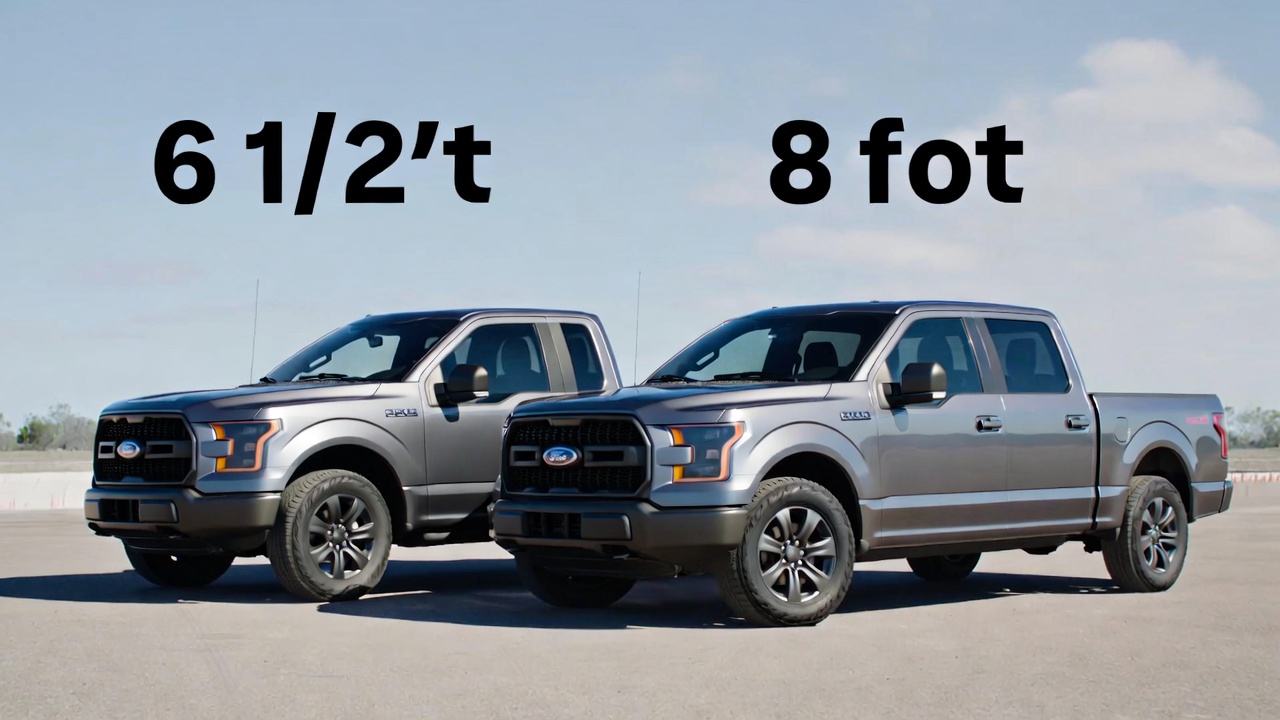
So you’re getting a Ford F-150. Great choice. But now you’re stuck on one question — do you go with the 6 1/2 foot bed or the 8 foot bed?
It sounds simple. But trust me, this decision matters more than most people think.
The wrong bed size can mess up your hauling, hurt your parking, limit your cab options, and even affect your truck’s resale value. So let’s break this down in plain English so you can pick the right one and feel good about it.
First, Let’s Talk About the Two Bed Sizes
The F-150 comes in a few bed lengths. The two most popular ones are:
- The 6.5-foot bed (also called the 6 1/2 foot bed or short bed)
- The 8-foot bed (also called the long bed or full-size bed)
There’s also a 5.5-foot bed on the F-150, but we’re not focusing on that today. The fight is between the 6.5 and the 8 footer.
Let’s go through every important angle.
Actual Dimensions: How Long Are These Beds Really?
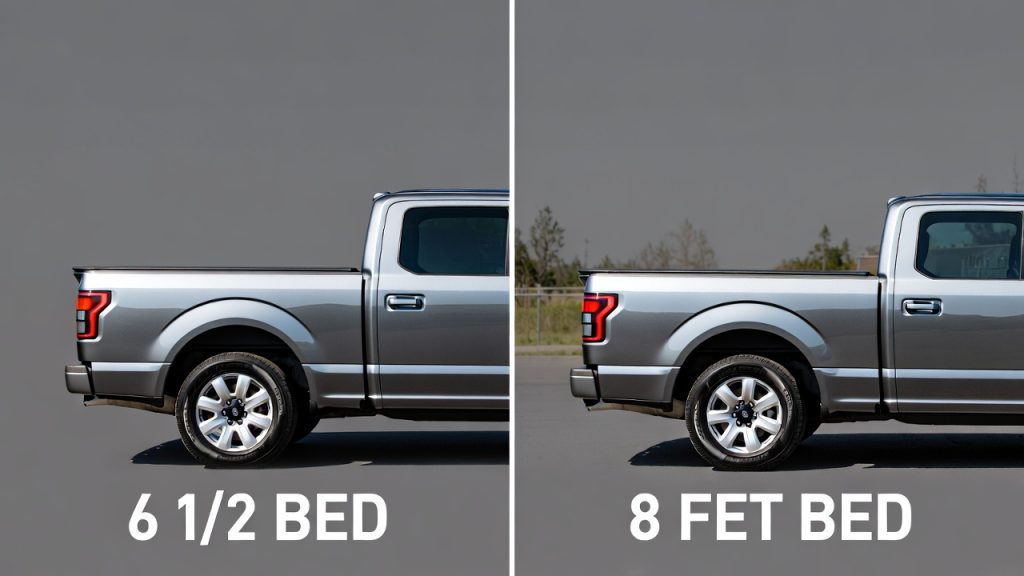
When Ford says “6.5-foot bed,” they’re talking about the inside cargo length. The outside of the truck is longer because the bed walls take up space.
Here’s a quick look:
| Bed Name | Inside Length | Outside Box Length |
|---|---|---|
| 6.5-ft Bed | ~78.9 inches | ~81.8 inches |
| 8-ft Bed | ~97.6 inches | ~100.6 inches |
That’s roughly an 18-inch difference in usable cargo space. That might not sound like a lot. But when you’re loading lumber, pipe, furniture, or equipment, 18 inches is huge.
The 8-foot bed gives you over 8 linear feet of flat floor space. The 6.5-foot bed gives you about 6.5 feet. Simple math, but it changes everything when you’re hauling real stuff.
Cab and Bed Combinations: Not Every Combo Exists
Here’s something a lot of first-time truck buyers miss. The F-150 bed size you can get depends on the cab style you pick.
There are three cab styles on the F-150:
- Regular Cab – two doors, no back seat
- SuperCab – extended cab with small rear doors
- SuperCrew – full four-door cab with a big back seat
Now here’s where it gets important:
- Regular Cab: Available with the 6.5-ft or 8-ft bed
- SuperCab: Available with the 6.5-ft or 8-ft bed
- SuperCrew: Only available with the 5.5-ft or 6.5-ft bed — not the 8-ft bed
So if you want the 8-foot long bed, you cannot get the SuperCrew cab. Period. You have to go with the Regular Cab or SuperCab.
This is a big deal. A lot of people want a full four-door truck with a long bed — and they can’t have it in the F-150. If that’s you, you’d need to look at a different truck.
On the flip side, if you want the SuperCrew with that roomy back seat, you’re capped at 6.5 feet for the bed.
Hauling Capacity: What Can You Actually Carry?
Let’s talk cargo. This is the main reason most people buy a truck in the first place.
The 8-ft Bed Wins for Long Loads
Standard lumber from the hardware store comes in 8-foot lengths. An 8-foot bed fits it perfectly with the tailgate up. A 6.5-foot bed? You’ll need to drop the tailgate and let it hang over — which is fine for some jobs, but not ideal.
Same goes for:
- Drywall sheets – Standard sheets are 4×8 feet. They slide right into an 8-foot bed flat. In a 6.5-foot bed, they hang over the tailgate.
- Plywood – Same story. Standard sheets fit fully in the long bed.
- Fence panels – Most panels are 8 feet wide. You see where this is going.
- Ladders and long pipes – The longer the bed, the easier this gets.
If you work in construction, landscaping, roofing, plumbing, or any trade that uses long materials, the 8-foot bed is the smarter pick.
The 6.5-ft Bed Is No Slouch
Don’t write off the shorter bed too fast. It still holds a huge amount of stuff. You can load:
- Motorcycles
- ATVs and small UTVs
- Bags of mulch, gravel, or soil
- Furniture
- Appliances
- Camping gear and coolers
For everyday hauling — the kind most people actually do — the 6.5-foot bed is plenty.
Payload and Towing: Does Bed Length Change Anything?
Good question. And here’s the honest answer: bed length itself doesn’t directly change how much weight your truck can carry or tow.
Payload and towing capacity depend on the engine, axle ratio, cab style, trim level, and towing package. Not the bed length.
That said, the 8-foot bed does add weight to the truck. A longer bed means more steel, which adds a little to the curb weight. That can slightly reduce your net payload rating. But we’re talking a minor difference here — not something that’ll change your life.
The bigger factor is still going to be your engine choice and how you spec the truck.
Overall Truck Length: Can You Park This Thing?
This is where the 8-foot bed starts to feel like a lot.
Let’s look at rough overall truck lengths for the F-150:
| Cab + Bed Combo | Approx. Overall Length |
|---|---|
| SuperCab + 6.5-ft bed | ~231 inches (~19.3 ft) |
| SuperCab + 8-ft bed | ~250 inches (~20.8 ft) |
| Regular Cab + 6.5-ft bed | ~210 inches (~17.5 ft) |
| Regular Cab + 8-ft bed | ~229 inches (~19.1 ft) |
A SuperCab with an 8-foot bed is nearly 21 feet long. That’s a massive truck. Parking it in a standard parking lot is rough. Squeezing it into a tight garage? Even harder.
If you live in the suburbs, drive in a city, or park in places with tight spaces, the long bed creates real daily headaches.
The 6.5-foot bed is far more manageable. It feels like a truck. The 8-foot bed sometimes feels like you’re steering a boat.
Garage Fit: Will It Even Fit in Your Garage?
Most residential garages run about 20 to 22 feet deep. That sounds like enough for even a long-bed truck. But here’s the catch — once you park it and open the doors, you need space to actually walk around.
With an 8-foot bed SuperCab combo pushing close to 21 feet, you’re right at the edge of most garages. Add in the front bumper and you’re probably not closing that garage door.
The 6.5-foot bed gives you more breathing room. You can park, open the doors, grab your stuff, and not feel like you’re doing yoga to squeeze out.
Fuel Economy: Is There a Difference?
The aerodynamic difference between the two beds is pretty minimal. So fuel economy doesn’t change dramatically based on bed size alone.
What matters more is the engine you pick, how much weight you carry, and whether you’re towing. Bed length is not a major factor in your miles per gallon.
Resale Value: Which Bed Size Holds Value Better?
Here’s some real talk: the 6.5-foot bed is more popular. More buyers want it. That’s just the market reality.
More demand means the short bed tends to hold its resale value well. It appeals to a broader range of buyers — families, everyday drivers, and truck enthusiasts alike.
The 8-foot bed is more of a niche product. It’s perfect for the right buyer, but the pool of buyers is smaller. When you go to sell or trade in, it might take longer to find the right person at the right price.
This doesn’t mean the long bed is a bad investment. It just means you should factor in resale when making your choice.
Who Should Get the 6.5-ft Bed?
The 6.5-foot bed is the all-around winner for most buyers. Here’s the type of person it’s made for:
Get the 6.5-ft bed if you:
- Want the SuperCrew cab for family use
- Drive mostly in town or in tight areas
- Do light to medium hauling — not trade work every day
- Want easier parking and garage storage
- Haul motorcycles, gear, or weekend supplies
- Are buying this as a daily driver first, work truck second
- Care about resale value to a broad market
- Tow a trailer regularly (where bed length matters less than hitch capacity)
Who Should Get the 8-ft Bed?
The 8-foot bed isn’t for everyone. But for the right person, it’s the only right answer.
Get the 8-ft bed if you:
- Work in a trade (construction, landscaping, roofing, plumbing, electrical)
- Haul standard lumber, drywall, or plywood regularly
- Don’t need the SuperCrew cab
- Have space to park a long truck — a big driveway or open lot
- Want to carry long pipe, rebar, or tubing without letting it hang way out
- Need a dedicated work truck, not a family hauler
- Already own or drive other long vehicles
Accessories and Truck Bed Covers: Does Size Matter Here?
Yes, and it’s easy to overlook this.
If you want a tonneau cover, bed liner, bed extender, or bed slide, you need to make sure it fits your specific bed size. Most brands make covers for both the 6.5-ft and 8-ft beds. But they’re not interchangeable.
Soft roll-up covers are easy to find in both sizes. Hard folding covers are available in both too, though they tend to cost more for the longer bed.
Camper shells and truck caps also need to match the exact bed length. Just keep this in mind when budgeting for accessories.
Real-World Scenarios to Help You Decide
Let’s run through some quick scenarios.
You’re a contractor who hauls lumber and tools every day. Get the 8-foot bed. Your work demands it.
You’ve got two kids in car seats and need a full back seat. Get the 6.5-foot bed with the SuperCrew cab. You can’t do this with the long bed.
You go camping and fishing on weekends and haul an ATV. The 6.5-foot bed handles an ATV just fine. Go with the shorter bed.
You run a landscaping crew and load up mulch, pavers, and gear every morning. Get the 8-foot bed. More bed space = fewer trips.
You want a truck to tow a fifth-wheel trailer. Interesting case here — the 8-foot bed actually helps with fifth-wheel hitch setup because the pin box has more room in front of the rear axle. If fifth-wheel towing is your thing, the long bed is worth considering.
You live in a dense city and park on the street. Get the 6.5-foot bed. An 8-footer on a city street is a nightmare.
A Quick Side-by-Side Summary
| Feature | 6.5-ft Bed | 8-ft Bed |
|---|---|---|
| Inside cargo length | ~78.9 inches | ~97.6 inches |
| Fits standard 8-ft lumber flat | No (hangs over) | Yes |
| Compatible with SuperCrew cab | Yes | No |
| Overall truck length (SuperCab) | ~19.3 ft | ~20.8 ft |
| Easier to park | Yes | No |
| Better for daily driving | Yes | Less ideal |
| Better for trade work | Less ideal | Yes |
| Better resale to broad market | Yes | Less so |
| Fifth-wheel towing benefit | Less | More |
Don’t Forget About the Truck Bed Floor
One thing people forget to check: the bed floor material. Both bed sizes come with the same options — you can get a spray-in bedliner, a drop-in liner, or a bare steel floor.
Go with a spray-in bedliner if you’re doing heavy work. It protects the floor, reduces noise, and makes cleanup easier. Drop-in liners are fine for light use.
The 8-foot floor naturally takes more abuse just because you’re loading longer, heavier stuff. A good liner matters more for the long bed.
Final Thoughts
The F-150 6.5-foot bed and 8-foot bed each have a strong case.
The 6.5-foot bed is the right pick for most people. It’s versatile, easy to manage, and works with the full-crew cab. It’s the truck for families, weekend warriors, and folks who haul light to medium loads.
The 8-foot bed is the right pick for people who work hard and haul big. If lumber, pipe, and plywood are part of your weekly life, the extra 18 inches of bed space pays for itself fast.
Think about how you’ll actually use the truck. Not how you think you might use it — how you’ll actually use it every single week. That answer will tell you which bed to buy.
Get the right one, and you’ll love your F-150 even more.
Related terms you might find useful: F-150 bed dimensions, Ford F-150 cargo space, F-150 long bed vs short bed, F-150 pickup truck bed size, F-150 cab and bed combinations, SuperCrew bed options, F-150 work truck bed, truck bed length comparison, F-150 payload capacity, F-150 towing setup