How to Tell If Your Timing Chain Is Bad?
Your car’s timing chain is like the conductor of an orchestra—it keeps everything in perfect rhythm. When something goes wrong with it, your entire engine can fall out of sync. The bad news is that a faulty timing chain can lead to expensive repairs. The good news is that you can spot the warning signs before things get really bad.
Let me walk you through everything you need to know about detecting a bad timing chain. By the end of this article, you’ll understand what a timing chain does, why it fails, and exactly what symptoms to watch for.
What Is a Timing Chain Anyway?
Before we talk about problems, let’s understand what you’re dealing with. A timing chain is a metal chain inside your engine that synchronizes the rotation of the crankshaft and camshaft. Think of it as the master scheduler that makes sure your engine’s valves open and close at exactly the right time.
The timing chain sits deep inside your engine, connecting different parts that need to work together. It spins constantly while your engine runs. This chain has to handle a lot of stress and heat, which is why problems can develop over time.
Your engine has several hundred explosions happening every minute. The timing chain makes sure each explosion happens at precisely the right moment. If it gets even slightly out of sync, your engine won’t run right. Worse, it could damage other engine parts.
Why Timing Chains Fail
Understanding why timing chains break helps you spot problems early. Several factors can cause a timing chain to wear out or break.
Wear and Tear
Your timing chain runs constantly while the engine operates. Over hundreds of thousands of miles, the metal links can stretch. The sprockets (the toothed wheels that the chain wraps around) can also wear down. This stretching and wearing happens slowly over time. Eventually, the chain becomes loose and can’t maintain proper timing.
Poor Oil Quality
Engine oil does more than just lubricate moving parts. It also keeps the timing chain clean and protected. If you don’t change your oil regularly, dirty oil can build up deposits on the chain. These deposits act like sandpaper, grinding away at the metal. Low oil levels make the problem worse by creating more friction.
Manufacturing Defects
Some engines have timing chains that are prone to failure. Certain car models have known issues with timing chain durability. If you own one of these vehicles, you might experience problems sooner than expected. Check your car’s maintenance records to see if your model has any recalls.
Tensioner Problems
The timing chain tensioner keeps the chain tight. When the tensioner fails, the chain becomes loose. A loose timing chain can slip on the sprockets, throwing off your engine’s timing. This happens before the chain actually breaks, so you might get warning signs first.
Clogged Timing Chain Guide
The chain runs along a guide to keep it in position. If this guide gets clogged with buildup, the chain can’t move freely. It starts to rub and wear faster than normal.
Signs Your Timing Chain Needs Attention
Now here’s the part that matters to you—how to know if something is wrong. Your car will give you several clues that your timing chain is failing.
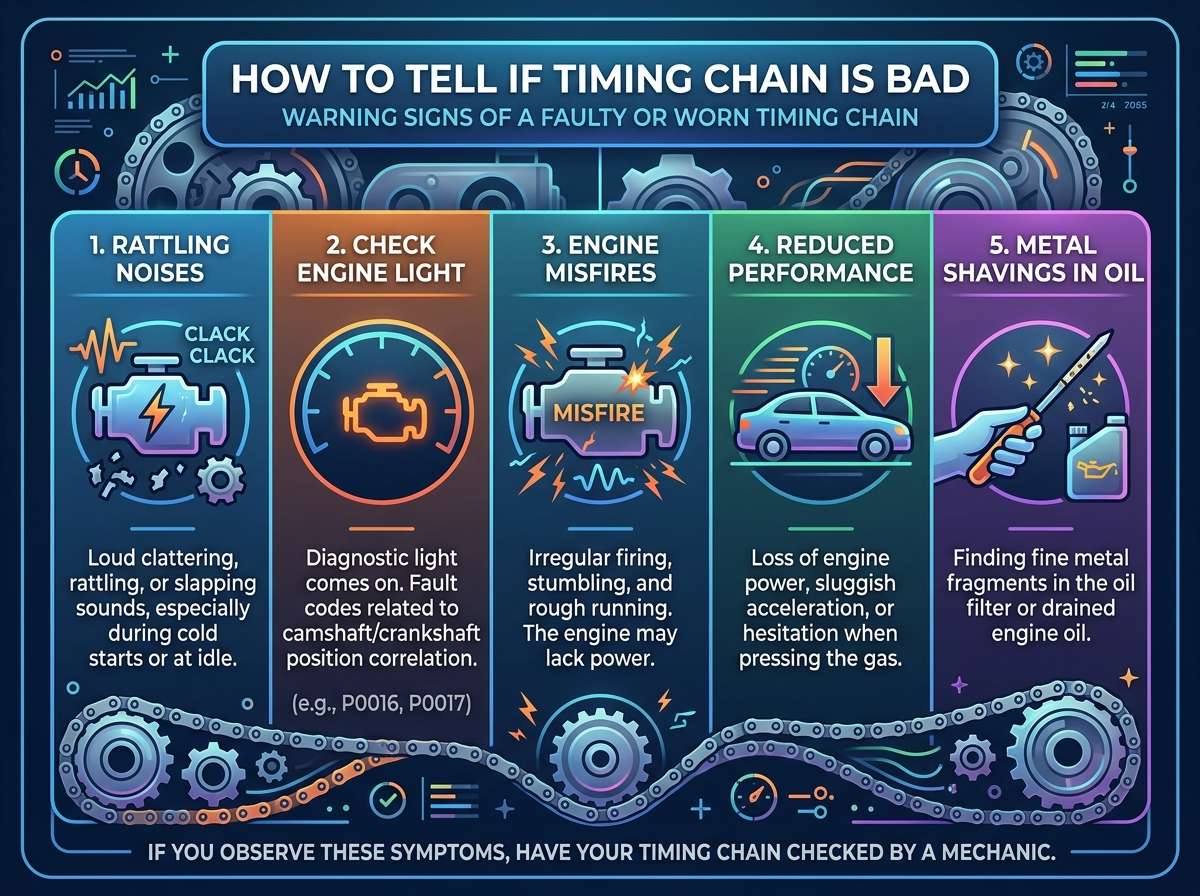
Your Engine Makes a Rattling Noise
Listen carefully when you start your car, especially in the morning when the engine is cold. A bad timing chain often creates a rattling sound from the front of the engine. This noise happens because the stretched chain isn’t tight anymore.
You might notice this rattle most when you accelerate or when the engine first starts. The noise comes from the loose chain hitting against the guides and sprockets. At first, you might hear it only sometimes. As the problem gets worse, the noise becomes constant and louder.
Don’t ignore this sound. A rattling engine is your car’s way of telling you something is wrong. The sooner you get it checked, the less expensive your repair bill will be.
Check Engine Light Turns On
Your car has sensors that monitor engine timing. If the timing gets too far off, these sensors trigger the check engine light. This is your dashboard’s warning system telling you to pay attention.
A check engine light can mean many things, but you need to have it scanned with a diagnostic tool. A mechanic can read the code and tell you if the timing chain is the culprit. Don’t drive around ignoring this light. The longer you wait, the more damage could happen.
Your Engine Runs Rough or Vibrates
When the timing chain stretches, your engine’s timing drifts. The valves open and close slightly off schedule. This makes the engine run rough and shake more than usual.
You might feel vibrations through the steering wheel or the entire car. The engine might stumble when you accelerate or idle roughly at traffic lights. These are all signs that something with your engine timing is off.
Trouble Starting Your Car
A stretched timing chain can make it hard to start your engine. The chain might slip on the sprockets, changing when the spark plugs fire. The engine might crank several times before it starts, or it might not start at all.
If your normally reliable car suddenly becomes hard to start, a timing chain problem could be the reason. This symptom usually shows up after the chain has stretched quite a bit.
Loss of Power and Acceleration
Your engine feels sluggish and doesn’t respond like it normally does. You press the gas pedal and the car doesn’t pick up speed as quickly as before. This happens because poor timing means less efficient combustion.
You might notice your fuel economy getting worse too. Your engine has to work harder to produce the same amount of power. This makes it burn more gas while delivering less performance.
Metal Particles in Your Oil
This is a more serious sign that shows significant damage is happening. If you do an oil change and find metal flakes in the drained oil, your timing chain is probably deteriorating rapidly.
Metal particles in the oil mean parts are grinding together. This indicates wear on the chain itself or the sprockets. You don’t want to reach this point. Get professional help as soon as you see this.
Your Engine Stalls While Driving
In extreme cases, a completely failed timing chain can cause your engine to stop while you’re driving. The chain breaks or slips so badly that the valves stop operating correctly.
This is dangerous and means you need immediate help. Never ignore this symptom.
How to Check Your Timing Chain
You can do some basic checks yourself, but be honest about your skill level. Some tasks need a professional mechanic.
Visual Inspection
You can sometimes see the timing chain if you remove the front engine cover. Look for the chain condition. A good chain looks metallic and smooth. A bad chain looks discolored, has visible damage, or shows signs of stretching.
This inspection requires removing covers and taking time, so many people skip this step. A mechanic has better tools and experience to do this properly.
Listen to Your Engine
The simplest check you can do is listen. Start your car on a cold morning when you haven’t driven it yet. Listen carefully to the engine sound for the first minute or so.
A rattling noise from the front of the engine is a bad sign. This noise usually gets worse when you rev the engine slightly.
Check Your Oil
Dirty or low oil contributes to timing chain problems. Check your oil level and color. If the oil is dark and dirty, it’s not protecting your chain properly.
Change your oil on schedule and use the correct type for your vehicle. This simple step prevents many timing chain problems.
Diagnostic Scan
A mechanic can connect a computer to your car and read the diagnostic codes. If you’re getting a check engine light, this scan will help identify the issue. The mechanic might see codes related to timing that point directly to the timing chain.
What Happens If You Ignore a Bad Timing Chain
I want to be clear about what ignoring this problem means for you.
A stretched timing chain gets worse over time. It doesn’t fix itself. The longer you drive with a bad timing chain, the more damage happens. Eventually, the chain will break completely.
When a timing chain snaps while driving, serious engine damage follows. The pistons can hit the valves, causing massive internal damage. Your engine could go from needing a timing chain replacement to needing a complete engine rebuild or replacement.
A timing chain replacement might cost you $1,500 to $3,000 depending on your car. An engine replacement can cost $5,000 to $10,000 or more. That’s a huge difference.
The choice is yours. Address the problem early or face enormous repair bills later.
Different Timing Chain Problems and Their Costs
Not every timing chain problem requires the same fix. The solution depends on what actually went wrong.
Worn Timing Chain
If only the chain is worn but the sprockets and tensioner are fine, you just need a timing chain replacement. This is the least expensive scenario.
Bad Timing Chain Tensioner
Sometimes the chain itself is fine, but the tensioner has failed. You can replace just the tensioner. This costs less than replacing the entire timing chain assembly.
Failed Timing Chain Guide
The guides can crack or become clogged. You might need to replace them along with the chain for a proper fix.
Complete Timing Chain Assembly Failure
In the worst cases, multiple parts need replacement. The chain, sprockets, tensioner, and guides all get replaced together. This is the most expensive repair.
How to Prevent Timing Chain Problems
You don’t have to be a victim of timing chain failure. Prevention is much easier than dealing with repairs.
Change Your Oil Regularly
This is the most important thing you can do. Follow your car’s recommended oil change schedule. Use the correct grade of oil for your vehicle. Regular oil changes keep your timing chain clean and well-lubricated.
Don’t Ignore Warning Signs
Listen to your engine. If something sounds wrong, get it checked. Don’t wait until the problem gets worse.
Maintain Your Engine
Keep up with all recommended maintenance. Timing chain problems sometimes start with neglect in other areas. A well-maintained engine is much less likely to have timing chain issues.
Use Quality Oil and Filters
Cheap oil and filters don’t protect your engine as well as quality products. The investment in good oil and filters pays off by extending the life of your timing chain.
Have Your Car Inspected
Regular inspections by a trusted mechanic can catch problems early. A professional might hear or see something that indicates timing chain wear before you notice anything wrong.
When to Seek Professional Help
Some car repairs are DIY jobs for handy people. A timing chain replacement is not one of them.
Working on a timing chain requires specialized knowledge and tools. You need to remove significant parts of the engine. You have to reset the timing perfectly when you’re done. If you mess up, you could destroy your engine.
Even if you have mechanical experience, timing chain work is best left to professionals. Take your car to a trusted mechanic or dealership. They have the proper equipment and experience.
Timing Chain vs. Timing Belt: Know the Difference
Some cars have a timing belt instead of a timing chain. They do the same job but work differently.
A timing belt is rubber with teeth on it. It stretches more easily than a chain but usually lasts 60,000 to 100,000 miles. A timing chain is metal and lasts much longer, often the life of the car.
The warning signs are similar for both. However, timing belts need to be replaced on a schedule, even if they look fine. Timing chains should last longer without routine replacement.
Check your owner’s manual to find out which one your car has. This matters because the maintenance schedules are different.
The Bottom Line About Timing Chains
Your timing chain is critical to your engine’s health. A bad timing chain can ruin your entire engine if you ignore it long enough.
The good news is that you now know what warning signs to look for. You can spot trouble early and avoid catastrophic damage. Pay attention to unusual noises, dashboard warnings, and changes in how your car runs.
Keep up with maintenance. Change your oil on time. Listen to your engine. Get professional help when you notice problems.
A small investment in addressing timing chain issues early saves you from spending thousands later. Your car will run better and you’ll have peace of mind knowing your engine is in good shape.
Don’t let a bad timing chain ruin your day—or your budget. Take action as soon as you spot the warning signs, and your car will thank you with years of reliable service.
Remember, your engine is trying to tell you when something is wrong. All you have to do is pay attention and take it seriously. That’s how you keep your car running smoothly and avoid timing chain problems altogether.

Peterson is an automotive enthusiast and auto parts reviewer with a passion for vehicle maintenance, upgrades, and performance. He enjoys researching and testing car parts, tools, and accessories to help drivers make informed buying decisions. Through AutoPartsTalk.com, Peterson shares honest reviews, practical maintenance tips, and expert guides to keep vehicles running safely and efficiently.