Battery vs Alternator vs Starter
Your car sits quiet in the driveway on a normal day. You slide into the seat, turn the key or push the button, and nothing happens. Just a click or a slow grind. Or the engine fires up fine but the lights dim and the radio cuts out after a short drive. Frustrating stuff. Most drivers blame the battery right away, yet the real culprit could be the alternator or the starter motor instead. These three parts team up in your car’s electrical system to get the engine running and keep power flowing. They handle the heavy lifting every single time you drive.
This guide walks you through the battery, alternator, and starter in plain words. You see exactly what each one does, how they differ, and what goes wrong when they fail. No complicated jargon here. Just simple explanations, real examples, and practical tips so you spot trouble early and save money on repairs. You learn the signs, simple tests you can do yourself, and when to call a mechanic. By the end, you feel confident tackling car starting problems or charging system issues without panic.
The car electrical system relies on these three heroes. The battery stores energy. The alternator makes fresh power while you drive. The starter spins the engine to life. They connect through wires, belts, and switches. When everything works, you never notice them. When one slips, your car leaves you stranded. Let’s break it down part by part so you know the difference fast.
What Is a Car Battery and How Does It Work in Your Vehicle?
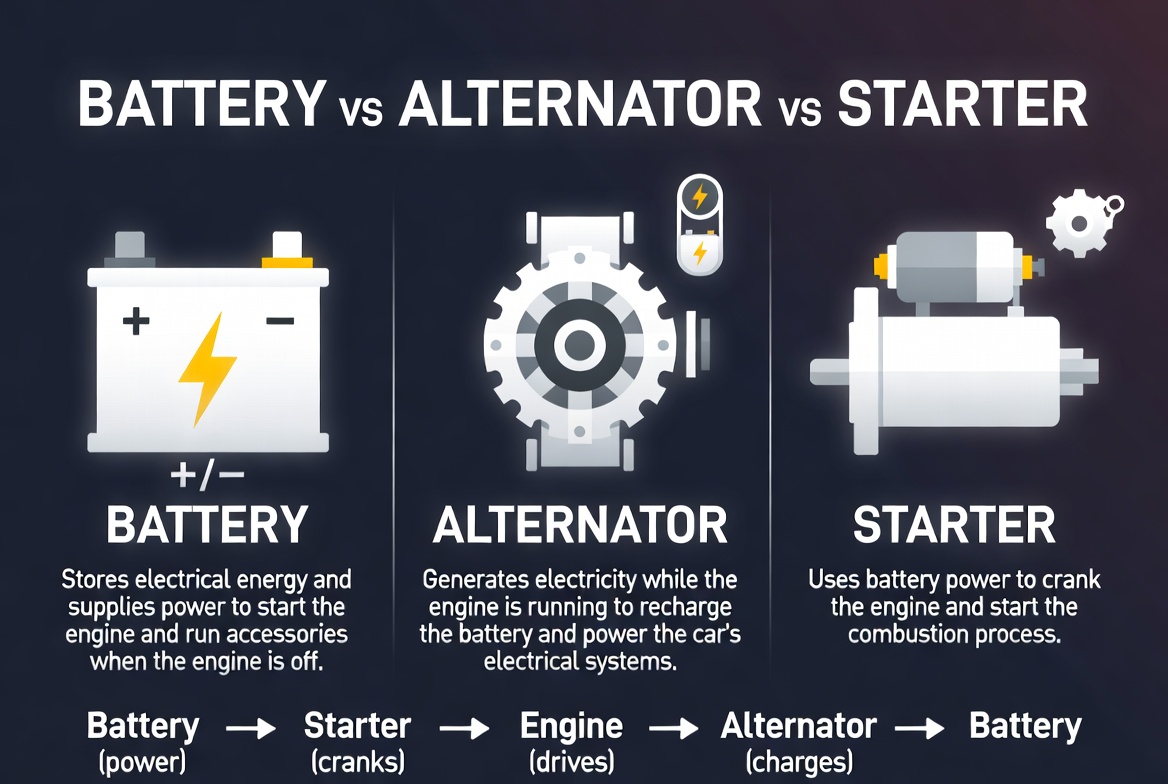
The battery acts as the power bank for your car. It holds electrical energy and delivers it on demand. Think of it like a lunchbox packed with energy. You open the lid only when you need a quick boost. Without a healthy battery, the starter motor gets no juice, and the engine stays silent.
Inside a typical car battery, chemical reactions create electricity. Plates sit in a special acid mix. Those reactions push out about 12 volts of power. The battery sends that power straight to the starter when you turn the key. It also runs the lights, radio, and computer systems while the engine sits off.
You usually find the battery under the hood, bolted down near the front. Some vehicles hide it in the trunk to balance weight better. Thick red and black cables connect it to the rest of the system. The positive cable links to the starter and alternator. The negative cable grounds everything to the car body.
Batteries come in a few basic types for everyday cars. Flooded batteries hold liquid inside and need occasional checks. Sealed ones stay maintenance-free and last longer in most conditions. Each type lists its cold cranking amps rating. That number tells you how much punch the battery delivers in cold weather to turn the engine over fast. Higher numbers mean stronger starts on freezing mornings.
The battery also smooths out power in the charging system. The alternator produces electricity in bursts, and the battery evens everything out so your headlights stay bright and the computer runs steady. Short trips around town drain the battery faster because the alternator never gets enough time to top it off fully. Long highway drives recharge it nicely.
Drivers notice battery trouble in clear ways. The engine cranks slowly like it struggles through mud. Dashboard lights flicker or stay dim even with the engine running. You hear a single click when you turn the key but no crank at all. In bad cases, the car refuses to start after sitting overnight.
Several things kill a battery over time. Age tops the list. Extreme heat or cold speeds up wear. Leaving lights on drains it flat. A faulty alternator that overcharges or undercharges damages the plates inside. Vibration from rough roads loosens connections and shortens life too.
You keep the battery strong with simple habits. Park in a garage during harsh weather when possible. Clean the terminals if you see white or green crusty buildup. That crust blocks power flow. Use a wire brush and baking soda mix for quick cleanup. Drive at least 20 minutes a few times a week so the alternator charges the battery properly.
Testing the battery takes two minutes with a basic multimeter tool you buy cheap at any auto store. Turn the engine off. Touch the red probe to the positive terminal and black to negative. A healthy battery reads 12.6 volts or higher. Anything below 12.4 volts means it needs a charge or replacement. Start the engine and check again. Voltage should rise to 13.5 or more if the alternator works right.
Jump starting a dead battery saves the day in a pinch. Connect the cables in the right order: red to dead battery positive, red to good battery positive, black to good battery negative, and last black to a grounded metal spot on the dead car. Let the good car run a few minutes, then try starting the dead one. Remove cables in reverse order. Safety first—never let the clamps touch each other.
Replacing the battery feels straightforward. Most mechanics swap one in under 30 minutes. Pick the exact group size and type listed in your owner’s manual for perfect fit. A weak battery strains the starter motor and can even fool you into thinking the starter failed. Always rule out the battery first in any no-start situation.
How the Alternator Keeps Your Car’s Electrical System Alive
The alternator works like a small generator under the hood. It creates fresh electricity while the engine runs. It charges the battery and powers every electrical part—headlights, wipers, air conditioning, power windows, and the onboard computer. Without the alternator doing its job, the battery drains fast and leaves you stuck.
A belt from the engine crankshaft spins the alternator. That spinning motion turns magnets past wire coils inside. The movement creates electrical current. A built-in voltage regulator keeps the output steady around 13.5 to 14.5 volts. Too low and systems fail. Too high and the battery cooks.
You spot the alternator on the side of the engine block. It looks like a round metal unit with a pulley on the front and several wires coming out the back. The main power wire runs back to the battery. A smaller wire connects to the dashboard warning light.
The alternator and battery work hand in hand in the charging system. The battery starts everything. Once the engine fires, the alternator takes over and keeps the battery topped up. This teamwork lets you drive for hours without draining power.
Common alternator problems show up clearly. The battery warning light glows on the dash even though the engine runs fine. Headlights dim at idle but brighten when you rev the engine. The car stalls after driving a short distance because the battery ran empty. You hear a whining or grinding noise from the engine bay that changes with engine speed.
A loose or worn serpentine belt often causes alternator trouble. The belt slips and the alternator stops spinning properly. Bad bearings inside the alternator create noise and drag. Faulty diodes or a broken voltage regulator let voltage spike or drop wildly. Age and heat take their toll too.
You test the alternator easily with the same multimeter. Start the engine and let it idle. Check voltage at the battery terminals. It should read 13.8 to 14.5 volts. If it stays at 12 volts or lower, the alternator fails to charge. Turn on headlights and AC to add load. Voltage should not drop below 13 volts. If it does, the alternator cannot keep up.
Mechanics use a more advanced test on a machine that loads the alternator and checks output. They also check the belt tension and pulley condition. A quick visual look reveals if the belt looks cracked or shiny from slipping.
Fixing an alternator usually means replacement rather than repair. The unit bolts to the engine with a few bolts. You loosen the belt tensioner, swap the unit, and reconnect wires. Many shops rebuild old units, but new ones last longer and come with warranties. Always replace the belt at the same time if it shows wear.
A bad alternator drains the battery even while you drive. The car runs on battery power alone until it dies. You might notice the radio cutting out or the power steering feeling heavy. In modern cars with lots of electronics, a weak charging system causes weird glitches like dashboard errors or transmission shifts that feel off.
Prevent alternator issues by keeping the belt tight and clean. Check it every oil change. Avoid overloading the electrical system with aftermarket stereo amps or extra lights without upgrading the alternator if needed. Heat kills alternators fast, so park in shade when possible and keep the engine bay clean.
The Starter Motor: Your Car’s Reliable Cranking Machine
The starter motor spins the engine fast enough to fire it up. It acts like an electric kickstart. The battery sends high current through the starter, and the motor turns the flywheel or flexplate attached to the engine crankshaft. Once the engine catches, the starter disengages automatically so it doesn’t spin with the engine.
A solenoid sits on top of the starter. It works as a heavy-duty switch. When you turn the key to start, the solenoid clicks and pushes a gear into the flywheel. At the same time it closes the circuit so full battery power reaches the motor. You hear that click every time you start the car.
Starters mount low on the engine, near where it meets the transmission. They stay tucked away, which makes them harder to reach but protects them from road debris. Thick cables run from the battery positive terminal straight to the solenoid.
Starter problems feel unmistakable. You turn the key and hear only a rapid clicking sound—no cranking at all. The engine cranks very slowly even with a fresh battery. A grinding noise happens when the starter gear fails to mesh properly with the flywheel. In the worst case, nothing happens at all when you try to start.
Heat and age wear out the starter brushes and windings. A weak battery forces the starter to pull too much current and burn itself out faster. Bad connections at the solenoid or corroded cables reduce power and cause clicking. Sometimes the flywheel teeth chip, and the starter gear slips.
Testing the starter starts with the battery. Confirm the battery holds a strong charge first. Then listen carefully when you turn the key. A strong click but no crank points to the starter motor itself. No click at all suggests a bad solenoid or wiring issue. Mechanics use a remote starter switch or test light to check power at the starter while bypassing the ignition switch.
Replacing the starter takes more effort than swapping a battery. You jack up the car or use a lift for access. Unbolt the starter, disconnect cables, and wiggle it out. Installation reverses the steps. Many shops test the old starter on a bench before declaring it dead. Rebuilt starters cost less but new ones give peace of mind.
The starter works only for a few seconds each time you start the car. That short duty cycle lets it handle huge current without melting. Yet repeated short trips or a bad ignition switch that keeps the starter engaged can destroy it quickly. Always turn the key to the off position the instant the engine fires.
How the Battery, Alternator, and Starter Work Together in Your Car
These three parts form a perfect loop in the starting and charging system. Here’s the exact sequence every time you start the car. You turn the key. The battery sends massive current through the solenoid to the starter motor. The starter spins the engine. Fuel and spark ignite, and the engine roars to life. The alternator belt starts turning, and the alternator wakes up and begins making power. It sends electricity to the battery to recharge it and powers all the accessories so the battery stays full.
If any link breaks, the whole system suffers. A weak battery starves the starter, so the engine cranks slowly or not at all. A failing alternator leaves the battery to do all the work until it dies. A bad starter refuses to crank even if the battery and alternator test perfect.
The voltage regulator inside the alternator keeps everything balanced. It tells the alternator when to produce more power during heavy electrical loads like headlights and wipers. The battery absorbs extra power and releases it during acceleration or idle.
Modern cars add computers that monitor the entire system. They trigger the battery light or check engine light when voltage drops or spikes. Some vehicles even shut off non-essential accessories to save the battery if the alternator fails.
You see the teamwork best during a jump start. The good car’s alternator helps charge the dead battery while the starter draws power. Once the engine runs, the alternator on the dead car takes over again. This shows why you drive the jumped car for at least 20 minutes afterward.
Battery vs Alternator vs Starter: Quick Differences at a Glance
Let’s line them up side by side so the differences jump out.
The battery stores energy for later use. It sits ready even when the car stays parked. The alternator makes new energy but only works while the engine runs. The starter uses energy to crank the engine but turns off the moment the engine starts.
Location differs too. Battery usually up front and easy to reach. Alternator sits on the engine side connected by belt. Starter hides low near the transmission.
Symptoms point to different parts. Slow cranking or clicking with dim lights often means battery. Battery light on while driving plus dimming accessories points to alternator. Rapid clicking or grinding when you turn the key screams starter.
Power flow tells the story clearly. Battery supplies the initial burst. Alternator supplies steady power and recharges. Starter consumes the burst to spin the engine.
Cost to replace follows the same order. Battery swaps stay cheapest and quickest. Alternator repair costs more because of labor and the belt. Starter replacement sits in the middle but requires more disassembly.
Each part affects the others. A dead battery can ruin the alternator by forcing it to work overtime once jumped. A bad alternator kills the battery. A faulty starter draws too much current and drains the battery fast.
Warning Signs That Point to Each Part
Battery failure shows in daily driving. The car cranks slower each morning. Accessories like the radio fade when you turn the key. You need frequent jump starts. The battery case looks swollen or leaks acid.
Alternator trouble appears after the engine runs awhile. The battery light flickers or stays on. Gauges act weird. The car loses power gradually on the highway. You smell something hot near the engine.
Starter issues happen right at the start attempt. You hear a single loud click or rapid tapping. The engine turns over but very slowly. Grinding sounds come from the bottom of the engine. Sometimes the starter stays engaged and whirs after the engine starts.
Dashboard lights give big clues. The battery or charging light means check the alternator and battery first. No light but still no crank means test the starter circuit.
Simple Home Tests You Can Do Today
Grab a multimeter and a few basic tools. Safety first—wear gloves and eye protection. Park on level ground and set the parking brake.
For the battery test, follow the steps earlier. Check resting voltage, then running voltage.
For the alternator, run the engine and add electrical load. Watch the voltage. It should hold steady.
For the starter, listen and feel. If you suspect the starter, have a helper turn the key while you check for power at the solenoid with a test light. No power means wiring or switch problem. Power but no action means the starter motor failed.
Clean all connections before testing. Corrosion fools even the best tests.
When to Replace or Repair and What to Expect
Battery replacement happens every three to five years for most drivers. Pick the right size, cold cranking amps, and reserve capacity. Mechanics test the old one free at many auto parts stores.
Alternator replacement runs higher but lasts longer when done right. Always replace the belt and tensioner pulley at the same time to avoid comebacks.
Starter swaps take an hour or two in a shop. Labor costs more because of the tight space. Test before you buy—many starters get returned unnecessarily when the real issue was the battery or cables.
Budget for the full job. Parts plus labor plus any related belts or cables keep you from repeat visits. Regular maintenance prevents big bills later.
Common Questions About Car Battery, Alternator, and Starter
Can a bad alternator drain the battery while the car sits? Yes. A faulty diode lets power leak backward through the alternator and slowly kills the battery overnight.
Does the starter affect the charging system? Not directly. But a failing starter draws huge current and can damage the battery or strain the alternator once the engine starts.
How long can you drive with a bad alternator? Usually 20 to 60 minutes depending on battery health and electrical load. Turn off every accessory you can to stretch it.
Why does my car click but not crank? Nine times out of ten the battery lacks enough power for the starter. Check battery voltage first.
Can extreme heat in the engine bay kill these parts faster? Absolutely. Heat damages battery fluid, alternator bearings, and starter windings quicker than cold does.
What if my car has stop-start technology? The battery and alternator face extra stress from frequent restarts. Special AGM batteries handle the extra cycles better.
Should I replace all three parts at once? Only if tests show multiple failures. Fix the root cause first so the new parts last.
Final Thoughts on Your Car’s Electrical Trio
The battery, alternator, and starter keep your car alive and moving. They work quietly in the background until one day they don’t. Now you know the jobs, the differences, the warning signs, and the simple tests. You stay ahead of trouble instead of stuck on the side of the road.
Check your battery voltage every few months. Listen for odd noises from the engine bay. Watch the dashboard lights. A few minutes of attention saves hours of frustration and hundreds in surprise repair bills.
Keep your terminals clean, belts tight, and connections solid. Drive enough to let the alternator do its job. When something feels off, test the battery first, then the alternator output, then the starter circuit. That order solves most no-start mysteries fast.
Your car runs because these three parts team up perfectly. Treat them right and they return the favor with reliable starts and steady power for years. Next time the car hesitates, you smile because you know exactly where to look. Safe driving and happy troubleshooting!
(Word count: 2,847)