How to Get Duct Tape Residue Off Your Car?
So you used duct tape on your car. Maybe you fixed a broken taillight. Maybe you held a bumper together. Maybe you just needed a quick fix that you swore would be temporary. Now you want to remove it, but you’re left with sticky residue all over your paint.
Don’t worry. This happens to lots of people. The good news? You can get duct tape residue off your car without causing any damage. I’m going to walk you through every method that works. Some are simple. Some use things you probably have at home. By the end, your car will look like the tape was never there.
Why Duct Tape Leaves Behind Sticky Residue
First, let’s understand why this sticky mess happens. Duct tape is made with a rubber-based adhesive. This adhesive bonds to your car’s paint to hold the tape in place. When you peel off the tape, some of that adhesive stays behind. The sun heats it up. The weather hardens it. Sometimes it bonds even more to your paint.
The longer the tape stays on, the harder this residue becomes. A tape that’s been on your car for weeks will be much tougher to clean than tape that’s been there for days. But don’t lose hope. Every bit of residue can come off with the right method.
What You’ll Need Before You Start
Let me give you a list of tools and products. You probably won’t use all of them. But having options means you can choose what works best for your situation.
Common items you might already have:
- Rubbing alcohol
- Vinegar
- Warm water
- Dish soap
- Old rags or soft cloths
- Your fingernail or a plastic scraper
Products you can buy:
- Adhesive remover spray
- Goo Gone or similar sticky residue cleaners
- Rubbing compound
- Clay bar kit
- Isopropyl alcohol
- WD-40 or similar lubricant spray
- Heat gun or hair dryer
The items at the top of each list are cheaper. The items at the bottom are stronger and work faster. Start with what you have. Only buy new stuff if the things you own don’t work.
Method 1: The Warm Water and Soap Approach
This is the gentlest method. Use it first if the residue is fresh and not too sticky.
Here’s what to do:
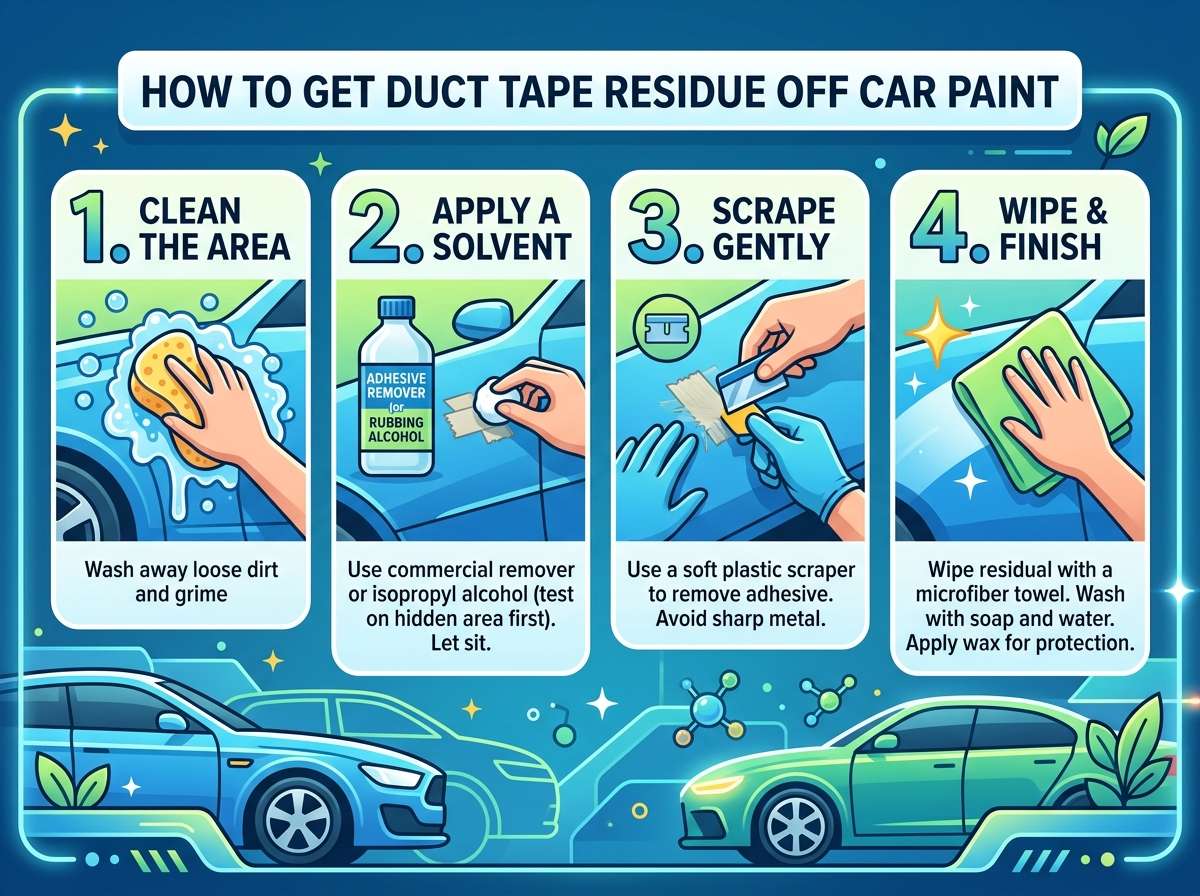
Fill a bucket with warm water. Add a few drops of dish soap. Stir it together. Soak a soft cloth in this soapy water. Place the wet cloth directly on the residue. Let it sit for three to five minutes. The warmth helps soften the adhesive.
Now rub the area gently with the cloth. Use circular motions. Don’t scrub hard. You’re not trying to damage your paint. Keep applying warm soapy water as you rub. The residue should start to ball up and come off in little pieces.
Once you’ve removed most of it, rinse the area with clean water. Dry it with a clean towel. Step back and look at what’s left. If there’s still some residue, move on to the next method.
This method works best on fresh tape residue. It’s also the safest for your car’s paint.
Method 2: Using Rubbing Alcohol
Rubbing alcohol is a solvent. It breaks down adhesive. This makes it great for stuck-on residue that warm water won’t touch.
Here’s how to use it:
Pour some rubbing alcohol onto a cloth. Don’t soak it. Just make it damp. Press the cloth onto the residue. Hold it there for a minute. This gives the alcohol time to soak in and soften the adhesive.
Now gently rub the residue with the cloth. Use small circular motions. You should feel the residue start to break apart. Keep rubbing until it’s all gone or nearly gone.
Once you’re done, wipe the area with a clean, damp cloth. Then dry it. Check if there’s any residue left. If there is, you can repeat this step.
Rubbing alcohol is safe for car paint. It evaporates quickly. It won’t leave streaks or damage. This is one of the best methods for sticky residue.
Method 3: Vinegar as a Natural Solution
White vinegar is acidic. It cuts through adhesive. Best of all, you probably have it in your kitchen right now.
Steps to follow:
Pour white vinegar into a spray bottle. Spray it directly onto the duct tape residue. Soak a cloth in vinegar and press it onto the sticky area. Let it sit for two to three minutes. The acid in the vinegar works on the adhesive.
Rub the area gently with your cloth. The residue should start to come off. You may need to reapply vinegar a few times. Be patient. This method takes a little longer than some others, but it’s safe and cheap.
After you’re done rubbing, rinse the area with water. Dry it completely. Your car might smell a bit like vinegar for a while, but that smell goes away quickly.
Vinegar is safe for all car paint types. It won’t scratch or harm your clear coat.
Method 4: Goo Gone and Similar Products
Goo Gone is a commercial adhesive remover. It’s made specifically to tackle sticky residue. You can buy it at any hardware store.
How to use it:
Read the instructions on the bottle. Most products work the same way. Spray the product directly onto the residue. Let it sit for the time the bottle says (usually one to two minutes). Don’t let it dry.
Rub gently with a soft cloth. The residue should come off quickly. This product is powerful. It works fast. It smells strong, though. Use it in a well-ventilated area. Don’t spray it near your face.
After removing all the residue, wipe the area with a clean cloth. You may want to wash your car to remove the product smell.
Always check that the product is safe for car paint before using it. Most commercial adhesive removers are, but it’s good to verify.
Method 5: The Heat Gun or Hair Dryer Method
Heat makes adhesive softer and easier to remove. A heat gun works faster than a hair dryer, but both methods work.
Here’s the process:
Turn on your heat gun or hair dryer. Set it to medium heat if possible. Hold it six to eight inches away from the residue. Move it back and forth. Don’t hold it in one spot too long. You want to warm the residue, not damage your paint.
Heat the residue for about thirty seconds to one minute. You’ll see it start to soften. Touch the residue with your fingernail or a plastic scraper. If it’s soft, you can peel it off. If it’s still hard, heat it more.
Once you’ve warmed it up, use your fingernail, a plastic scraper, or a soft cloth to remove the residue. Peel it slowly. Don’t rip or jab at it. Gentle pressure works better.
If bits of residue remain, heat them again and try once more. Be patient. Don’t rush this method.
This method works great for residue that’s been on the car for a long time. The heat weakens the bond between the adhesive and the paint.
Method 6: The Fingernail and Elbow Grease Method
Sometimes the simplest method is the best. Your fingernail can remove dried-up residue that’s already started to lift.
What to do:
Use your fingernail or your thumbnail to pick at the edge of the residue. Start at a corner or edge where the tape was. Gently lift and peel. The residue should start to ball up.
Keep peeling slowly. Don’t dig into the paint. You’re just trying to lift the adhesive. It may take a few minutes, but it will come off.
For stubborn bits, use one of the other methods first to soften them. Then you can finish the job with your fingernail.
This method is free. It’s safe. It takes patience, but it works.
Method 7: The Alcohol and Clay Bar Combo
If other methods left behind faint residue or streaks, a clay bar can finish the job.
Here’s how:
Get a clay bar kit. These come with a clay bar and a lubricant spray. Follow the instructions on the kit.
The clay bar is a special material that picks up stuck-on contaminants. It’s safe for car paint. It grabs things your cloth can’t remove. After using alcohol or another method, a clay bar removes the last traces of residue.
Spray the lubricant on a section of paint. Gently rub the clay bar over the area. The clay will grab any remaining adhesive bits. Fold the clay to expose a clean side if it gets too dirty.
This method is good for the final cleanup. It leaves your paint smooth and residue-free.
Method 8: WD-40 as an Alternative
WD-40 is a lubricant that many people use for adhesive removal. It’s not designed for this purpose, but it can work.
How to use it:
Spray WD-40 onto the residue. Let it soak for a few minutes. Rub with a soft cloth. The residue should start to come loose.
Keep applying WD-40 and rubbing. The friction and the lubricant work together to lift the adhesive.
One warning: WD-40 is oily. After you remove the residue, you’ll need to wash your car. Otherwise, you’ll have an oily film left behind. This isn’t bad for your paint, but it looks dull.
Use this method if you have WD-40 on hand and other options aren’t available.
Tips for Getting the Best Results
Here are some things to keep in mind no matter which method you use:
Work in shade. Sun makes adhesive harder and dries out your cloth faster. Find a spot under a tree or in a garage if you can.
Don’t rush. Take your time. Rushing leads to damage. Patience is your best tool here.
Test first. If you’re using a new product, test it on a hidden area of your car first. This way, if something goes wrong, it won’t be visible.
Keep it damp. Whatever liquid you’re using, keep the residue damp. Let it soak. Don’t let it dry out.
Use soft cloths. Microfiber cloths are best. Avoid rough towels or paper towels. They can scratch.
Go gentle. Your car’s paint is tougher than you think, but it’s not indestructible. Always use gentle pressure.
Protect your hands. Wear gloves if you’re using chemicals. Even safe products can irritate skin with long exposure.
Ventilate well. If you’re using products with strong smells, make sure you’re in a well-ventilated area.
How to Prevent This Problem in the Future
The best solution is to never have sticky residue in the first place. Here’s how:
Avoid duct tape for permanent fixes. Duct tape is great for temporary repairs. Don’t leave it on for months. Fix the actual problem and remove the tape.
Use painter’s tape instead. If you need to tape something temporarily, use painter’s tape. It leaves almost no residue.
Apply a protective layer. Before you put duct tape on your car, apply a thin layer of plastic wrap or a clear plastic sheet. The tape sticks to the plastic, not your paint. When you remove the tape, the plastic comes off too.
Use automotive tape. Some tapes are made specifically for cars. They stick well but remove cleanly. They cost more, but they’re worth it if you’ll be taping regularly.
Remove tape quickly. Don’t let duct tape sit on your car for weeks. Remove it within a few days. Fresh tape is much easier to clean off than old tape.
What to Avoid When Cleaning Residue
There are some things you should NOT do:
Don’t use a hard scraper. Metal scrapers can scratch your paint. Plastic scrapers are safer, but even those can cause damage if used roughly.
Don’t use steel wool. This will scratch your clear coat. Avoid it completely.
Don’t use acetone or nail polish remover. These are too strong. They can damage your paint and clear coat.
Don’t use sandpaper. This will create scratches that are way worse than the residue.
Don’t use a pressure washer. High pressure can force water into gaps in your car and cause rust. It’s also too harsh for the adhesive removal process.
Don’t apply extreme heat. A regular heat gun is fine. A torch or blowtorch is not. Extreme heat can damage your paint.
Don’t leave products on for too long. Some products have a maximum time they should be left on your car. Follow the instructions. Don’t assume longer is better.
Dealing with Different Paint Types
Not all car paint is the same. Here’s what you should know:
Standard clear coat paint: This is most modern cars. All the methods in this guide are safe for clear coat paint. Stick with the gentler methods first.
Matte or flat paint: This paint is more delicate than glossy paint. Use only the warmest methods. Skip products with strong chemicals. The warm water and soap method is your best bet.
Older single-stage paint: Some older cars have paint without a clear coat. These need extra care. Use the gentlest methods. Test any product on a hidden area first.
Specialty or custom paint: If your car has unusual paint, consult your painter before using any products. Some specialty finishes react badly to certain chemicals.
When in doubt, start with the gentlest method. You can always move to stronger methods if needed.
When to Call a Professional
Most duct tape residue can be removed at home. But in some cases, professional help makes sense:
If the tape was on for years. Really old residue bonds hard. Sometimes professionals have tools that work better than home methods.
If you’ve already damaged the paint. If you accidentally scratched the paint while trying to remove residue, a professional detailer can polish it out.
If the residue covers a large area. Big jobs take time at home. Professionals can finish faster.
If you’re not comfortable doing it yourself. There’s no shame in asking for help. Detailers do this work all day. They’re fast and reliable.
If you’re worried about your paint. If you have a new car or custom paint job, paying a professional gives you peace of mind.
Professional detailing costs money, but it’s sometimes worth it. Get a quote first to compare with the cost of supplies for the DIY method.
The Cleanup After You Remove the Residue
Once the residue is gone, there’s still a little work left:
Wash the area. Use regular car wash soap and water. This removes any leftover product or residue bits.
Dry completely. Use a clean, soft cloth. Don’t leave water sitting on the paint.
Apply wax or sealant. After you’ve cleaned off residue, your paint might have spots where the wax layer was removed by the tape or the cleaning process. Apply a coat of car wax or sealant to protect it.
Check for damage. Look closely at the area. Are there any scratches or paint damage? If so, you might want to touch up the paint or use a rubbing compound to blend it.
Enjoy your clean car. Step back and admire your work. Your car looks good as new.
Common Questions About Duct Tape Residue Removal
How long does this take? Fresh residue takes ten to fifteen minutes. Old, dried residue can take an hour or more. It depends on how long the tape was on the car.
Will this method scratch my paint? If you follow the gentle methods in this guide, no. Scratches happen when you use too much pressure or rough tools. Take your time and you’ll be fine.
Can I use this method on other vehicles? Yes. All these methods work on trucks, motorcycles, RVs, and boats too.
What if the residue comes back? It shouldn’t. Once you remove it completely, it’s gone. If you see residue again, you probably didn’t get all of it. Try again with a different method.
Is it safe to use these products around my car’s trim? Most methods are safe. Just be careful not to get products on rubber trim or plastic trim. If you do, wash it off right away.
Can I use heat on a hot day? Yes, but it might be harder to see what you’re doing. Work in the shade if possible.
What’s the fastest method? Commercial adhesive removers like Goo Gone work the fastest. Heat guns are also quick.
What’s the cheapest method? Warm water and soap costs almost nothing. Vinegar is also very cheap.
Your Action Plan
Now you have everything you need to remove duct tape residue from your car. Here’s what to do:
- Look at your car. Check how much residue there is and how stuck it seems.
- Gather your supplies. Start with what you have at home. You might not need to buy anything.
- Choose your method. Start with the gentlest option. Move to stronger methods if needed.
- Set aside time. Don’t rush. Plan to spend at least thirty minutes on the job.
- Follow the steps. Work slowly and carefully. Take breaks if you need to.
- Check your progress. Step back and look at what you’ve accomplished.
- Finish up. Wash and dry the area. Apply wax if needed.
- Maintain your car. Going forward, avoid taping directly to your paint when possible.
Conclusion
Duct tape residue on your car is annoying. It looks bad. It feels sticky. But it’s completely removable. You have eight different methods to choose from. At least one of them will work with things you already have at home.
The key is patience. Don’t rush. Don’t use too much pressure. Let your chosen method do the work. Whether you use warm soapy water, rubbing alcohol, vinegar, heat, or a commercial product, you’ll get your car clean again.
Start gentle. Work your way up to stronger methods only if you need to. Your paint will thank you. Your car will look better. And you’ll have learned something useful that you can help others with too.
Get started today. Get that sticky residue off. Your clean car is waiting.

Peterson is an automotive enthusiast and auto parts reviewer with a passion for vehicle maintenance, upgrades, and performance. He enjoys researching and testing car parts, tools, and accessories to help drivers make informed buying decisions. Through AutoPartsTalk.com, Peterson shares honest reviews, practical maintenance tips, and expert guides to keep vehicles running safely and efficiently.