How to Reset an ABS Module?
Introduction
Your car’s brake system keeps you safe on every drive. When something goes wrong with your anti-lock brakes, you want to fix it fast. The ABS module controls how your brakes work during emergency stops, and sometimes it needs a reset. The good news? You can handle this yourself in many cases.
This guide walks you through everything you need to know about resetting your ABS module. We’ll cover what it does, why it breaks down, and exactly how you fix it. Let’s get started.
What Is an ABS Module and Why Does It Matter?
Your ABS (anti-lock braking system) module is like your car’s brain for brake safety. It sits under your vehicle and connects to sensors on all four wheels. When you hit the brakes hard, these sensors send signals to the ABS module. The module then tells your brakes to release and reapply quickly. This rapid pulsing stops your wheels from locking up on slippery roads.
Think about sliding on ice. Without ABS, your wheels lock and you skid out of control. With ABS, your wheels stay rolling even under hard braking. This gives you better steering control and helps you stop in shorter distances. The ABS module makes this magic happen dozens of times per second.
The module also stores error codes when something goes wrong. A simple reset can clear these codes and fix the problem. A full reset tells the module to forget old data and start fresh.
Signs Your ABS Light Keeps Coming On
Your dashboard has an ABS warning light for a reason. When it glows, your ABS module is trying to tell you something. Here are the main signs that your ABS needs attention:
The ABS Light Won’t Turn Off – This is the most obvious sign. Once this light stays on after you start driving, your ABS system isn’t working right. Your regular brakes still work, but you lost the safety boost that ABS gives you.
Your Brakes Feel Spongy or Soft – If the pedal feels mushy or goes down too far before catching, your ABS module might be stuck in reset mode. This makes your brakes act weird and feel unreliable.
Your Vehicle Pulls to One Side When Braking – A broken ABS module can cause uneven braking force. You notice your car veering left or right when you apply the brakes. This danger signal means you need a reset soon.
Brake Noise or Grinding Sounds – Your ABS module controls brake pressure. When it breaks down, your brakes might make grinding or clicking noises. You hear a pulsing sound when you brake on dry roads.
The ABS Light Blinks While Driving – A blinking light means an active fault is happening right now. This calls for a quick reset to clear the fault code and restore your ABS function.
Tools You’ll Need for an ABS Module Reset
Before you start, gather your supplies. You don’t need fancy equipment or a trip to the mechanic shop. Here’s what you collect:
A Car Battery Disconnect Tool – You can use a wrench to loosen the negative terminal on your battery. This tool lets you safely remove battery power from your vehicle.
A Scan Tool or OBD2 Reader – This device plugs into your vehicle’s diagnostic port. It reads and clears error codes from your ABS module. You can buy a basic model for under fifty dollars.
Safety Glasses – Your eyes matter. Wear protection when working under the hood or under your vehicle.
Work Gloves – These keep your hands clean and protected from sharp edges and old brake dust.
A Jack and Jack Stands – You’ll need these if you must access your ABS module directly. Never work under a car held up by just a jack.
Basic Socket Set – Most resets don’t need you to remove parts. Still, having sockets helps if you need to access connections or sensors.
A Flashlight – The area around your ABS module stays dark. A good flashlight lets you see what you’re doing.
A Clean Rag – Use this to wipe away brake dust and corrosion around wheel sensors and connections.
Step-by-Step Guide to Reset Your ABS Module
Step One: Turn Off Your Vehicle
Start by turning off your engine. Let your car sit for a few seconds. You want all electrical systems to power down completely. This simple step prevents electrical damage and keeps you safe.
Open your hood and locate your battery. Your battery sits in one of the engine corners. Look for a black box with thick wires attached to it.
Step Two: Disconnect Your Battery
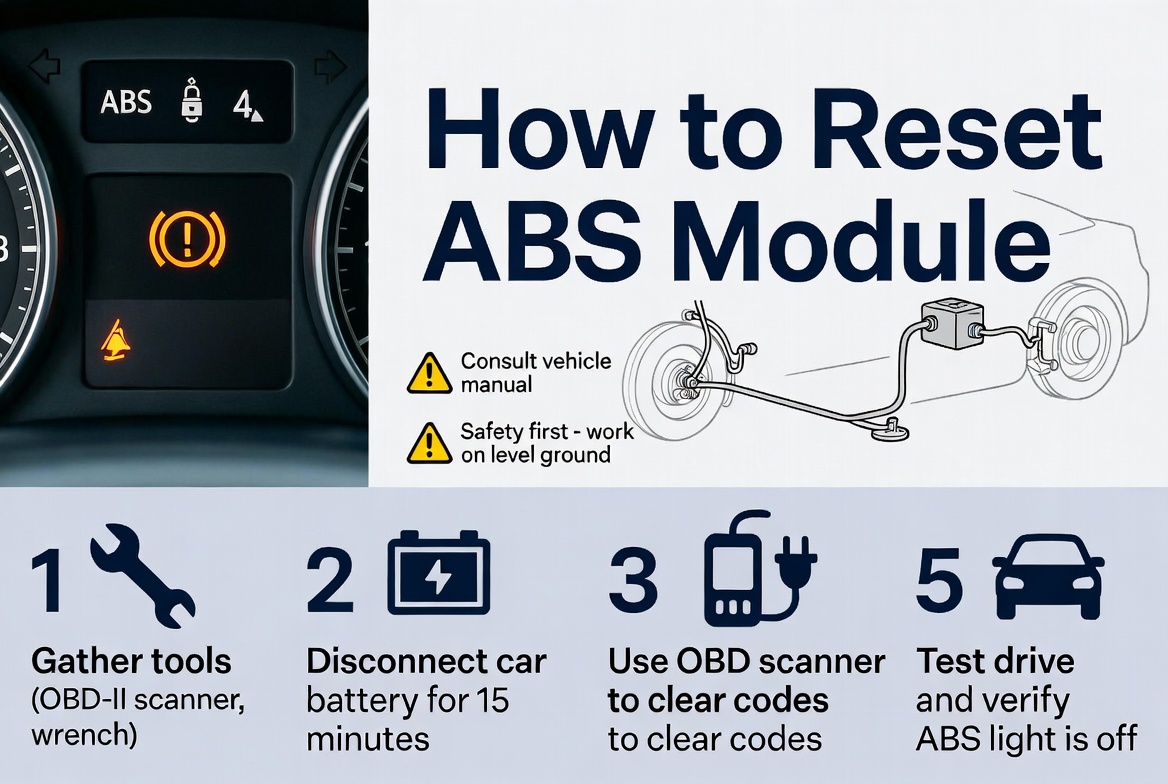
Find the negative terminal on your battery. This terminal has a minus sign and a black cable running from it. Grab your wrench and loosen the nut on this terminal. Turn left to loosen. Don’t remove it completely, just loosen it enough to slide the cable off the post.
Leave the negative cable disconnected for about fifteen minutes. This drains all power from your vehicle’s computer system. The ABS module will reset when power returns.
Some cars have a fuse for the ABS module. You can pull this fuse instead of disconnecting the battery. Check your owner’s manual for the fuse box location and the ABS fuse label.
Step Three: Reconnect Your Battery
After fifteen minutes have passed, slide the negative cable back onto the battery post. Tighten the nut with your wrench. Turn right until it feels snug. Don’t over-tighten, or you’ll crack the battery case.
Your vehicle now has power again. The ABS module has done a hard reset and forgotten all old error codes.
Step Four: Start Your Vehicle
Turn your key to wake up your car. Let the engine run for about thirty seconds. Watch your dashboard lights come on. Most lights should turn off after a few seconds. Keep your eyes on the ABS light. It might stay on for a moment, then turn off.
If the ABS light stays off, congratulations. Your reset worked. Drive your car for a short distance to make sure the light doesn’t come back on.
Step Five: Use a Scan Tool (Optional but Helpful)
Grab your OBD2 scan tool if you have one. Plug it into the diagnostic port under your steering wheel. The scan tool reads codes stored in your ABS module. It tells you exactly what went wrong.
Your scan tool has a menu. Select the option to read codes. Write down any codes you see. Common codes include C0035 (wheel sensor issue), C0040 (left front wheel speed sensor), and C0045 (right front wheel speed sensor).
After you note the codes, use your scan tool to clear them. Select the option to erase codes. Your scan tool will delete old fault data. This finalizes your reset.
Step Six: Test Drive and Monitor
Drive your vehicle around the neighborhood for five to ten minutes. Brake gently and smoothly. Feel how your brakes respond. Your brake pedal should feel firm and responsive. Your vehicle should not pull to one side.
Pay attention to your dashboard. The ABS light should stay off during this test drive. If the light comes back on, you have a deeper problem that needs professional help.
After your test drive, park and turn off your engine. Wait five minutes, then start your vehicle again. The ABS light should remain off. This tells you the reset stuck and your system is working.
Resetting ABS Modules in Different Vehicle Types
Domestic Trucks and SUVs
Pickup trucks and full-size SUVs hold their ABS modules near the engine bay or under the driver’s seat. The reset process stays the same as our main guide. Domestic vehicles respond well to the battery disconnect method.
Your owner’s manual shows the exact location. The manual also explains which fuse controls your ABS system. You can pull this fuse instead of disconnecting your battery.
Japanese Vehicles
Honda, Toyota, and Nissan vehicles often have ABS modules that communicate with other systems. You might need to reset your instrument cluster too. Consult your specific owner’s manual for your exact model.
Some Japanese vehicles need you to hold down the brake pedal while disconnecting the battery. This drains stored power in brake fluid accumulators. Check your vehicle’s specific needs.
European Vehicles
BMW, Volkswagen, and Mercedes vehicles sometimes lock their ABS modules when faults happen. A simple reset might not unlock your brakes. You may need a scan tool that speaks your vehicle’s language.
European vehicles often use different diagnostic protocols. A basic OBD2 reader might not read your ABS codes. You might need professional diagnostic equipment.
Luxury and High-Tech Vehicles
Newer luxury vehicles connect their ABS to stability control systems, traction control, and even parking brakes. Resetting one system might need resetting several others. Always check your owner’s manual first.
These vehicles store codes in encrypted formats. A standard scan tool won’t read all the information. You might benefit from a dealership diagnostic session.
Common Mistakes People Make When Resetting ABS Modules
Forgetting to Let the Battery Sit Long Enough – Fifteen minutes lets all power drain. Rushing this step means your reset fails. The ABS module still holds old codes. Set a timer on your phone so you don’t forget.
Reconnecting the Battery the Wrong Way – Always connect the positive cable first, then the negative. Reversing this order causes electrical damage and might blow fuses. Take your time with this step.
Ignoring Sensor Issues – Your reset clears codes, but it doesn’t fix broken sensors. If a wheel sensor died, no reset brings it back to life. You’ll need a new sensor. A scan tool helps you know if sensors are the real problem.
Not Using a Scan Tool to Verify – Guessing if your reset worked leads to dangerous surprises. Always read your codes with a scan tool. The codes tell you what’s actually broken.
Driving Right After a Reset – Give your vehicle time to relearn. Drive gently for the first few trips. Let your ABS system recalibrate and test itself.
Ignoring Brake Fluid Issues – Dirty brake fluid clogs ABS modules. A reset won’t help if your fluid is dark brown or black. You might need a brake fluid flush to complete your repair.
When You Should Call a Professional Mechanic
Some ABS problems need a real mechanic. Here’s when you should stop and call for help:
The Light Comes Back On Immediately – If your light returns within minutes of your reset, you have a deeper fault. A broken sensor, bad wire, or computer failure needs expert help.
Your Brakes Don’t Feel Safe – Never drive a car with unsafe brakes. If your pedal feels weird or your brakes don’t work right after your reset, stop driving. Call a mechanic right away.
Your Vehicle Has Water Damage – If your car got flooded or had water damage, your ABS module’s electronics are probably fried. Reset won’t help electronic damage.
You Get Code C0096, C0097, or C0098 – These codes point to ABS control module faults, not sensor issues. These codes usually mean your module needs replacing or professional repair.
Your ABS Module Itself Is Wet or Corroded – If you see rust, corrosion, or water inside your ABS module housing, your module is damaged. Professional replacement is your safest choice.
Multiple Systems Are Acting Up – When your ABS light pairs with your traction control light and stability light, your vehicle needs comprehensive diagnosis. A professional scan tool reads all connected systems.
Frequently Asked Questions About ABS Module Resets
Q: Will a reset void my vehicle’s warranty? A: No. A simple reset doesn’t involve opening your ABS module or changing parts. Your warranty stays intact. Disconnecting your battery for fifteen minutes causes no damage.
Q: Can I reset my ABS module without a scan tool? A: Yes. The battery disconnect method works without a scan tool. A scan tool just helps you know which codes exist and confirms your reset worked. Both methods are valid.
Q: How often can I reset my ABS module? A: You can reset it as many times as needed. Each reset just clears stored codes and restarts the system. There’s no limit to how many resets you do.
Q: Will resetting my ABS affect my regular brakes? A: No. Your regular brakes work independently from your ABS system. Resetting ABS only affects anti-lock braking. Your standard brake function stays the same.
Q: What does each ABS code mean? A: Codes starting with C00 relate to wheel speed sensors. Codes C0010 through C0049 point to specific wheels or sensor issues. Codes C0050 and higher relate to ABS module faults. Your scan tool or owner’s manual explains specific codes.
Q: Can I reset an ABS module while my car is running? A: Never disconnect your battery while your engine runs. This causes electrical surges that damage your alternator and computer. Always turn off your engine first.
Q: How long does a reset take? A: The whole process takes about thirty minutes. Most of this time is waiting for the battery to drain. The actual work takes only five or ten minutes.
Q: Will a reset fix an ABS sensor problem? A: No. A reset clears error codes but doesn’t fix broken parts. If a sensor is dead, you need a new sensor. A reset just tells you a sensor is broken.
Q: Can bad brake fluid cause an ABS light to come on? A: Yes. Dirty or contaminated brake fluid clogs ABS passages and triggers fault codes. Flushing your brake fluid and resetting your ABS module together solves this problem.
Q: Why does my ABS light come on when I first start my vehicle? A: This is normal. Your ABS module runs a self-test when you start your engine. The light should turn off within five seconds. If it stays on, you have a real fault.
Final Thoughts
Resetting your ABS module is an achievable project for any car owner willing to learn. You don’t need special skills or expensive tools. A battery disconnect and fifteen minutes of patience often solve your problem.
Remember, your ABS system keeps you safe. Take it seriously. If your reset works, great. If it doesn’t, a professional mechanic can dig deeper and find the real issue.
Trust your instincts about your vehicle. If something feels unsafe, stop driving and get professional help. Your life matters more than saving a few dollars on a mechanic visit.
The next time your ABS light comes on, you’ll know exactly what to do. You’ll stay calm, follow these steps, and likely solve your problem yourself. Drive safe out there.