How to Check If Your MAF Sensor Is Bad?
Your car’s mass air flow sensor does something really important. It measures how much air flows into your engine so your vehicle can run smoothly and efficiently. When this sensor stops working right, your car tells you something’s not okay. The good news? You can learn to spot the problem yourself without heading straight to the mechanic.
This guide walks you through everything you need to know about your air flow sensor and how to figure out if it needs attention.
What Does a MAF Sensor Do Anyway?
Let’s start with the basics. Your car’s engine needs three things to work: fuel, air, and a spark. The mass air flow sensor measures how much air comes into your engine. Your car’s computer uses this info to figure out exactly how much fuel to spray into each cylinder. Think of it like a recipe—you need the right ratio of ingredients to make something work properly.
The sensor sits in your air intake and uses a hot wire or film that measures the air passing over it. When air is cold, it passes the sensor differently than warm air. The sensor picks up these changes and sends signals to your engine computer. That computer then tells your fuel injectors how much fuel to use.
Without an air flow sensor working correctly, your engine can’t figure out the right fuel-to-air mix. Too much fuel? You waste gas. Too little? Your engine misfires and runs rough.
Common Signs That Your Air Flow Sensor Has Problems
Your car gives you clues when something’s wrong. Here are the most common signals that your mass air flow sensor needs attention:
Your Check Engine Light Comes On
The check engine light is your car’s way of saying something needs checking. When your mass air flow sensor goes bad, it usually triggers this light. Your car’s computer detects that the sensor’s readings don’t match what it expects. This is often the first sign many drivers notice.
Your Engine Runs Rough at Idle
Rough idling feels strange—your car shakes or vibrates when you’re sitting at a red light. This happens because the fuel-air mix is off. Your air flow sensor might be giving wrong readings, so your engine gets too much or too little fuel. That rough feeling tells you something’s not balanced.
Poor Fuel Economy Gets Your Attention
When you’re filling up more often than usual, your air flow sensor might be the culprit. A bad sensor can make your engine run rich, meaning it uses more fuel than it should. You notice your miles per gallon drop. You’re paying more at the pump without driving any differently.
Acceleration Feels Sluggish or Weak
When you step on the gas, your car should respond. If your mass air flow sensor is failing, acceleration feels slow and weak. Your engine hesitates before picking up speed. You might feel like your car is holding back when you try to pass someone or merge on the highway.
Your Engine Stalls or Dies Unexpectedly
A completely failed air flow sensor can cause your engine to stall while driving. Your car might shut off at traffic lights, during turns, or while you’re cruising. This is dangerous and means you need to address the problem fast.
Strange Smells Come from Your Engine
Sometimes a bad sensor creates a rich fuel mixture, which can smell like raw fuel around your engine. You might notice a strong gas smell even when your tank isn’t full or you haven’t been driving hard.
Your Engine Hesitates When Starting
Your car might be slow to start or crank a few times before firing up. This happens because the sensor can’t tell your engine’s computer how much air is entering during cold starts.
How to Check Your MAF Sensor: Step-by-Step Methods
Now let’s talk about how to actually inspect your air flow sensor. You have several options depending on how hands-on you want to get.
Method 1: Read Your Diagnostic Codes
Your car’s computer stores codes when something goes wrong. You can read these codes yourself.
What you need: An OBD2 scanner (these are cheap online or at auto parts stores)
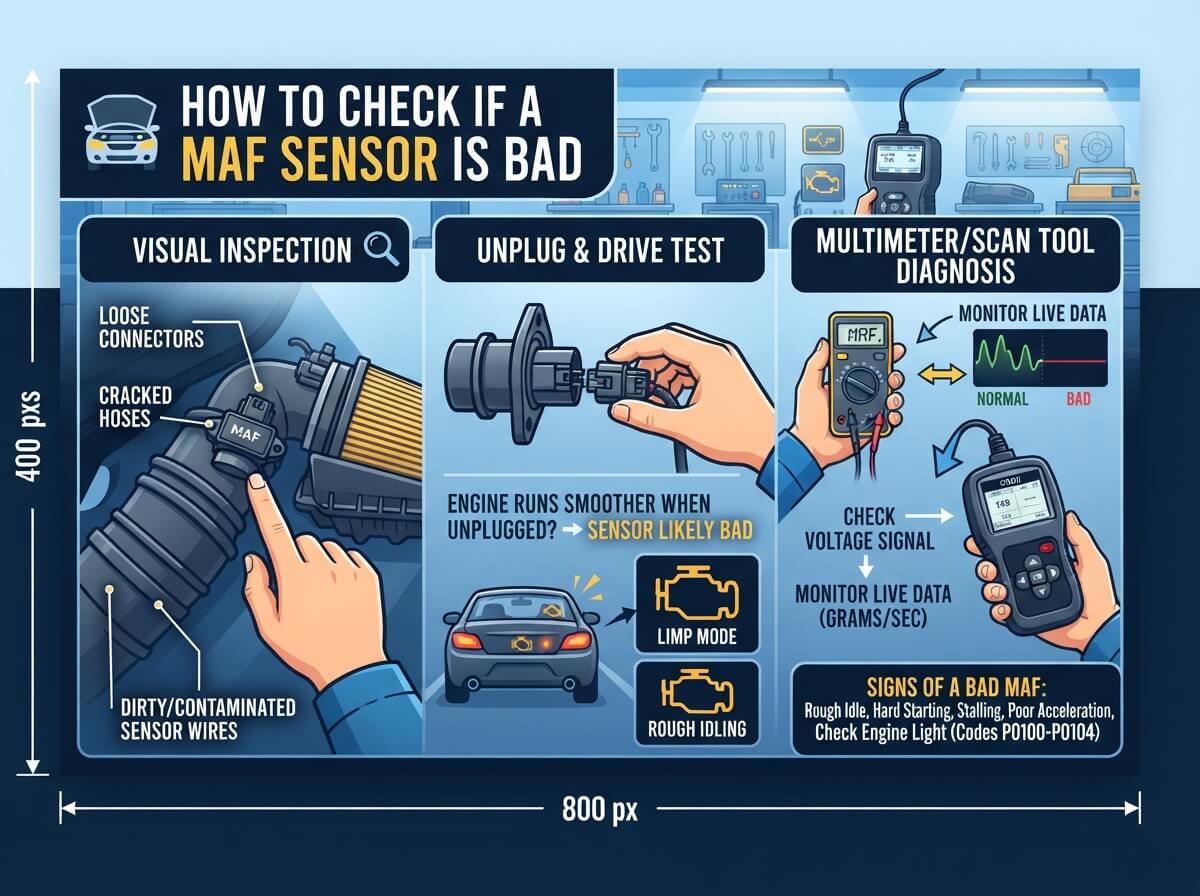
How to do it: Find your vehicle’s OBD2 port under the steering wheel on the dashboard. Plug in your scanner. Turn your ignition to the “on” position without starting the engine. Your scanner will pull up any codes your car’s computer found. Look for codes like P0101 (mass air flow sensor range problem), P0102 (mass air flow sensor low), or P0103 (mass air flow sensor high). These codes point to air flow sensor issues.
Method 2: Inspect the Sensor Visually
You can look at your mass air flow sensor to see if it’s dirty or damaged.
What you need: Your owner’s manual to find where the sensor is located A flashlight Safety glasses
How to do it: Locate your air flow sensor in your air intake. It usually sits between your air filter box and your engine. Look at the sensor carefully. Is it dirty? Does it have dust buildup? Can you see any physical damage? A sensor that looks caked with dirt might be the problem. Don’t touch the actual sensor element—the hot wire or film is delicate.
Method 3: Listen to Your Engine Behavior
Sometimes your ears can tell you a lot.
Pay attention to how your engine sounds. A bad mass air flow sensor can cause:
- Backfiring sounds from the exhaust
- Popping noises when accelerating
- A general roughness to the idle sound
These sounds happen when the fuel mix is wrong. Rich mixtures (too much fuel) often create backfire sounds.
Method 4: Pay Attention to How Your Car Drives
Drive your car and notice everything:
- Does it hesitate when you step on the gas?
- Does it stall when you come to a stop?
- Does it feel like something’s holding it back?
- Does it surge forward unexpectedly?
Take notes on exactly when these things happen. Do they happen in certain conditions? When the engine is cold? After highway driving? This info helps you and your mechanic figure out what’s wrong.
Method 5: Test Disconnecting the Sensor
This test only works if you’re comfortable with car mechanics. Disconnecting your air flow sensor tells your engine to run in a backup mode using pre-set fuel amounts.
What to do: With your engine off, find the air flow sensor connector and carefully disconnect it. Start your engine and drive your car for a short distance in a safe area. Does your car run better? Does it feel stronger? If yes, your sensor is likely failing. Reconnect the sensor when you’re done.
Note: Your check engine light will come on during this test. It goes away once you reconnect the sensor.
What Causes an Air Flow Sensor to Go Bad?
Understanding what damages these sensors helps you prevent problems.
Dirty Air Filter
Your air filter catches dust and dirt before it reaches your sensor. A clogged filter lets debris bypass and coat your air flow sensor. Changing your air filter regularly keeps this from happening.
Engine Problems
Sometimes other issues damage your sensor. Vacuum leaks, dirty fuel injectors, or misfiring cylinders can send extra debris toward the sensor.
Contaminated Engine Oil
If your engine oil is old and dirty, it can create sludge that travels to your sensor. Regular oil changes prevent this.
Moisture and Humidity
Water can corrode sensor connections or damage the delicate wire inside. Parking in extremely humid areas or driving through deep water increases this risk.
Normal Wear and Tear
All sensors eventually wear out. They last different amounts of time depending on your driving habits and vehicle condition. Some last 80,000 miles, others last 150,000 miles.
What You Should Do If You Suspect a Bad Sensor
Once you think your mass air flow sensor is the problem, here’s what to do:
Start with Cleaning
Before replacing anything, try cleaning your sensor. Many shops can clean them inexpensively. Sometimes cleaning fixes the problem completely. A dirty air flow sensor often acts like a bad sensor, but cleaning restores it.
Get a Professional Diagnosis
Visit a trusted mechanic for a proper diagnosis. They have professional diagnostic equipment that can test your sensor accurately. They can confirm it’s actually the air flow sensor and not something else creating similar symptoms.
Know the Replacement Cost
MAF sensors cost between $150 and $400 for the part, depending on your vehicle. Labor costs vary, but expect another $100 to $300. Some newer or luxury vehicles cost more. Getting quotes from different shops helps you find fair pricing.
Don’t Ignore the Problem
Driving with a failed mass air flow sensor damages other parts. Your catalytic converter can get ruined if the fuel mix stays too rich. Engine damage gets worse over time. Address this soon.
How to Keep Your Sensor Healthy
Prevention is easier than repair.
Change Your Air Filter Regularly
Your air filter needs replacement roughly every 15,000 to 30,000 miles. Check your owner’s manual for your vehicle’s schedule. A clean air filter keeps debris away from your sensor.
Use Quality Fuel
Top-tier fuel from good gas stations has better detergents. These keep your fuel system cleaner and protect your sensors.
Maintain Your Engine Regularly
Keep up with your scheduled maintenance. Fresh oil, new filters, and regular checkups prevent many problems that damage air flow sensors.
Avoid Driving Through Deep Water
Never drive through water deeper than a few inches if you can help it. Water can damage multiple engine components, starting with your air flow sensor.
Keep Your Engine Bay Clean
Occasionally wipe down your engine area, especially if you live in dusty conditions. Less dust around your sensor means less chance of contamination.
When to Call a Professional
Some things you can do yourself, and some things need a pro. Call a mechanic when:
- You’re not comfortable working on cars
- Your diagnostic codes don’t match your symptoms
- You’ve tried basic troubleshooting and nothing improved
- You want to be absolutely sure before spending money on repairs
A good mechanic asks good questions and explains what they find. They don’t just replace parts randomly.
The Bottom Line
Your mass air flow sensor is small but mighty. When it stops working, your whole engine suffers. You now know what this sensor does, how to spot when it’s failing, and what to check yourself. You understand what causes problems and how to prevent them.
Most importantly, you know you can take action. Start with a diagnostic scan from an auto parts store. Look at the sensor yourself. Think about when problems happen. Then make an informed decision about whether to clean, repair, or replace it.
Your car’s air flow sensor keeps your engine running smoothly and efficiently. Treating it right means your car treats you right with reliable performance and good fuel economy. Don’t ignore warning signs—catch sensor problems early and you’ll save yourself money, frustration, and potentially dangerous breakdowns on the road.